New Shep
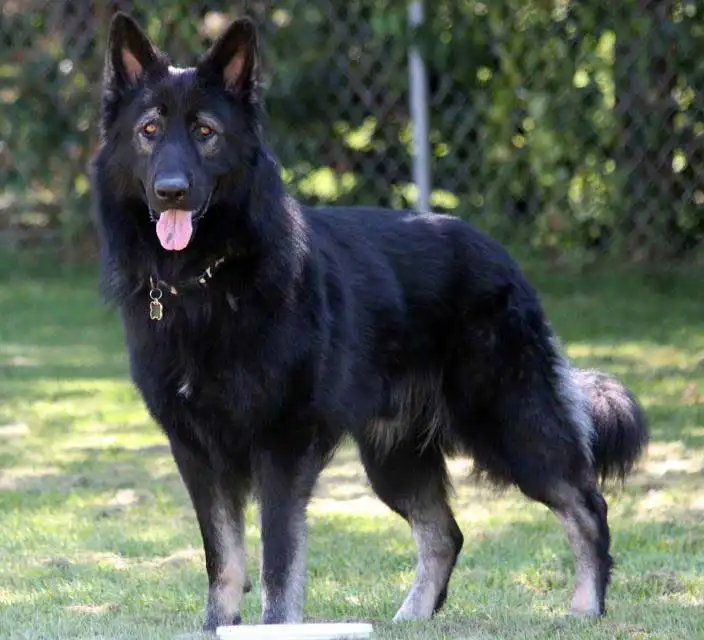
The New Shep is a thoughtfully designed hybrid that merges the reliable German Shepherd, celebrated for its contributions to law enforcement and military service, with the affectionate Newfoundland, a breed famous for its love of water. This combination typically produces a dog that is both confident and intelligent, known for its friendly demeanor and tolerance, particularly around children and smaller animals. However, poor breeding practices can result in behavioral issues such as aggression or anxiety, as well as various health concerns. While the New Shep is recognized by both the Designer Breed Registry and the International Designer Canine Registry, it has yet to achieve widespread popularity. As a result, finding a reputable breeder may take some time, but it is essential to ensure that the dog is free from any inherited behavioral or genetic problems related to aggression or nervousness.
Breed Origin
The New Shep is a designer breed that emerges from the deliberate crossbreeding of the German Shepherd and the Newfoundland. The German Shepherd, initially developed for herding purposes, has gained a reputation as a formidable guard dog and is frequently associated with military and law enforcement roles. On the other hand, the Newfoundland is known as a gentle giant, thriving in water-based environments. This breed has a somewhat mysterious background; while its precise ancestry is unclear, it has a long history of companionship with fishermen along the Canadian coastline, earning it the nickname of the original "ship's dog." In the 1700s, these canines were known as greater St. John's dogs, closely related to the now-extinct lesser St. John's dog, which is a precursor to the Labrador Retriever. Like their smaller counterparts, Newfoundlands excelled at retrieving ropes, nets, and fish from icy waters and played a crucial role in rescuing shipwreck survivors. By the 1800s, Newfoundlands had become popular in both England and the United States, admired not only for their swimming prowess but also for their exceptionally gentle nature with children. The German Shepherd was developed in the early 1900s by Captain Max Emil Friedrich von Stephanitz, a cavalry officer and dog breeder who prioritized traits such as intelligence, physical soundness, and a stable temperament. Originally bred as a herding dog capable of guiding sheep back to the fold without nipping, the German Shepherd was also strong and robust enough to accompany sheep over long distances and protect them from predators. As the need for herding dogs diminished, Captain von Stephanitz redirected his efforts to establish the breed as a police dog, which is its primary recognition today. The American Kennel Club officially acknowledged the German Shepherd breed in 1908, and it has since risen to become one of the most popular breeds, second only to the Labrador Retriever.
Breed Appearance
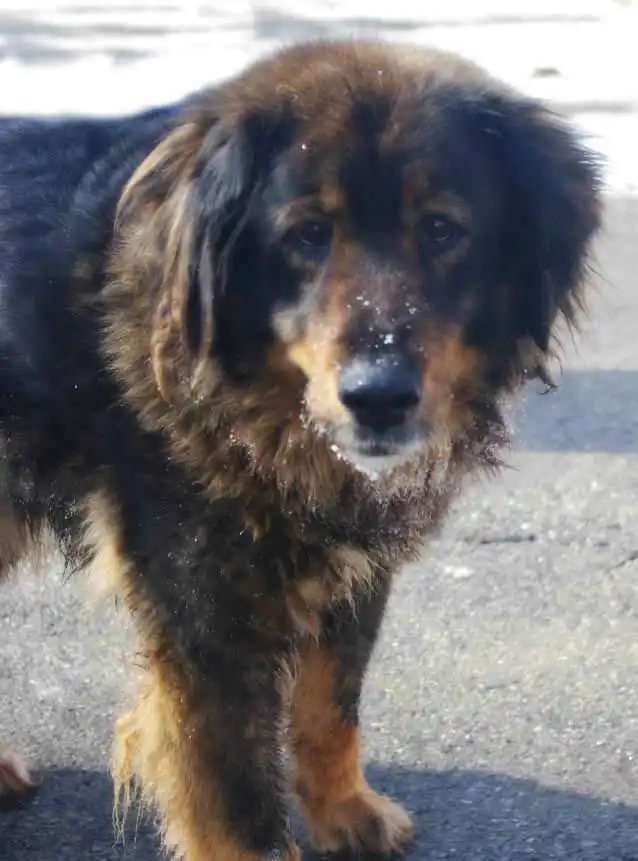
The New Shep is generally a sizable dog, often nearing giant proportions, distinguished by a sturdy build with substantial bones and a fit physique. Variations can arise among New Shep hybrids, as each dog may display unique traits inherited from its parent breeds. Both the Newfoundland and the German Shepherd have straight, strong backs that are slightly longer than their height; however, the Newfoundland typically has a level back, while the contemporary German Shepherd, particularly those bred for shows, often exhibits a pronounced slope. Moreover, the Newfoundland has a deeper chest and a wider skull compared to the German Shepherd, which features a longer, more tapered muzzle. While both breeds usually possess brown eyes and pointed ears, the Newfoundland's eyes tend to be smaller and lack the almond shape characteristic of German Shepherds. Additionally, the ears of the German Shepherd stand erect, in contrast to the Newfoundland's ears, which fold forward. Both breeds are double-coated, with a soft, dense undercoat beneath a coarse outer layer of fur that ranges from short to medium length and is often slightly wavy—a trait likely inherited by their puppies. Consequently, New Shep puppies can exhibit a variety of physical traits from either parent, resulting in noticeable differences in appearance even among siblings.


Care Routine
Although this particular hybrid doesn't need regular baths, caring for the New Shep's coat requires a significant commitment from the owner to keep it clean and free from dirt, debris, and knots. The soft undercoat is prone to matting, and the Newfoundland's fur tends to gather dust and debris, while the German Shepherd is recognized for its heavy shedding. Consequently, daily brushing is crucial to prevent tangles, eliminate debris, and manage loose hair. Shedding becomes especially noticeable for both parent breeds during the spring and fall, so you may need to increase the frequency of brushing during these times to handle the additional fur.
Behavior & Temperament
Overall, the combination of these breeds typically results in a dog that is both confident and well-behaved. While they are large enough to command attention, they usually possess a friendly nature. Nonetheless, certain bloodlines of German Shepherds and Newfoundlands may show signs of anxiety, shyness, or aggression. Therefore, it is essential to ensure that both parent breeds have stable health and temperament before breeding this hybrid. It is vital to monitor all interactions between these robust dogs and young children. Generally, they are patient with kids and tend to exhibit a calmer demeanor than many other breeds of comparable size, which helps minimize the risk of accidental injuries due to exuberant behavior. When socialized early, they usually coexist well with other household pets. Although they may not be particularly outgoing with unfamiliar dogs, their interactions are generally friendly, though there can be instances of same-sex aggression, especially among males. To address potential undesirable traits in the New Shep, effective socialization and both basic and advanced training are essential. Training can be somewhat challenging due to their independent streak, but with the right motivation, these dogs are highly trainable and can excel in various areas, including advanced obedience, military and rescue work, tracking, and pulling small carts or sleds.


Play & Exercise
Both the German Shepherd and Newfoundland breeds are renowned for their impressive strength and stamina. In a similar vein, the New Shep, a hybrid of these two breeds, also needs regular exercise to uphold these qualities. To keep them in optimal health, it is vital for these dogs to partake in at least an hour of vigorous physical activity each day. Care must be taken with younger dogs of this size; allowing them to engage in rough play or leap from heights can result in significant and lasting harm to their developing bones and joints. Due to their size and high energy, this crossbreed is typically ill-suited for most apartment living and flourishes best in a larger home with a yard.
Things to Know
Cups Per Day
3.0 Cups
Daily Activity
60 Minutes
Average Lifespan
10 Years
Origin
Unknown
Type
Crossbreeds
Size
Large
Origin Country
Unknown
Brush Frequency
Daily
Coat Texture
Wavy
Register
Your kids have been begging for a pet forever, and you've recently decided that it's time for your family to get a new addition -- a dog! While everyone is excited for the new arrival, you're wondering if you need to have a dog license. How much does it cost? Is it required? Where do you get one?
Member Clubs

PETINNATE
Other
Height & Weight
Weight
96 lbs (44 kg)Male: 108 lbs (49 kg) , Female: 85 lbs (39 kg)
Height
26 inches (66 sm)Male: 27 inches (69 sm) , Female: 25 inches (64 sm)
6 Months
51 lbs ( m 51 lbs, f 51 lbs )
19 inches ( m 19 inches, f 19 inches )
12 Months
72 lbs ( m 72 lbs, f 72 lbs )
22 inches ( m 22 inches, f 22 inches )
18 Months
77 lbs ( m 77 lbs, f 77 lbs )
23 inches ( m 23 inches, f 23 inches )
Eye Colors
Brown
Nose Colors
Black
Brown
Coat Colors
Sable
Blue
Silver
Red
Cream
Gray
Brown
White
Black