Pom-Kee
Pomkee
The Pom-Kee hybrid is an intriguing combination of the Pomeranian and the Keeshond, merging two unique purebred lineages, each with its own background and function. The Pomeranian, which initially originated as a larger herding breed, contrasts with the Keeshond, whose main purpose was to serve as a companion and a watchdog. Nevertheless, during the 17th and 18th centuries, the amiable Keeshond demonstrated its adaptability by also taking on hunting duties, assisting in the management of rat populations and other vermin while protecting ships and their cargo.
Breed Origin
The Pom-Kee is a relatively recent hybrid breed, emerging from the combination of a Pomeranian and a Keeshond, and there is limited information available about this mix. To gain insight into the potential appearance and behavior of this hybrid, it is helpful to delve into the histories of its parent breeds. The Pomeranian is an ancient breed with somewhat unclear origins, believed to trace back to the Prussian region of Pomerania, now part of Germany and Poland. This breed is associated with various ancient Spitz types. Although its precise beginnings are uncertain, the Pomeranian rose to prominence around 1870 when it was officially recognized by the Kennel Club in England. Queen Victoria significantly influenced the breed's development, captivated by its appeal and working to reduce its size to what we see today. Originally, Pomeranians weighed approximately 30 pounds and were utilized for herding, a fact that seems surprising given their current small size. Over time, the toy-sized Pomeranian became a beloved companion among the elite, including notable figures like Marie Antoinette, Thomas Edison, Michelangelo, and Queen Victoria herself. The breed first appeared in American Kennel Club shows in the Miscellaneous Class as early as 1888 and achieved full recognition in the Toy Class by 1900. The Keeshond, another ancient breed, has origins that can be traced back to at least the 13th and 14th centuries in Holland. Valued by farmers for its protective instincts as a watchdog and its loyalty to families, the Keeshond became a versatile working dog by the 1800s. It was skilled at guarding various properties, including riverboats and farms, and was effective in hunting and controlling rat populations. Its ancestry is believed to include breeds such as the Samoyed, Finnish Spitz, Norwegian Elkhound, Pomeranian, Chow Chow, and Siberian Husky. The Keeshond made its way to England around 1910 and reached the United States in 1923, receiving recognition from the American Kennel Club in 1930. The Pom-Kee hybrid is officially recognized by the Dog Registry of America, Inc.
Breed Appearance
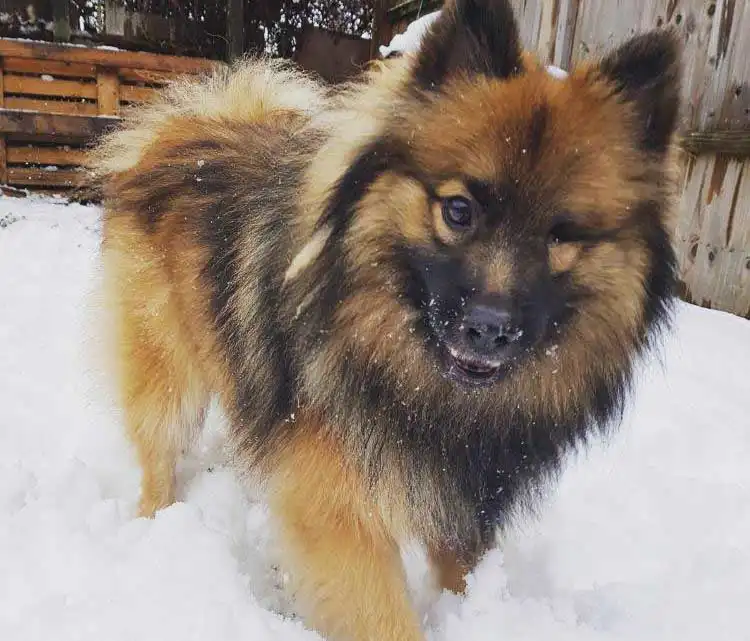
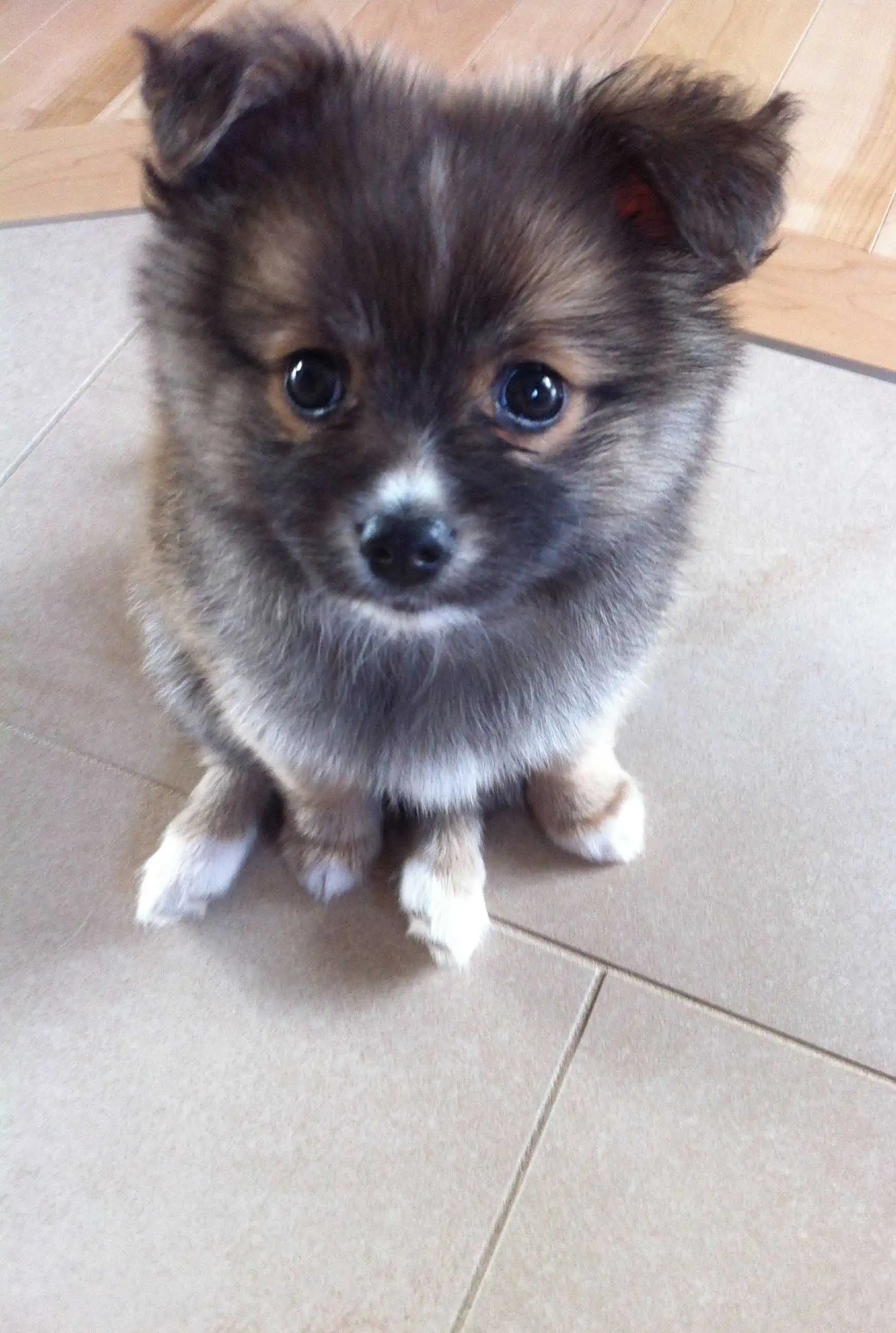
The Pom-Kee is a mixed breed that arises from the union of the Pomeranian and the Keeshond, which allows it to display characteristics from one or both parent breeds. Commonly described as a "large Pomeranian," this breed generally measures between 6 and 18 inches in height at the shoulder and can weigh from 3 to 45 pounds. Both parent breeds are celebrated for their opulent, fluffy coats and tails that curl over their backs, reminiscent of "plumes on a lady's hat." Their facial features are quite alike, showcasing long, slender muzzles akin to those of a fox, small erect ears, and dark, expressive almond-shaped eyes that reflect a keen awareness. Furthermore, both breeds exhibit scissors bites and possess well-proportioned, compact physiques, which contribute to their confident stance.


Care Routine
Your Pom-Kee hybrid is considered to have moderate grooming needs, which indicates that she sheds a significant amount and is not hypoallergenic. To maintain her coat's health, it's advisable to brush her at least twice a week. This will help remove loose hair, debris, tangles, and mats, while also ensuring that her natural oils are evenly spread throughout her fur. Bathing should be performed as needed, which could vary from weekly to monthly or even quarterly, depending on her activity level. During her weekly grooming routine, it's crucial to inspect her ears and clean them with a cotton ball and a veterinarian-recommended ear cleaning solution to avoid infections. Her toenails should also be checked weekly and trimmed as necessary, unless her regular physical activity keeps them naturally worn down. To prevent periodontal disease and tooth loss, regular dental check-ups and cleanings are important, along with brushing her teeth at least twice a week at home. Fortunately, she is rated low in both drooling and odor.
Behavior & Temperament
Your Pom-Kee, a charming mix of Pomeranian and Keeshond, may inherit a variety of personality traits from its parent breeds. Consequently, your furry friend could be affectionate, alert, friendly, gentle, energetic, cheerful, intelligent, playful, independent, lively, loyal, social, and outgoing. To ensure your Pom-Kee flourishes around children and strangers, early socialization is essential. This breed is known for forming strong bonds with family members and may find it difficult to be left alone for long periods. While she typically gets along well with other dogs, she might occasionally view the family cat as a target for her playful behavior. Thanks to her intelligence, she responds positively to training methods that emphasize rewards, though it's important to keep in mind that she has a tendency to bark, which could be problematic in quiet settings. With the right training, this barking can be effectively managed.


Play & Exercise
The Pom-Kee, a charming mix of the Pomeranian and Keeshond breeds, is a moderately active dog that needs around 30 to 60 minutes of exercise daily. Regular activities like brisk walks, playful trips to the dog park, or engaging games of fetch and Frisbee will help keep her both physically fit and mentally engaged. However, if she is left alone for long stretches or kept outside without interaction from her owners, she may start to bark excessively, which can be an issue in noise-sensitive areas. Therefore, this hybrid may not be the best choice for those who are often away from home. The Pom-Kee is versatile and can thrive in various living situations, whether in urban or rural areas, apartments, condos, or family homes, with or without a fenced yard, as long as she gets enough exercise to stay healthy and happy. Her thick coat allows her to handle cooler temperatures well, but during warmer months, it’s crucial to ensure she has access to air conditioning or well-ventilated areas.
Things to Know
Cups Per Day
2.0 Cups
Daily Activity
45 Minutes
Average Lifespan
14 Years
Origin
Unknown
Type
Crossbreeds
Size
Small
Origin Country
Unknown
Brush Frequency
Weekly
Coat Texture
Straight
Register
Your kids have been begging for a pet forever, and you've recently decided that it's time for your family to get a new addition -- a dog! While everyone is excited for the new arrival, you're wondering if you need to have a dog license. How much does it cost? Is it required? Where do you get one?
Member Clubs

PETINNATE
Other
Height & Weight
Weight
24 lbs (11 kg)Male: 24 lbs (11 kg) , Female: 24 lbs (11 kg)
Height
12 inches (30 sm)Male: 12 inches (30 sm) , Female: 12 inches (30 sm)
6 Months
18 lbs ( m 18 lbs, f 18 lbs )
9 inches ( m 9 inches, f 9 inches )
12 Months
24 lbs ( m 24 lbs, f 24 lbs )
11 inches ( m 11 inches, f 11 inches )
18 Months
24 lbs ( m 24 lbs, f 24 lbs )
11 inches ( m 11 inches, f 11 inches )
Eye Colors
Brown

Nose Colors
Black
Coat Colors
Black

Fawn
Blue
Gray
Brown
Red
Cream
Sable
Brindle
White