Pooahoula
Pooda Houla
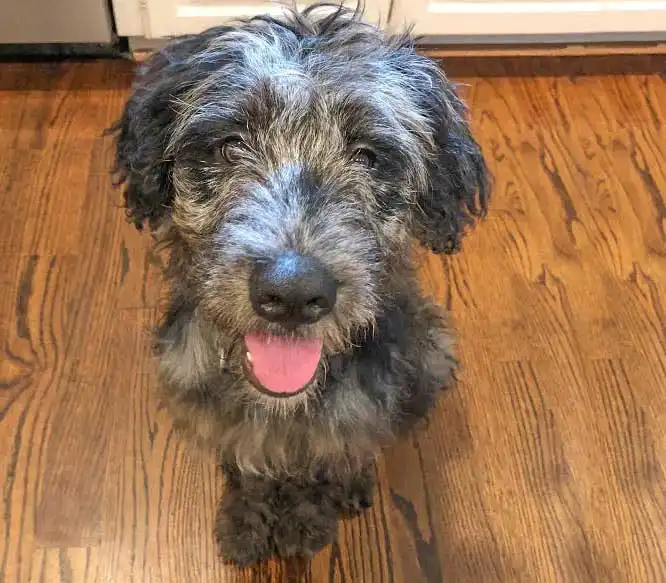
The Pooahoula is a hybrid breed that results from crossing a Poodle with a Catahoula Cur, also known as the Louisiana Catahoula Cur. While the Standard Poodle is commonly used for this mix, Miniature Poodles can also be included to create a smaller version. This breed is known for its striking looks, often resembling the Catahoula Cur with its vibrant, multi-colored coat and captivating ice blue eyes. Although Pooahoulas can be prone to overeating and weight gain, they are generally very active and tend to expend energy quickly. Consequently, it is crucial for owners to keep an eye on their Pooahoula's diet and to refrain from exercising them right after meals to minimize the risk of bloat.
Breed Origin
The Pooahoula remains relatively unknown, largely due to the limited presence of the Catahoula Cur. This hybrid breed, which combines the Poodle and the Catahoula, typically involves Standard and Miniature Poodles in its breeding. Generally, the Pooahoula displays characteristics that are more reminiscent of the Catahoula. For those curious about this breed, resources are scarce, but one can gather information from the histories of its parent breeds. The Catahoula Cur has its roots in northern Louisiana, specifically around Lake Catahoula. It is believed to have developed from the crossbreeding of indigenous dogs in the southeastern United States with Bloodhounds and Greyhounds that were introduced from Europe. While the American Kennel Club does not officially recognize the Catahoula Cur, it is acknowledged by the United Kennel Club. Since 1996, the AKC has allowed registrations through its Foundation Stock Service, even though the breed has not achieved full recognition. In stark contrast to the lesser-known Catahoula Cur, the Poodle is a widely recognized and cherished breed. The Standard Poodle was originally bred in Germany in the 15th century for retrieving waterfowl, a role that also applies to the Miniature and Toy Poodles. However, the Poodle's ancestry extends even further back, with significant contributions from the French, who focused on developing its companionable qualities rather than hunting abilities. Although the American Kennel Club officially recognized the Poodle in 1887, it did not become truly popular in the United States until after World War II. The breed experienced a surge in popularity during the 1950s, dominating breed rankings for two decades. Today, the Poodle remains a prominent favorite on the AKC's list of popular breeds.
Breed Appearance
The Pooahoula is a hybrid breed resulting from the combination of a Poodle and a Catahoula Cur, showcasing characteristics inherited from both parent breeds. The size of a Pooahoula can range from medium to large, depending on the specific Poodle lineage involved in its breeding. This crossbreed is known for its straight legs and sturdy build, along with a tail that gracefully arches over its back. Typically, the coat is short and dense, although some may have medium-length, curly fur in a variety of colors. The breed features a medium-sized head with a long, slender muzzle and a black nose, while its eyes can display a spectrum of colors, including striking ice blue. Its ears are long and hang down, adorned with a moderate amount of feathering.


Care Routine
Caring for a Pooahoula is relatively easy, especially since its coat resembles that of the Catahoula Cur. The fur is short, thick, and shiny, which helps it resist dirt and debris. A weekly brushing is usually enough to remove any dirt and keep the coat looking sleek and glossy. However, the fur around the ears may be slightly longer and requires additional grooming attention. If not cleaned properly, dirt, moisture, and buildup can accumulate in the ears, increasing the risk of infections. On the bright side, the Pooahoula's coat tends to shed minimally and may even have hypoallergenic qualities thanks to its Poodle heritage.
Behavior & Temperament
The Pooahoula is a breed that flourishes in the company of others and finds it difficult to cope when left alone. Renowned for their loving disposition, they exhibit a gentle and affectionate demeanor, especially towards children. Although they may initially be wary of unfamiliar faces, their innate curiosity often leads them to warm up to new individuals over time. These dogs strike a balance, displaying neither aggression nor shyness. While the Pooahoula may be somewhat reserved around other dogs, early and continuous socialization can ease their integration with other pets, including cats. Regular interactions with a variety of dogs, people, and settings can bolster the Pooahoula's confidence and help reduce any tendencies toward unfriendliness. Training can vary in difficulty, but with steady support from a confident owner, the Pooahoula's ability to learn can greatly improve.


Play & Exercise
The Pooahoula is a lively breed that flourishes in outdoor settings and should not be left alone for extended periods. This hybrid loves to run, making a large backyard the perfect space for them to thrive. To ensure their well-being and happiness, the Pooahoula needs at least two walks each day. They may have a tendency to pull on the leash, so it's crucial for their handler to be confident in order to maintain control. Taking them to dog parks is an excellent way for the Pooahoula to burn off energy and interact with other dogs; however, supervision is necessary, as this breed might not always be as friendly as others. Given their size and exercise requirements, the Pooahoula is not ideal for apartment living and tends to prefer warmer climates over cooler ones.
Things to Know
Cups Per Day
2.5 Cups
Daily Activity
60 Minutes
Average Lifespan
14 Years
Origin
Unknown
Type
Crossbreeds
Size
Medium
Origin Country
United States
Brush Frequency
Weekly
Coat Texture
Straight
Register
Your kids have been begging for a pet forever, and you've recently decided that it's time for your family to get a new addition -- a dog! While everyone is excited for the new arrival, you're wondering if you need to have a dog license. How much does it cost? Is it required? Where do you get one?
Member Clubs

PETINNATE
Other
Height & Weight
Weight
48 lbs (22 kg)Male: 48 lbs (22 kg) , Female: 48 lbs (22 kg)
Height
19 inches (48 sm)Male: 19 inches (48 sm) , Female: 19 inches (48 sm)
6 Months
40 lbs ( m 40 lbs, f 40 lbs )
16 inches ( m 16 inches, f 16 inches )
12 Months
45 lbs ( m 45 lbs, f 45 lbs )
19 inches ( m 19 inches, f 19 inches )
18 Months
47 lbs ( m 47 lbs, f 47 lbs )
19 inches ( m 19 inches, f 19 inches )
Eye Colors
Blue

Hazel
Brown
Amber
Nose Colors
Black
Coat Colors
Black
Gray
Brown
Red
Fawn
Blue
Silver

White
Sable