Pumi
Hungarian Pumi
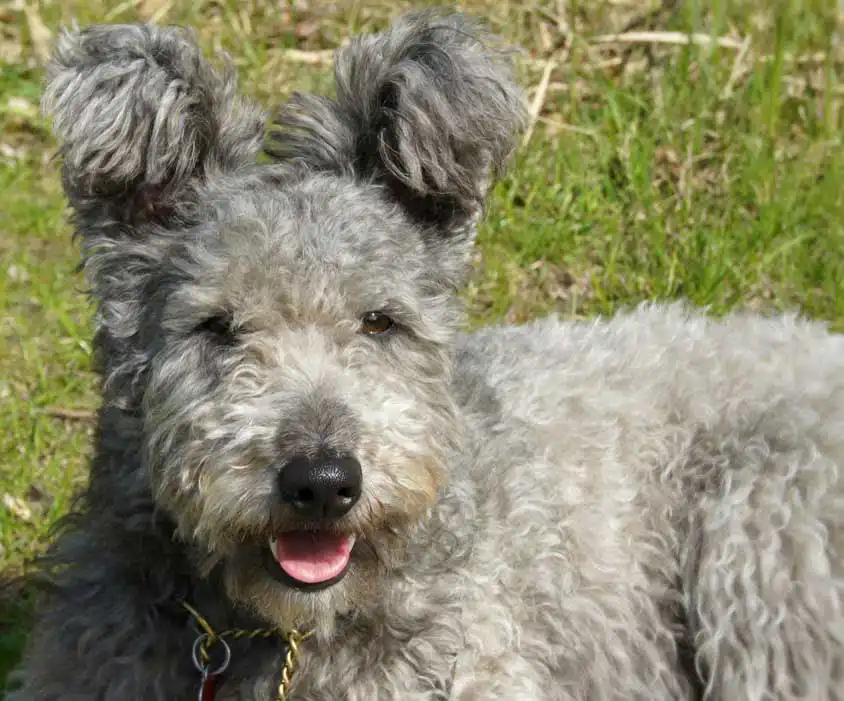
The Pumi is a lively and joyful small dog breed. To keep his weight in check and harness his high energy levels, he requires regular physical activity. After a good play session, he loves to curl up at your feet and relax. Originally developed for herding, he may have a natural tendency to herd children by nipping at their legs and heels. Moreover, he can become quite vocal if he lacks mental and physical stimulation. As a family companion, the Pumi is a fantastic option, providing years of loyalty and vibrant companionship. While he is generally easy to train, he benefits from a consistent trainer to help him grasp his place within the family dynamic.
Breed Origin
The Pumi traces its roots back to the 1700s, with a lineage that includes the Puli, German and French Sheepdogs, and possibly the Pomeranian and Hutespitz. There is also some conjecture that ancient terriers may have contributed to their genetic makeup, which could account for certain terrier-like traits. During the 17th and 18th centuries, the Puli was primarily employed for herding merino sheep. Hungarian shepherds began crossbreeding the Puli with various herding breeds, particularly French and German Sheepdogs, to produce dogs that were more adept at navigating Hungary's varied landscapes. The Pumi was specifically bred for driving cattle, thanks to its energetic, vocal, and lively disposition. The breed's development into its present form spanned over 300 years. Although the Pumi was first documented by name in 1815, it took more than a century for it to be officially recognized as a separate breed. Despite its unique appearance, marked by fluffy ears, the Pumi is frequently confused with the Puli. This breed is versatile, taking on multiple roles on the farm, such as a watchdog, pest hunter, and livestock guardian. Staying true to its herding heritage, the Pumi is known for its vocal nature, with the original breed standard indicating that it is not one to remain quiet. In recent years, the Pumi has broadened its reach beyond Hungary, making its way across Europe and into North America. To foster awareness and educate the public about these intriguing herding dogs, the Hungarian Pumi Club of America was established. In 2016, the American Kennel Club officially recognized the Pumi as a herding breed.
Breed Appearance
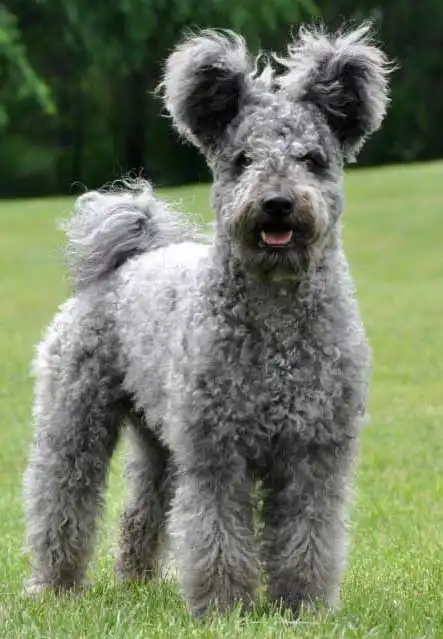
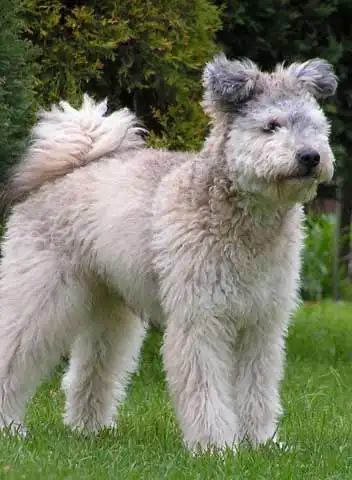
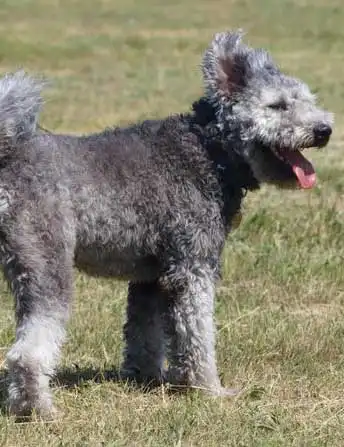
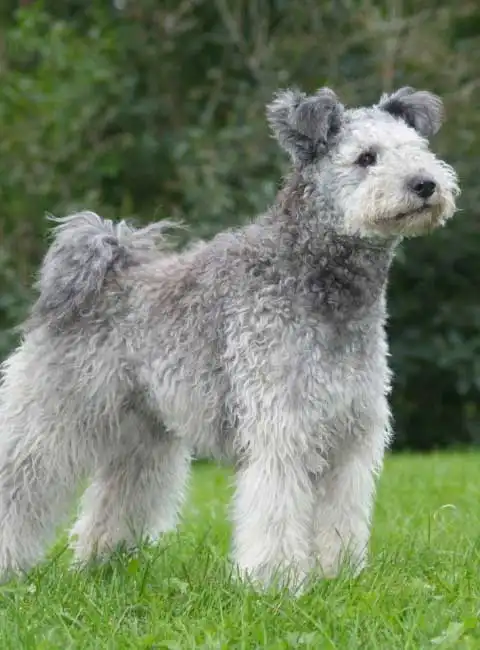
The Pumi is a small to medium-sized dog that stands out due to its distinctive look. Its coat is characterized by a combination of wavy and curly textures, ultimately forming tight corkscrew curls that envelop its body. This breed possesses a double coat, featuring a rough outer layer and a softer undercoat. The fur typically extends from the body by one and a half to three inches and should never be straight or corded. With an elongated head and semi-erect ears that stick out from the sides, the Pumi has a unique profile. Its tail is circular and has a minimal undercoat. The dog has a black nose, and its pigmentation, including the gums, should be dark. The eyes are a rich brown color. Pumis come in a variety of shades, such as black, silver, rust, sand, gray, or grizzle. The only acceptable white on the body is a small patch on the chest, which should be less than one inch in size. Patterns like pied or black and tan are not allowed for this breed.
Care Routine
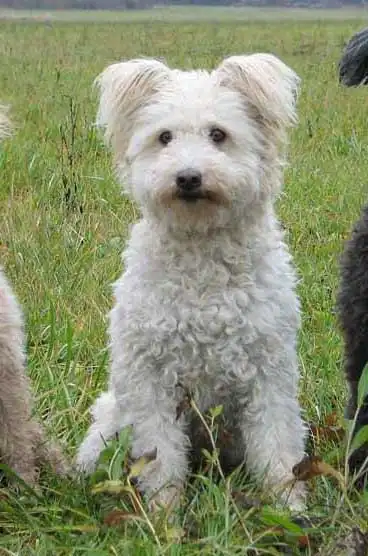
The Pumi demands more grooming attention compared to typical herding breeds. Its unique corkscrew curls necessitate weekly combing to prevent tangles and eliminate debris from its fur. During shedding seasons, more frequent grooming becomes essential to prevent matting. While the Pumi does shed, you probably won’t notice much hair on your carpets, furniture, or clothing. It’s crucial to avoid using a blow dryer on its coat; instead, let it air dry naturally to preserve the curls and prevent any damage. Regular trims every few months are important, and many Pumi owners choose to utilize professional grooming services. Bathing should occur monthly with a mild shampoo formulated for curly coats. Additionally, nails should be trimmed as needed, usually during grooming sessions, and ears should be inspected weekly to keep them clean and free from infections or unpleasant odors.
Behavior & Temperament
The Pumi is a small dog full of character and charm. Renowned for its alertness and spirited nature, this breed enjoys engaging in playful activities. Typically, a Pumi will watch unfamiliar people closely before deciding whether to approach them, showcasing a natural caution around strangers and a strong sense of judgment. Generally, Pumis are friendly with other dogs and even cats they have grown up with, although it's important to supervise their interactions with various household pets. In essence, the Pumi is an active and easily trainable companion, often expressing its needs and feelings through barking and other vocalizations. Because of its vocal tendencies, this breed may not be ideal for apartment living or areas with strict noise regulations. Training a Pumi to be quiet can prove to be quite difficult, and if left alone for long periods, it may become bothersome. This breed particularly shines in dog sports, demonstrating exceptional skills in agility, obedience, and herding events.
Play & Exercise
Things to Know
Cups Per Day
1.2 Cups
Daily Activity
45 Minutes
Average Lifespan
13 Years
Origin
1700s
Type
Pure Breeds
Size
Medium
Origin Country
Hungary
Brush Frequency
Weekly
Coat Texture
Curly
Register
Your kids have been begging for a pet forever, and you've recently decided that it's time for your family to get a new addition -- a dog! While everyone is excited for the new arrival, you're wondering if you need to have a dog license. How much does it cost? Is it required? Where do you get one?
Member Clubs

PETINNATE
Herding Dog

AKC
Herding Group

UKC
Herding Dog
Height & Weight
Weight
26 lbs (12 kg)Male: 28 lbs (13 kg) , Female: 23 lbs (10 kg)
Height
17 inches (43 sm)Male: 17 inches (43 sm) , Female: 16 inches (41 sm)
6 Months
15 lbs ( m 15 lbs, f 15 lbs )
12 inches ( m 12 inches, f 12 inches )
12 Months
19 lbs ( m 19 lbs, f 19 lbs )
15 inches ( m 15 inches, f 15 inches )
18 Months
23 lbs ( m 23 lbs, f 23 lbs )
16 inches ( m 16 inches, f 16 inches )
Eye Colors
Brown

Nose Colors
Black
Coat Colors
Black
Gray

Silver