Pyrenean Mastiff
Perro Mastin del Pireneo, Mastin d'Aragon, Mastín del Pirineo, Mostín d'o Pireneu
The Pyrenean Mastiff is a remarkably large and fluffy breed recognized for its serene nature. With appropriate training, this dog is gentle and well-behaved. However, as with any canine, insufficient training or socialization can result in behavioral problems. It’s essential to understand that the Pyrenean Mastiff is different from both the Spanish Mastiff and the Pyrenean Mountain Dog, as these are distinct breeds. This breed can show a certain level of independence and stubbornness, which, coupled with its size, can create management challenges. Although it typically has a well-balanced temperament, it may not be the best fit for first-time dog owners.
Breed Origin
The Pyrenean Mastiff is thought to have originated in the Aragonese Pyrenees of Spain, with its roots tracing back to ancient livestock guardian breeds, including various types of Mastiffs. This robust mountain breed has been a guardian of livestock since the 1200s. Many experts believe that the ancestors of this breed were brought to Spain from Assyria and Sumeria by the Phoenicians. Over the years, the Pyrenean Mastiff developed into a protector of flocks and a companion to shepherds, responsible for defending against large predators and ensuring the safety of the herds. Despite its considerable size, the Pyrenean Mastiff is remarkably agile, capable of traversing long distances alongside its flock. Historically, these dogs were primarily tasked with protecting merino sheep on the Spanish side of the Pyrenees. The highest population of Pyrenean Mastiffs was located north of the Ebro River, while the Spanish Mastiff flourished to the south. Although these two breeds lived in close proximity, they have maintained their distinct identities. In the 1940s, the breed faced a serious risk of extinction due to the rise of rail transport for sheep, which made traditional herding methods less viable, coupled with a decline in their numbers during the World Wars. Comprehensive records of the breed's history are limited until 1977, when the Club de Mastin del Pirineo de España initiated research efforts. The breed has largely remained within the Aragonese Pyrenees, which has contributed to its preservation. It wasn't until the late 1970s and early 1980s that the Pyrenean Mastiff began to gain recognition beyond its native region. The breed received official acknowledgment from the Fédération Cynologique Internationale in 1982, and the Kennel Club recognized it as the Mastin del Pireneo in 2001. In 2014, the American Kennel Club included the Pyrenean Mastiff in its Foundation Stock Service.
Breed Appearance
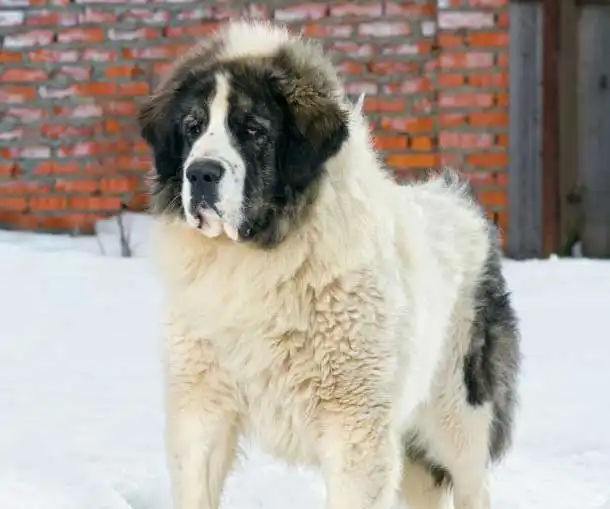
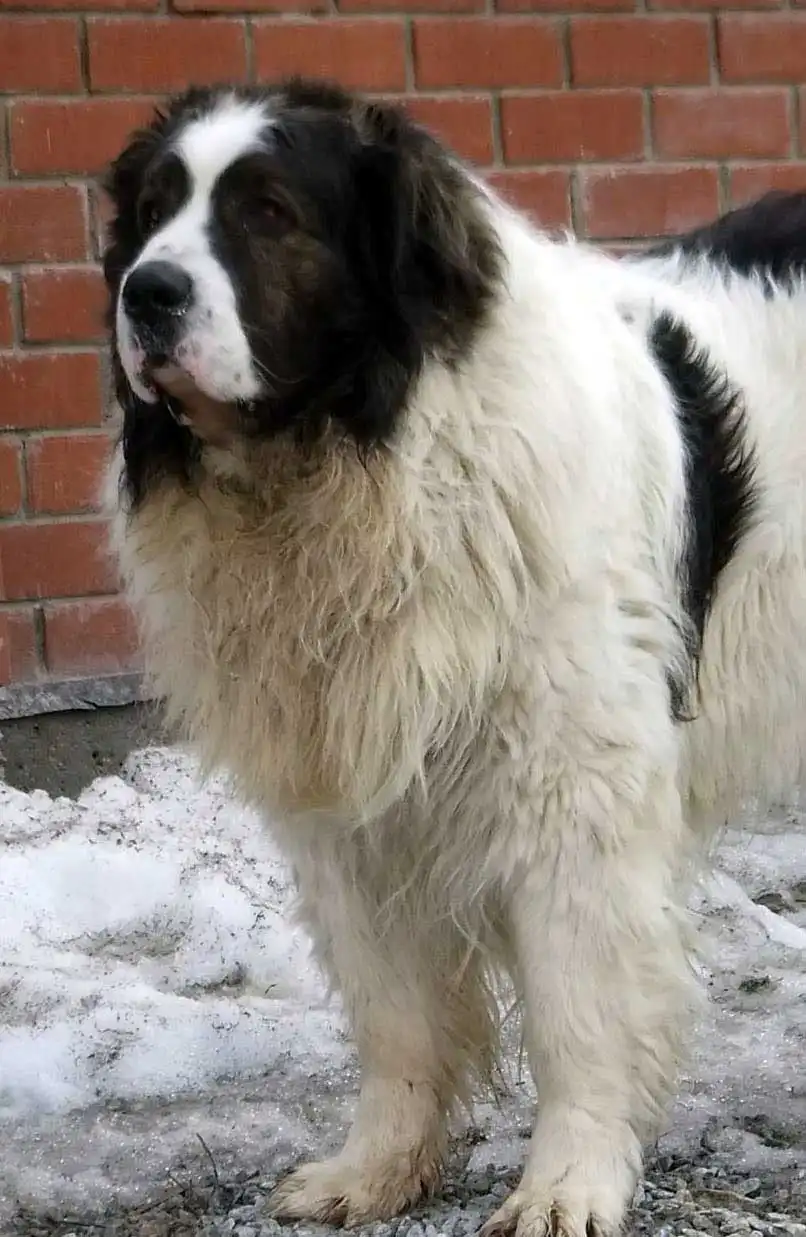
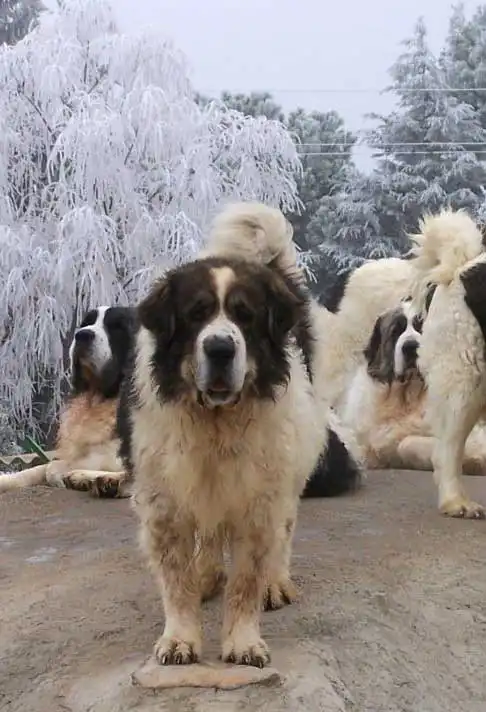
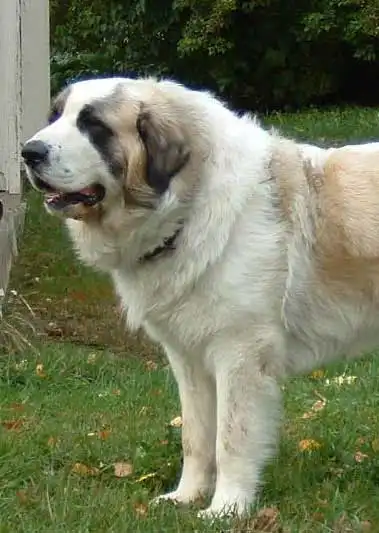
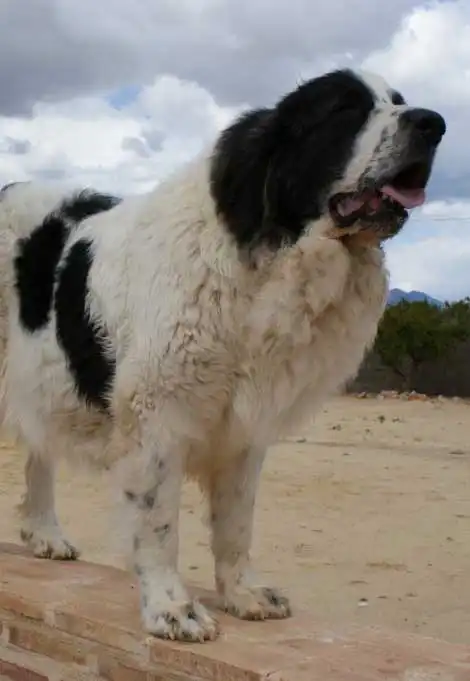
The Pyrenean Mastiff is characterized by a strong, double-layered coat that sheds regularly. This coat is not only lengthy but also notably thick, which can lead to tangling and matting. While the fur on the head and legs is shorter, it becomes denser around the chest and neck, with longer feathering along the backs of the legs. The tail is substantial and covered in short, dense hair. Although this breed can come in various colors, its predominant shade is always white. Acceptable color combinations according to breed standards include white with shades such as beige, biscuit, black, brown, golden, gray, sable merle, and silver. The breed is distinguished by its dark, almond-shaped eyes and a prominent black nose, along with triangular, drooping ears. With a large head and a robust bone structure, the Pyrenean Mastiff has a muscular chest and a thick neck. Despite its impressive size, this breed is surprisingly agile and light on its feet.
Care Routine
The Pyrenean Mastiff is not classified as a hypoallergenic breed and tends to shed regularly. For those dogs involved in conformation shows, grooming should be performed several times a week. Conversely, family pets or working dogs only need grooming about once a week. To prevent tangles and matting, it is recommended to use a pin brush, a metal comb, de-tangling spray, and possibly a dematter to keep the coat smooth and minimize shedding. Given the thickness of their fur, grooming can be a lengthy process, but it is crucial for controlling shedding. Additionally, the hair between their paw pads should be trimmed every few weeks, especially for dogs that work in environments where dirt and debris can gather. As a breed, Mastiffs are known for their tendency to drool, particularly after eating or drinking. The Pyrenean Mastiff does not require frequent baths, usually needing only a few throughout the year.
Behavior & Temperament
The Pyrenean Mastiff can pose some management challenges due to his large stature, which might be daunting for those not accustomed to handling big dog breeds. As a natural protector of livestock, he exhibits a strong instinct to safeguard his home and family. To ensure he doesn’t develop shyness or aggression towards strangers, it’s vital to start training and socialization early on. Generally, he possesses a gentle nature and is fairly trainable; however, it’s important for a confident leader to take charge, as he may try to dominate if not properly guided. He usually gets along well with children, as long as they respect his space, and he tends to have positive interactions with other animals. Nevertheless, caution should be exercised around other dogs, especially those of the same sex. To keep the Pyrenean Mastiff happy, he requires a job or activity to focus on, as insufficient stimulation can lead to destructive tendencies.
Play & Exercise
Things to Know
Cups Per Day
3.0 Cups
Daily Activity
60 Minutes
Average Lifespan
13 Years
Origin
1273 A.D.
Type
Pure Breeds
Size
Giant
Origin Country
Aragonese Pyrenees (Spain)
Brush Frequency
Weekly
Coat Texture
Straight
Register
Your kids have been begging for a pet forever, and you've recently decided that it's time for your family to get a new addition -- a dog! While everyone is excited for the new arrival, you're wondering if you need to have a dog license. How much does it cost? Is it required? Where do you get one?
Member Clubs
PETINNATE
Guardian Dog

AKC
Foundation Stock Service

UKC
Guardian Dog
Height & Weight
Weight
155 lbs (70 kg)Male: 160 lbs (73 kg) , Female: 150 lbs (68 kg)
Height
27 inches (69 sm)Male: 28 inches (71 sm) , Female: 26 inches (66 sm)
6 Months
70 lbs ( m 70 lbs, f 70 lbs )
21 inches ( m 21 inches, f 21 inches )
12 Months
100 lbs ( m 100 lbs, f 100 lbs )
23 inches ( m 23 inches, f 23 inches )
18 Months
150 lbs ( m 150 lbs, f 150 lbs )
25 inches ( m 25 inches, f 25 inches )
Eye Colors
Brown

Nose Colors
Black
Coat Colors
Pied
White