Rat-Cha
Rat-Chi
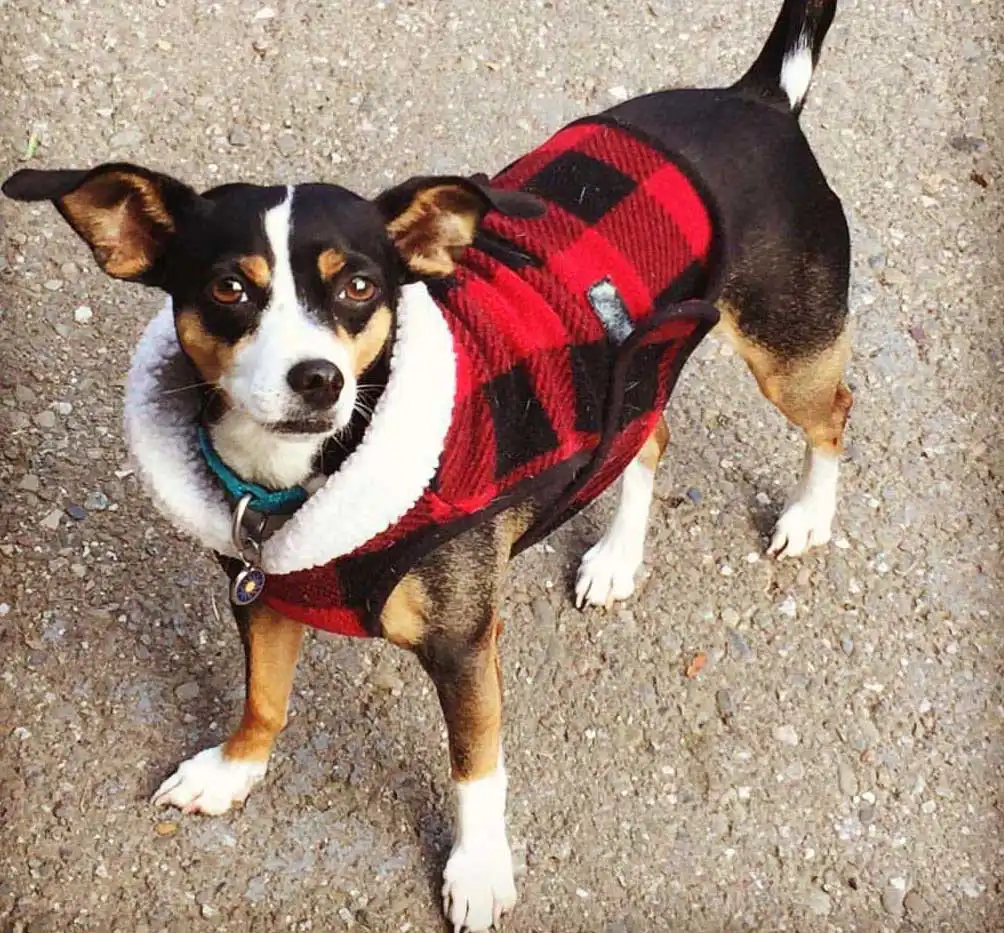
The Rat-Cha is a mixed breed that emerges from the crossbreeding of the purebred American Rat Terrier and Chihuahua. This designer dog is celebrated for its energetic personality and deep affection for its family. Commonly known as the Rat-Chi, the Rat-Cha is not only playful but also tends to display a strong protective nature towards its family members. To prevent any aggressive tendencies or unwanted protective behaviors, it is crucial for owners to prioritize early socialization with a variety of people, environments, and other dogs. Generally, the Rat-Cha tends to form a strong attachment to one particular family member, often choosing to curl up in their lap for comfort.

Breed Origin
The Rat-Cha has emerged as a popular designer breed, largely due to the charm of its parent breeds. However, detailed information about its breeding history and development is limited. This scarcity of documentation can be attributed to the relatively recent hybridization of its progenitors and the diverse traits that may appear in Rat-Cha puppies. For those keen on exploring their Rat-Cha's ancestry and potential traits, delving into the histories of both parent breeds can offer valuable insights. The American Rat Terrier, a breed that has evolved over many years, is a true American invention. Its breeding program included several well-known breeds, such as the Manchester Terrier, Bull Terrier, Old English White Terrier, and Fox Terrier. The aim was to produce a small, determined terrier skilled in hunting rats and adept at maneuvering through tight spaces. Although the American Kennel Club officially recognized the breed in 2013, it has been bred in the United States for a long time. A notable appearance of a Rat Terrier was alongside Shirley Temple in the film "The Little Colonel," and President Theodore Roosevelt favored the breed for its effectiveness in controlling the rat population at the White House. Various regional adaptations of the Rat Terrier also developed across the U.S.; in the South, it was crossbred with Beagles to create a dog suited for pack hunting, while in the Midwest, Greyhounds and Whippets were introduced to enhance speed for chasing jackrabbits. Conversely, the Chihuahua, which hails from Mexico, is another distinguished breed from the Americas. Historical accounts trace the Chihuahua, originally called the Techichi, back to the 9th century in Mesoamerica, where these small dogs were cherished as companions and vermin hunters. The Techichi was so valued that it was often buried with its owner upon death. Although the breed faded into obscurity during the Spanish conquest of the Aztec Empire, it survived in the region and was rediscovered in the mid-1800s in the Mexican state of Chihuahua, which ultimately gave the breed its name. After its rediscovery, the Chihuahua made its way to the United States by the late 1800s, and the American Kennel Club recognized it in 1904. Interest in the breed skyrocketed, and by the 1960s, the Chihuahua had become one of the most beloved dog breeds in the country. Today, it remains a prominent figure in the rankings of the American Kennel Club.
Breed Appearance
The Rat-Cha's appearance can differ quite a bit, not primarily because of the distinct characteristics of its parent breeds, but due to the various standards within those breeds. Despite this variability, you can generally expect the Rat-Cha to be a small dog with a smooth and soft coat. Some may have longer fur, a trait that can be traced back to their ancestry, as both parent breeds are known to have longer hair. Typically, the Rat-Cha has a small, rounded head adorned with large, upright triangular ears. Its eyes are dark, round, and prominent, though they do not protrude as much as those of the Chihuahua. Both parent breeds are susceptible to dental issues, which may lead to the Rat-Cha experiencing missing teeth or conditions like an underbite—features that are often viewed unfavorably. The Rat-Cha's body is compact, supported by long, slender legs and a wiry tail that can vary from short to medium in length.


Care Routine
The Rat-Cha is a breed that requires very little maintenance and has straightforward grooming needs. They do shed a moderate amount, but a weekly brushing can easily manage any loose or dead hair. While not considered hypoallergenic, consistent grooming can help minimize allergens in your living space. Generally, Rat-Chas do not emit a strong doggy odor; thus, any unusual smells may signal underlying health concerns, such as ear infections or dental issues. Dental care is particularly important for Rat-Chas, but many problems can be prevented with good oral hygiene practices. Owners can support their dogs' dental health by regularly brushing their teeth and offering sturdy rubber chew toys.
Behavior & Temperament
The Rat-Cha is a devoted companion that typically bonds closely with one family member. To reduce the likelihood of aggressive behavior towards strangers, it is crucial to socialize them early on. This breed is generally not the best fit for homes with young children. Although Rat-Chas are lively, they prefer to engage in play at their own discretion rather than being forced into it. You’ll often find them contentedly lounging in their owner's lap. Unlike many dogs, Rat-Chas do not exhibit a pack mentality and are more suited to being solo pets within a household. However, with adequate socialization, they can live harmoniously with other dogs. Their natural prey drive may create challenges when sharing a home with cats, but these issues can also be alleviated through proper socialization. House training a Rat-Cha is usually quite easy, thanks to their small size, intelligence, and desire to please their owners.


Play & Exercise
The Rat-Cha is an energetic hybrid breed celebrated for its lively nature. This dog typically enjoys short bursts of activity, which allows it to meet most of its exercise requirements indoors. While it can adapt well to apartment living, having access to a small backyard for running and playing is ideal for this designer breed. It's crucial to avoid leaving a Rat-Cha outside alone for long periods, as it tends to struggle with being alone and may develop negative behaviors such as chewing or digging out of boredom or loneliness. Furthermore, this breed does not fare well in cold weather and prefers warmer climates. However, the Rat-Cha can thrive in a variety of environments, particularly since it will mostly live in a climate-controlled home.
Things to Know
Cups Per Day
0.5 Cups
Daily Activity
30 Minutes
Average Lifespan
16 Years
Origin
Unknown
Type
Crossbreeds
Size
Small
Origin Country
United States
Brush Frequency
Weekly
Coat Texture
Straight
Register
Your kids have been begging for a pet forever, and you've recently decided that it's time for your family to get a new addition -- a dog! While everyone is excited for the new arrival, you're wondering if you need to have a dog license. How much does it cost? Is it required? Where do you get one?
Member Clubs

PETINNATE
Other
Height & Weight
Weight
13 lbs (6 kg)Male: 13 lbs (6 kg) , Female: 13 lbs (6 kg)
Height
11 inches (28 sm)Male: 11 inches (28 sm) , Female: 11 inches (28 sm)
6 Months
11 lbs ( m 11 lbs, f 11 lbs )
10 inches ( m 10 inches, f 10 inches )
12 Months
12 lbs ( m 12 lbs, f 12 lbs )
11 inches ( m 11 inches, f 11 inches )
18 Months
12 lbs ( m 12 lbs, f 12 lbs )
11 inches ( m 11 inches, f 11 inches )
Eye Colors
Brown

Nose Colors
Black
Coat Colors
Black

White
Brown
Red
Fawn
Sable
Gray