Rottle
Rotti-poo, Rottiepoo, Rottiedoodle, Rottweilerpoo, Rottweilerdoodle
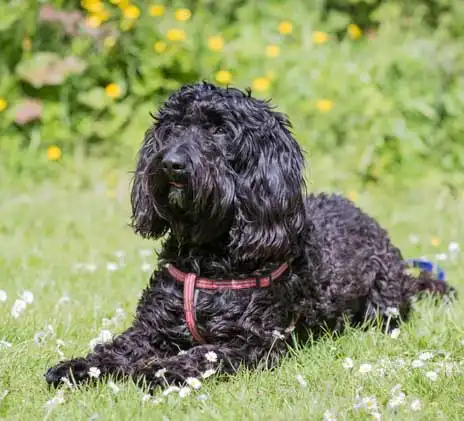
The Rottle is a hybrid breed created by crossing a Poodle with a Rottweiler. The size of a Rottle can vary from medium to large, depending on whether the Poodle parent is a standard or miniature type. These dogs are celebrated for their friendly personalities, making them not only wonderful family pets but also dependable guardians. With their gentle and loving disposition, Rottles exhibit courage and loyalty, ensuring they are trustworthy protectors of your home and family. Their desire to learn and please makes training a straightforward process. Moreover, due to their Poodle lineage, Rottles typically have low shedding, making them a viable choice for individuals with allergies.
Breed Origin
The Rottle hybrid has been around for about thirty years, with its origins rooted in Germany. However, information regarding its history is limited, making it crucial to delve into the backgrounds of its parent breeds for a better understanding. The Poodle, one of the oldest dog breeds, also originates from Germany and can be traced back to the first century. Its evolution involved various water dog breeds, including those from Hungary, Russia, France, Spain, Portugal, and Germany, as well as the North African Barbet. Some theories even propose that Poodles may share ancestry with Asian herding dogs. Originally bred as water retrievers for hunting, Poodles eventually became popular as loving companions due to their friendly disposition. There are three recognized sizes of Poodles: standard, miniature, and toy. The smaller varieties were specifically developed in the 15th century to cater to the tastes of middle-class Parisians, achieved by breeding small Poodles among themselves rather than with other small breeds, as was previously thought. Standard and miniature Poodles were used for hunting ducks and truffles, while the Toy Poodle primarily served as a lap dog. Their intelligence and quick learning abilities made them favorites in circuses and among street performers. The American Kennel Club officially recognized the Poodle in the late 1880s, and it currently ranks as the seventh most popular dog breed in the United States. The Rottweiler, another ancient breed from Germany, dates back to around 74 A.D. when Roman soldiers crossbred Mastiffs or Roman Drover dogs with German Shepherds to protect their camps and herd cattle. The breed gets its name from the town of Rottweil, which was formerly known as das Rote Wil, referring to the small villas with red roofs in the area. Initially, Rottweilers were used to drive cattle during the day and guard camps at night, but their roles later expanded to include bear hunting and pulling wagons. As the demand for these tasks decreased, Rottweilers became popular among butchers for pulling meat carts, earning them the nickname Rottweiler Metzgerhunds, meaning Rottweil Butcher dogs. The breed faced a near extinction crisis until enthusiasts founded the International Club for Leonbergers and Rottweilers in 1899. Shortly after, in 1901, the first breed standard for Rottweilers was established. It took another thirty years for the American Kennel Club to recognize the breed, which now ranks as the eighth most popular dog breed in America.
Breed Appearance
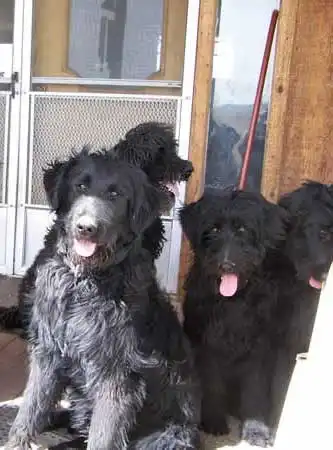
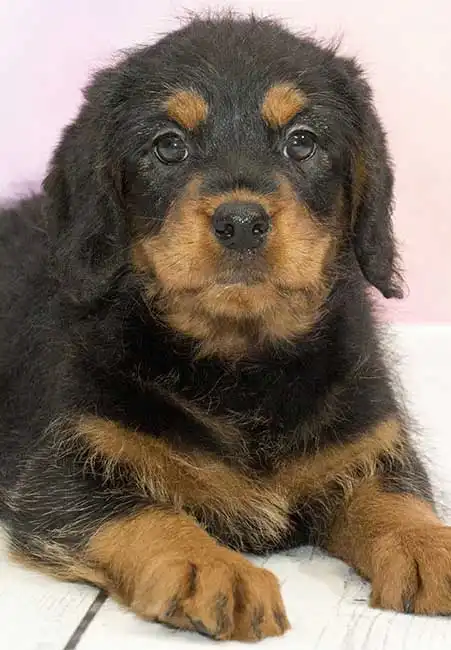
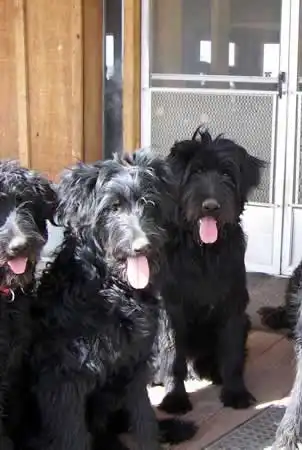
This hybrid breed generally falls into the medium to large category, characterized by a sturdy physique, a rounded head, and long, fluffy ears that droop down. Their oval-shaped eyes are brown, and they have a flat muzzle paired with a black nose. The size of a Rottle can vary widely, depending on whether the Poodle parent was a miniature or standard variety. As a result, their height can range from 10 to 27 inches, with weights between 50 and 100 pounds. Coat colors are quite varied, including shades like gray, blue, red, brown, white, black, or a parti-color pattern featuring two or more colors. Their fur is usually thick and curly, and it can be either single-layered or double-layered.
Care Routine
Owing to their Poodle lineage, Rottles might be less likely to trigger allergies; however, their thick, curly coat demands regular grooming. It’s crucial to brush them well with a pin brush and comb several times each week. Bathing your Rottle every few weeks, or as needed, is also important. When bathing, choose a mild dog shampoo or one suggested by your vet to prevent skin irritation or dryness. You can either seek professional grooming services or manage the grooming yourself if you wish. Additionally, don’t forget to trim your dog’s nails and clean their ears on a monthly basis or as required.
Behavior & Temperament
The Rottle is an exceptionally brave and sociable breed, celebrated for its playful interactions with both humans and animals, including children. They generally display a friendly and entertaining personality, marked by their gentle nature and sense of humor. While they are loyal companions to their families, it is crucial to provide proper training, as they can become protective when unfamiliar individuals are present. Rottles have an inherent hunting instinct, which might prompt them to pursue local wildlife; however, with sufficient socialization, they usually coexist peacefully with indoor pets. They will bark to notify you of any potential intruders, but otherwise, they are typically calm and quiet. Training them is relatively easy, and they tend to grasp commands quickly.


Play & Exercise
The Rottle has a high energy demand, requiring regular, vigorous exercise every day. Ideally, this breed should partake in around 60 to 90 minutes of physical activity daily, although this can be adjusted based on your dog's specific needs. It's crucial to understand that without sufficient exercise, Rottles can easily become overweight, so aim for at least 30 minutes of activity twice a day. They thrive on a range of activities, including long walks, running, swimming, playing flyball or frisbee, agility training, and hiking. Moreover, socializing with other dogs at a dog park is an excellent way for your Rottle to engage in play and develop essential social skills.
Things to Know
Cups Per Day
3.5 Cups
Daily Activity
90 Minutes
Average Lifespan
12 Years
Origin
1980s
Type
Crossbreeds
Size
Large
Origin Country
Germany
Brush Frequency
Daily
Coat Texture
Curly
Register
Your kids have been begging for a pet forever, and you've recently decided that it's time for your family to get a new addition -- a dog! While everyone is excited for the new arrival, you're wondering if you need to have a dog license. How much does it cost? Is it required? Where do you get one?
Member Clubs

PETINNATE
Other
Height & Weight
Weight
75 lbs (34 kg)Male: 80 lbs (36 kg) , Female: 70 lbs (32 kg)
Height
19 inches (48 sm)Male: 20 inches (51 sm) , Female: 18 inches (46 sm)
6 Months
30 lbs ( m 30 lbs, f 30 lbs )
15 inches ( m 15 inches, f 15 inches )
12 Months
55 lbs ( m 55 lbs, f 55 lbs )
16 inches ( m 16 inches, f 16 inches )
18 Months
70 lbs ( m 70 lbs, f 70 lbs )
17 inches ( m 17 inches, f 17 inches )
Eye Colors
Brown
Nose Colors
Black
Coat Colors
Black
Gray
Brown
Red
Cream
Blue
White
Pied