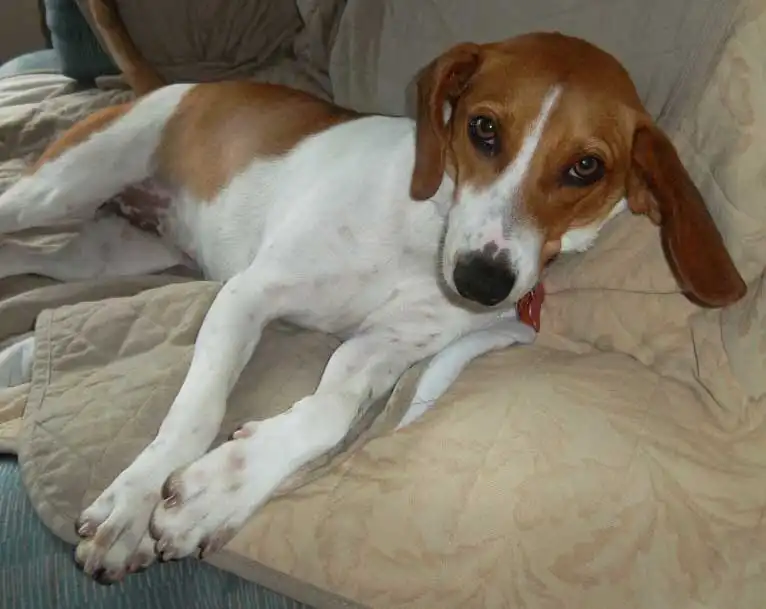
Running Walker Foxhound
The Running Walker Foxhound is a unique breed that developed from the American Foxhound lineage in the mid to late 19th century. These dogs are naturally skilled hunters, adept at pursuing game like foxes, rabbits, and coyotes, but they do not possess the treeing instinct characteristic of coonhounds. While they are intelligent, their tendency to have short attention spans can complicate training efforts. Known for their high energy, Running Walkers are typically friendly and well-behaved; however, without sufficient physical and mental stimulation, they may exhibit problems such as excessive barking, depression, and destructive tendencies.
Breed Origin
The Running Walker Foxhound breed traces its roots back to Kentucky in the mid to late 1800s, specifically developed for the purpose of hunting the red fox, which had recently migrated westward from Virginia. A breeder named George Washington Maupin realized that, although his foxhounds were among the best in the area for hunting native grey foxes, they struggled to keep pace with the larger and more elusive red foxes. In his quest to breed a dog with the ideal temperament and abilities for this challenge, Maupin experimented with hounds from Virginia and English Foxhounds, but his attempts were unsuccessful, as these dogs still could not catch the red foxes. A significant breakthrough occurred in 1952 when Maupin came across a rat-tailed black and tan hound of unknown ancestry, which he named Tennessee Lead. This dog was acquired from Tom Harris, who had discovered him during a deer hunt near the Kentucky border and subsequently sold him to Maupin. Tennessee Lead turned out to be an outstanding hunting dog, particularly adept at tracking the red foxes that had previously eluded other hounds. He became a popular stud, mating with both Virginia and English Foxhounds, as well as various other hound breeds. This breeding initiative played a crucial role in the development of several dog breeds, including the Black and Tan Coonhound, Treeing Walker Coonhound, Trigg hound, and, most notably, the Running Walker Foxhound. While the Running Walker resembles other hounds that are descendants of Tennessee Lead, its hunting style distinguishes it from the rest. Unlike many hounds that are proficient at tracking and cornering prey that seeks refuge in trees, the Running Walker Foxhound is more focused on pursuing trails on the ground, showcasing remarkable determination in following its target over extended distances.
Breed Appearance
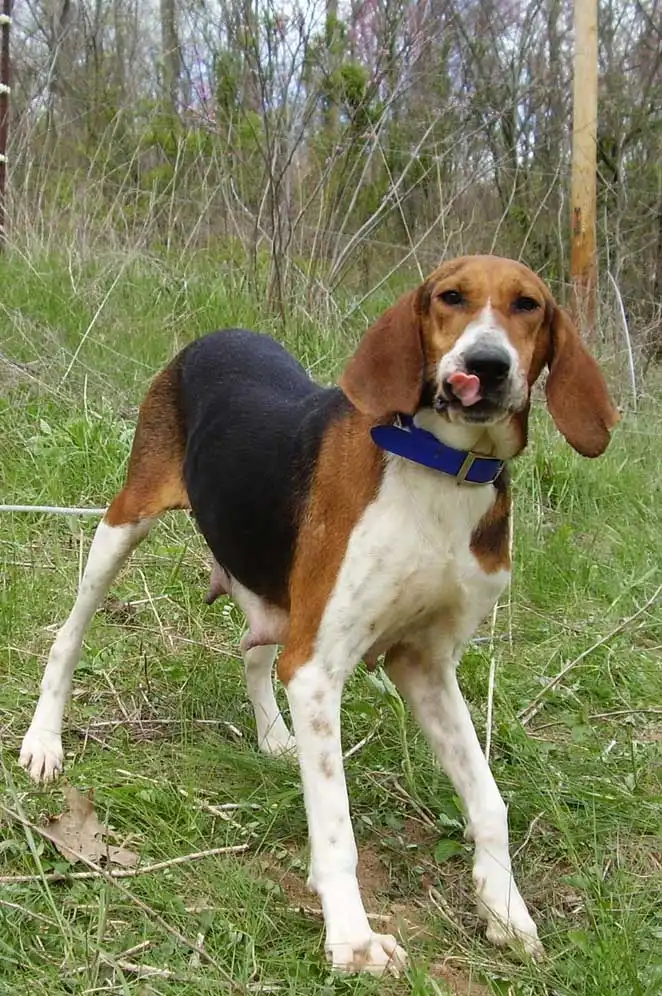
The American Foxhound is distinguished by its sturdy build, featuring a body that is somewhat elongated in relation to its height. While not excessively heavy, these dogs exhibit a muscular neck and back. Their legs are robust and straight, supported by well-defined hindquarters that allow them to match the swift movements of the red fox. The tail is of moderate length and can be straight, saber-shaped, or gently curved. The breed's head is of average size, with skulls that may be flat or slightly arched. They possess strong, straight muzzles that are broad and deep, characterized by a lack of wrinkles and tightly fitting lips. Eye color and shape can vary, but they consistently have darkly pigmented rims that fit snugly. The ears are rounded and droopy, typically positioned low and hanging close to the sides of the head. Their coat is short and dense, lying close to the body, and comes in a range of colors, including combinations of orange and white, lemon and white, brown and white, black and tan, as well as tricolored patterns.

Care Routine
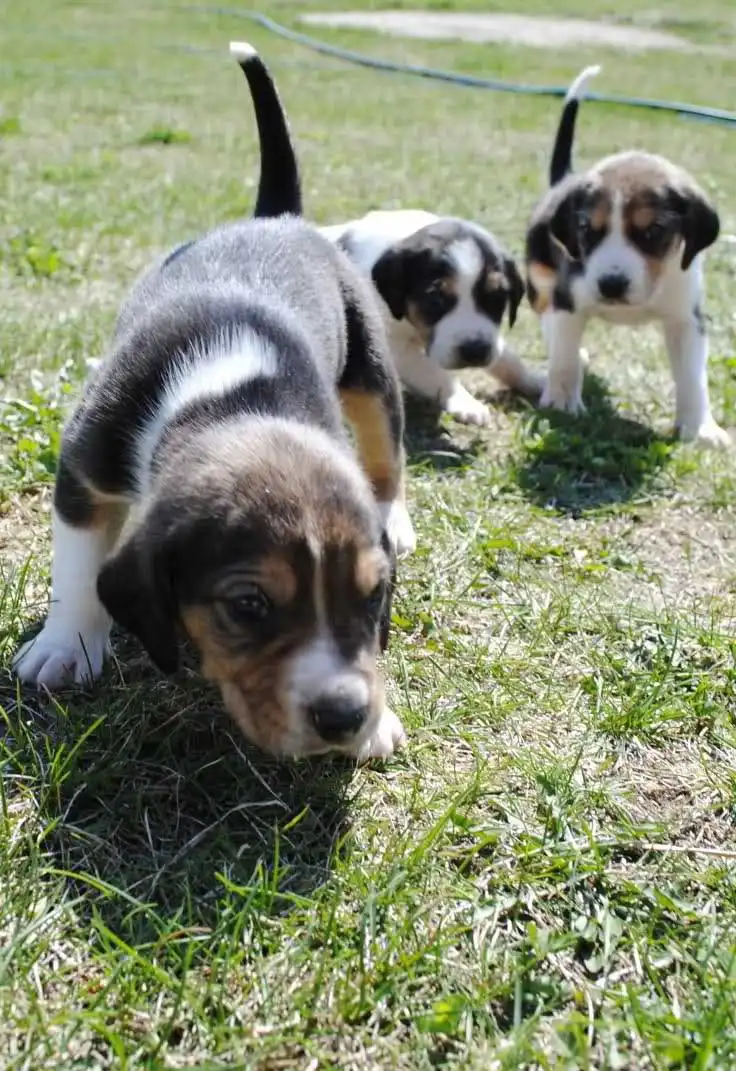
The coat of the Running Walker Foxhound is naturally equipped to withstand various weather conditions, so bathing should be limited to when it is truly necessary; frequent washing can strip the coat of its essential protective oils. To keep the coat healthy and lustrous, it is advisable to groom the dog weekly with tools like a slicker brush, a firm bristle brush, or a grooming glove. This grooming routine will effectively remove dirt and debris, control shedding, and enhance the overall health of the coat. Moreover, breeds with drooping ears, such as many Fox and Coonhounds, are more susceptible to ear infections. Therefore, it is important to regularly check their ears to ensure they stay clean, dry, and free of odors.
Behavior & Temperament
The Running Walker Foxhound is a tenacious breed known for its strong hunting and tracking instincts, particularly adept at chasing foxes and coyotes. Their high energy and determination in the field can be quite demanding for some families, yet they are generally friendly, enthusiastic, and well-mannered. These dogs are typically sociable and eager to please, but their short attention spans can make housetraining a bit of a challenge. As a result, short and varied training sessions are often the most effective approach. The enticing scents they encounter can easily divert their focus, further complicating training efforts. While they usually get along well with other dogs, their strong prey drive can create difficulties in homes with multiple pets unless they are properly socialized from a young age. Without adequate physical and mental engagement, these dogs may become disheartened and display unwanted behaviors, such as excessive howling or destructive chewing.


Play & Exercise
These lively trailing hounds need ample exercise to maintain their physical health and mental well-being. Particularly, active working breeds may exhibit destructive tendencies and signs of depression if they do not receive enough physical activity and mental stimulation. They flourish with extended walks and runs, and beyond hunting foxes and coyotes, the Running Walker Foxhound also excels in scenting contests. This breed is not ideal for apartment living due to their high energy and distinctive howling, which can disturb nearby residents.
Things to Know
Cups Per Day
3.0 Cups
Daily Activity
60 Minutes
Average Lifespan
12 Years
Origin
1800s
Type
Pure Breeds
Size
Large
Origin Country
United States
Brush Frequency
Weekly
Coat Texture
Straight
Register
Your kids have been begging for a pet forever, and you've recently decided that it's time for your family to get a new addition -- a dog! While everyone is excited for the new arrival, you're wondering if you need to have a dog license. How much does it cost? Is it required? Where do you get one?
Member Clubs

PETINNATE
Other
Height & Weight
Weight
63 lbs (29 kg)Male: 63 lbs (29 kg) , Female: 63 lbs (29 kg)
Height
24 inches (61 sm)Male: 24 inches (61 sm) , Female: 24 inches (61 sm)
6 Months
44 lbs ( m 44 lbs, f 44 lbs )
20 inches ( m 20 inches, f 20 inches )
12 Months
56 lbs ( m 56 lbs, f 56 lbs )
22 inches ( m 22 inches, f 22 inches )
18 Months
62 lbs ( m 62 lbs, f 62 lbs )
23 inches ( m 23 inches, f 23 inches )
Eye Colors
Blue

Hazel
Brown
Amber
Nose Colors
Black
Isabella
Coat Colors
Red
Pied
Cream
Brown
Black