Russian Harlequin Hound
Anglo-Russian Hound, Russian Piebald Hound
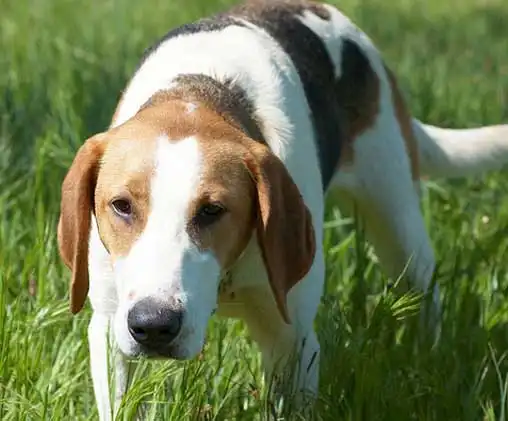
The Russian Harlequin Hound is a rare breed predominantly found in Russia. This scenthound results from a mix between the Russian Hound and the English Foxhound, celebrated for its remarkable tracking abilities, especially when pursuing game such as foxes and wolves, commonly known as red game. Typically, these dogs are friendly and sociable with both humans and other canines; however, their strong prey drive may render them incompatible with cats and smaller animals. Given their high energy levels and propensity to be vocal, this breed is not well-suited for life in an apartment.
Breed Origin
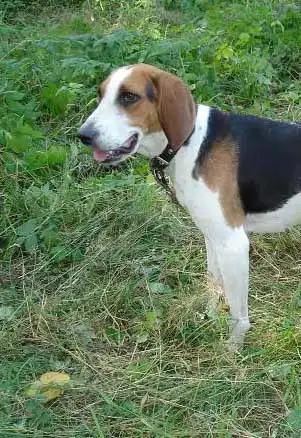
In the 18th century, a dog breed indigenous to Russia began to develop organically. However, it wasn't until around 1900 that dedicated selective breeding efforts took off, culminating in the establishment of the first breed standard for the Russian Hound in 1925. Breeders then crossed the Russian Hound with English Foxhounds and introduced several French scenthounds into the lineage. This combination led to the emergence of the Russian Harlequin Hound, characterized by its more square build and distinctive tricolored patches on a predominantly white coat. The vocalizations of the Russian Harlequin Hound are deeper and more melodious than those of the Russian Hound, often featuring black saddle markings. Initially referred to as the Anglo-Russian Hound until 1951, this breed was later recognized as a separate entity and adopted the name Russian Harlequin Hound. Celebrated for their beautiful voices, speed, and endurance in tracking, these hounds were frequently used as Red Chase dogs, pursuing foxes and wolves—collectively known as red game—and are rarely seen outside the former Soviet Union. Breeders are actively working to refine the breed's characteristics and consistency, and the Russian Harlequin Hound has started to make appearances at Soviet dog shows, where it is considered on par with the finest Russian Hounds. Furthermore, the Russian Harlequin Hound contributed to the development of the Dunker, a breed created by William Dunker, also known as the Norwegian Hound.
Breed Appearance
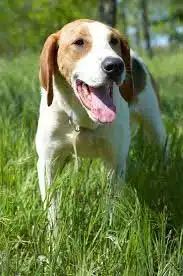
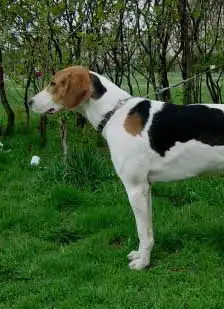
The Russian Harlequin Hound is a sturdy, medium-sized breed, generally reaching a height of around twenty-four inches and weighing between 40 and 70 pounds. This breed is known for its square build, long, straight legs, and a robust tail that has a slight saber-like curve. Its head is broad and square, featuring a straight muzzle that ends in a black nose. The dog has slightly drooping lips, oval dark brown eyes, and medium-sized pendant-shaped ears that are set high on the head and hang down to frame its face. One of the breed's most notable traits is its short coat, which is primarily white with tricolored markings on the head, face, back, and tail. This dense fur is particularly beneficial for hunting, as it ensures the dog can be easily spotted in various environments.
Care Routine
This breed requires minimal grooming. To maintain the natural oils that safeguard their coat, baths should be limited, as the Russian Harlequin Hound is more prone to skin allergies than many other breeds. Their coat sheds moderately and should be brushed once or twice a week. Despite being short, the coat is dense, making slicker brushes or grooming gloves less effective for removing loose hair. Furthermore, it’s important to regularly check their long, drooping ears to keep them clean, dry, and free from infections.
Behavior & Temperament
This dog breed is typically friendly and playful with almost everyone they meet, and they are gentle enough to be around most children. Nonetheless, it’s crucial to supervise any interactions between kids and dogs at all times. Renowned for their loyalty and strong connections with humans, these dogs are also highly intelligent, which makes training relatively straightforward, particularly when using positive reinforcement techniques. They are lively and agile, excelling in various canine sports. While the Russian Harlequin Hound generally gets along well with other dogs, their strong hunting instincts and high prey drive can be problematic around smaller pets, like cats, unless they have been raised together or adequately socialized. Additionally, they have a distinctively melodic bark that they love to use. Given their high energy levels, they are not ideally suited for apartment living.


Play & Exercise
The Russian Harlequin Hound is a highly active breed with a natural inclination for hunting. These dogs generally require at least one to two hours of vigorous exercise each day, and they often benefit from even more physical activity. Their strong prey drive can make it challenging for them to resist chasing smaller animals, so it’s crucial to keep them leashed unless they are working. Moreover, their intelligence means that mental engagement is equally vital as their physical exercise. Providing them with puzzles and a variety of mentally stimulating activities, such as rally sports, advanced obedience, and agility training, can effectively satisfy their cognitive requirements.
Things to Know
Cups Per Day
3.0 Cups
Daily Activity
60 Minutes
Average Lifespan
11 Years
Origin
1900s
Type
Pure Breeds
Size
Medium
Origin Country
Russia
Brush Frequency
Weekly
Coat Texture
Straight
Register
Your kids have been begging for a pet forever, and you've recently decided that it's time for your family to get a new addition -- a dog! While everyone is excited for the new arrival, you're wondering if you need to have a dog license. How much does it cost? Is it required? Where do you get one?
Member Clubs

PETINNATE
Other
Height & Weight
Weight
55 lbs (25 kg)Male: 55 lbs (25 kg) , Female: 55 lbs (25 kg)
Height
25 inches (64 sm)Male: 25 inches (64 sm) , Female: 25 inches (64 sm)
6 Months
38 lbs ( m 38 lbs, f 38 lbs )
21 inches ( m 21 inches, f 21 inches )
12 Months
49 lbs ( m 49 lbs, f 49 lbs )
23 inches ( m 23 inches, f 23 inches )
18 Months
55 lbs ( m 55 lbs, f 55 lbs )
24 inches ( m 24 inches, f 24 inches )
Eye Colors
Brown

Nose Colors
Black
Coat Colors
Pied