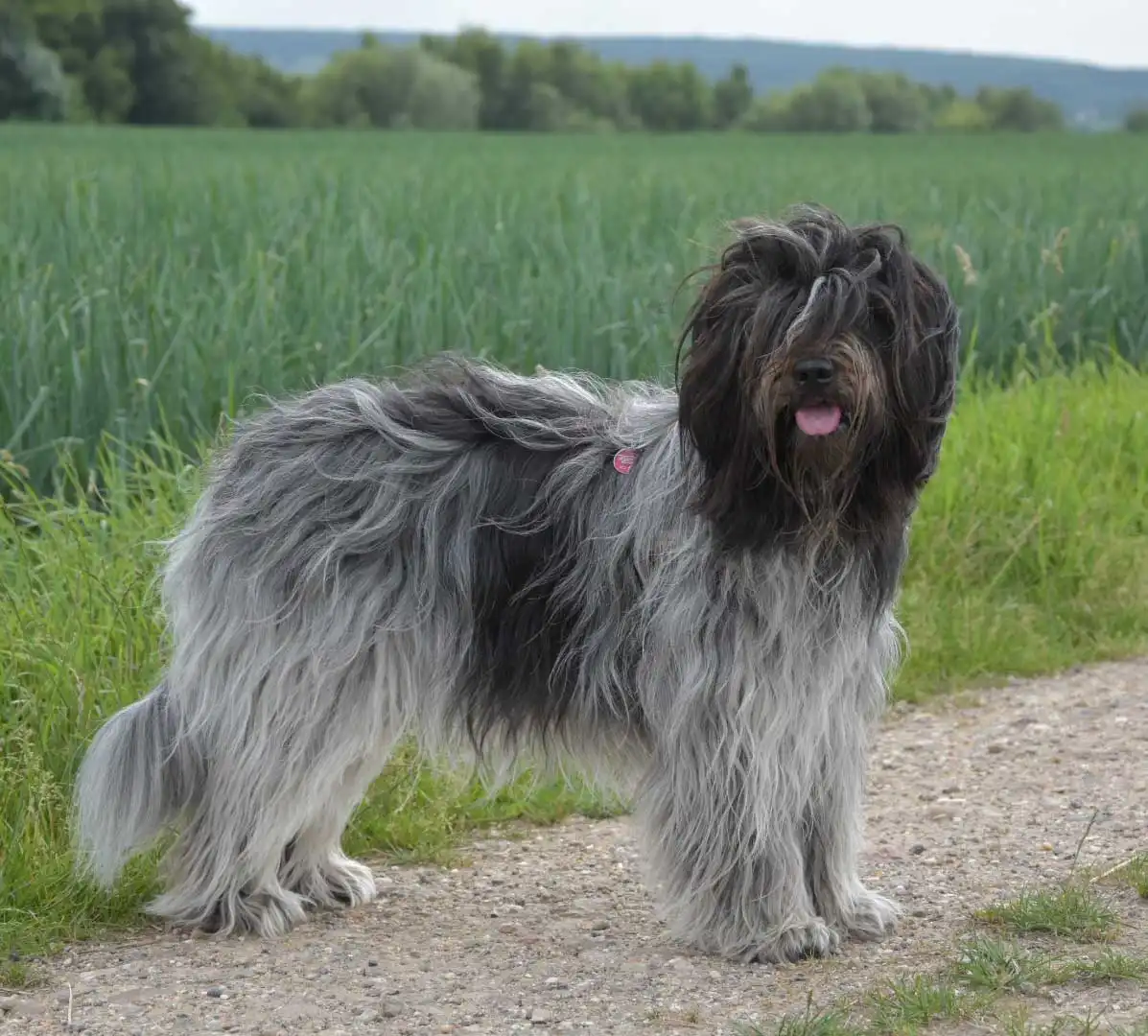
Schapendoes
Dutch Sheepdog
The Schapendoes is a medium-sized sheepdog celebrated for its keen intelligence and strong work ethic. To flourish in a household setting, this breed thrives on having a job to do, whether it’s retrieving the newspaper or organizing its toys. Hailing from the Netherlands, the Schapendoes requires consistent exercise and continuous training to develop into a well-adjusted family pet. This breed is especially friendly with children and tends to get along well with other dogs, as well as smaller pets like cats and ferrets. Furthermore, the Schapendoes excels in a variety of canine sports, such as agility, dock diving, and herding.
Breed Origin
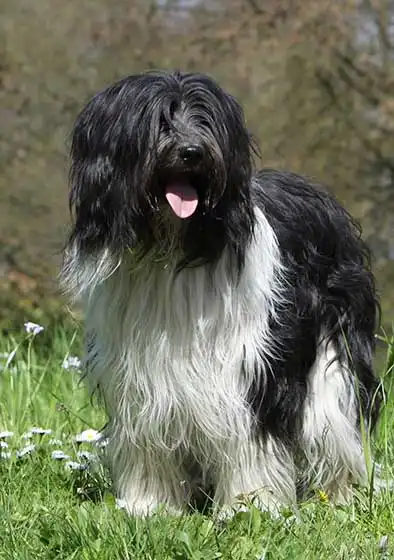
The Schapendoes is a multifaceted sheepdog with origins dating back to the 19th century, predominantly found in the northeastern region of the Netherlands, especially in Drenthe. This breed was closely linked to the working class and never received royal endorsement, which has led to a lack of comprehensive historical records. Information about the Schapendoes remained limited until the formation of the Nederlandse Schapendoes breed club in 1947. In 1952, the breed achieved provisional recognition from the Kennel Club of Holland. Although relatively obscure outside the Netherlands, the Schapendoes was quite popular domestically until the 1940s, when the rise of Border Collies, which performed similar roles, posed a threat to its survival. The Border Collie quickly became the preferred option, prompting a group of passionate advocates to take action to preserve the Schapendoes from extinction. Official acknowledgment of the breed came only after World War I, with the breed standard being established in 1954 and the creation of an official studbook. It wasn't until 1971 that the Schapendoes was fully recognized as a Dutch breed. The Federation Cynologique Internationale granted recognition in 1989, and in 2005, the American Kennel Club included the Schapendoes in its Foundation Stock Service. However, due to the breed's limited numbers in the United States and Canada, it has not yet achieved full registration status. In 2006, the United Kennel Club recognized the breed, allowing it to compete in all UKC events.
Breed Appearance
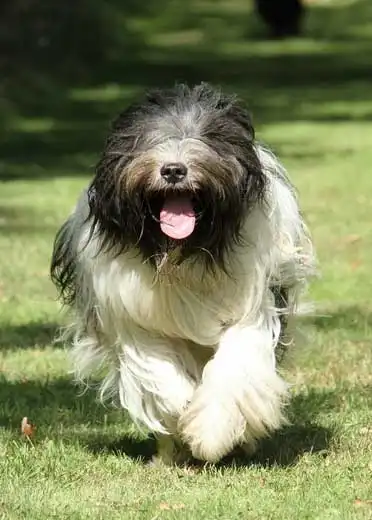
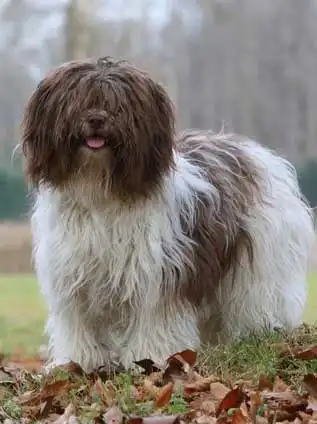
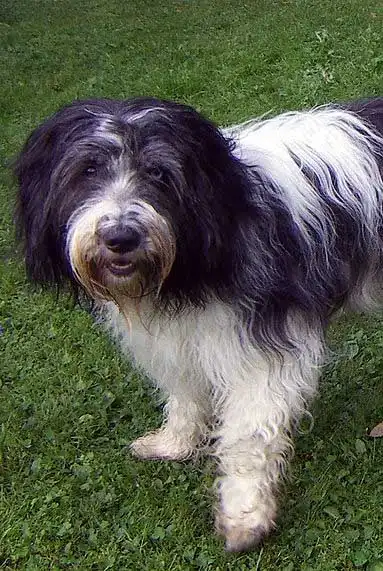
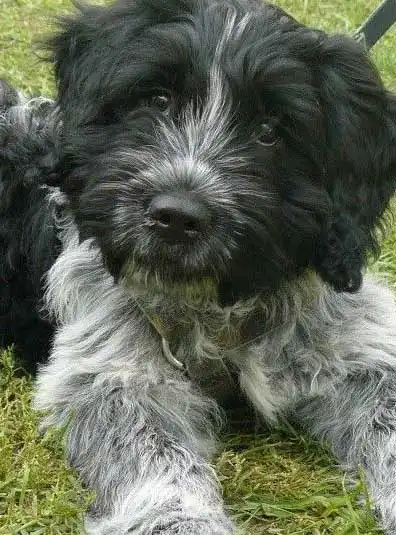
The Schapendoes is a medium-sized dog characterized by its slender build, which facilitates quick and agile movements. Its remarkable speed is enhanced by strong hindquarters, making it adept at herding fast-moving sheep. This breed is known for its long, double coat that is dense and exhibits a gentle wave; however, frizzy or overly curly fur is not desirable. The coat should have a dry, fine texture rather than a silky feel. Visually striking, the Schapendoes features a prominent topknot, expressive eyebrows, a beard, and a moustache. Its large, round eyes are well-set into the head, facing more forward than to the sides, and are typically brown, though not excessively dark. The nose is generally black, but may appear brown depending on the coat color. The ears are positioned high and hang down freely, embellished with ample feathering. While all coat colors are permissible, the most common combinations include black, black and white, brown and white, gray and white, blue-gray, and tri-color.
Care Routine
The Schapendoes, known for his charming appearance featuring a topknot, beard, and moustache, is quite easy to care for. Although he is not hypoallergenic and doesn’t drool, he does undergo considerable seasonal shedding, losing a significant amount of hair once or twice a year, which requires more frequent grooming during those times. Outside of these shedding periods, a weekly brushing is adequate to keep his coat from matting. For grooming, a pin brush and a metal comb are recommended, paying special attention to his topknot and facial hair, particularly his beard and moustache. These areas should be washed weekly, but he generally doesn’t need frequent baths—usually only during heavy shedding. Additionally, his ears should be cleaned weekly, and his nails should be trimmed every few weeks. Establishing a dental care routine is also essential for maintaining the health of his teeth and gums.
Behavior & Temperament
The Schapendoes is an affectionate and intelligent breed, making it a fantastic option for families. This dog thrives on interaction, enjoying games and the presence of both kids and adults. To stay happy and well-adjusted, the Schapendoes requires a job or activity to keep him occupied; without this, he may engage in destructive behaviors or bark excessively when left alone for long periods. Unlike traditional sheepdogs, he doesn’t use biting to manage livestock; instead, he guides them gently with nudges from his nose and shoulders. His sharp mind makes him highly trainable, enabling him to quickly learn tricks and excel in various dog sports such as herding, dock diving, and agility. To avoid any potential mischief, it’s important to have a secure fence, as his natural herding instincts can lead him into trouble if not properly contained. Furthermore, early socialization is vital to help him feel at ease around strangers and prevent any tendencies toward shyness.
Play & Exercise
Things to Know
Cups Per Day
2.4 Cups
Daily Activity
90 Minutes
Average Lifespan
14 Years
Origin
19th Century
Type
Pure Breeds
Size
Medium
Origin Country
Netherlands
Brush Frequency
Weekly
Coat Texture
Wavy
Register
Your kids have been begging for a pet forever, and you've recently decided that it's time for your family to get a new addition -- a dog! While everyone is excited for the new arrival, you're wondering if you need to have a dog license. How much does it cost? Is it required? Where do you get one?
Member Clubs

PETINNATE
Herding Dog

AKC
Foundation Stock Service

UKC
Herding Dog
Height & Weight
Weight
38 lbs (17 kg)Male: 41 lbs (19 kg) , Female: 35 lbs (16 kg)
Height
18 inches (46 sm)Male: 19 inches (48 sm) , Female: 18 inches (46 sm)
6 Months
16 lbs ( m 16 lbs, f 16 lbs )
13 inches ( m 13 inches, f 13 inches )
12 Months
26 lbs ( m 26 lbs, f 26 lbs )
16 inches ( m 16 inches, f 16 inches )
18 Months
35 lbs ( m 35 lbs, f 35 lbs )
17 inches ( m 17 inches, f 17 inches )
Eye Colors
Brown
Nose Colors
Black
Brown
Coat Colors
Black
Gray

Pied