Schnottie
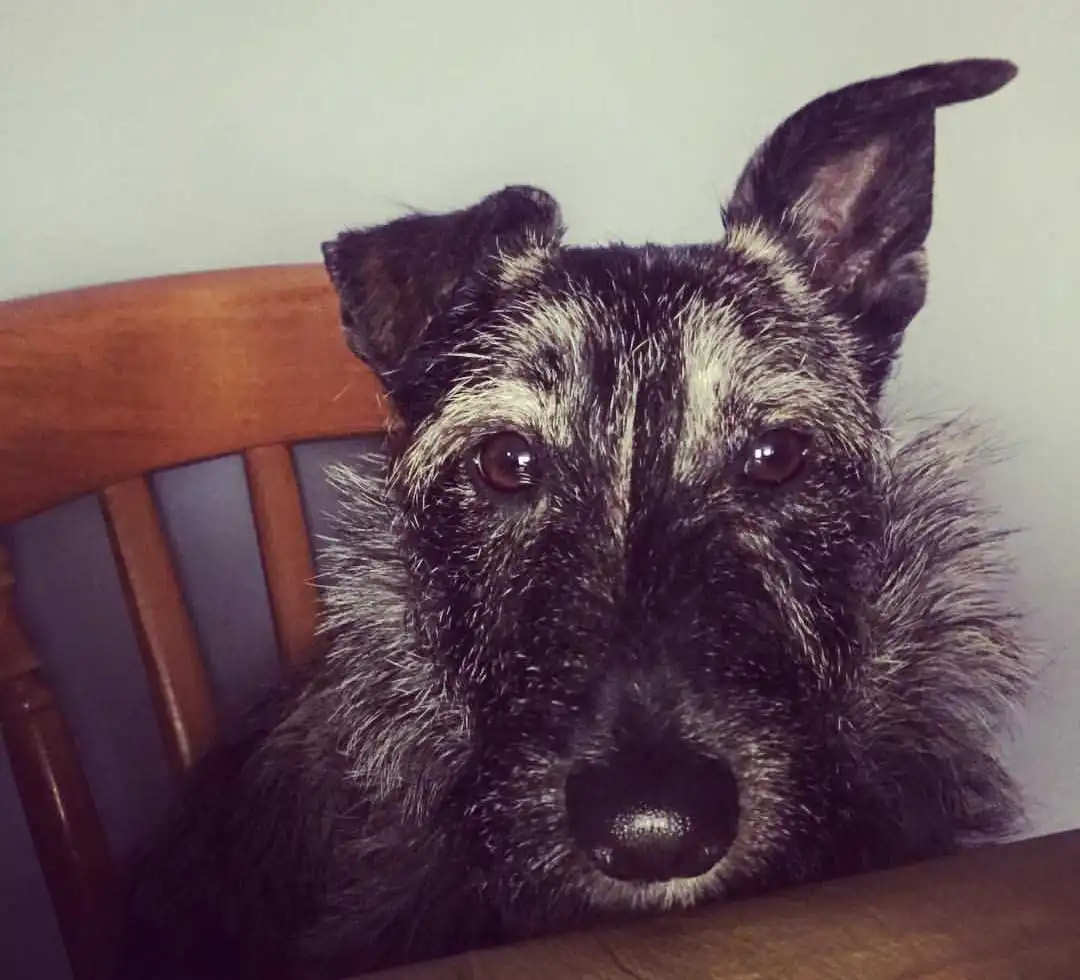
The Schnottie is a hybrid breed that emerges from the union of a purebred Standard Schnauzer and a Rottweiler. This mix is relatively rare, and information about it is somewhat scarce. Additionally, the term "Schnottie" is occasionally confused with a combination of a Scottish Terrier and a Miniature Schnauzer. Those considering adopting a Schnottie should proceed with caution and thoroughly research the traits of both parent breeds before making a decision. Renowned for their intelligence and loyalty, Schnotties exhibit strong protective instincts. Their energy levels can vary from moderate to high, depending on which parent they resemble more, but their physical appearance clearly showcases features from both the Schnauzer and the Rottweiler.
Breed Origin
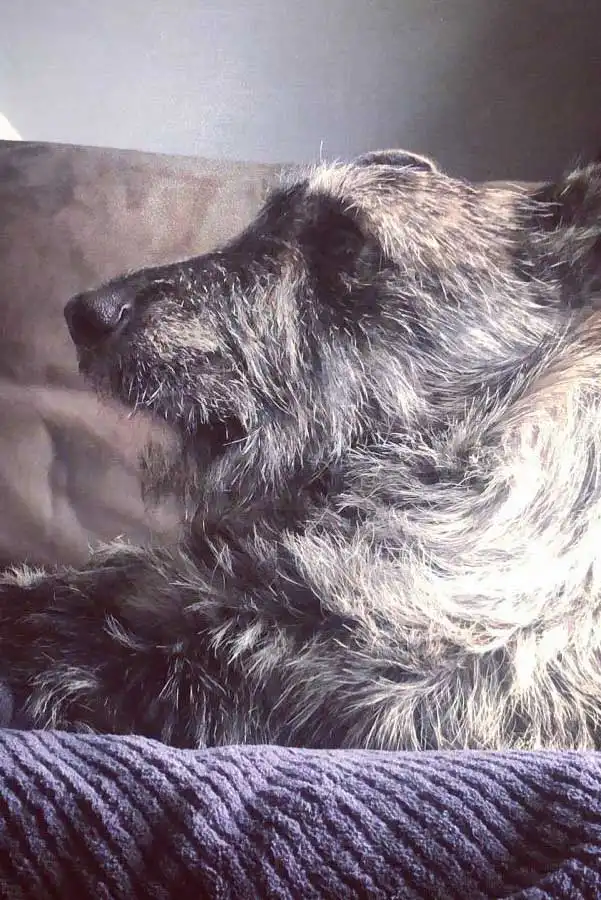
The Schnottie mix is a relatively recent hybrid, resulting from the crossbreeding of the Standard Schnauzer and the Rottweiler. Occasionally, a Giant Schnauzer may be part of this mix, which significantly increases the dog's size and weight. Currently, there is limited information available about the Schnottie, and no established breed standards exist. For those interested in better understanding their Schnottie, delving into the histories of both parent breeds can provide valuable insights. The Standard Schnauzer is the oldest and original breed within the Schnauzer family, with origins dating back to 16th-century Germany. These dogs were originally utilized for farm protection, livestock herding, and pest control. Before the establishment of breed standards in the 20th century, the Standard Schnauzer was known as the Wirehair Pinscher, a name that emphasized its coat type and Terrier lineage; "Pinscher" translates to "biter" or "Terrier" in German. In the 1900s, the breed's name evolved to Schnauzer, derived from the German term for beard or mustache. German immigrants brought the Schnauzer to the United States in the early 1900s, but it wasn't until after World War I that the breed gained widespread popularity, despite being recognized by the American Kennel Club in 1904. In a similar vein, the Rottweiler also originates from Germany and is part of the Molossus family, commonly known as Mastiffs. The breed's ancestors arrived in the region during the Roman invasions and interbred with local canines over time. The name "Rottweiler" comes from the red tiles used by the Romans on their roofs, which inspired the name of the town Rote Wil, rediscovered over 600 years after the Romans left. The Rottweiler flourished in this area, adopting the town's name. However, by the late 1800s, the breed had fallen out of favor in Germany and was nearing extinction. A resurgence of interest in the early to mid-20th century helped revitalize the Rottweiler. The breed found success in the United States and was officially recognized by the American Kennel Club by 1931. Today, the Rottweiler ranks among the top ten most popular dog breeds.
Breed Appearance
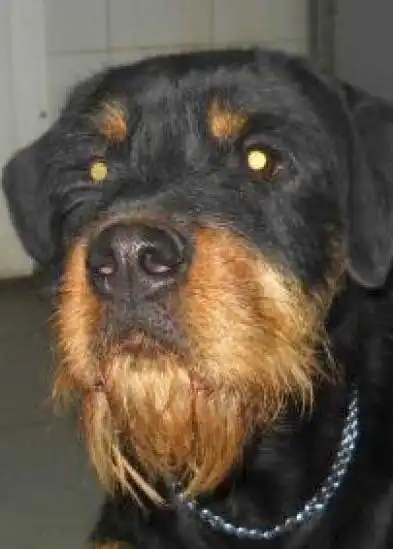
The Schnottie is a mixed breed that emerges from the combination of a Standard Schnauzer and a Rottweiler. Although a Giant Schnauzer can also be one of its parents, opting for this option will considerably enhance the dog's overall size and weight. It is essential for potential owners to be well-acquainted with the breed's lineage before welcoming a new puppy into their home. This breed tends to inherit traits from both parent breeds, often resembling the Standard Schnauzer while showcasing the Rottweiler's unique coat and markings. The Schnottie's head is distinctly block-shaped, featuring a long, square muzzle and a prominent black nose. Its eyes are round and brown, complemented by a bearded muzzle that echoes the Schnauzer's appearance. The coat is medium in length and wiry, typically exhibiting the black and tan coloration characteristic of Rottweilers, complete with the signature tan markings on its face.

Care Routine
The Schnottie may be regarded as a hypoallergenic breed if its coat resembles that of the Standard Schnauzer. Typically, this breed does not experience significant shedding; however, if its fur is short and smooth like a Rottweiler's, owners can expect more shedding. To keep the coat clean and free of tangles, regular brushing—ideally once a week—is recommended to remove dead or loose hair. Given its sensitive skin, the Schnottie should only be bathed when absolutely necessary to avoid potential skin problems, including allergies. Furthermore, this breed is known to drool more than many other large dogs and might develop a slight odor. To reduce any unpleasant smells caused by drooling, it is advisable to wipe the Schnottie's face with pet wipes or a warm washcloth.
Behavior & Temperament
The Schnottie is a loyal and steadfast guardian, originating from a heritage of protectors. This hybrid breed is deeply devoted to its family and displays a strong affection for children. However, if not properly socialized and trained, the Schnottie may show tendencies toward aggression or shyness. This breed has difficulty with solitude and needs plenty of mental stimulation and physical activity to thrive. Although the Schnottie is generally cautious around strangers and other dogs, with appropriate socialization, it can learn to live harmoniously with other pets and greet unfamiliar individuals with a measured approach, steering clear of both aggression and excessive timidity.
Play & Exercise
The Schnottie is an energetic dog that exhibits a moderate to high level of activity. Known for their quick learning abilities, they possess a strong inclination to please their owners. The Schnauzer heritage plays a significant role in their spirited demeanor, while the Rottweiler influence helps to balance their enthusiasm. This breed is playful and enjoys various activities, such as running and playing tug-of-war with ropes, toys, or sticks. Regular outdoor exercise is crucial for the Schnottie, and they adapt well to both urban and rural environments, provided they have ample opportunities to stay active. A spacious backyard is particularly beneficial for this larger breed. Although they favor warmer climates, it’s essential not to leave them outside unsupervised. Additionally, it is recommended that owners split their Schnottie's meals into two or three portions throughout the day and refrain from engaging in vigorous exercise for at least an hour after feeding to minimize the risk of Gastric Dilatation Volvulus, commonly known as Bloat.
Things to Know
Cups Per Day
2.5 Cups
Daily Activity
60 Minutes
Average Lifespan
13 Years
Origin
Unknown
Type
Crossbreeds
Size
Medium
Origin Country
United States
Brush Frequency
Weekly
Coat Texture
Wiry
Register
Your kids have been begging for a pet forever, and you've recently decided that it's time for your family to get a new addition -- a dog! While everyone is excited for the new arrival, you're wondering if you need to have a dog license. How much does it cost? Is it required? Where do you get one?
Member Clubs
PETINNATE
Other
Height & Weight
Weight
58 lbs (26 kg)Male: 60 lbs (27 kg) , Female: 55 lbs (25 kg)
Height
23 inches (58 sm)Male: 24 inches (61 sm) , Female: 22 inches (56 sm)
6 Months
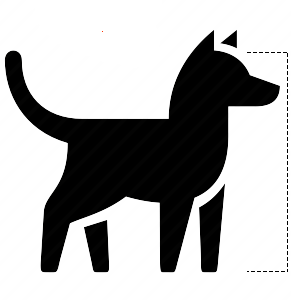
45 lbs ( m 45 lbs, f 45 lbs )
19 inches ( m 19 inches, f 19 inches )
12 Months
55 lbs ( m 55 lbs, f 55 lbs )
21 inches ( m 21 inches, f 21 inches )
18 Months
55 lbs ( m 55 lbs, f 55 lbs )
21 inches ( m 21 inches, f 21 inches )
Eye Colors
Brown
Nose Colors
Black
Coat Colors
Black
Sable
Gray

Brown