Scottish Cocker
The Scottish Cocker is a charming crossbreed that combines the Scottish Terrier and the Cocker Spaniel. This distinctive mix brings together the friendly disposition, loyalty, and sociability of the Cocker Spaniel with the intelligence, courage, alertness, and lively spirit of the Scottish Terrier. The outcome is a lively and loving dog full of character. Although she doesn’t require an abundance of exercise, she isn’t one to spend her days idly. This delightful companion is sure to become a beloved part of the family, easily capturing the affection of all who meet her.

Breed Origin
The Scottish Cocker is a hybrid breed that results from the crossbreeding of the Cocker Spaniel and the Scottish Terrier. As a relatively recent creation, there is limited information available about this breed, which means we often look to the histories of its parent breeds for insight. While the precise origins of the Scottish Cocker are not well-documented, it is likely that this breed emerged in the United States sometime between the late 20th and early 21st centuries, a time characterized by an increasing interest in breeding mixed-breed dogs for various purposes. The Cocker Spaniel, the smallest of the spaniel breeds, was initially bred for hunting and retrieving birds. Its ancestry can be traced back to the United Kingdom in the 1400s, where it was part of a broader group of spaniels developed for hunting both on land and in water. The English Cocker Spaniel, which is the predecessor of the American Cocker Spaniel, was specifically bred to flush and retrieve game birds. In the 1800s, many English Cockers were imported to the United States and Canada to meet the needs of North American bird hunters, leading to the development of the American Cocker Spaniel in the early to mid-1900s. The American Kennel Club officially recognized the Cocker Spaniel in 1878, and it currently ranks as the 29th most popular breed in their registry. On the other hand, the Scottish Terrier has a more uncertain history, with its origins firmly rooted in Scotland, although the timeline of its development is less defined. Some sources suggest that the Scottish Terrier's beginnings may trace back to 55 B.C. during the Roman occupation of Britain, while others indicate it was established as a distinct breed in the 1800s. Bred to hunt foxes, rats, and other pests, Scottish Terriers were commonly found in mining communities, villages, and homes, demonstrating their remarkable hunting prowess. Today, they are still appreciated for their hunting skills, companionship, and lasting popularity. The American Kennel Club recognized the Scottish Terrier in 1885, and it is currently the 58th most popular breed in their registry. The Scottish Cocker is recognized by various organizations, including the American Canine Hybrid Club, the Designer Dogs Kennel Club, the Dog Registry of America, and the International Designer Canine Registry.
Breed Appearance
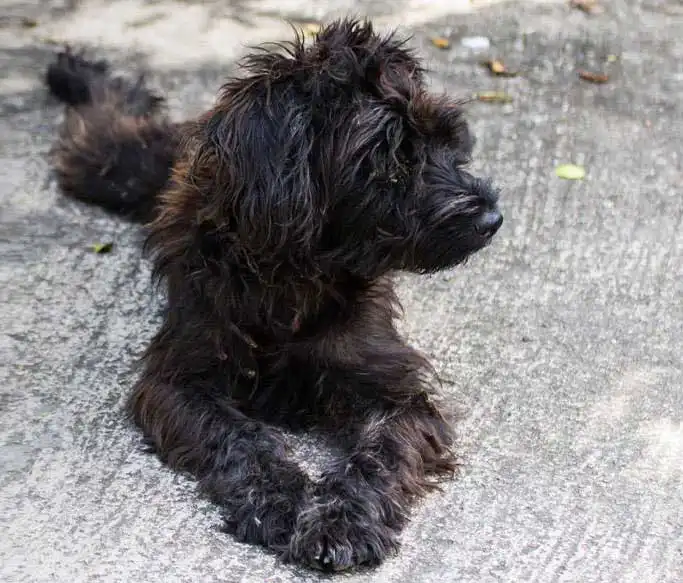
The Scottish Cocker is a charming hybrid breed that emerges from the union of the Cocker Spaniel and the Scottish Terrier, allowing it to display physical characteristics from one or both of its parent breeds. Breeders and enthusiasts often describe this appealing mix as small to medium in size, typically reaching heights of 10 to 16 inches and weighing between 16 to 25 pounds when fully grown. Its coat is medium-length and silky, which may have a slight wave or remain straight, with color variations that can include white, brown, and black. This breed is known for its sturdy physique, featuring a rounded head, a medium to broad muzzle, and a scissors bite. Its eyes are dark and almond-shaped, though those with a merle coat may exhibit blue eyes. The nose is black, and the ears can be either long and low-set or erect and pointed, positioned high on the head. The tail's length can vary, and it may be carried upright or curled over the back, often embellished with feathering.


Care Routine
Your Scottish Cocker hybrid requires a moderate level of care and attention to shedding. Since only the Scottie parent has a hypoallergenic coat, there’s a chance that your hybrid may not be hypoallergenic, which could pose a concern for individuals with asthma or other respiratory conditions. To effectively manage her moderate shedding, you should vacuum more often and brush her coat once or twice a week to eliminate loose hair and debris, as well as to prevent mats and tangles. Regular brushing also aids in distributing natural oils, keeping her coat healthy and vibrant. Bathing should be reserved for when it’s truly necessary to preserve these essential oils. Regarding drooling and odor, she is relatively low-maintenance. It’s crucial to check her ears weekly, cleaning them as needed with a cotton ball and an appropriate canine ear wash. While you’re caring for her ears, remember to examine her toenails and trim them if required, unless her regular exercise naturally keeps them worn down. Like all dogs, your Scottish Cocker will benefit from having her teeth brushed two to three times a week to help prevent periodontal disease and the potential loss of teeth due to gum issues.
Behavior & Temperament
The Scottish Cocker, a delightful mix of the Cocker Spaniel and the Scottish Terrier, can inherit a range of personality traits from its parent breeds. Owners and breeders often describe this charming little dog as affectionate, friendly, and sociable, with a moderate need for exercise. Known for their intelligence and trainability, they make wonderful companions for families. This loving pup quickly captures hearts, displaying deep affection for her human family and getting along well with children, other dogs, and even cats. She greets everyone with warmth, often treating strangers as potential friends. However, she struggles with being left alone for long periods, which can lead to separation anxiety and boredom, potentially resulting in unwanted behaviors. With low to moderate energy levels, she enjoys relaxing by the fireplace, cuddling in your lap, or resting beside you on the couch or in bed for hours. Additionally, her barking is moderate, so it's something to consider if you live in a noise-sensitive environment.


Play & Exercise
The Scottish Cocker hybrid is a moderately active dog that thrives on daily walks with you, relishing playful outings at the dog park or in a secure backyard. To keep her engaged and fit, interactive games like fetch, Frisbee, flyball, or hide-and-seek are ideal, as she typically needs 1 to 2 hours of exercise each day. With a natural curiosity for hunting and exploring, it’s crucial to keep her leashed when outside your home, in a fenced area, or any safe space—unless you’re ready to chase her if she spots a small animal or an enticing scent that piques her interest. Her size and energy level make her well-suited for apartment or condo living, provided her exercise requirements are met and noise regulations are taken into account. She can also flourish in a family home, whether or not there’s a fenced yard, in both rural and urban settings. While she can adapt to different climates, additional precautions may be needed during warmer weather.
Things to Know
Cups Per Day
2.0 Cups
Daily Activity
60 Minutes
Average Lifespan
14 Years
Origin
2000's
Type
Crossbreeds
Size
Small
Origin Country
United States
Brush Frequency
Weekly
Coat Texture
Straight
Register
Your kids have been begging for a pet forever, and you've recently decided that it's time for your family to get a new addition -- a dog! While everyone is excited for the new arrival, you're wondering if you need to have a dog license. How much does it cost? Is it required? Where do you get one?
Member Clubs

PETINNATE
Other
Height & Weight
Weight
21 lbs (10 kg)Male: 21 lbs (10 kg) , Female: 21 lbs (10 kg)
Height
13 inches (33 sm)Male: 13 inches (33 sm) , Female: 13 inches (33 sm)
6 Months
15 lbs ( m 15 lbs, f 15 lbs )
10 inches ( m 10 inches, f 10 inches )
12 Months
20 lbs ( m 20 lbs, f 20 lbs )
13 inches ( m 13 inches, f 13 inches )
18 Months
20 lbs ( m 20 lbs, f 20 lbs )
13 inches ( m 13 inches, f 13 inches )
Eye Colors
Blue

Brown
Nose Colors
Black
Coat Colors
Black

Brown
White