Serbian Hound
Balkan Hound, Srpski gonič, Balkanski gonič
Vibrant in the field and affectionate at home, the Serbian Hound is renowned for its remarkable abilities as both a loyal companion and a skilled hunter. With a history that spans nearly a millennium, this breed has long been a favored choice among hunters in the Balkans, prized for its sharp sense of smell, endurance during hunts, and intelligence. While they are often employed in packs to track and capture larger game like deer and boar, they also thrive as solitary hunters, adept at pursuing smaller prey such as hares and foxes. Despite their strong hunting instincts, which ignite an almost limitless enthusiasm for the chase, Serbian Hounds exhibit a calm and loving demeanor in domestic settings. Their fierce loyalty, especially towards their trainers and families, can sometimes lead to challenges due to their high intelligence. Naturally sociable, they generally get along well with other dogs and are typically good with children; however, their strong prey drive may create difficulties in homes with non-canine pets. In summary, Serbian Hounds are exceptional companions, skillfully balancing their roles as hunters, protectors, and affectionate family members.
Breed Origin
The Serbian Hound, similar to other distinguished European breeds, has a fascinating yet largely unrecorded history concerning its origins. Some historians propose that this breed may date back to around 1000 BC, likely arising from the crossbreeding of dogs left by Phoenician traders. Although numerous theories about its past exist, it is widely recognized that the first written reference to what was then known as the Balkan Hound appeared in the 11th Century, penned by Frank Laska. Over the years, despite various transformations, the Serbian Hound has continued to be cherished in the Balkans, renowned for its exceptional sense of smell, dedication to hunting, and friendly disposition—qualities that seem to have persisted throughout its history, as indicated by sparse documentation. A breed standard was first established in 1924, but a formalized version was not recorded until 1939. The breed received official recognition from the Federation Cynologique Internationale in 1940. It retained the designation of Balkan Hound until 1996, when the FCI officially renamed it the Serbian Hound. The breed was acknowledged by the United Kennel Club in 2006.
Breed Appearance
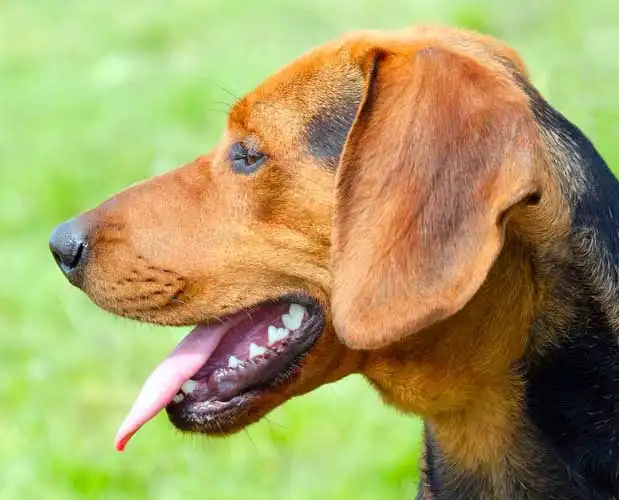
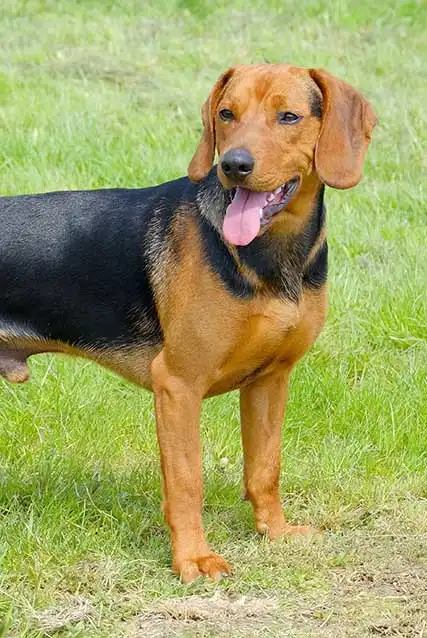
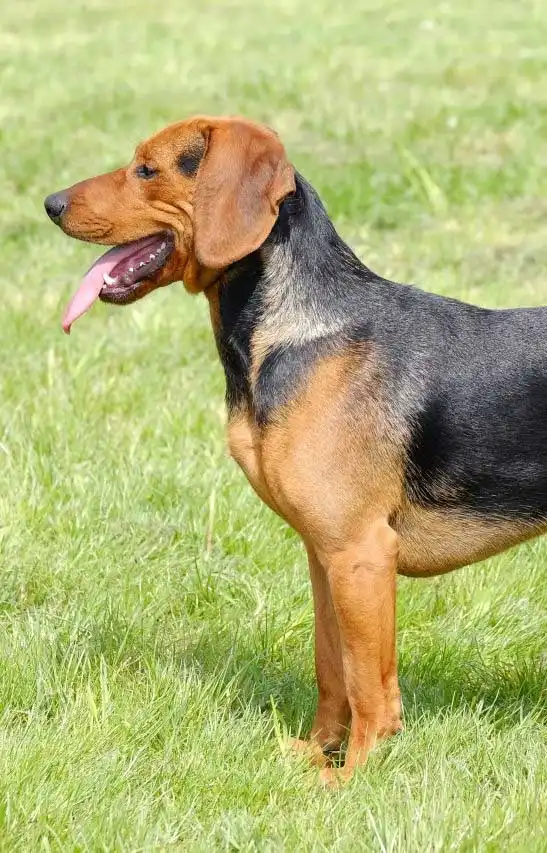
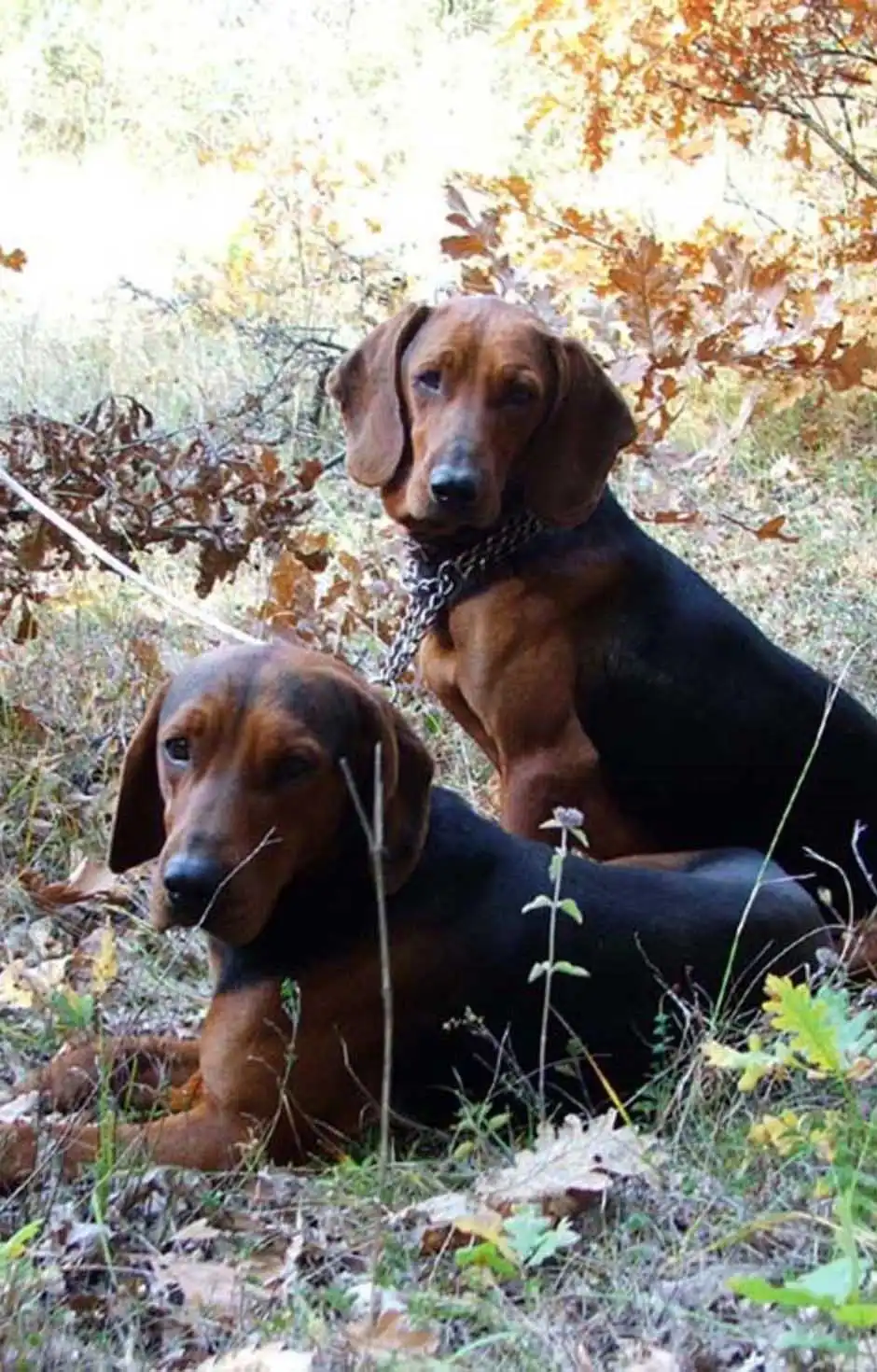
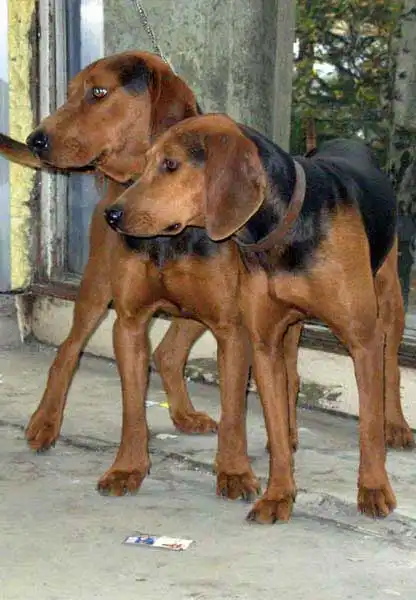
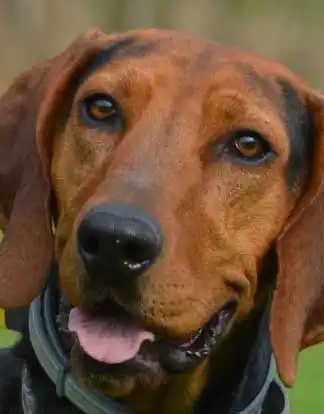
The Serbian Hound is a medium-sized dog breed, generally standing between 17 and 22 inches at the shoulder and averaging around 44 pounds in weight. A defining feature of this breed is its short, dense coat, which is primarily red with a black saddle and may include occasional markings, such as a white spot on the chest. The breed has a long, slender head, with the skull being slightly longer than the narrowing muzzle. They possess a black nose and medium-sized, dark oval eyes. Their ears are thin, folded, and positioned high on the head. The Serbian Hound's body is slightly longer than it is tall, characterized by strong legs, a deep and broad chest that enhances their powerful bark, and a somewhat thick, tapering tail.
Care Routine
The Serbian Hound is considered a breed that requires minimal upkeep. A few brushings each week with a firm bristle brush are enough to maintain their coat's cleanliness and distribute natural oils. Generally, they only need a bath every few months, unless they come into contact with something particularly smelly; otherwise, they are quite adept at managing their own grooming. If they aren’t actively hunting, where their nails would typically wear down, it’s essential to regularly inspect and trim their nails to prevent any cracking or breaking. Furthermore, it’s advisable to brush their teeth weekly to promote good dental health.
Behavior & Temperament
Serbian Hounds are known for their outstanding behavior, both in hunting scenarios and at home. As dedicated hunters, they exhibit a strong motivation and impressive endurance during their pursuits. Yet, in the company of their families, they consistently show traits of kindness, gentleness, affection, and steadfast loyalty. Having been bred as pack animals for many years, they typically get along well with other dogs and children, especially when they receive adequate training and socialization. However, they may be somewhat reserved around strangers. It’s best to avoid having them in households with non-canine pets due to their strong prey drive, which could lead to complications. While they can be quite calm indoors, they require plenty of exercise; without it, they might develop undesirable habits. Training can be somewhat difficult, as their intelligence and independence can come across as stubbornness. Despite these minor hurdles, Serbian Hounds can be wonderful family pets and companions, and with appropriate training, they can also function effectively as guard dogs.
Play & Exercise
Serbian Hounds are recognized for their lively nature, although they are not considered the most energetic dog breed. Developed for hunting, these dogs exhibit impressive endurance, enabling them to partake in extended physical activities without tiring easily. Consequently, they flourish in homes with active families or those that can provide ample outdoor space or regular visits to dog parks. Ideally, they require a daily exercise routine of at least a couple of miles, with a minimum of around 45 minutes dedicated to walking or running.
Things to Know
Cups Per Day
3.0 Cups
Daily Activity
45 Minutes
Average Lifespan
14 Years
Origin
11th Century
Type
Pure Breeds
Size
Medium
Origin Country
Serbia
Brush Frequency
Weekly
Coat Texture
Straight
Register
Your kids have been begging for a pet forever, and you've recently decided that it's time for your family to get a new addition -- a dog! While everyone is excited for the new arrival, you're wondering if you need to have a dog license. How much does it cost? Is it required? Where do you get one?
Member Clubs

PETINNATE
Scenthound

UKC
Scenthound
Height & Weight
Weight
44 lbs (20 kg)Male: 44 lbs (20 kg) , Female: 44 lbs (20 kg)
Height
20 inches (51 sm)Male: 20 inches (51 sm) , Female: 19 inches (48 sm)
6 Months
31 lbs ( m 31 lbs, f 31 lbs )
13 inches ( m 13 inches, f 13 inches )
12 Months
37 lbs ( m 37 lbs, f 37 lbs )
16 inches ( m 16 inches, f 16 inches )
18 Months
44 lbs ( m 44 lbs, f 44 lbs )
19 inches ( m 19 inches, f 19 inches )
Eye Colors
Brown
Nose Colors
Black
Coat Colors
White
Red
Black