Sharbo
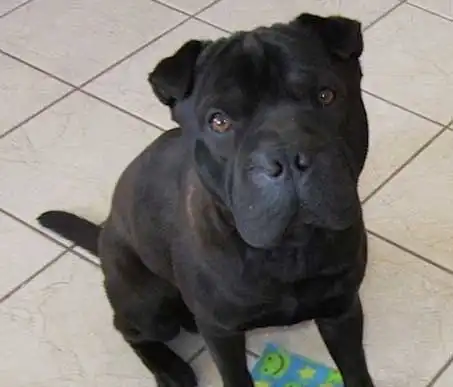
The Sharbo is a fascinating hybrid that merges the Boston Terrier with the Chinese Shar-Pei. This distinctive mix combines two purebred dogs, each originally bred for pit and dog fighting in their respective homelands, the United States and China. As a family companion, the Sharbo stands out for its loyalty and affection, while also embodying the traits of a watchful and protective guard dog. It's worth noting that the Boston Terrier, one of the breeds that contribute to the Sharbo, is recognized as one of the earliest Non-Sporting breeds established in the U.S. and is celebrated as the first among roughly ten American-bred breeds acknowledged by the American Kennel Club.
Breed Origin
The Sharbo is a hybrid dog breed that results from crossing a Boston Terrier with a Chinese Shar-Pei. While the exact origins of this mix are not well-documented, it is believed to have emerged in the United States during the late 20th century, a time when there was a rising trend in creating mixed breeds for various purposes. To gain a deeper understanding of the Sharbo, it is beneficial to look into the histories of its parent breeds. The Boston Terrier, often referred to as "The American Gentleman," is one of the earliest Non-Sporting breeds developed in the U.S. and is among the few purebreds recognized by the American Kennel Club (AKC) as distinctly "American." This breed is thought to have originated in the 1800s in Boston, Massachusetts, although the specifics of its beginnings remain somewhat vague. Its ancestry likely includes Bulldogs, Terriers, and possibly some French Bulldog lineage. Originally bred for pit fighting and bull-baiting—activities that are now illegal—the Boston Terrier has evolved into a cherished family pet, companion, and watchdog. The AKC officially recognized the breed in 1893, and it currently ranks as the 21st most popular breed in their registry. On the other hand, the Chinese Shar-Pei, as its name indicates, originates from China and is an ancient breed with unclear historical documentation. The timeline of its development is uncertain. Traditionally, the Shar-Pei was utilized by peasants in southern China for hunting, herding, and protection, while the elite used them for pit fighting, a practice that has since been banned. The breed nearly faced extinction during the Communist revolution and is now regarded as one of the rarest dog breeds. Today, the Chinese Shar-Pei is valued as a family pet, companion, guard dog, and watchdog. It received official recognition from the AKC in 1962 and is currently the 61st most popular breed in their registry. The Sharbo hybrid is recognized by various organizations, including the American Canine Hybrid Club, the Designer Breed Registry, the Designer Dogs Kennel Club, the Dog Registry of America, and the International Designer Canine Registry.
Breed Appearance
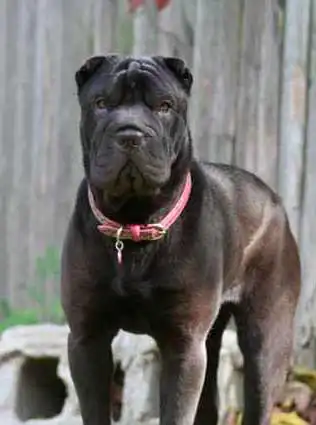
The Sharbo is a hybrid dog breed that emerges from the combination of a Boston Terrier and a Chinese Shar-Pei, which means it can display traits from one or both of its parent breeds. Breeders and owners report that Sharbo dogs generally stand between 15 and 20 inches tall and weigh between 30 and 50 pounds. This medium-sized canine is characterized by a sturdy build, a square head, and large, mostly brown eyes, along with floppy ears that typically hang down. The coat of a Sharbo can vary in texture, being straight, short, coarse, or silky, with common colors including brown, brindle, white, black, and golden. The tail may be short and close to the body or longer and curled over the back. Its bite can be either scissors or undershot, giving the muzzle a squared look, and the tongue may be purple or black. The feet are usually compact, ranging from small to medium, and have short toenails.


Care Routine
The Sharbo hybrid is considered to have low to moderate grooming requirements, with minimal shedding that only calls for weekly brushing. Although his coat isn't hypoallergenic, the Shar-Pei ancestry may necessitate more frequent baths than other breeds. Typically, it's recommended to bathe a Shar-Pei every two weeks, while the Boston side might require less frequent washing. Furthermore, the Shar-Pei genetics can increase the risk of ear infections, making it essential to inspect his ears weekly. Cleaning should be done as needed with a cotton ball and a veterinarian-approved ear cleaner. Nail maintenance is also important; check his nails once or twice a month and trim them as needed, unless regular exercise keeps them naturally worn down. To avoid periodontal disease and the risk of tooth loss, his teeth should be brushed at home at least two to three times a week. While he is generally low in drooling, he does have a moderate level of odor due to his Shar-Pei lineage. This active dog requires a substantial amount of exercise, needing between one to two hours of physical activity each day.
Behavior & Temperament
The Sharbo is a hybrid breed that emerges from the combination of a Boston Terrier and a Chinese Shar-Pei, which means it can inherit a range of personality traits and temperaments from either or both parent breeds. Owners and breeders often characterize the Sharbo as affectionate, playful, and intelligent, although it may also show aggressive behavior, particularly when it comes to defending its family. With appropriate early socialization, the Sharbo tends to be moderately friendly towards children, strangers, cats, and other dogs. This breed thrives on love and attention from its human companions, often returning that affection with loyalty. Generally, the Sharbo has a calm disposition, enjoying both energetic play and quiet moments snuggling on the couch. However, it can exhibit jealousy towards other dogs, especially if it feels overlooked or believes it deserves more attention. Such behaviors can be effectively managed through proper socialization. Furthermore, the Sharbo has a strong hunting instinct inherited from its ancestry, which is an important factor to consider when interacting with other animals. Initially, it may be wary of strangers until it feels reassured that there is no danger to its family. Training the Sharbo is usually straightforward, provided that clear leadership is established from the beginning; neglecting this aspect may result in difficulties in managing its behavior.


Play & Exercise
The Sharbo hybrid is recognized for its lively disposition, necessitating a considerable amount of daily physical activity—generally ranging from one to two hours. This exercise can take various forms, including extended walks, play sessions at a dog park or a secure backyard, and interactive games like fetch, Frisbee, flyball, and earth dog activities, along with obedience and agility training. Due to his strong hunting instincts, it’s essential to keep him leashed whenever he’s outside the home, in a fenced area, or any other secure location, unless your exercise plan involves allowing him to pursue small animals or intriguing scents in the neighborhood or woods. He is not typically a frequent barker and tends to vocalize only when necessary, making him a good fit for apartment or condo living, as long as there are no strict noise restrictions. Regardless of your living situation, it’s vital to ensure he gets enough exercise, as insufficient activity can lead to destructive behaviors caused by boredom. He can flourish in a family environment, whether or not there is a fenced yard, and is adaptable to both urban and rural settings. Ideally, he thrives in moderate to temperate climates, requiring additional care during extreme weather conditions.
Things to Know
Cups Per Day
2.5 Cups
Daily Activity
90 Minutes
Average Lifespan
14 Years
Origin
2000's
Type
Crossbreeds
Size
Medium
Origin Country
United States
Brush Frequency
Weekly
Coat Texture
Straight
Register
Your kids have been begging for a pet forever, and you've recently decided that it's time for your family to get a new addition -- a dog! While everyone is excited for the new arrival, you're wondering if you need to have a dog license. How much does it cost? Is it required? Where do you get one?
Member Clubs

PETINNATE
Other
Height & Weight
Weight
40 lbs (18 kg)Male: 40 lbs (18 kg) , Female: 40 lbs (18 kg)
Height
18 inches (46 sm)Male: 18 inches (46 sm) , Female: 18 inches (46 sm)
6 Months
30 lbs ( m 30 lbs, f 30 lbs )
13 inches ( m 13 inches, f 13 inches )
12 Months
40 lbs ( m 40 lbs, f 40 lbs )
17 inches ( m 17 inches, f 17 inches )
18 Months
40 lbs ( m 40 lbs, f 40 lbs )
17 inches ( m 17 inches, f 17 inches )
Eye Colors
Brown

Nose Colors
Black
Coat Colors
Black

Brown
Brindle
White