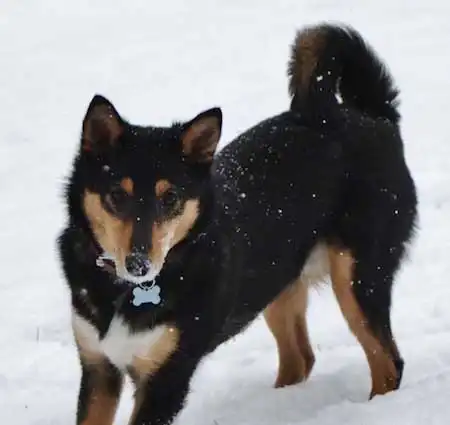
Sheltie Inu
The Sheltie Inu is a small designer breed that has been purposefully developed by crossing the ancient Japanese hunting dog, the Shiba Inu, with the Shetland Sheepdog, a herding breed native to the Shetland Islands in Scotland. These dogs are typically intelligent, but their trainability can greatly differ depending on which parent breed they take after. Consequently, some may be quite easy to train, while others might pose challenges, with many falling somewhere in the middle. Despite their relatively small size, their high energy and tendency to bark excessively can make them less suitable for apartment living. Nevertheless, with adequate exercise and daily attention, they can often adjust to such settings.
Breed Origin
The Sheltie Inu is a carefully crafted hybrid, born from the combination of two distinct breeds: the ancient and well-loved Shiba Inu, a small hunting dog hailing from Japan, and the Shetland Sheepdog, a compact herding dog developed on the Shetland Islands off the coast of Scotland. The Shiba Inu, also referred to as the Shiba Ken, is the smallest of six native Japanese hunting breeds, all of which share similar physical characteristics and temperamental traits. While Shiba Inus were occasionally employed to hunt larger game such as boar and deer, their primary role was to locate and flush out smaller animals and birds. The breed experienced a significant decline during World War II due to bombing raids and outbreaks of distemper, which led to the establishment of breeding programs in the 1950s that aimed to revive the population by mixing various Shiba strains. In contrast, the Shetland Sheepdog, another small breed from an island, was developed for a different purpose. Originating in the Shetland Islands, the Sheltie was bred to manage the island's uniquely small livestock. This energetic little dog has evolved over the centuries, and while its precise ancestry is somewhat ambiguous, it is believed that several breeds contributed to its creation, including the Scotch Collie, King Charles Spaniel, Icelandic Sheepdog, Border Collie, and a now-extinct breed known as the Greenland Yakki. As tourism boomed in the 1800s, local farmers began selling these small dogs to visitors, even crossbreeding them with smaller breeds like Corgis, Papillons, and Pomeranians to enhance their appeal and reduce their size. Over time, this trend diminished the dogs' herding effectiveness, prompting breeders to reintroduce more Collie genetics. Today, the Sheltie stands out as both a proficient herding dog and a loving, devoted companion.
Breed Appearance
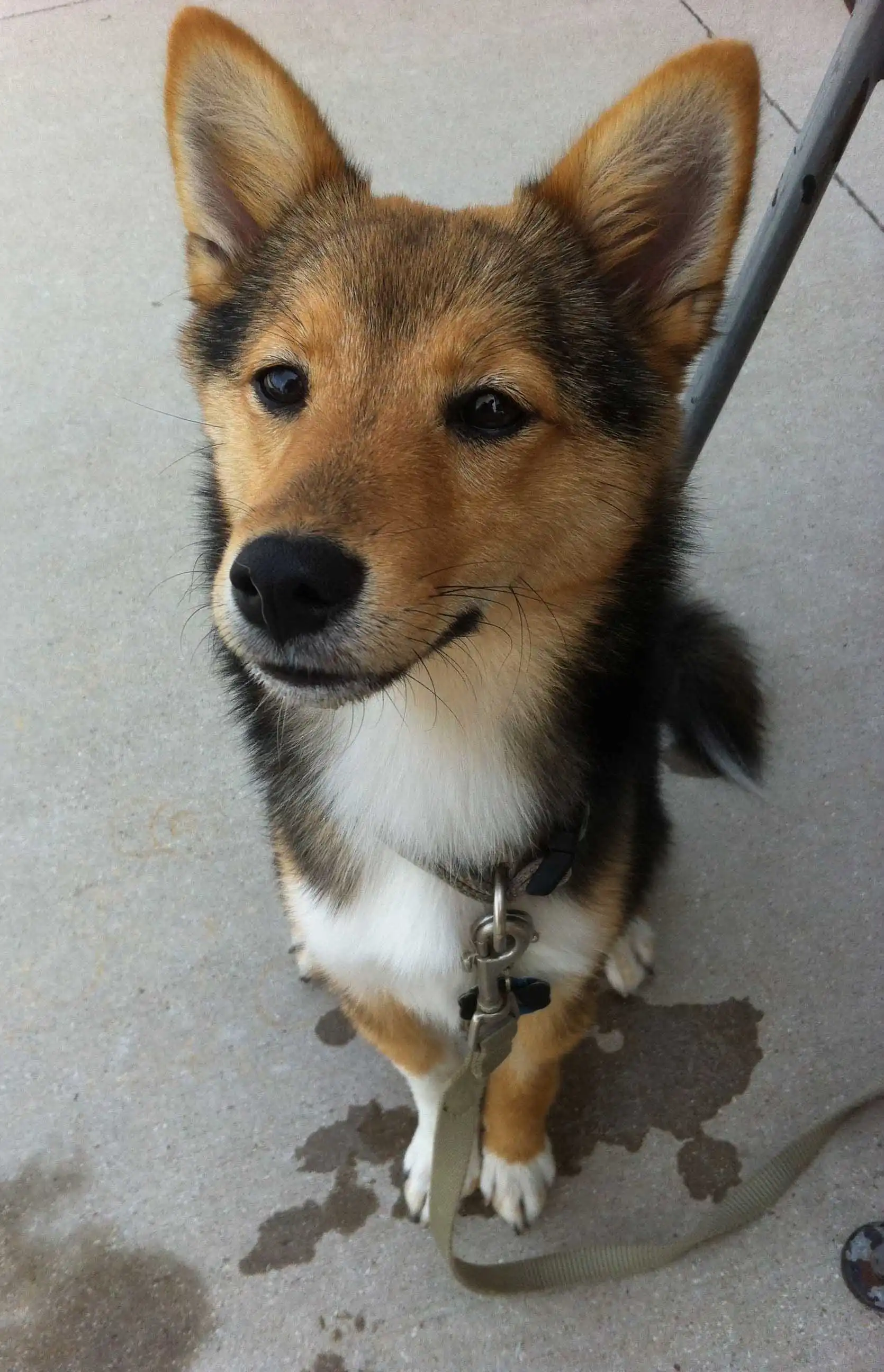
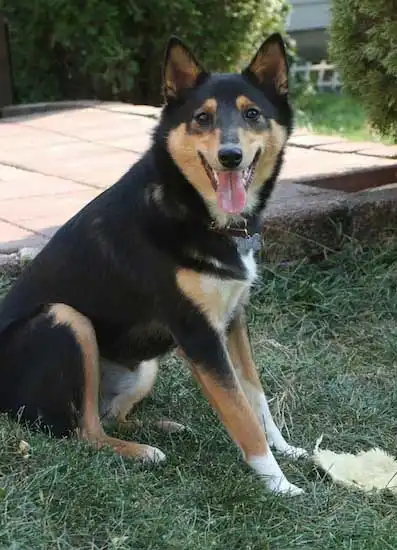
The Sheltie Inu is a compact yet sturdy breed, typically featuring a body that is longer than it is tall. Variants that resemble the Shiba Inu often have a more muscular and compact physique, whereas those that take after the Sheltie tend to be slightly longer and leaner. This breed is distinguished by its broad, wedge-shaped head, which includes a moderately long muzzle, a rounded nose, and a strong, well-defined jaw. Its ears are triangular in shape and can stand fully erect or be partially upright. The eyes of the Sheltie Inu can vary in shape, either resembling the slightly triangular form typical of the Shiba Inu or the more almond-shaped eyes characteristic of the Shetland Sheepdog. While the majority of Sheltie Inus have dark brown eyes, some may inherit blue or parti-colored eyes from their Shetland Sheepdog ancestry, particularly those with merle coats or those whose parents or close relatives carry the merle gene.

Care Routine
This hybrid breed benefits from a coat that naturally repels dirt and has minimal odor, which means it doesn't require frequent baths. However, to keep their double-layered fur healthy and shiny, regular brushing is necessary. For Shiba Inus with shorter coats, tangling is not a significant issue, so brushing once or twice a week is usually sufficient to control shedding. On the other hand, those that inherit the longer, more prone-to-tangle coat of the Shetland Sheepdog will require more frequent grooming, ideally several times a week or even daily. It's essential to brush thoroughly to avoid tangles and mats, particularly in areas such as behind the ears and under the armpits. Additionally, maintaining their nails and teeth is vital; nails should be trimmed every two months, while teeth should be brushed multiple times a week.
Behavior & Temperament
The Sheltie Inu is an exceptionally smart and observant breed that needs ample socialization, attention, and training to grow into a self-assured and well-adjusted companion. It is essential to keep this breed mentally engaged, particularly when they are left alone, as they can develop negative behaviors such as separation anxiety, excessive barking, or destructive chewing if they feel neglected. While the Shiba Inu parent may pose some training difficulties due to its dominant personality and reluctance to follow commands, the Shetland Sheepdog is recognized for its willingness to learn and ability to be trained. As a result, the Sheltie Inu may inherit varying traits from its parents in terms of trainability. These dogs thrive on social interaction and love to entertain their families, often forming deep, affectionate connections with adults and older children. However, they might find it challenging to interact with younger children, especially those who are loud or move quickly. Their keen alertness also makes them excellent watchdogs, but it’s crucial to address any propensity for excessive barking early in their development.


Play & Exercise
Despite their small size, this dog is incredibly energetic and athletic, requiring a minimum of an hour of intense exercise daily. It's important to keep them leashed or in a secure, fenced space, as they have a strong instinct to chase anything that moves quickly. Moreover, weather conditions should be taken into account, particularly for Sheltie Inus, who can be susceptible to overheating because of their thick, dense coats inherited from their Sheltie ancestry. Although they can adjust to apartment living if given sufficient exercise, they typically flourish in a larger home, preferably one with a fenced yard.
Things to Know
Cups Per Day
1.0 Cups
Daily Activity
60 Minutes
Average Lifespan
14 Years
Origin
Unknown
Type
Crossbreeds
Size
Small
Origin Country
Unknown
Brush Frequency
Daily
Coat Texture
Straight
Register
Your kids have been begging for a pet forever, and you've recently decided that it's time for your family to get a new addition -- a dog! While everyone is excited for the new arrival, you're wondering if you need to have a dog license. How much does it cost? Is it required? Where do you get one?
Member Clubs
PETINNATE
Other
Height & Weight
Weight
20 lbs (9 kg)Male: 21 lbs (10 kg) , Female: 19 lbs (9 kg)
Height
15 inches (38 sm)Male: 16 inches (41 sm) , Female: 15 inches (38 sm)
6 Months
13 lbs ( m 13 lbs, f 13 lbs )
13 inches ( m 13 inches, f 13 inches )
12 Months
18 lbs ( m 18 lbs, f 18 lbs )
14 inches ( m 14 inches, f 14 inches )
18 Months
18 lbs ( m 18 lbs, f 18 lbs )
14 inches ( m 14 inches, f 14 inches )
Eye Colors
Blue
Brown
Nose Colors
Black
Coat Colors
Black
Pied
Red
Brown
Sable
Cream