Sibercaan
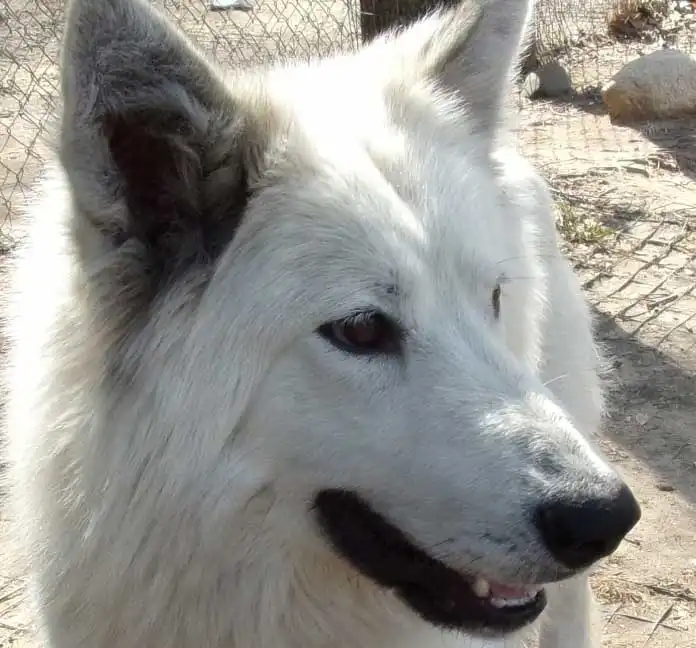
The Sibercaan is a hybrid dog breed, though there is some disagreement about its parentage. All breed registries acknowledge that one of its progenitors is the Canaan dog, which has been domesticated since approximately 2200 to 2000 BC. This breed made its way back to the Negev Desert around 2000 years ago after the Romans displaced the Israelites. However, opinions vary regarding the second parent breed. The American Canine Hybrid Club and the International Designer Canine Registry recognize the Siberian Husky as the other parent, while the Designer Breed Registry asserts that it is the Native American Indian Dog. This latter breed is noted for its intelligence and energetic nature, making it highly trainable when the right techniques are employed. Conversely, if subjected to harsh or repetitive training, it may become stubborn and manipulative. Overall, the Sibercaan is a loyal and devoted companion, making it a good fit for families with members of all ages, although it may be cautious around strangers. This hybrid does not do well in confined spaces and requires plenty of daily exercise and attention, rendering it unsuitable for small living conditions.
Breed Origin
The Sibercaan is categorized as a designer dog, resulting from a purposeful cross between two different breeds rather than being a purebred. As noted by the American Canine Hybrid Club and the International Designer Canine Registry, this breed combines the Canaan dog and the Siberian Husky, both of which belong to the ancient Spitz family. The Canaan dog, a rare breed, was domesticated thousands of years ago and is recognized as Israel's National Breed. Historically, these dogs were employed for guarding and herding by the Israelites and nomadic Bedouins as far back as 2200 to 2000 BC. Artifacts such as hieroglyphics, skeletal remains, and carvings from that time that closely resemble the Canaan dog underscore its long-standing connection to the local community. After the Roman conquest, many Israelites were scattered, leaving behind numerous Canaan dogs that adapted to the Negev Desert. While some continued to assist the Bedouins, the majority became feral or semi-wild. In the early 1930s, Professor Rudolphina Menzel aimed to create a military dog suited for the harsh desert conditions. She captured several of these wild Canaan dogs and found them to be exceptionally trainable, leading to a successful breeding program. This effort resulted in a strong and resilient breed that played a crucial role in military operations during World War II and is still utilized by the Israeli Defense Forces today. Siberian Huskies rose to prominence in the early 1900s, primarily as sled dogs. They were instrumental in the renowned serum run of 1925, a perilous mission during a diphtheria outbreak that involved twenty sled drivers and over a hundred dogs covering 658 miles of challenging terrain, ultimately saving approximately 10,000 lives. Like the Canaan dog, Siberian Huskies were domesticated thousands of years ago, living alongside the Chukchi people in the icy northern regions of Russia, where they aided in hunting, property protection, and sled pulling. Interestingly, the Designer Breed registry also recognizes the Sibercaan as a mix of the Canaan dog and the Native American Indian Dog. The latter breed is acknowledged only by the Native American Indian Dog Registry and the National Kennel Club, which catalogs a wider variety of rare dog breeds than the American Kennel Club. The Native American Indian Dog is thought to be a descendant of the dogs that accompanied Native Americans, although this lineage is somewhat contested. Therefore, while most Sibercaans are likely a mix of the Canaan dog and Siberian Husky, some may also carry genetics from the Native American Indian Dog, which could subtly affect their appearance and temperament. Nonetheless, the Native American Indian Dog shares many traits with both the Siberian Husky and the Canaan dog.
Breed Appearance
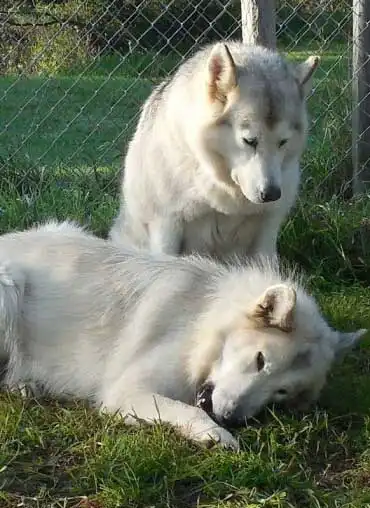
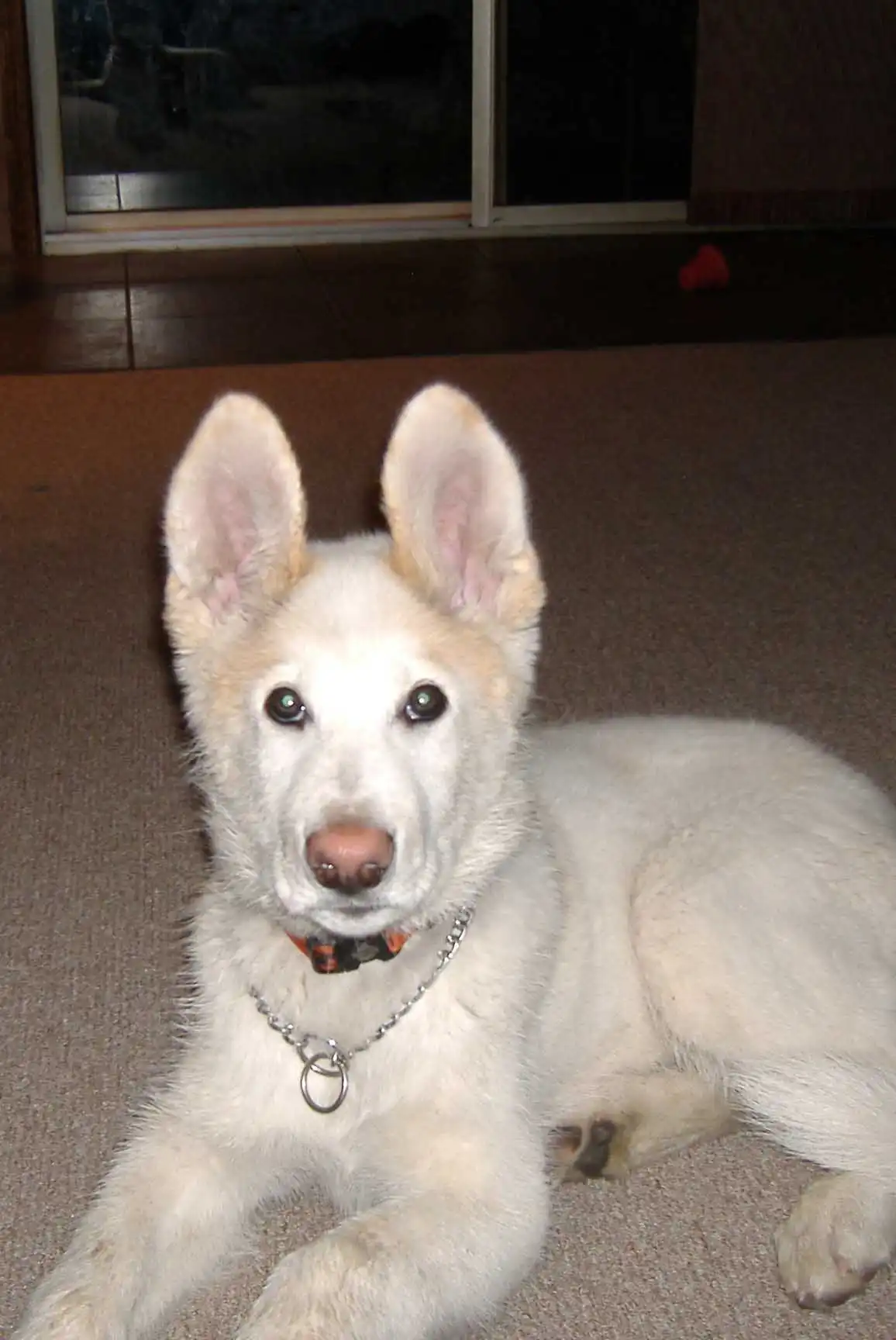
The Sibercaan is a medium-sized working dog, generally characterized by a square physique, although some may be slightly elongated. They have a well-balanced head that is broad and somewhat flat between the ears. Typically, they inherit the almond-shaped eyes found in all three of their parent breeds, with eye colors that can vary significantly, ranging from deep brown to amber, hazel, blue, and even particolor, showcasing their varied lineage. Their muzzles are of moderate length, tapering to a point, and their small to medium-sized triangular ears stand upright atop their heads. Like many breeds in the Spitz family, they boast a thick, dense coat. The Canaan dog contributes a relatively short coat, while the Siberian Husky has a longer one, resulting in the Sibercaan having fur that can be classified as short to medium in length. Their coats may be solid or predominantly white with markings similar to those of the Siberian Husky, or they might display large patches of color typical of the Canaan dog. If bred with the Native American Indian Dog instead of the Siberian Husky, these dogs may have longer fur and the potential for a mottled, tortoiseshell pattern, as well as the possibility of being significantly larger than the average Sibercaan.

Care Routine
Grooming this breed typically requires a moderate amount of effort, with those having longer coats needing more time and care than their shorter-haired relatives. Generally, bathing is only needed once or twice a year, but it’s essential to ensure the undercoat is completely dried afterward, as any lingering moisture can foster mold and mildew against the skin. Both the Canaan Dog and the Native American Indian Dog shed lightly throughout most of the year, necessitating brushing two to three times a week to prevent tangles and mats while also helping to distribute their natural oils evenly. However, they experience heavier shedding in the spring and fall, which calls for daily brushing during these peak shedding seasons. In contrast, the Siberian Husky sheds profusely year-round, requiring daily grooming to effectively manage their constant hair loss.
Behavior & Temperament
This hybrid breed is characterized by its active nature and intelligence, likely inheriting a high energy level from either the Siberian Husky or the Native American Indian Dog, along with a trainable temperament from the Canaan. It is crucial to use consistent and gentle training techniques, as a harsh approach may lead to stubbornness, while repetitive methods can cause boredom, resulting in the dog trying to take charge of the training process. When it comes to interactions with children, supervision is always recommended. However, the three parent breeds are generally very loyal to their families. They typically get along well with older children and are usually quite tolerant of younger ones. These social dogs should not be left alone for long periods, as they can develop separation anxiety or depression, which may manifest as excessive barking or destructive behavior. While the Siberian Husky and the Native American Indian Dog are generally friendly towards strangers, other dogs, and various animals, the Canaan breed can increase prey drive and aggression towards other dogs, as well as heighten wariness of unfamiliar people. Given their high energy levels, vocal nature, and aversion to confinement, these dogs are not well-suited for apartment living and are likely to resist crate training more than other breeds.


Play & Exercise
This breed is an exceptionally active and athletic dog that demands significant exercise to remain in optimal shape. To ensure their well-being and balance, they need at least one to one and a half hours of vigorous physical activity daily, with many dogs thriving on even more. The Sibercaan is also a highly intelligent hybrid, which makes it crucial to combine mental challenges with physical exercise. Activities that effectively integrate both elements for the Sibercaan can encompass agility training, advanced obedience, dog sledding, tracking drills, and occasionally herding tasks, although they generally do not enjoy water-related sports.
Things to Know
Cups Per Day
2.5 Cups
Daily Activity
60 Minutes
Average Lifespan
15 Years
Origin
Unknown
Type
Crossbreeds
Size
Medium
Origin Country
Unknown
Brush Frequency
Daily
Coat Texture
Straight
Register
Your kids have been begging for a pet forever, and you've recently decided that it's time for your family to get a new addition -- a dog! While everyone is excited for the new arrival, you're wondering if you need to have a dog license. How much does it cost? Is it required? Where do you get one?
Member Clubs

PETINNATE
Other
Height & Weight
Weight
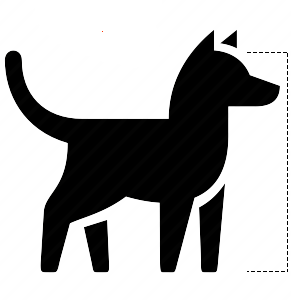
48 lbs (22 kg)Male: 53 lbs (24 kg) , Female: 43 lbs (20 kg)
Height
22 inches (56 sm)Male: 22 inches (56 sm) , Female: 21 inches (53 sm)
6 Months
30 lbs ( m 30 lbs, f 30 lbs )
17 inches ( m 17 inches, f 17 inches )
12 Months
37 lbs ( m 37 lbs, f 37 lbs )
20 inches ( m 20 inches, f 20 inches )
18 Months
42 lbs ( m 42 lbs, f 42 lbs )
21 inches ( m 21 inches, f 21 inches )
Eye Colors
Blue

Hazel
Brown
Amber
Nose Colors
Black
Brown
Coat Colors
Fawn
Red
Gray
Black
White
Sable