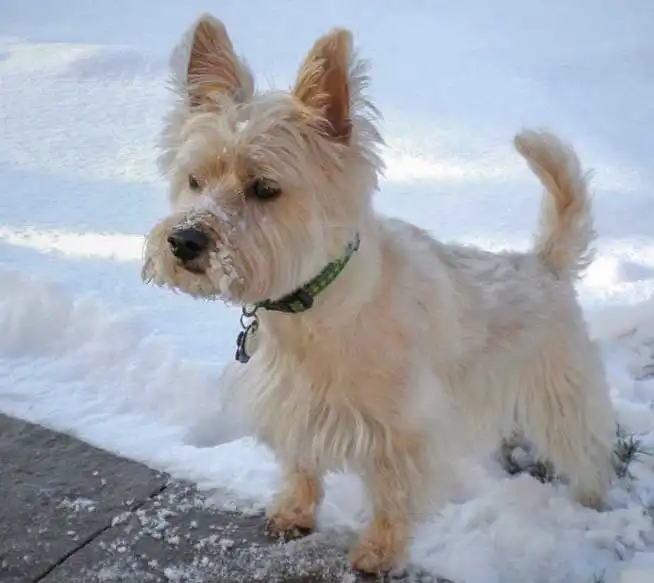
Silkland Terrier
The Silkland Terrier is an enchanting hybrid, born from the union of the Silky Terrier and the West Highland White Terrier. This delightful blend combines two affectionate toy breeds, making it hard to resist their cuddly charm. Each parent contributes to this little treasure's lively personality, endless enthusiasm, and overflowing affection. She is sure to be a wonderful addition to your family, but it's crucial to establish yourself as the leader from the start, as she may try to assert her dominance. Plus, she has mastered the skill of being a lap dog!

Breed Origin
The Silkland Terrier is a mixed breed that results from crossing the Silky Terrier with the West Highland White Terrier, commonly known as the Westie. While there is some information available about the hybrid's physical traits and personality, its origins are not well-documented. It is believed that this breed emerged in the United States during the late 20th or early 21st century, coinciding with a growing trend of creating new breeds through the combination of established purebreds. To gain a clearer understanding of the Silkland Terrier, it is helpful to examine the histories of its parent breeds. The Silky Terrier, sometimes referred to as the Sidney Silky or the Australian Silky Terrier, was developed in Australia in the 1800s. Its ancestry likely includes the Yorkshire Terrier along with various native Australian terrier breeds, making it the only toy breed to originate from Australia. Although primarily bred for companionship rather than for hunting vermin, this small dog embodies the true terrier spirit and is quite capable of such activities. The Silky Terrier was brought to the United States by returning soldiers after World War II and was officially recognized by the American Kennel Club in 1959. Today, it ranks as the 100th most popular breed in their registry. The West Highland White Terrier, or Westie, originates from the Scottish Highlands and was historically known as the Roseneath Terrier or Poltalloch Terrier in the 1800s. Bred to hunt small game, the Westie became a familiar presence in mining communities, farms, and households. Initially, this breed had a red coat, but following a tragic incident in the 1900s where a red hunting dog was mistakenly shot, breeders began to favor the white coat we see today, having previously culled white puppies at birth to preserve the red coloration. The Westie made its way to the United States and received official recognition from the American Kennel Club in 1908, where it currently ranks 41st in popularity among registered breeds. The Silkland Terrier hybrid is recognized by various organizations, including the American Canine Hybrid Club, the Dog Breed Registry, the Designer Dogs Kennel Club, the Dog Registry of America, and the International Designer Canine Registry.
Breed Appearance
The Silkland Terrier is a hybrid breed created by crossing the Silky Terrier with the West Highland White Terrier, often referred to as the Westie. This mix can display a range of physical traits inherited from one or both parent breeds. Breeders and pet owners note that Silkland Terriers generally reach a height of 9 to 11 inches at the shoulder and weigh between 15 and 20 pounds. They are characterized by a thick, silky coat that can vary in length, with common colorations including black, brown, white, and cream. The breed has dark brown, almond-shaped eyes, and small, V-shaped ears that are positioned high on the head and stand erect. Additionally, they possess a black nose and a scissors bite, along with a short, carrot-shaped tail that is held high.


Care Routine
The Silkland Terrier hybrid demands considerable care and is known for frequent shedding, even though her coat is hypoallergenic. The density and length of her fur can vary, influenced by the dominant parent breed in her lineage. To keep her coat healthy and looking its best, it’s important to brush her several times a week to remove loose hair, debris, mats, and tangles, while also helping to distribute her natural oils. Regular ear checks are essential, and cleaning should be performed as necessary with a cotton ball and a veterinarian-recommended ear wash. Her toenails should also be inspected weekly; she may need monthly trims unless her regular exercise naturally wears them down. It’s recommended to brush her teeth two to three times a week at home to help prevent periodontal disease, which can eventually lead to tooth loss. Fortunately, she is considered low in drooling and dog odor. This lively little dog requires daily activities to channel her energetic nature.
Behavior & Temperament
The Silkland Terrier is a charming mix of the Silky Terrier and the West Highland White Terrier (Westie). This breed can exhibit a range of personality traits from either or both of its parent breeds. Many owners and breeders describe the Silkland Terrier as alert, affectionate, friendly, energetic, intelligent, sweet, playful, and lively. It is an ideal choice for first-time dog owners, particularly if socialized properly from an early age. With adequate exposure, she typically gets along well with children, family cats, other dogs, and even strangers, though she may approach new people with some caution. While she may bark from time to time, her vocal tendencies ensure that no unfamiliar individual—whether a stranger, friend, or family member—will go unnoticed, making her a great little watchdog! Furthermore, her strong hunting instincts and moderate tendency to wander necessitate that she be kept on a leash when outdoors, whether in a yard or another secure environment. Given her high energy levels inherited from her parent breeds, regular exercise is crucial, but training her is straightforward, as she is eager to please.


Play & Exercise
Your Silkland Terrier brings a vibrant and energetic spirit to your household. To help her effectively manage her energy levels, she will need about one to two hours of appropriate exercise each day. She will appreciate her daily walks, which don’t have to be long due to her petite size, as well as playtime at the dog park or in a safe yard. Moreover, she will be eager to participate in interactive activities such as fetch, Frisbee, and hide and seek—whether indoors or outdoors—along with obedience and agility training sessions. Her small stature makes her a perfect fit for apartment or condo living, as long as her exercise requirements are fulfilled. She can also adapt well to family homes, regardless of whether there is a fenced yard, and she thrives in both rural and urban settings. Ideally, she prefers a moderate climate and should avoid extreme temperatures; however, she can adjust to various conditions as long as she has sufficient shelter from harsh weather. Given her strong hunting instincts and a tendency to explore, it’s essential to keep her on a leash when outside, whether in a fenced yard or any secure area. Otherwise, you may find yourself in pursuit of her as she dashes through the neighborhood, around the block, or into the woods after a small creature or an enticing scent that has piqued her curiosity.
Things to Know
Cups Per Day
1.0 Cups
Daily Activity
90 Minutes
Average Lifespan
14 Years
Origin
2000's
Type
Crossbreeds
Size
Small
Origin Country
United States
Brush Frequency
Weekly
Coat Texture
Straight
Register
Your kids have been begging for a pet forever, and you've recently decided that it's time for your family to get a new addition -- a dog! While everyone is excited for the new arrival, you're wondering if you need to have a dog license. How much does it cost? Is it required? Where do you get one?
Member Clubs

PETINNATE
Other
Height & Weight
Weight
18 lbs (8 kg)Male: 18 lbs (8 kg) , Female: 18 lbs (8 kg)
Height
10 inches (25 sm)Male: 10 inches (25 sm) , Female: 10 inches (25 sm)
6 Months
13 lbs ( m 13 lbs, f 13 lbs )
7 inches ( m 7 inches, f 7 inches )
12 Months
17 lbs ( m 17 lbs, f 17 lbs )
10 inches ( m 10 inches, f 10 inches )
18 Months
17 lbs ( m 17 lbs, f 17 lbs )
10 inches ( m 10 inches, f 10 inches )
Eye Colors
Brown

Nose Colors
Black
Coat Colors
White
Cream
Brown
Black