Slovac Cuvac
Slovak Cuvac, Slovak Chuvach, Tatransky Cuvac, Slovensky Kuvac
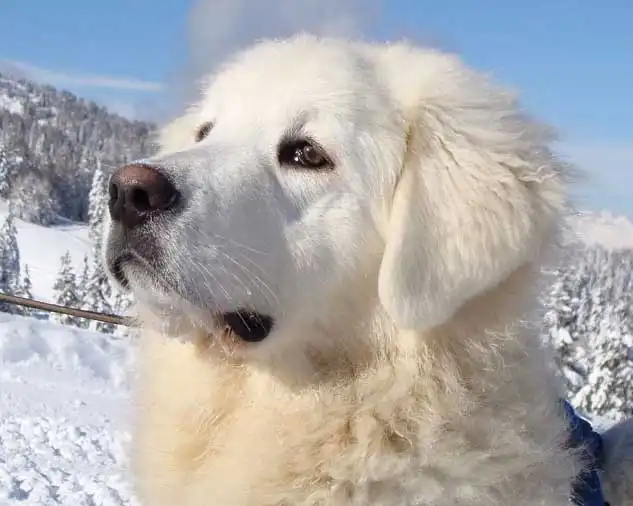
The Slovensky Cuvac (pronounced Slov-en-SKI Chew-votch) is an impressive breed that closely resembles the Great Pyrenees. This dog is not ideal for first-time owners, as it demands significant training to integrate smoothly into family life. Known for its affectionate nature, the Slovensky Cuvac is particularly fond of children and gets along well with other pets, often relishing playtime with youngsters. However, it’s crucial for the dog to understand that children are neither his peers nor subordinates within the household. This breed flourishes in expansive settings such as farms and ranches, where they have ample space to roam and engage in activities; keeping one in an apartment is not recommended due to its size. Furthermore, you can anticipate that this dog will be protective of your home and may exhibit a reserved demeanor around strangers.
Breed Origin
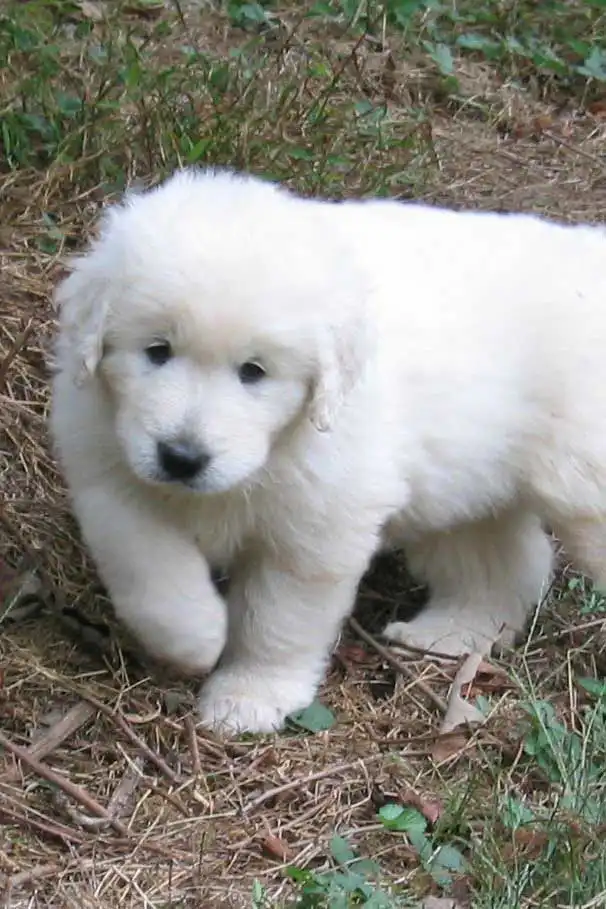
The Slovensky Cuvac's ancestry can be traced back to the Arctic wolf, a species that existed before the last ice age. Fossil findings in Europe’s mountainous regions, especially near glacial boundaries, validate the Arctic wolf's presence in areas like the Balkans, Caucasus, Carpathians, Rodope Mountains, as well as the Abruzzi, Alps, and Pyrenees. Furthermore, remains of the Slovensky Cuvac have been discovered in these locations and in Scandinavia, largely due to the work of Swedish explorer Wahlenberg. In the past, the Slovensky Cuvac was essential to the nomadic Slovak mountain communities, who depended on these dogs for livestock protection, property security, cart pulling, and companionship. This group, known as the Wallachischer Bund, was primarily located in Kaschau and was marked by its autonomy, avoiding the forced labor that was common in medieval society. They produced sheep’s cheese and other goods for trade, enabling them to prosper without external coercion. As traders visited the region to buy cheese and other products, they often found themselves enchanted by the fluffy, white puppies of the Slovensky Cuvac, which contributed to the breed's rising popularity in lowland areas. Over three decades ago, Anton Hruza, a professor at Brno Veterinary College, initiated the official stud book for the Slovensky Cuvac, with the breed club established in Bratislava. The first recognized kennel for this breed was named Ze zlaté studny, meaning "of the Golden Fountain."
Breed Appearance
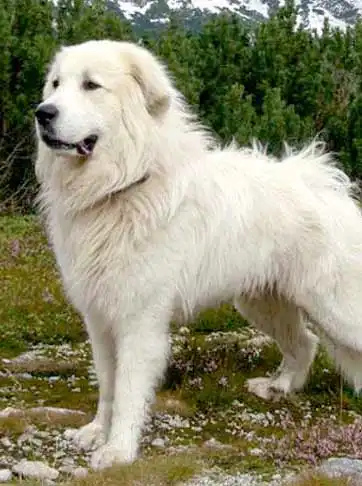
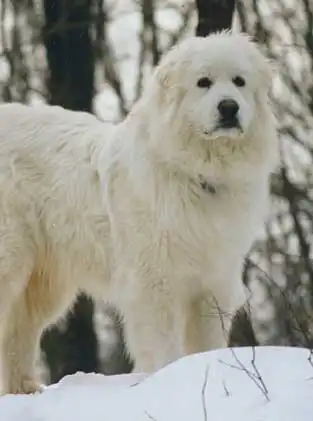
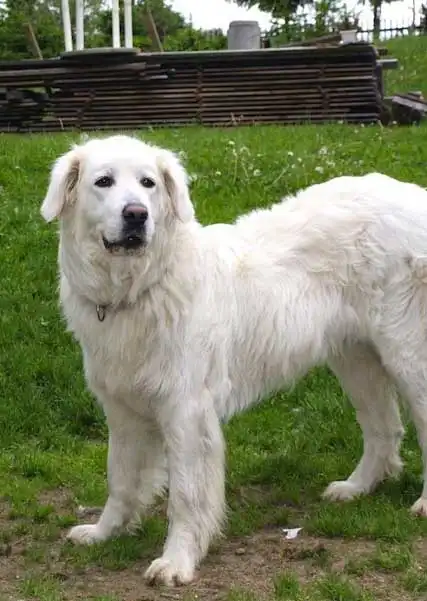
The Slovensky Cuvac is a classic mountain dog, easily recognized by its large head and striking white fur. This breed radiates self-assurance and possesses a natural alertness, often exhibiting a wary attitude towards strangers. Its coat is thick and consistently medium to long in length, except for the head and legs, where the hair is shorter and more fitted. Unlike some other breeds, the Slovensky Cuvac does not have feathering on its tail, ears, or the back of its legs. The undercoat is remarkably soft and dense, typically measuring between half to two-thirds the length of the outer coat, which can range from 5 to 15 centimeters. The topcoat has a moderate wave, especially noticeable around the neck, while the waves on the back blend smoothly. This outer layer is designed to be coarse, offering insulation and protection from harsh weather. The breed features a black nose and dark pigmentation around the lips and eyes, which are oval and deep brown. Although the Slovensky Cuvac is primarily white, a slight yellowish tint on the ears is acceptable, though not ideal.
Care Routine
The Slovensky Cuvac is generally a low-maintenance breed. However, to keep his coat in good condition, he should be groomed weekly using a pin brush and a metal comb. This breed undergoes substantial shedding twice a year, which requires daily brushing and warm baths once a week during those times. When bathing, it's recommended to use a whitening shampoo to enhance the coat's brightness. The warmth of the water will help loosen the shedding fur, making the grooming process more effective. His undercoat, which is wool-like, can be quite labor-intensive to brush, so be ready to dedicate several hours each day until the shedding is finished. Additionally, remember to trim his nails and the hair between his paw pads as necessary. Regular ear checks and cleaning are important to prevent infections, and establishing a dental care routine early on will support healthy teeth and gums. Starting to brush his teeth when he is young will help him get used to the process.
Behavior & Temperament
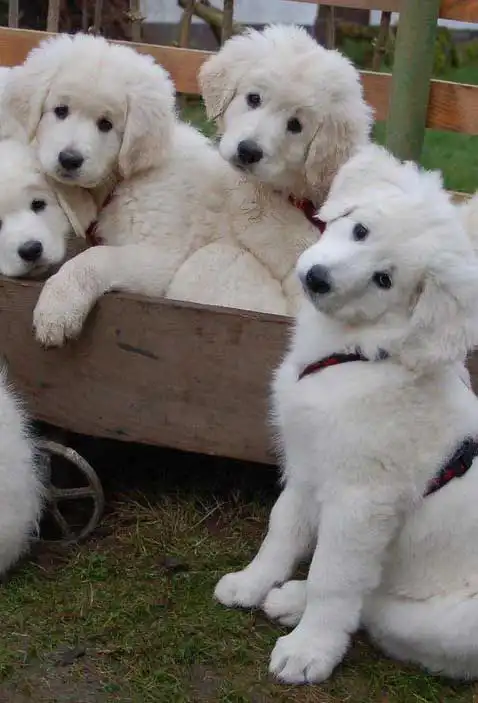
The Slovensky Cuvac is a devoted companion and a courageous guardian, always ready to defend his family and livestock from any danger. He is naturally wary of strangers, often displaying suspicion towards unfamiliar people or animals that enter his territory. To ensure his safety in your yard, a robust, high fence is necessary. Although he typically maintains a calm demeanor, he shows a playful side when interacting with his family. This breed is generally good with children, but it’s vital that he understands the family hierarchy; he should never be allowed to take charge over any human. Supervision is essential when he is around children outside the family, as he might view them as a threat and respond aggressively. A confident, assertive owner and consistent training are key to helping him become a well-adjusted member of the household. The Slovensky Cuvac is not recommended for first-time dog owners.
Play & Exercise
Things to Know
Cups Per Day
3.0 Cups
Daily Activity
60 Minutes
Average Lifespan
12 Years
Origin
Ancient times
Type
Pure Breeds
Size
Large
Origin Country
Slovakia
Brush Frequency
Weekly
Coat Texture
Wavy
Register
Your kids have been begging for a pet forever, and you've recently decided that it's time for your family to get a new addition -- a dog! While everyone is excited for the new arrival, you're wondering if you need to have a dog license. How much does it cost? Is it required? Where do you get one?
Member Clubs

PETINNATE
Guardian Dog

AKC
Foundation Stock Service

UKC
Guardian Dog
Height & Weight
Weight
82 lbs (37 kg)Male: 88 lbs (40 kg) , Female: 75 lbs (34 kg)
Height
24 inches (61 sm)Male: 26 inches (66 sm) , Female: 23 inches (58 sm)
6 Months
38 lbs ( m 38 lbs, f 38 lbs )
17 inches ( m 17 inches, f 17 inches )
12 Months
62 lbs ( m 62 lbs, f 62 lbs )
21 inches ( m 21 inches, f 21 inches )
18 Months
75 lbs ( m 75 lbs, f 75 lbs )
23 inches ( m 23 inches, f 23 inches )
Eye Colors
Brown

Nose Colors
Black
Coat Colors
White