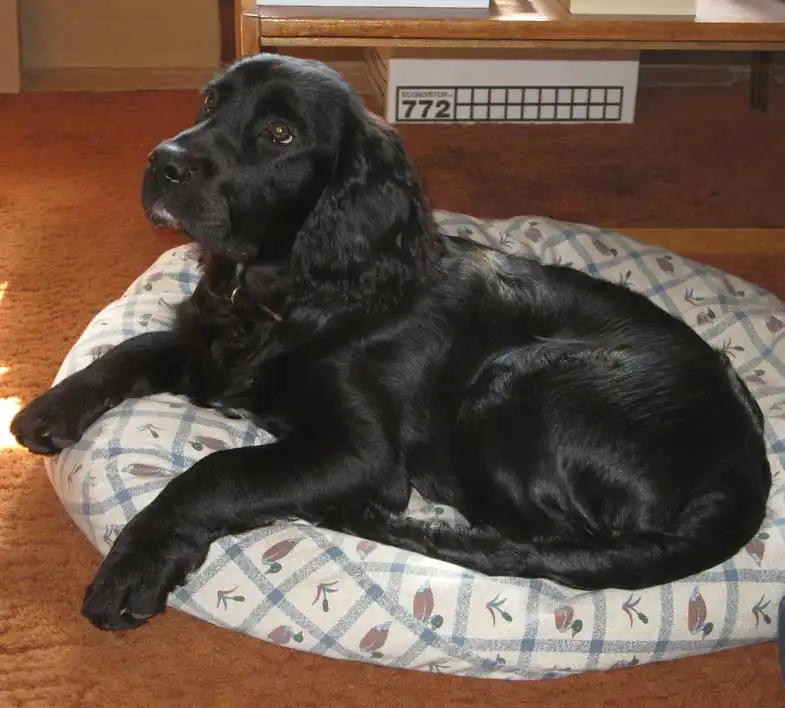
Spangold Retriever
The Spangold Retriever is a hybrid breed that emerges from the crossbreeding of an English Springer Spaniel and a Golden Retriever. This sizable dog is celebrated for his loving disposition, making him an excellent choice for families, especially those with young children. Although he is not excessively energetic, which suits individuals who prefer a more laid-back lifestyle, he still needs regular exercise to maintain his health and happiness. Thanks to his keen intelligence, the Spangold Retriever is generally straightforward to train and housebreak. Moreover, he acts as a dependable watchdog. His moderate shedding necessitates a fair amount of grooming, and he thrives best in homes that feature a fenced yard.
Breed Origin
The Spangold Retriever is a hybrid dog breed, and while it is not particularly uncommon, its exact lineage remains somewhat ambiguous. To better understand the history of the Spangold Retriever, one can delve into the backgrounds of its parent breeds. It is generally accepted that all Spaniel breeds can trace their ancestry back to Spain, from where they were brought to Europe by Roman invaders. Historical references to Spaniels can be found in Welsh texts dating as far back as 300 A.D., highlighting their long-standing presence. Initially, Spaniels were employed to flush out small game prior to the invention of firearms. Even after guns became prevalent, their ability to drive prey into the open continued to be highly regarded. Throughout the 19th century, Spaniels were favored as hunting companions across Europe. The first English Springer Spaniel arrived in Canada in 1913, and by 1923, the American Kennel Club had officially registered its first English Springer Spaniel. The modern Golden Retriever was developed in Scotland on Lord Tweedmouth's estate. A passionate waterfowl hunter, Lord Tweedmouth carefully recorded his breeding practices with the goal of producing an outstanding retrieving dog. He aimed for a breed that not only possessed a keen sense of smell but also formed a strong bond with its human hunting partner, setting it apart from other hunting breeds of the era. His aspiration was to create a loyal and well-behaved dog, both in the field and at home. To realize this vision, Lord Tweedmouth paired his hunting dog, Nous, with the now-extinct Tweed Water Spaniel, known for its gentle nature, loyalty, and exceptional retrieving abilities—qualities that would later characterize the Golden Retriever. He subsequently bred the resulting puppies with both wavy and flat-coated Retrievers, as well as a Red Setter, ultimately leading to the establishment of the Golden Retriever as we know it today.
Breed Appearance
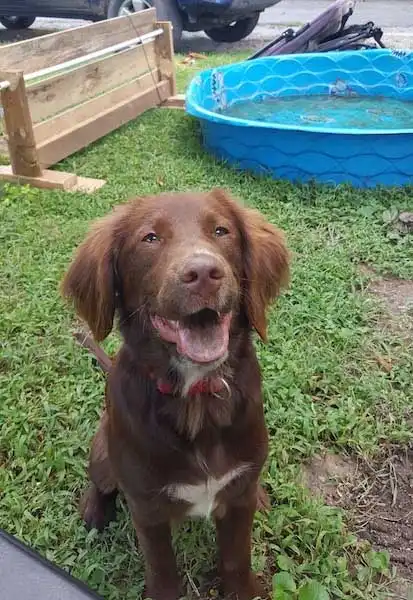
The Spangold Retriever is a large breed, usually reaching about sixty-five pounds at maturity, with females typically being slightly lighter. The coloration of its coat is determined by the dominant characteristics of its parent breeds, leading to a diverse range of appearances. This breed can be found in shades such as black with white markings, tan with white highlights, or red with white accents. Additionally, it may have a light cream coat sprinkled with red speckles, a nod to its English Springer Spaniel heritage. The Spangold Retriever features a dense coat that varies from medium to long in length. Its tail is long and hangs low, often showing some feathering, which can also be seen on its legs and feet. The breed is characterized by its floppy ears, which may need special attention, and its large feet, which may include webbing.


Care Routine
The Spangold Retriever is known for shedding a considerable amount, necessitating regular grooming. To maintain a tangle-free coat and manage excess hair, it’s best to brush him two to three times weekly. During the spring and fall, when shedding intensifies, daily brushing is advisable. If he inherits the floppy ears characteristic of his English Springer Spaniel ancestry, it’s important to clean his ears weekly with a damp cotton ball to eliminate any built-up dirt. Keep an eye out for any signs of redness or foul odors, as these may indicate an ear infection. Furthermore, brushing his teeth two to three times a week can help reduce tartar accumulation and combat bad breath, though daily brushing is preferable for optimal dental health. Finally, trim his nails every two to three weeks, unless they naturally wear down on their own.
Behavior & Temperament
The Spangold Retriever is a loving and loyal pet, making it an excellent choice for families with children of all ages. This breed is not only smart but also eager to learn, which makes training a delightful experience. While they enjoy spending quality time with their families, they need regular physical activity to maintain their well-being; without sufficient exercise, they may experience anxiety or depression. Renowned for their affectionate demeanor, Spangold Retrievers are also alert and will bark to alert their owners of any unusual activity, serving as effective watchdogs. Despite their protective nature, they are friendly and open to newcomers, often quickly forming connections with new acquaintances. Although they can adapt to apartment living, they truly flourish in homes with plenty of space to run and play, particularly in a fenced yard, as they possess a natural instinct for hunting.


Play & Exercise
The Spangold Retriever can easily become sluggish if not adequately stimulated, leading to potential behavioral challenges. To mitigate issues like separation anxiety or depression, this breed needs between 45 minutes to an hour of exercise daily. Engaging toys that stimulate their intellect are also essential for their well-being. A mix of daily walks and playtime in a safe environment will help ensure that the Spangold Retriever receives enough physical activity. They particularly enjoy trips to the dog park, and if you love hiking, this breed will keep up with you effortlessly. Renowned for their hunting skills, Spangold Retrievers thrive on activities that replicate retrieval tasks, providing both physical and mental engagement.
Things to Know
Cups Per Day
3.0 Cups
Daily Activity
45 Minutes
Average Lifespan
14 Years
Origin
Unknown
Type
Crossbreeds
Size
Large
Origin Country
Unknown
Brush Frequency
Daily
Coat Texture
Wavy
Register
Your kids have been begging for a pet forever, and you've recently decided that it's time for your family to get a new addition -- a dog! While everyone is excited for the new arrival, you're wondering if you need to have a dog license. How much does it cost? Is it required? Where do you get one?
Member Clubs

PETINNATE
Other
Height & Weight
Weight
63 lbs (29 kg)Male: 63 lbs (29 kg) , Female: 63 lbs (29 kg)
Height
19 inches (48 sm)Male: 22 inches (56 sm) , Female: 15 inches (38 sm)
6 Months
25 lbs ( m 25 lbs, f 25 lbs )
9 inches ( m 9 inches, f 9 inches )
12 Months
40 lbs ( m 40 lbs, f 40 lbs )
11 inches ( m 11 inches, f 11 inches )
18 Months
52 lbs ( m 52 lbs, f 52 lbs )
13 inches ( m 13 inches, f 13 inches )
Eye Colors
Hazel

Brown
Nose Colors
Black
Coat Colors
Red
Cream
Black