Spinone Italiano
The Spinone Italiano was initially developed as a multi-talented hunting dog, celebrated for its abilities in pointing, setting, and retrieving game. With an exceptional sense of smell and a sturdy coat, this breed excels in outdoor environments. Although its hunting instincts are prominent, the Spinone Italiano also serves as a wonderful companion for active families. This breed is not only intelligent and energetic but also affectionate, thriving on strong family connections and active participation in daily activities. Proper care for a Spinone involves diligent attention to ear and dental hygiene, along with regular grooming. To promote their overall health, it is crucial to fulfill their exercise needs; a combination of consistent training and patient nurturing will enable this breed to achieve its full potential.
Breed Origin
The Spinone Italiano boasts a deep and storied heritage, characterized by various names and historical mentions. The name "Spinone" comes from the Italian word for spine or thorn, which aptly describes both the texture of its coat and its adeptness at maneuvering through prickly underbrush during hunts. Often called the Italian Griffon, this breed's lineage can be traced back to 500 BC in the Piedmont region of Italy. By the Renaissance period, the Spinone had established itself as an esteemed hunting dog, frequently depicted in artworks from the 14th and 15th centuries. The precise origins of the Spinone Italiano are somewhat unclear, owing to its long history of breeding. Some hypotheses propose that its forebears were a blend of White Mastiffs, French Griffons, and Italian Setters, potentially mixed with dogs introduced by Greek traders. Regardless of its exact ancestry, like many Italian breeds, the Spinone has roots in ancient stock. For many years, the Spinone flourished in Italy, but its popularity declined after World War II with the arrival of other hunting breeds. Facing the risk of extinction, a small group of passionate breeders committed themselves to revitalize the Spinone and restore its status as an exceptional hunting partner. Despite its lengthy history, the American Kennel Club only granted official recognition to the Spinone Italiano in 2000. While it may not be as familiar in the United States, this remarkable hunting dog continues to be a beloved choice in Italy, France, and Scandinavian countries today.
Breed Appearance
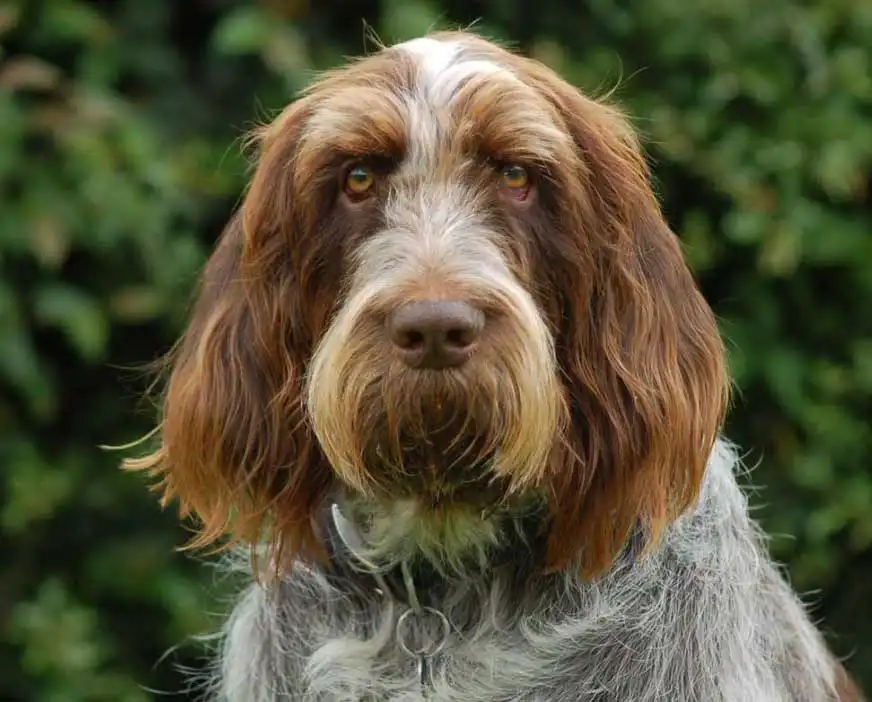
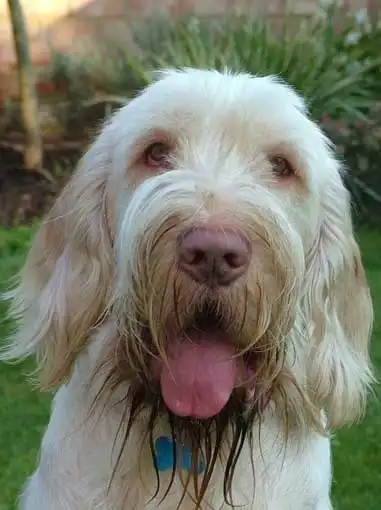
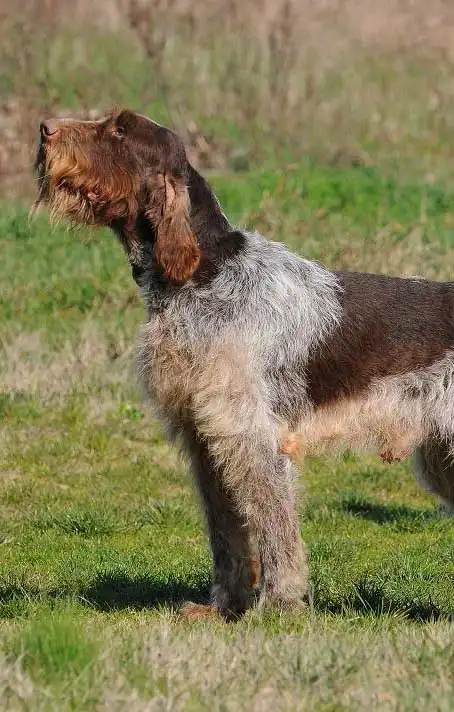
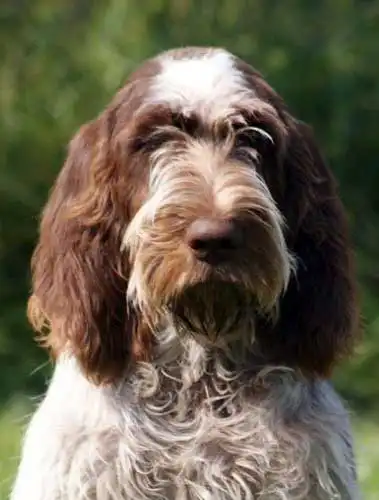
The Spinone Italiano is a robust and substantial breed, known for its muscular build and strong bone structure. Males generally stand about two inches taller than females, with their weight appropriately matching their size. This breed is distinguished by its elongated head, which carries a kind and intelligent expression. From a frontal view, the muzzle appears square, framed by tight lips and exhibiting either a scissor or level bite. The nose is large and spongy, featuring wide, open nostrils. The Spinone's eyes are gentle and can range in color from a warm brownish-yellow to deep brown, complementing the coat beautifully. The ears hang low, below the level of the eyes, are triangular in shape, and do not stand erect. From the front, the forelegs are straight and muscular, leading to long limbs that end in large, round, compact feet with well-arched toes. The hind legs are powerful, showcasing strong thighs and stifles that are not overly angular, which enhances the breed's agility and movement. These hind legs are lean and perpendicular to the ground, concluding with slightly oval-shaped feet that also have well-arched toes. The Spinone's tail is aligned with its back and is typically held either horizontally or downward.
Care Routine
The Spinone Italiano is characterized by its natural look, featuring a medium-length, coarse coat that requires minimal maintenance. A simple routine of occasional brushing and hand stripping is usually enough to keep the fur untangled. However, the breed's long beard can trap moisture and develop an odor, so giving it special attention will help maintain its natural appearance and minimize any unpleasant smells. This breed also has rapidly growing nails that should be trimmed bi-monthly to prevent cracking and splitting. Introducing a grooming routine early in a puppy's life will help the Spinone become accustomed to the process, making it easier for both the dog and its owner. Regular dental hygiene is also advisable to reduce the buildup of bacteria. Additionally, the Spinone's ears are quite furry and hang down, which makes them more prone to infections. Regular inspections to remove dirt and debris, along with cleaning using a veterinarian-recommended solution, can greatly lower the risk of ear infections. As a larger breed, the Spinone is not ideal for being kept indoors for extended periods. Despite its capacity to enjoy long walks on trails, it has a relatively low energy level. Two daily walks are typically sufficient for an adult Spinone's exercise needs. With adequate physical activity, this breed can adapt well to apartment living or urban settings. Furthermore, the Spinone is versatile and can thrive in a variety of climates, whether hot or cold.
Behavior & Temperament
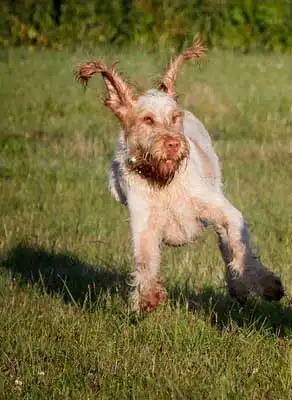
The Spinone Italiano is a loyal and gentle pet, celebrated for its loving disposition towards family members. This breed is particularly known for its compatibility with children; however, it is crucial to supervise interactions between kids and a Spinone, as with any dog. With a playful spirit and a desire for family engagement, the Spinone is also welcoming to strangers, which makes it less suitable as a guard dog. When socializing with other dogs, the Spinone exhibits a sweet and playful attitude, relishing their company. However, its hunting instincts may be triggered by smaller animals like cats, rabbits, and gerbils. While Spinones can live harmoniously with cats, they might display playful stalking tendencies. As a larger breed, Spinone Italianos need two walks each day to stay fit. Their energy levels are typically moderate and tend to wane with age. Nonetheless, they flourish during long walks in nature and are considered excellent hiking partners, having been bred to navigate diverse terrains over extended distances. Outdoors, they often move at a slow, deliberate pace, frequently checking in with their owners to ensure everyone is safe and on track. Training a Spinone can present some challenges due to their somewhat stubborn temperament, but they are intelligent dogs. It is often noted that while you cannot compel a Spinone to obey, you can certainly encourage them. The most successful training strategy involves a firm and consistent approach, ideally beginning when the dog is still young. Given their specific training needs, this breed may not be the best fit for first-time dog owners or those unable to commit adequate time to training.
Play & Exercise
Things to Know
Cups Per Day
3.0 Cups
Daily Activity
45 Minutes
Average Lifespan
11 Years
Origin
ancient times
Type
Pure Breeds
Size
Large
Origin Country
Italy
Brush Frequency
Daily
Coat Texture
Wiry
Register
Your kids have been begging for a pet forever, and you've recently decided that it's time for your family to get a new addition -- a dog! While everyone is excited for the new arrival, you're wondering if you need to have a dog license. How much does it cost? Is it required? Where do you get one?
Member Clubs

PETINNATE
Gun Dog

AKC
Sporting Group

UKC
Gun Dog
Height & Weight
Weight
72 lbs (33 kg)Male: 77 lbs (35 kg) , Female: 66 lbs (30 kg)
Height
24 inches (61 sm)Male: 25 inches (64 sm) , Female: 24 inches (61 sm)
6 Months
50 lbs ( m 50 lbs, f 50 lbs )
21 inches ( m 21 inches, f 21 inches )
12 Months
55 lbs ( m 55 lbs, f 55 lbs )
23 inches ( m 23 inches, f 23 inches )
18 Months
66 lbs ( m 66 lbs, f 66 lbs )
23 inches ( m 23 inches, f 23 inches )
Eye Colors
Brown

Amber
Nose Colors
Brown
Isabella
Coat Colors
Brown
Isabella
Fawn
White
Pied