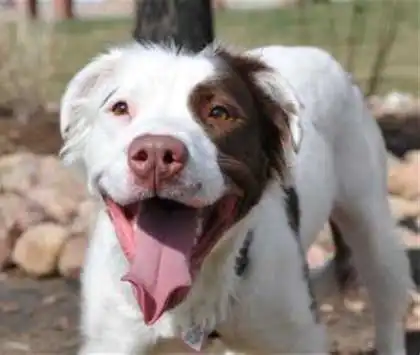
Springer Pit
The Springer Pit is a mixed breed resulting from the crossbreeding of an American Pit Bull Terrier and an English Springer Spaniel. These dogs are generally on the larger side, featuring short coats and a moderate tendency to shed. With a lifespan that can reach up to 15 years, they typically weigh between 35 and 55 pounds. Renowned for their playful disposition, Springer Pits are full of energy and need plenty of daily exercise to stay content and healthy. They enjoy engaging in activities such as fetch and flyball, which brings great joy to their owners. Furthermore, these dogs are intelligent and quick to respond to training, making it easy to teach them commands. They are also affectionate and sensitive, often finding it challenging to cope with being left alone for long periods.
Breed Origin
The Springer Pit is a hybrid breed resulting from the crossbreeding of an English Springer Spaniel and an American Pit Bull Terrier. The English Springer Spaniel is believed to have originated in Spain, as suggested by its name. This breed has a long and storied history, with mentions in Welsh legal texts dating back to 300 A.D. Artistic representations resembling the modern Springer Spaniel can be found in 16th and 17th-century paintings. Initially, Spaniels were used in hunting, where they would spring into action to drive small game or birds into a position for capture. As firearms became prevalent, these dogs adapted to help hunters by flushing out game. In the 19th and early 20th centuries, English breeders began to classify Spaniels based on their hunting functions rather than their breed. Smaller Spaniels were designated for hunting woodcock, leading to the term "Cocker," while larger ones were recognized for their ability to flush game, hence the name "Springers." The first English Springer Spaniel was introduced to America by a Canadian breeder in 1913. Since the 1940s, two distinct types of Springers have emerged: those bred for fieldwork and those intended for conformation shows. Fieldwork Springers are known for their exceptional endurance, speed, and keen sense of smell, and these two varieties are not interbred. The American Kennel Club officially recognized the English Springer Spaniel in 1910. Conversely, the American Pit Bull Terrier traces its lineage to the Bull and Terrier breeds developed in England during the 19th century for bull and bear baiting. After these cruel practices were banned, the dogs were repurposed for dog fighting. These "bull dogs" were bred to be aggressive towards other dogs but were also trained to be gentle with their handlers, resulting in a temperament that is protective yet affectionate towards humans. As a result, they became known as strong, loyal companions that are great with families. Upon arriving in America, these dogs were used for hunting, guarding property, and as loving pets. American breeders later developed a larger version of the original English breed, which came to be known as the American Pit Bull Terrier. In 1936, the American Kennel Club recognized this breed as the American Staffordshire Terrier, a name change intended to distance the dogs from their fighting background.
Breed Appearance
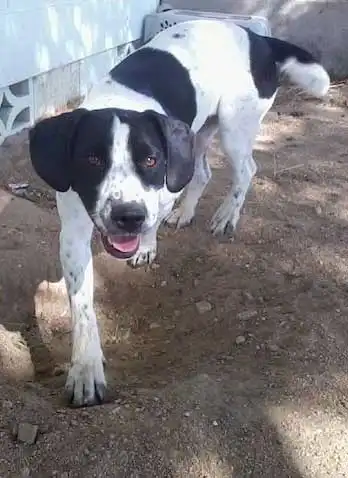
The Springer Pit is a sturdy breed known for its short to medium coat, which can appear in various colors such as black, white, blue, cream, brindle, brown, or combinations of two or three hues. This breed is distinguished by its muscular and compact build, featuring strong legs and paws that facilitate quick running and adept swimming, along with a long tail. Its powerful jaw muscles provide a scissor-like bite, and the breed has a large head adorned with long, floppy ears and soft, rounded eyes. The muzzle is elongated and narrower than the head, showcasing a prominent black or brown nose.


Care Routine
This hybrid breed requires minimal upkeep, making it a perfect option for those who may not have the time or resources for frequent grooming. She experiences moderate shedding, so it's recommended to use a deshedder a few times each week, along with an occasional bath to maintain her cleanliness. Regular ear inspections and cleanings are crucial to prevent infections, which can be accomplished with a cotton ball dampened with a cleaning solution. To combat tartar buildup and harmful bacteria, it's important to brush her teeth at least three times a week. Furthermore, her nails should be clipped once or twice a month, unless her natural activities help to naturally wear them down.
Behavior & Temperament
The Springer Pit is a cheerful, intelligent, and energetic dog, full of affection. She delights in playtime and loves to dash around in a yard or park, showcasing the natural prey drive characteristic of the English Springer Spaniel. It’s crucial to have a securely fenced area, as she tends to wander and could easily get lost or hurt. Her intelligence and loyalty make training straightforward, as she quickly responds to commands. This hybrid is exceptionally sociable, getting along well with people, other dogs, and various animals, and she is always eager to join in on the fun. However, she is not ideal for guarding property; although she may bark at first, her primary interest lies in playing and seeking affection. Additionally, the Springer Pit is quite sensitive and emotional; she finds it challenging to be left alone for long periods, which can lead to separation anxiety. If she becomes bored, she might start chewing on and damaging household items.


Play & Exercise
The Springer Spaniel originates from two highly active breeds, which means they need plenty of exercise to stay healthy and happy, as well as to avoid problematic behaviors like excessive barking or chewing. Ideally, they should be walked two to three times daily, with brisk walks or jogs being especially beneficial. Furthermore, these dogs flourish when engaged in activities that stimulate both their physical and mental skills. They particularly enjoy games such as fetch, tracking, or agility courses. Many Springer Spaniels also love to swim, whether in a large pond or a small kiddie pool. These dogs thrive in homes with spacious yards where they can run and play freely. If a large yard isn’t an option, regular visits to a park where they can explore, especially one with a pond or lake for swimming, will keep them happy.
Things to Know
Cups Per Day
2.5 Cups
Daily Activity
60 Minutes
Average Lifespan
13 Years
Origin
Unknown
Type
Crossbreeds
Size
Medium
Origin Country
Unknown
Brush Frequency
Weekly
Coat Texture
Straight
Register
Your kids have been begging for a pet forever, and you've recently decided that it's time for your family to get a new addition -- a dog! While everyone is excited for the new arrival, you're wondering if you need to have a dog license. How much does it cost? Is it required? Where do you get one?
Member Clubs

PETINNATE
Other
Height & Weight
Weight
45 lbs (20 kg)Male: 48 lbs (22 kg) , Female: 43 lbs (20 kg)
Height
21 inches (53 sm)Male: 21 inches (53 sm) , Female: 20 inches (51 sm)
6 Months
25 lbs ( m 25 lbs, f 25 lbs )
13 inches ( m 13 inches, f 13 inches )
12 Months
40 lbs ( m 40 lbs, f 40 lbs )
17 inches ( m 17 inches, f 17 inches )
18 Months
41 lbs ( m 41 lbs, f 41 lbs )
19 inches ( m 19 inches, f 19 inches )
Eye Colors
Blue

Hazel
Brown
Nose Colors
Black
Brown
Coat Colors
Blue
White
Brindle
Cream
Brown
Black