Swedish Elkhound
Jämthund, Swedish Moosehound, Norsk Elghund
The Swedish Elkhound, often known as the Jämthund, is an ancient breed of Spitz-type dog with a lineage that dates back thousands of years. This breed is distinctive for its wolf-like appearance and is thought to share a genetic connection with wolves. Historically, Swedish Elkhounds have been utilized for various purposes, such as tracking elk and protecting against bears and wolves. Despite their remarkable skills as working dogs, they are also recognized for their serene nature at home, making them wonderful companions. They embody an impressive blend of being both dedicated hunters and charming pets—this is truly no exaggeration. Over time, Swedish Elkhounds have taken on a variety of roles, including hunters, trackers, guard dogs, herders, sled dogs, and even participants in military or rescue missions, highlighting their adaptability. They are generally loving and playful with their families, yet they possess a high energy level that demands sufficient engagement to avoid boredom or frustration. Consequently, they flourish in active households or those with large yards or access to open spaces for exercise. Furthermore, their longer coats require regular grooming. In summary, the Swedish Elkhound has very few downsides, making it one of the most adaptable and well-rounded dog breeds available.
Breed Origin
The Swedish Elkhound traces its roots back to Jämtland, a central province in Sweden, where it was developed thousands of years ago. This area inspired the breed's original name, Jämthund. Historically, these dogs have held a vital place in the region, believed to have accompanied Vikings on their expeditions and served as multifunctional utility dogs for hunting and various other tasks. Primarily found in Scandinavia, they were one of the few breeds maintained by the Sami people, an indigenous Finno-Urgic group residing in the Arctic territories of Russia, Finland, Norway, and Sweden. The Swedish Elkhound is related to several other regional breeds, such as the Finnish Lapphund, Swedish Lapphund, Lapponian Herder, and the Norwegian Elkhound, which was considered the same breed until 1946, despite variations in color, pattern, and size. Notably, while many breeds were developed to mimic wolves, genetic research suggests that the Swedish Elkhound actually has wolf ancestry, stemming from the interbreeding of female wolves with local male dogs shortly after domestication. Throughout the years, these dogs have been employed for a variety of functions, including sledding, elk tracking, and as beloved family companions. In their native dialect, they were referred to as "bear dogs," highlighting their courage, as they were among the few breeds willing to confront a bear without fear. Moreover, they have served as protectors, watchdogs, and have even been utilized in military, police, and rescue operations, earning a reputation as one of the most versatile dog breeds. Despite their extensive history, which exceeds that of many other breeds, the Fédération Cynologique Internationale only established their breed standard in 2003, and they gained recognition from the United Kennel Club in 2006. Interestingly, even with their remarkable adaptability and utility, Swedish Elkhounds remain relatively uncommon outside their native region and are not the most popular breed locally.
Breed Appearance
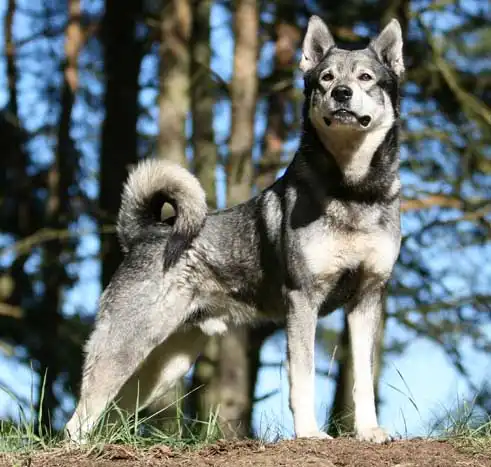
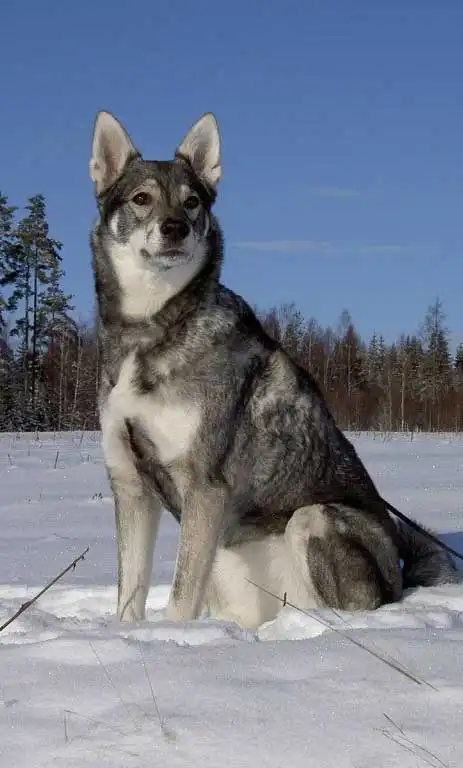
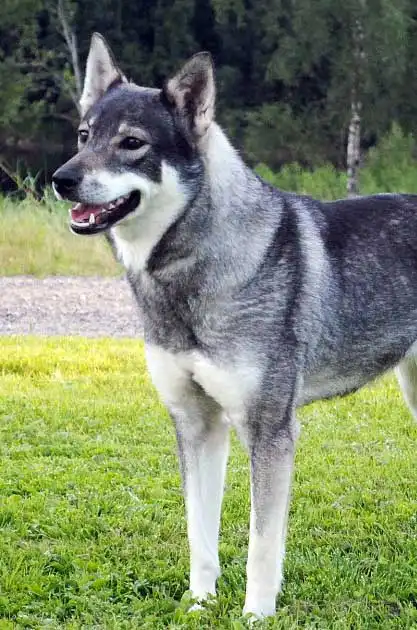
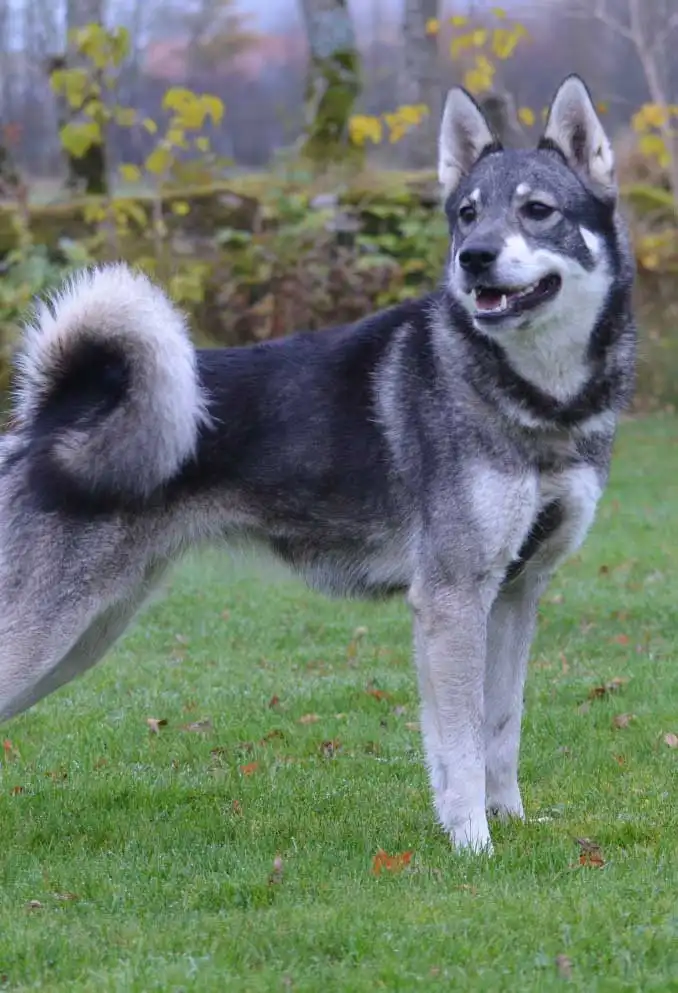
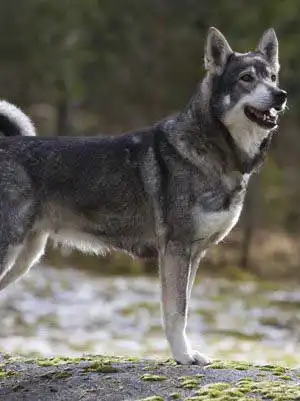
Swedish Elkhounds are medium to large-sized dogs, typically standing around two feet tall at the shoulder and weighing roughly 65 pounds. They exhibit a striking resemblance to wolves, particularly in their facial structure and distinctive double coat. This coat features a semi-long outer layer that lies close to the body without being flat, complemented by a thick, woolly undercoat. The undercoat is usually cream-colored, while the outer coat can range from light to dark grey. These dogs have long, broad heads with a pronounced stop and a tapered muzzle that culminates in a wide black nose. Their dark brown, oval-shaped eyes often reflect a calm yet intelligent expression. Their ears are erect, sturdy, and taper to a point, with hair covering both sides. Swedish Elkhounds possess long, strong necks that transition into well-defined shoulders and a straight, slightly sloping back. Their front legs are straight and robust, supported by substantial bone structure, and are separated by a deep, well-sprung chest that gently tucks in at the belly. When viewed from behind, their back legs are parallel, showcasing good angulation from the side and a healthy amount of muscle in the thighs. Their tails are thick, curled, and furry, held high above their backs.
Care Routine
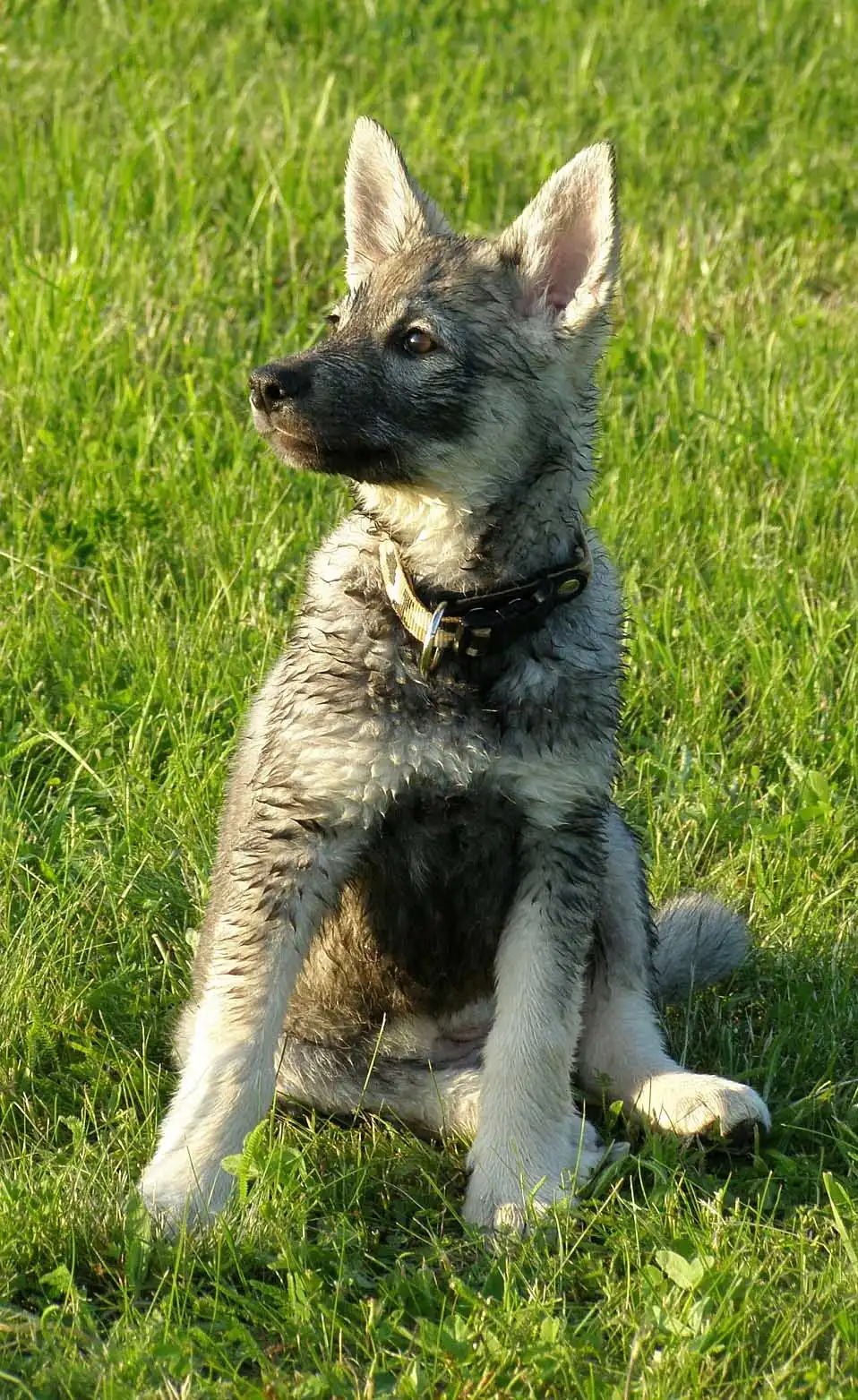
Swedish Elkhounds are considered a breed that requires moderate grooming. They shed quite a bit, which means daily brushing is essential to keep their coats healthy, eliminate loose hair, and prevent matting that can occur without regular attention. A slicker brush or a firm bristle brush is usually effective for this purpose, though a dematter may be necessary if matting arises. Bathing is not typically required unless the dog gets particularly dirty or develops an unpleasant smell; in fact, it's best to limit baths to maintain the natural oils in their fur and skin. In addition to grooming, it's important to regularly check and trim their nails as needed, and to brush their teeth weekly.
Behavior & Temperament
Swedish Elkhounds are celebrated for their well-rounded temperament and adaptability, making them remarkable companions in both indoor and outdoor settings. When outdoors, they stand out as one of the most versatile and hardworking breeds, capable of thriving in a variety of tasks when given proper training. This training is generally suitable for those with moderate experience who can adopt a firm and consistent approach. In their work, these dogs display courage, confidence, and a strong dedication, showcasing impressive determination and endurance. As their name implies, Swedish Elkhounds have a historical role in hunting elk and other large game, but they are also skilled at tracking smaller prey. Notably, they can confront wolves and even bears, demonstrating a level of bravery that is uncommon among dog breeds. This protective nature carries over into their home life, where they form strong bonds with their families, viewing them as part of their pack. They serve as vigilant guardians, alerting their families to potential threats with a powerful bark and providing steadfast protection, which makes them excellent watchdogs. Affectionate and playful, these dogs are full of energy due to their historical roles, requiring regular exercise and plenty of attention. Consequently, they flourish in active households or with families willing to invest time and space to meet their physical needs. Despite their lively disposition, Swedish Elkhounds usually maintain a calm presence at home and exhibit considerable patience, making them naturally good with children. However, like all breeds, they benefit from thorough training and socialization to fully realize their potential. It’s worth noting that they may exhibit some aggression towards other dogs, especially those of the same sex, as their pack mentality emphasizes a strict hierarchy. This highlights the importance of comprehensive training, as they may try to take on the alpha role if there is any ambiguity. Overall, with their strong work ethic, desire to be part of a family, and excellent temperament, Swedish Elkhounds are considered exceptional all-around dogs.
Play & Exercise
Swedish Elkhounds, similar to various working breeds, are characterized by their high energy and need for consistent, vigorous physical activity to stay happy, healthy, and well-behaved. Their intelligence necessitates significant mental stimulation, making it crucial to engage them in activities that challenge both their minds and bodies. Without this engagement, they may experience frustration or boredom, potentially resulting in negative behaviors. These dogs flourish in spacious environments where they can run freely and explore, which aligns with their naturally inquisitive disposition. Therefore, they are ideally suited for larger homes that provide plenty of room for adventure. It is recommended that they receive at least 90 minutes of exercise daily.
Things to Know
Cups Per Day
3.5 Cups
Daily Activity
90 Minutes
Average Lifespan
13 Years
Origin
Ancient Times
Type
Pure Breeds
Size
Large
Origin Country
Sweden
Brush Frequency
Daily
Coat Texture
Straight
Register
Your kids have been begging for a pet forever, and you've recently decided that it's time for your family to get a new addition -- a dog! While everyone is excited for the new arrival, you're wondering if you need to have a dog license. How much does it cost? Is it required? Where do you get one?
Member Clubs

PETINNATE
Northern Breed

UKC
Northern Breed
Height & Weight
Weight
66 lbs (30 kg)Male: 72 lbs (33 kg) , Female: 61 lbs (28 kg)
Height
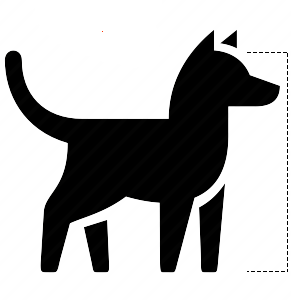
23 inches (58 sm)Male: 24 inches (61 sm) , Female: 22 inches (56 sm)
6 Months
43 lbs ( m 43 lbs, f 43 lbs )
15 inches ( m 15 inches, f 15 inches )
12 Months
51 lbs ( m 51 lbs, f 51 lbs )
18 inches ( m 18 inches, f 18 inches )
18 Months
60 lbs ( m 60 lbs, f 60 lbs )
22 inches ( m 22 inches, f 22 inches )
Eye Colors
Brown

Nose Colors
Black
Coat Colors
Gray
Cream