Teddy Roosevelt Terrier
Teddy Roosevelt Rat Terrier, Bench Legged Feist, Short-legged Rat Terrier, TRT
The Teddy Roosevelt Terrier is a compact dog that exudes a vibrant personality. Full of energy, this breed requires ample physical exercise and mental stimulation to keep them entertained and out of trouble. They are playful, enjoy digging, and are known for their vocal nature. This breed emerged from the crossbreeding of the Rat Terrier and the Short-Legged Rat Terrier. Although some claim that President Theodore Roosevelt contributed to the breed's creation, there is no definitive proof of this. Nonetheless, it is a fact that President Roosevelt was an enthusiastic owner of several of these spirited dogs.
Breed Origin
The Teddy Roosevelt Terrier, a breed that originated in the United States, has its roots in terriers brought by English miners and other working-class immigrants. It is commonly believed that this breed descends from a variety of terriers, such as the Manchester Terrier, Bull Terrier, Smooth Fox Terrier, Beagle, Whippet, and Italian Greyhound. Additionally, the now-extinct White English Terrier may have played a role in its genetic background. Originally, the Teddy Roosevelt Terrier was employed for ratting and was often called the "Rat Terrier." Over time, two distinct types of Rat Terriers emerged, distinguished by their leg length. The shorter-legged variant was designated the Teddy Roosevelt Terrier, a name that many attribute to President Theodore Roosevelt, even though there is no definitive evidence linking him directly to the breed's development. Nonetheless, it is documented that he owned several of these short-legged Rat Terriers, and some enthusiasts still refer to them as Teddy Roosevelt Rat Terriers. While the Teddy Roosevelt Terrier is frequently associated with the Rat Terrier, the two breeds have unique official standards. In 1999, the United Kennel Club (UKC) recognized the Teddy Roosevelt Terrier as a distinct breed, separate from the Rat Terrier. Both breeds are fully acknowledged by the UKC and can compete independently in all UKC-sanctioned events. Although no other registry has recognized the Teddy Roosevelt Terrier thus far, the American Kennel Club began including the breed in its Foundation Stock Service in 2016.
Breed Appearance
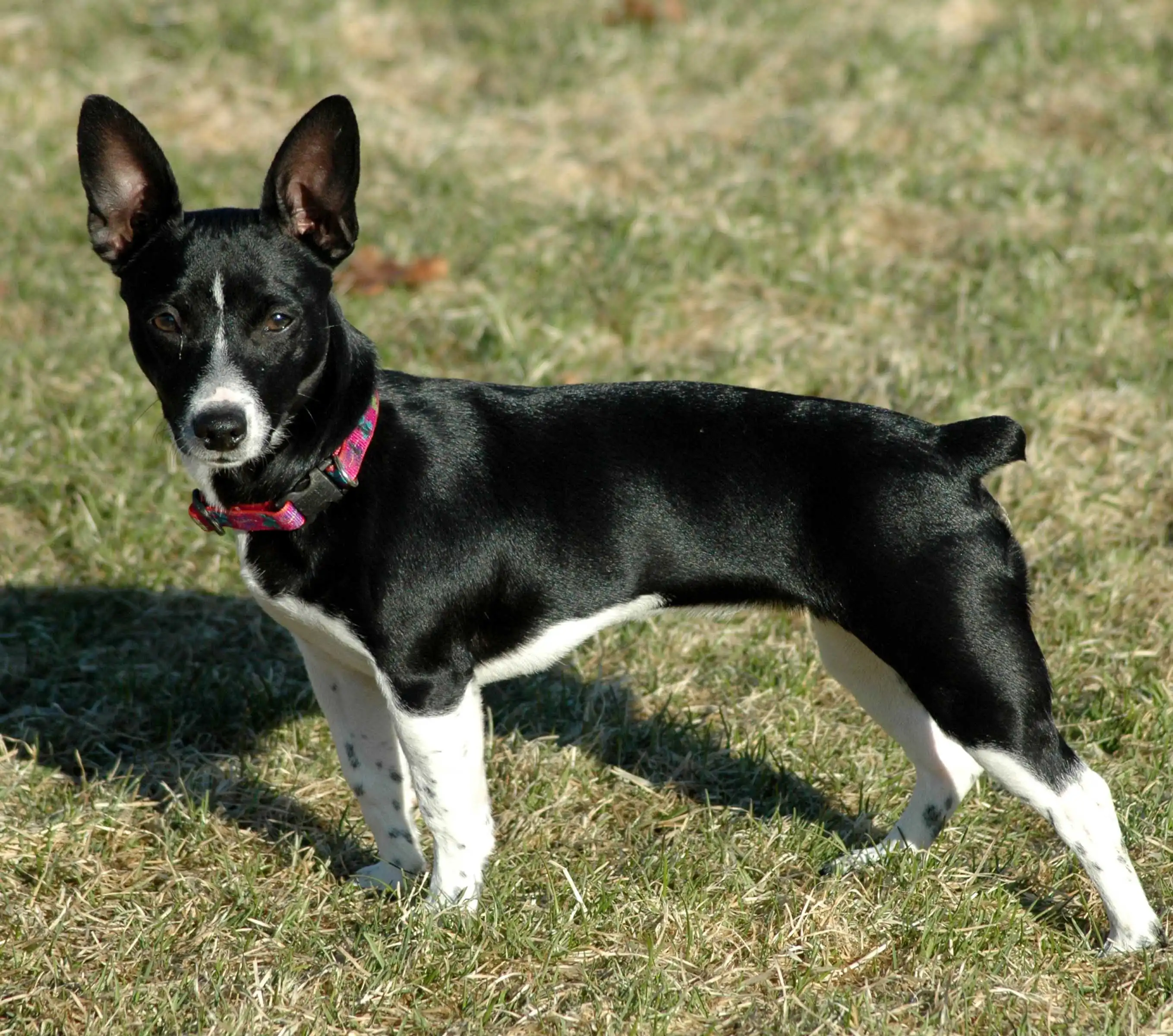
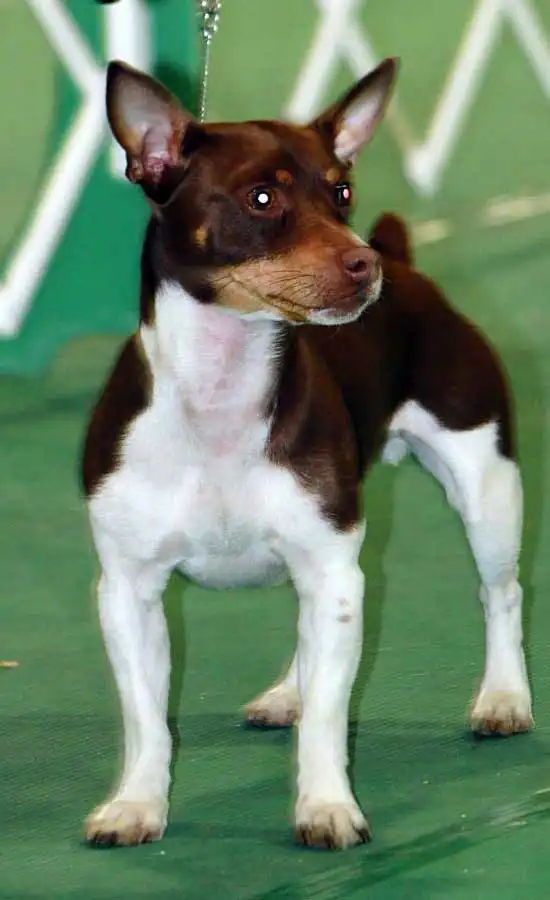
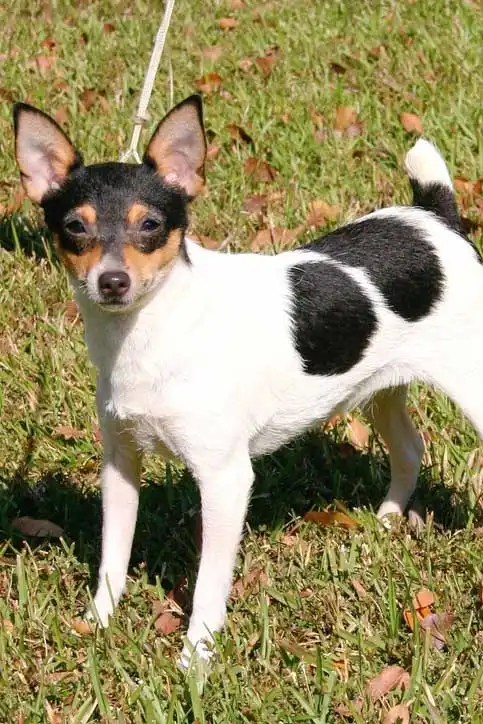
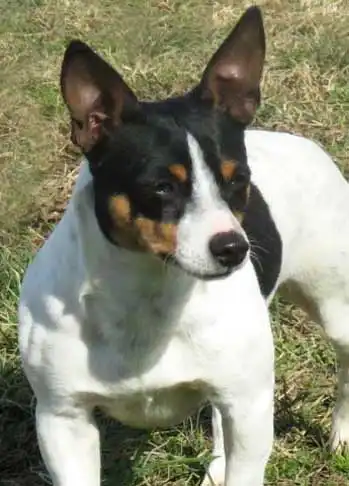
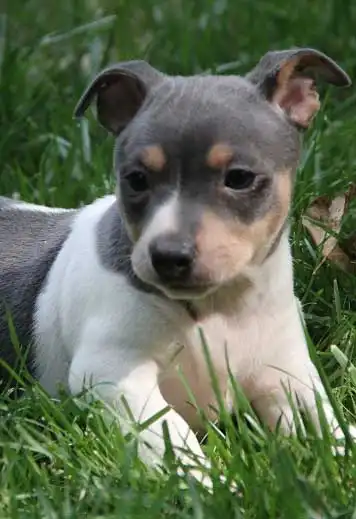
The Teddy Roosevelt Terrier is a sturdy, short-legged breed recognized for its energetic disposition. It boasts a broad head with a slightly rounded skull that resembles a wedge, proportionate to its body structure. This breed has a compact, boxy build, with its length ideally equal to its height, measured from the breastbone to the rear and from the shoulder to the ground. Its ears are triangular and stand erect at the sides of the skull, although button or slightly folded ears are also acceptable. While a docked tail is preferred, a naturally upright tail or a natural bobtail is allowed. Typically, the breed features a black nose and dark brown eyes, though variations may include a self-colored nose and lighter eyes. The Teddy Roosevelt Terrier has a short, dense coat that comes in a variety of colors and patterns, including combinations like white, black, red, tri-color, black and tan, lemon and white, black and white, blue and white, red and white, as well as white with chocolate or tan.
Care Routine
The Teddy Roosevelt Terrier is a breed that requires minimal grooming, typically needing attention just once a month unless preparations for conformation shows are underway. In such cases, the coat should be maintained with weekly grooming sessions and baths every four to six weeks. When brushing, it's best to use a soft slicker brush or a firm bristle brush to effectively eliminate dirt and loose fur. During bath time, choose a mild shampoo and make sure to dry him thoroughly before letting him outside, as he has a tendency to roll in dirt after a wash. Nail trimming should be performed as needed, generally every few weeks, using either clippers or a nail grinder to keep them neat. Furthermore, his teeth should be brushed at least weekly, although brushing two to three times a week is ideal for maintaining good dental health.
Behavior & Temperament
The Teddy Roosevelt Terrier is a lively and spirited breed, celebrated for its loving disposition. This dog forms strong bonds with its family and typically interacts well with other canines. However, it's important to exercise caution around smaller animals like ferrets, hamsters, or guinea pigs, as its natural hunting instincts may emerge. With a keen desire to hunt, this terrier is relentless when it comes to pursuing pests in the home or yard. To keep this energetic terrier happy, it requires ample exercise and mental stimulation. It excels in various canine sports and is not well-suited for being left alone in the yard for long stretches, as this can lead to undesirable behaviors. In an effort to entertain itself, it may dig or engage in playful mischief, such as tugging clothes off the line. Effective training is crucial for setting boundaries at home, and with proper instruction, this breed can also be trained to act as a reliable guard dog.
Play & Exercise
Things to Know
Cups Per Day
0.8 Cups
Daily Activity
60 Minutes
Average Lifespan
16 Years
Origin
1900s
Type
Pure Breeds
Size
Small
Origin Country
United States
Brush Frequency
Monthly
Coat Texture
Straight
Register
Your kids have been begging for a pet forever, and you've recently decided that it's time for your family to get a new addition -- a dog! While everyone is excited for the new arrival, you're wondering if you need to have a dog license. How much does it cost? Is it required? Where do you get one?
Member Clubs

PETINNATE
Terrier

AKC
Foundation Stock Service

UKC
Terrier
Height & Weight
Weight
18 lbs (8 kg)Male: 18 lbs (8 kg) , Female: 18 lbs (8 kg)
Height
12 inches (30 sm)Male: 12 inches (30 sm) , Female: 12 inches (30 sm)
6 Months
10 lbs ( m 10 lbs, f 10 lbs )
7 inches ( m 7 inches, f 7 inches )
12 Months
14 lbs ( m 14 lbs, f 14 lbs )
10 inches ( m 10 inches, f 10 inches )
18 Months
17 lbs ( m 17 lbs, f 17 lbs )
11 inches ( m 11 inches, f 11 inches )
Eye Colors
Hazel

Brown
Amber
Nose Colors
Blue
Black
Brown
Coat Colors
Black
White
Brown
Red
Blue

Pied