Thai Bangkaew
The Thai Bangkaew is a breed known for its cleverness and strong-willed nature, which can pose challenges for inexperienced dog owners who may find it difficult to manage. This breed has a history that spans over a hundred years, originating from a mix of the indigenous Thai domestic dog and the now-extinct Asiatic wild jackal. Although there is limited documentation about its development, it is generally accepted that the Thai Bangkaew emerged in the village of Bangkaew, located near the Bang Rakam District in central Thailand. It is also believed that the breed was initially cultivated at a monastery called Wat Bangkaew. In terms of appearance, the Thai Bangkaew shares similarities with the Spitz family, showcasing a double coat and a unique plume tail. While it tends to be cautious around unfamiliar people, this breed is incredibly devoted to its family and will protect them from any perceived dangers. Renowned for its intelligence and keen hunting abilities, the Thai Bangkaew requires relatively simple grooming, with regular brushing and daily exercise being crucial for its well-being.
Breed Origin
The Thai Bangkaew breed originated in Thailand during the 1900s, specifically in the village of Bangkaew, located in the Bang Rakam District of Phitsanulok Province. This region is notable for the Wat Bangkaew monastery, which is considered the breed's birthplace. It is believed that the Thai Bangkaew resulted from a cross between local domestic dogs and the Asiatic jackal, ultimately exhibiting traits characteristic of the Spitz family. Historical records indicate that Luang Puh Maak Metharee, the third abbot of Wat Bangkaew, was instrumental in the breed's formation. He adopted a pregnant dog that had mated with a jackal, leading to a litter of four puppies. These puppies are thought to have mated with herding dogs belonging to the Song community in the nearby village of Huay Chan. Initially, the Thai Bangkaew was utilized as a guardian, known for its barking that alerted homeowners to potential dangers. In 1957, a selective breeding initiative was launched, which marked the official development of the Thai Bangkaew as it is recognized today. Genetic research has validated its ancestry, linking it to both the domestic Thai dog and the Asiatic jackal. However, information about the breed remains limited, and documentation is sparse. At present, the Thai Bangkaew is not acknowledged by the American Kennel Club (AKC), and there are few media portrayals of this distinctive breed.
Breed Appearance
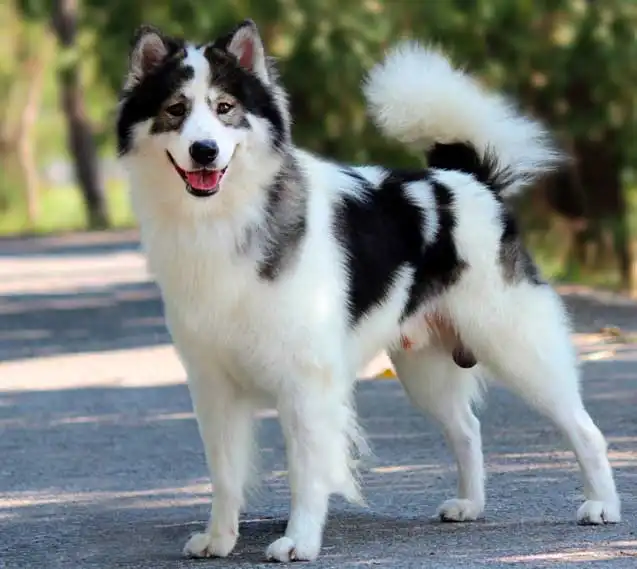
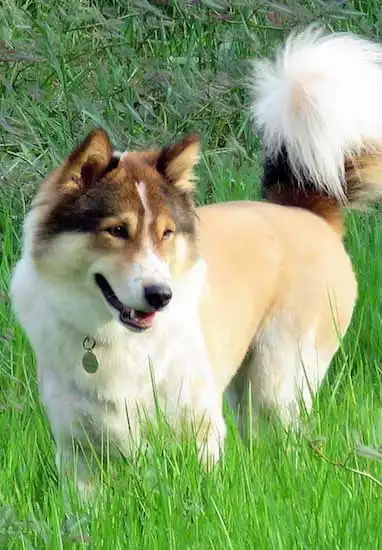
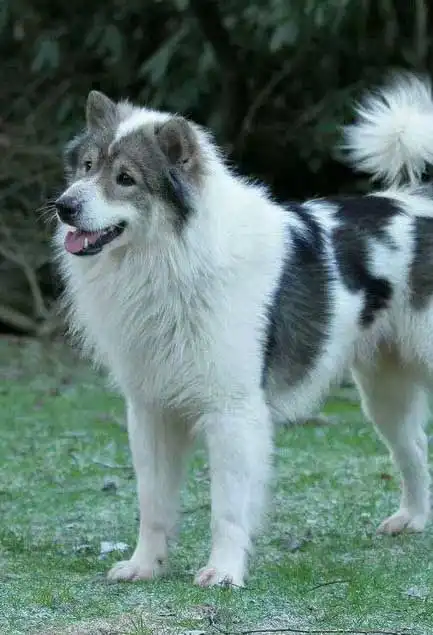
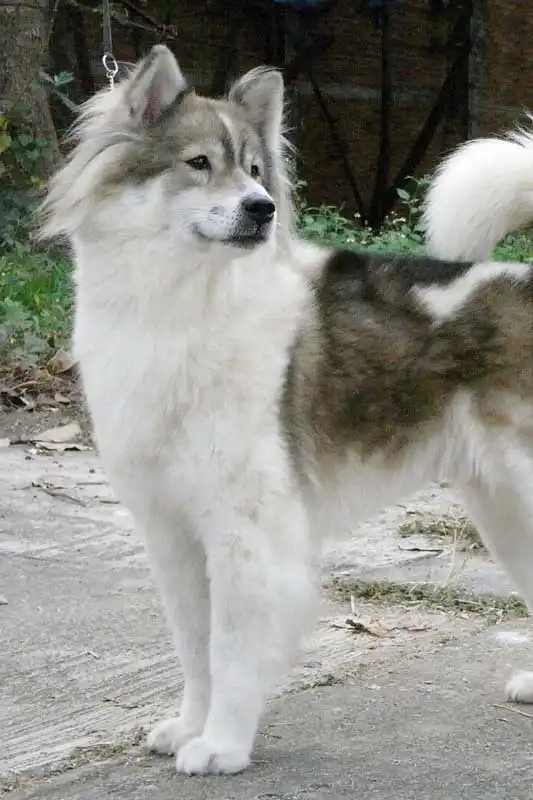
The Thai Bangkaew is characterized by a medium-length, coarse outer coat complemented by a soft, dense undercoat that is both water-resistant and easy to care for. A prominent ruff encircles its neck and shoulders, resembling a mane. Its tail is plume-like, arching elegantly over its back. This breed is known for its athleticism, moving with a smooth and graceful stride. The coat displays a variety of color combinations, such as white, gray and white, red and white, black and white, white and tan, and brown and white. The Thai Bangkaew has a square, well-balanced build with a broad, deep chest, and both its neck and chest are strong and muscular. Its head is square-shaped, featuring two alert, pointed ears, and it has average-sized brown eyes along with a scissors bite in its teeth.
Care Routine
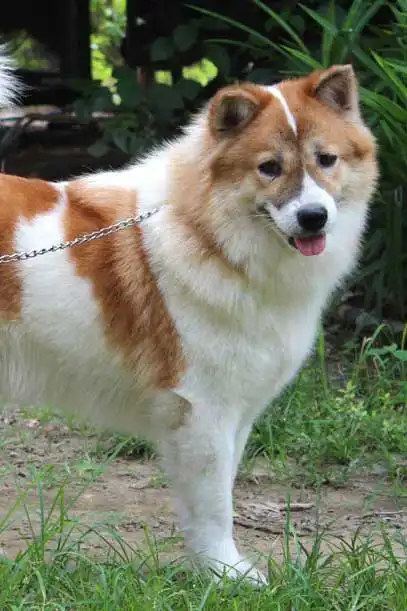
The Thai Bangkaew is characterized by a medium-length double coat that requires regular grooming to maintain its condition. To avoid matting, it is recommended to brush the coat daily. Although frequent baths are not necessary, if you prefer to keep your dog clean, bathing every 6 to 8 weeks is advisable. Overbathing can lead to an excess of natural oils, which may result in a greasy appearance. This breed is not hypoallergenic and tends to shed regularly, but they generally do not emit a strong odor. As a lively and energetic breed, the Thai Bangkaew requires plenty of mental and physical activities. A home with a large yard is ideal, as it allows this agile dog to run and play energetically. While they can adapt to both urban and rural settings, they perform best in rural areas where they have more room to expend their energy. Their double coat enables them to thrive in various climates, offering protection against extreme temperatures. There are no specific dietary needs for this breed.
Behavior & Temperament
The Thai Bangkaew is known for being an energetic, spirited, and intelligent companion. This breed is ideally suited for seasoned owners who can handle its stubborn tendencies, which may require a significant amount of patience. A successful owner should be ready to tackle the challenges that come with this breed, using a firm yet gentle training style. The Thai Bangkaew is typically cautious around unfamiliar faces, often barking at those it does not recognize, and is naturally protective of its family. To address potential issues like destructiveness and dominance, early training is crucial. Despite these hurdles, the breed is also marked by its loyalty, determination, and playful nature, making it a rewarding companion for those willing to dedicate time and effort to keep it stimulated and happy. While the Thai Bangkaew can adapt well to family life, it is preferable to have older or more patient children to minimize the risk of aggressive behavior. Furthermore, this breed may be suspicious of other dogs and often finds socializing with them challenging, so early socialization is vital for developing positive interactions with other animals.

Play & Exercise
Things to Know
Cups Per Day
2.5 Cups
Daily Activity
90 Minutes
Average Lifespan
12 Years
Origin
1900s
Type
Pure Breeds
Size
Medium
Origin Country
Thailand
Brush Frequency
Daily
Coat Texture
Straight
Register
Your kids have been begging for a pet forever, and you've recently decided that it's time for your family to get a new addition -- a dog! While everyone is excited for the new arrival, you're wondering if you need to have a dog license. How much does it cost? Is it required? Where do you get one?
Member Clubs

PETINNATE
Other
Height & Weight
Weight
48 lbs (22 kg)Male: 53 lbs (24 kg) , Female: 43 lbs (20 kg)
Height
19 inches (48 sm)Male: 20 inches (51 sm) , Female: 18 inches (46 sm)
6 Months

20 lbs ( m 20 lbs, f 20 lbs )
14 inches ( m 14 inches, f 14 inches )
12 Months
35 lbs ( m 35 lbs, f 35 lbs )
16 inches ( m 16 inches, f 16 inches )
18 Months
42 lbs ( m 42 lbs, f 42 lbs )
18 inches ( m 18 inches, f 18 inches )
Eye Colors
Brown

Nose Colors
Black
Coat Colors
Black

Gray
Brown
Red
Cream

White
Pied