Tosa Ken
Japanese Tosa, Tosa-Inu, Tosa-Ken, Japanese Mastiff
The Tosa is a sizable breed that was initially developed for dog fighting, recognized for its impressive looks and determined temperament. This breed is not ideal for novice dog owners, as it requires a skilled handler capable of establishing authority. Given its intricate background, the Tosa is not recommended for families with young children or other animals. It often displays aggression towards same-sex dogs and necessitates a sturdy, tall fence when outdoors without supervision. Continuous training is crucial to ensure the Tosa does not try to take control of the household hierarchy.
Breed Origin
While the Tosa may not be widely recognized, this breed boasts a rich heritage that dates back several centuries, primarily in Japan. The longstanding practice of dog fighting in the country created a need for a strong and assertive dog capable of participating in such contests, which ultimately led to the emergence of the Tosa. Initially, local Kochi dogs were bred with other native Japanese breeds known for their fighting prowess. This was followed by further crossbreeding with Western breeds, including the Bulldog, St. Bernard, Great Dane, Mastiff, and Bull Terrier. In the context of dog fighting, the Tosa is often compared to a Sumo wrestler, thanks to its formidable size, temperament, and fighting abilities. Celebrated as a national treasure in Japan, the Tosa continues to be popular despite the prohibition of dog fighting, with enough underground activities in both Japan and North America to maintain interest in the breed. The Tosa flourished in the traditional Japanese dog fighting scene of the last century, where fighters were expected to engage with silent resolve and determination, enhancing its allure in illicit fighting circles worldwide. Given its contentious history, the Tosa has been banned in numerous countries, where it is classified as a dangerous breed. Ownership is illegal in the United Kingdom, Australia, Turkey, Cyprus, Tunisia, Hong Kong, Singapore, New Zealand, Norway, Denmark, and Malaysia. Additionally, several states in the United States have imposed restrictions on Tosa ownership due to its ties to dog fighting. This breed is not ideal for inexperienced dog owners; it requires the expertise of someone well-versed in its unique needs and training. The United Kennel Club recognized the Tosa as a guardian breed in 1998, and the previous year, it was included in the American Kennel Club Foundation Stock Service. By 2010, the Tosa was officially accepted into the Working group, enabling it to participate in AKC companion events.
Breed Appearance
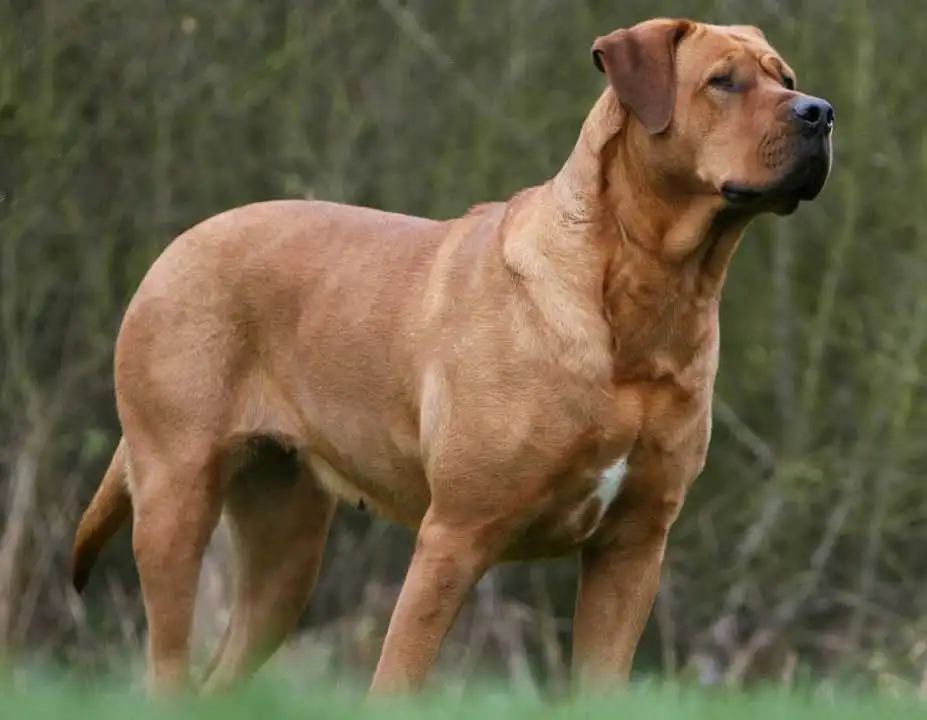
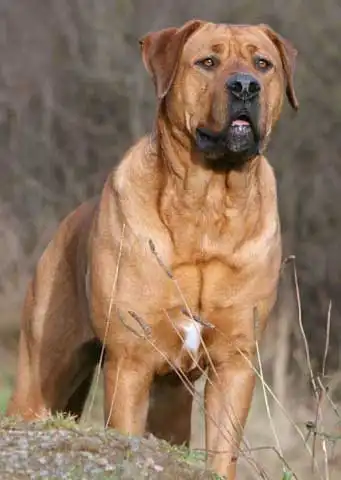
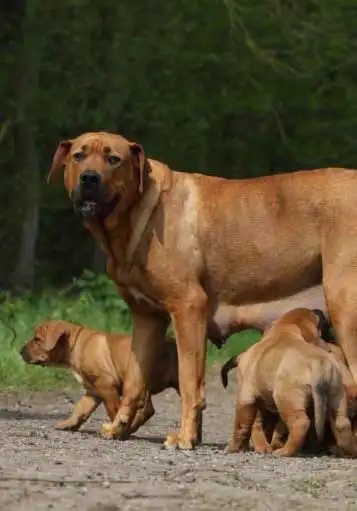
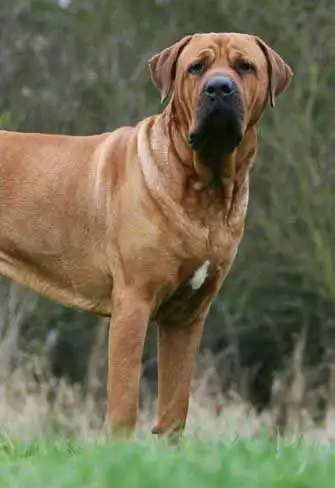
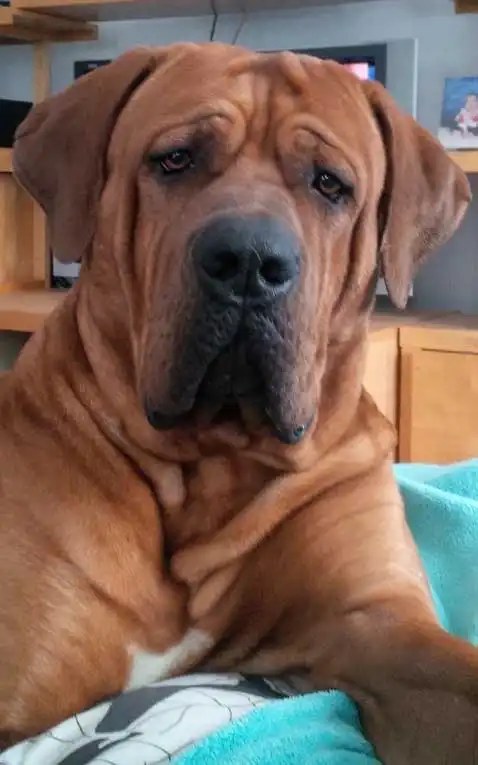
The Tosa is a striking breed known for its impressive stature, marked by a wide head and a squared muzzle that radiates assurance. Its large, black nose is well-aligned with its muzzle. This breed boasts powerful jaws with substantial teeth that form a scissors bite. Although the Tosa's eyes are relatively small compared to its head, they are a rich shade of brown. The neck is strong and features a dewlap, a fold of skin that hangs beneath the jaw. Ears are set high on the head and hang close to the cheeks. The tail is long and thick, tapering to a point. With robust bones and notably large feet, the Tosa has a solid physique. Its coat is short, dense, and coarse, often displaying a black mask on the face, along with the potential for a small white marking on the chest or feet. This breed comes in four distinct colors: brindle, black, fawn, and red.
Care Routine
The Tosa is not classified as a hypoallergenic breed. This dog has a dense coat that requires weekly grooming to remove loose or dead hair and to promote skin health. Due to its prominent jowls, the Tosa is prone to drooling, so it's wise to have a drool rag nearby, especially after drinking or during moments of excitement or heat. Although he sheds lightly, consistent grooming is crucial to prevent short hairs from accumulating on your furniture and clothing. When brushing, it's best to use a slicker brush or a natural bristle brush. If preparing the Tosa for conformation shows, applying a leave-in coat conditioner can enhance the coat's luster, but be careful not to overdo it, as this can result in a softer texture rather than a firm one. Additionally, trimming his nails every few weeks is necessary to avoid overgrowth. Regular ear cleaning is essential to keep them free from dirt and moisture, and brushing his teeth consistently is important for maintaining healthy gums and teeth.
Behavior & Temperament
The Tosa was intentionally developed for combat, which leads to its pronounced aggressive behavior towards other dogs, especially those of the same gender. This breed is typically not ideal for families with young children or for first-time dog owners. Even seasoned handlers may encounter difficulties with a Tosa. It demands a confident owner who is willing to dedicate time and effort to its training, helping the dog recognize its role within the family structure. A major concern with the Tosa is its tendency to assert dominance over its owner if it detects any signs of weakness. Ideally, this breed should be the only dog in the home and requires a tall, secure fence in the yard to prevent it from chasing after nearby dogs. Given its high pain threshold, an electric fence is not a viable option for containment. As a result, the Tosa is not well-suited for living in subdivisions or apartments.

Play & Exercise
Things to Know
Cups Per Day
4.0 Cups
Daily Activity
60 Minutes
Average Lifespan
11 Years
Origin
1800s
Type
Pure Breeds
Size
Giant
Origin Country
Japan
Brush Frequency
Weekly
Coat Texture
Straight
Register
Your kids have been begging for a pet forever, and you've recently decided that it's time for your family to get a new addition -- a dog! While everyone is excited for the new arrival, you're wondering if you need to have a dog license. How much does it cost? Is it required? Where do you get one?
Member Clubs

PETINNATE
Guardian Dog

AKC
Foundation Stock Service

UKC
Guardian Dog
Height & Weight
Weight
130 lbs (59 kg)Male: 145 lbs (66 kg) , Female: 115 lbs (52 kg)
Height
25 inches (64 sm)Male: 25 inches (64 sm) , Female: 25 inches (64 sm)
6 Months
61 lbs ( m 61 lbs, f 61 lbs )
20 inches ( m 20 inches, f 20 inches )
12 Months
97 lbs ( m 97 lbs, f 97 lbs )
22 inches ( m 22 inches, f 22 inches )
18 Months
115 lbs ( m 115 lbs, f 115 lbs )
24 inches ( m 24 inches, f 24 inches )
Eye Colors
Brown

Nose Colors
Black
Coat Colors
Fawn
Red
Brindle
Black