Toy Foxillon
Toy Papiox
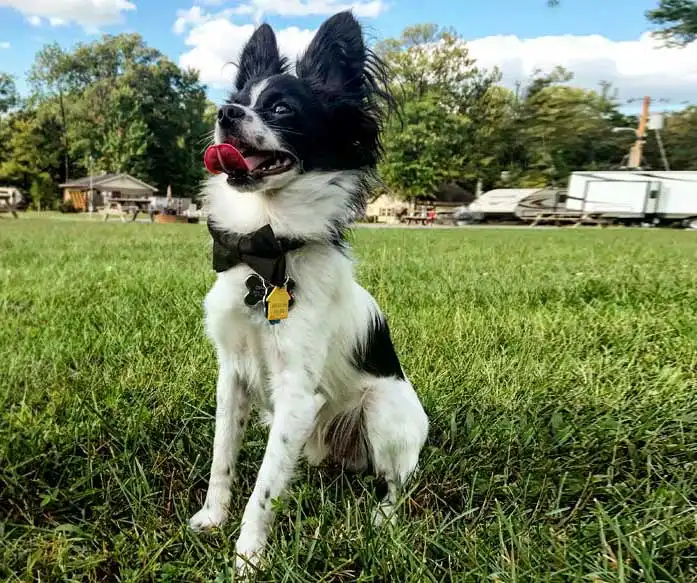
The Toy Foxillon is an enchanting mixed breed that emerges from the combination of a Papillon and a Toy Fox Terrier. Generally, these petite dogs weigh between 3 and 10 pounds and reach a height of 7 to 11 inches. Renowned for their loving disposition, they make excellent companions for children and other animals alike. This spirited little dog is brimming with energy, relishing both playtime and cozy moments with its owners. Depending on the genetic traits inherited from its parent breeds, a Toy Foxillon may sport either the Toy Fox Terrier's short coat or the Papillon's long, silky fur. Their coat colors are quite diverse, ranging from fawn, chocolate, black, white, and cream to combinations of two or three hues. Many owners find the Toy Foxillon to be a delightful companion, bringing immense happiness into their lives.
Breed Origin
The Toy Foxillon is a mixed breed that arises from the crossbreeding of a Toy Fox Terrier and a Papillon, though information about its origins is limited. The Toy Fox Terrier itself has roots tracing back to 16th-century England, where the Terrier breed first appeared. This breed descends from the Smooth Fox Terrier, which was originally bred for fox hunting. The Smooth Fox Terrier exhibited a wide range of sizes, weighing between 7 and 20 pounds. The smaller versions became particularly popular due to their lively personalities, proving adept at tasks like ratting, hunting, and guarding. The United Kennel Club recognized the Smooth Fox Terrier in 1912, grouping all size variations under one breed classification. In the 1920s, advocates began pushing for the smaller dogs to be recognized as a separate breed, and it wasn't until 1936 that the UKC officially designated the Toy Fox Terrier as distinct, with the American Kennel Club following suit in 2003. On the other hand, the Papillon has been depicted in various portraits from the 16th century, created by famous artists such as Watteau, Rubens, Boucher, Van Dyke, Fragonard, and Rembrandt, often alongside noblewomen. These delightful little dogs were cherished by aristocratic women throughout Europe and were transported by traders across France, Spain, and Italy. Early Papillon ancestors had droopy ears, but during the 17th century under Louis XIV, the breed transformed to feature the upright, pointed ears we associate with it today. The name "Papillon," which translates to "butterfly" in French, reflects the breed's unique feathered ears that resemble butterfly wings. The American Kennel Club officially recognized the Papillon in 1915.
Breed Appearance
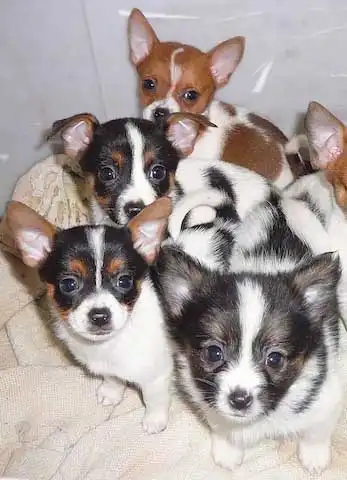
The Toy Foxillion is a mixed breed that generally weighs between 3 and 10 pounds and stands 7 to 11 inches tall. The coat's texture can differ depending on which parent it takes after, ranging from short, fine fur to long, silky strands. This breed is notable for its feathered ears, underbelly, paws, and tail. The fur often features a combination of two or three colors, with common pairings including black and white, fawn and white, or a mix of black, fawn, and white. They have small, triangular heads with a slender, tapered muzzle, and their eyes and noses are tiny, rounded, and dark. Typically, the ears are pointy and triangular, although some puppies may have floppy ears. Despite its small and delicate build, the Toy Foxillion also displays a certain muscularity. Its tail is thin and proportionate to its body, and if it inherits characteristics from its Papillon parent, it may curl over its back.

Care Routine
The Toy Foxillon experiences a moderate level of shedding, making weekly brushing advantageous for eliminating loose fur and avoiding tangles, especially in those with longer coats. This hybrid breed is not hypoallergenic, which means it may not be suitable for individuals with allergies. Fortunately, they typically do not develop unpleasant odors, so frequent baths are unnecessary; a quick wipe with a damp cloth is usually sufficient to keep their coat clean. For Toy Foxillons with longer hair, it’s advisable to trim the fur around the eyes and ears to help prevent infections and blockages. Regular ear checks and cleanings are also crucial to inhibit the growth of yeast and bacteria and to remove any debris. Furthermore, maintaining their overall health requires brushing their teeth at least three times a week and trimming their nails on a monthly basis.
Behavior & Temperament
The Toy Foxillon is an energetic, loving, and playful breed that thrives on affection and interactive play with their owners. Renowned for their friendly nature, they generally get along well with other dogs, strangers, and children. However, it’s crucial to keep in mind that this breed is quite fragile and can be easily harmed, making supervision around young children and larger dogs necessary. Early socialization is vital to avoid problems such as excessive barking and small dog syndrome, which may present as growling, possessiveness, or destructive chewing behaviors. Toy Foxillons are nimble jumpers, often seen bounding on and off furniture or exploring elevated surfaces, as well as racing around the yard. Eager to please, they quickly respond to commands, particularly when rewarded with praise. These dogs develop strong attachments to their families and may suffer from anxiety if left alone for long periods, which can lead to feelings of depression.


Play & Exercise
The Toy Foxillon is an energetic and agile toy breed. Although they generally exhibit a calm demeanor indoors, it’s crucial to recognize their need for outdoor exercise. As a toy dog, their physical activity requirements are relatively low; a daily routine of 20 to 30 minutes is adequate to keep them healthy. They enjoy walks, running in the park, and engaging in playful activities. Additionally, these dogs love to jump, so you may often find them in surprising high spots. The Toy Foxillon adapts well to different environments, but due to their small stature and sociable nature, they flourish best when they are indoors with their families. It’s also important to keep an eye on them, as they have a tendency to explore, especially when in your yard or at the park.
Things to Know
Cups Per Day
1.0 Cups
Daily Activity
30 Minutes
Average Lifespan
14 Years
Origin
Unknown
Type
Crossbreeds
Size
Small
Origin Country
United States
Brush Frequency
Weekly
Coat Texture
Straight
Register
Your kids have been begging for a pet forever, and you've recently decided that it's time for your family to get a new addition -- a dog! While everyone is excited for the new arrival, you're wondering if you need to have a dog license. How much does it cost? Is it required? Where do you get one?
Member Clubs

PETINNATE
Other
Height & Weight
Weight
7 lbs (3 kg)Male: 8 lbs (4 kg) , Female: 6 lbs (3 kg)
Height
9 inches (23 sm)Male: 10 inches (25 sm) , Female: 8 inches (20 sm)
6 Months
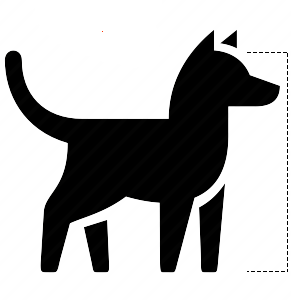
4 lbs ( m 4 lbs, f 4 lbs )
6 inches ( m 6 inches, f 6 inches )
12 Months
5 lbs ( m 5 lbs, f 5 lbs )
8 inches ( m 8 inches, f 8 inches )
18 Months
5 lbs ( m 5 lbs, f 5 lbs )
8 inches ( m 8 inches, f 8 inches )
Eye Colors
Brown

Nose Colors
Black
Brown
Coat Colors
Pied
White
Fawn
Cream
Brown
Black