Tyrolean Hound
Tiroler Bracke, Tyroler Bracke, Bracchet Autrichein a Poil Lisse
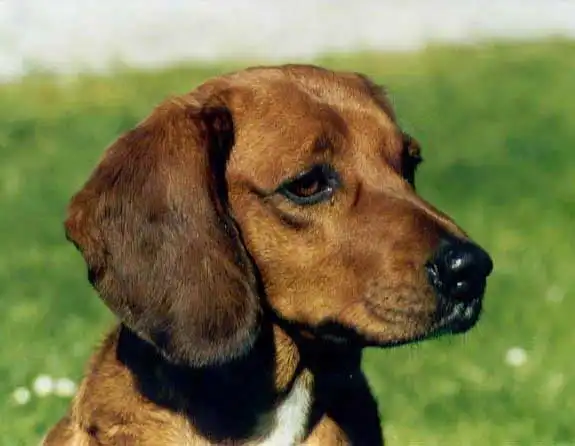
The Tyrolean Hound, believed to be a descendant of the mythical Celtic Hounds, has a fascinating history that stretches back centuries, even though it has only gained formal recognition in the last 160 years. Renowned for their outstanding hunting abilities, these dogs also make devoted companions. In a home environment, they are known for their calm and relaxed nature, which makes them a great fit for families with children. Unlike many other breeds used for hunting, Tyrolean Hounds tend to be more reserved around strangers, displaying aloofness rather than aggression. While they have a natural inclination to hunt independently, they thrive in family settings and benefit from early socialization to foster positive relationships with other dogs.
Breed Origin
The Tyrolean Hound has a distinguished heritage that can be traced back to the ancient Celtic Hounds. This breed is one of three "Grand Brackes," a group of large dogs indigenous to Austria, which also includes the Austrian Black and Tan Hound and the Syrian Coarse-haired Hound. Known for their remarkable scent-tracking skills, Tyrolean Hounds are adept at hunting foxes and hares, as well as tracking wounded or ill deer. Developed alongside their Grand Bracke counterparts, these dogs are well-suited to withstand the harsh weather and rugged terrain of the Alpine region, enabling them to adapt effectively to changing environments. For centuries, the Tyrolean Hound has been a prominent presence in the Tyrol region of western Austria, serving as both a hunting companion and a loyal friend to nobility and warriors during the Dark and Middle Ages. They were particularly favored by Emperor Maximilian I in the 15th century. However, it wasn't until 1860 that dedicated breeding initiatives commenced, leading to the breed's official recognition in 1896. Although they gained some acknowledgment in 1908, it wasn't until 2006 that the United Kennel Club fully recognized the breed. While Tyrolean Hounds remain a popular choice for hunting and companionship in their homeland, their introduction to other regions of the world has been gradual.
Breed Appearance
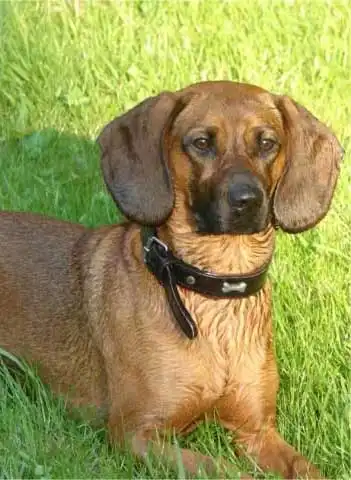
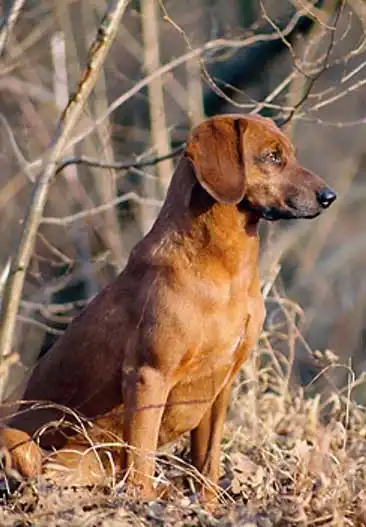
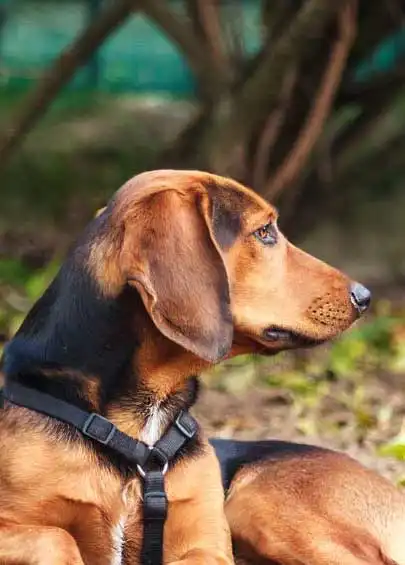
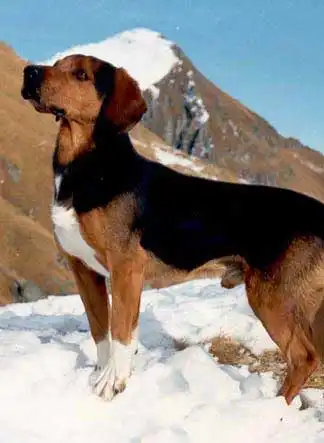
The Tyrolean Hound is a medium-sized dog breed, typically standing between 16 and 20 inches tall at the shoulder and weighing as much as 60 pounds, though they generally average around 45 to 50 pounds. This breed is characterized by a dense double coat that comes in three color patterns: red, black and tan, and tri-color. Unlike many breeds that have a soft undercoat paired with a rough outer layer, the Tyrolean Hound possesses a uniformly coarse coat, which aids in their adaptability to different climates. These dogs have a light yet muscular physique, giving them an athletic look. Their skull is broad with a slight arch, and they have a long, moderately deep muzzle that ends in a black nose. The eyes are dark brown and not deeply set, while the ears are high, broad, and rounded, almost reaching the nose in length. The body is relatively rectangular, featuring a deep chest, straight and moderately muscled forelegs, and strong, broad hind legs. The back has a gentle slope that leads to a long, thick, tapered tail, which is carried high and has a distinctive saber-like curve.
Care Routine
The Tyrolean Hound is often seen as a breed that doesn't demand extensive upkeep, yet it does have a specific care regimen that sets it apart from other European scent hounds of comparable size. Its rugged double coat requires brushing two to three times weekly with a sturdy bristle brush to eliminate loose fur and dirt. Because this breed lacks a dense, soft undercoat for added protection, regular grooming also helps in detecting external parasites like ticks, which they may pick up during hunts or walks in forested areas. For dogs that are frequently used for hunting, more regular brushing and bathing will be necessary; in contrast, those kept as companions at home will not require such intensive grooming. As with any breed, monitoring their nails is essential, trimming them as necessary to prevent cracking or breaking, and it’s advisable to brush their teeth at least once a week.
Behavior & Temperament
The Tyrolean Hound may not exhibit the ideal temperament seen in breeds such as certain Bohemian and German Pointers, but they are still considered a well-mannered breed that excels both in hunting and as a family companion. In the field, they display remarkable energy and determination, utilizing their outstanding scenting abilities to track various game, including foxes, hares, and deer, with impressive stamina and enthusiasm. At home, they are affectionate and loving, forging strong bonds with their families, especially with those who dedicate time to their training. Since they were primarily bred as solitary hunters rather than pack animals, they need some socialization to interact effectively with other dogs. While they may be somewhat reserved around strangers and can bark, making them good watchdogs, they are generally not aggressive, which limits their role as guard dogs. They typically get along well with children, but proper training and socialization are essential for safe interactions. Additionally, their strong prey drive necessitates careful management when raising them alongside non-canine pets to ensure harmonious living. As a highly intelligent breed, they can be a bit stubborn and are moderately easy to train; however, with thorough training, they become quite responsive.
Play & Exercise
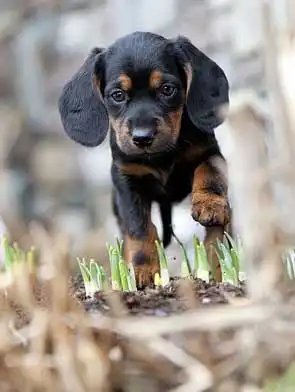
Tyrolean Hounds are characterized by a moderate to high energy level, which means they require ample daily physical activity to maintain their health and happiness. Given their size and lively disposition, they are not ideal for apartment living unless they are with an owner or family who can keep up with their energy needs. If they do not receive enough exercise, they may resort to destructive behaviors out of boredom or frustration. These dogs flourish in settings that offer spacious yards, nearby open fields, or dog parks where they can run freely and expend their energy. It is crucial for this breed to have at least 16 miles of running or walking each week, along with a daily exercise routine of at least 45 minutes.
Things to Know
Cups Per Day
3.5 Cups
Daily Activity
45 Minutes
Average Lifespan
13 Years
Origin
1800s
Type
Pure Breeds
Size
Medium
Origin Country
Austria
Brush Frequency
Weekly
Coat Texture
Straight
Register
Your kids have been begging for a pet forever, and you've recently decided that it's time for your family to get a new addition -- a dog! While everyone is excited for the new arrival, you're wondering if you need to have a dog license. How much does it cost? Is it required? Where do you get one?
Member Clubs
PETINNATE
Scenthound

UKC
Scenthound
Height & Weight
Weight
48 lbs (22 kg)Male: 48 lbs (22 kg) , Female: 48 lbs (22 kg)
Height
18 inches (46 sm)Male: 19 inches (48 sm) , Female: 18 inches (46 sm)
6 Months
34 lbs ( m 34 lbs, f 34 lbs )
12 inches ( m 12 inches, f 12 inches )
12 Months
41 lbs ( m 41 lbs, f 41 lbs )
15 inches ( m 15 inches, f 15 inches )
18 Months
47 lbs ( m 47 lbs, f 47 lbs )
17 inches ( m 17 inches, f 17 inches )
Eye Colors
Brown
Nose Colors
Black
Coat Colors
White
Red
Brown
Black