Victorian Bulldog
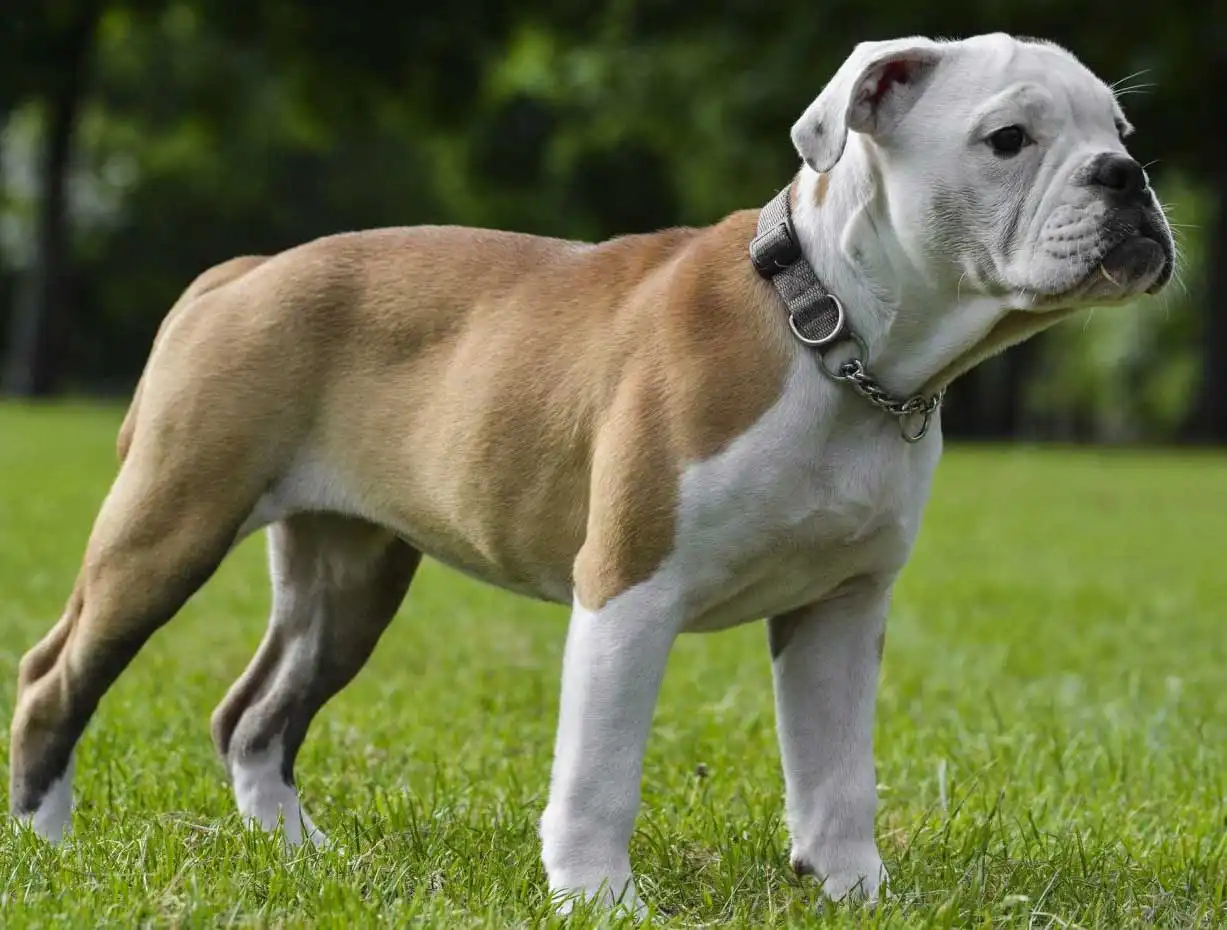
The English Bulldog has experienced considerable evolution since its origins in the 1800s. Historical images showcase a sturdy dog that bears a resemblance to the contemporary English Bulldog, albeit with a longer muzzle, elongated legs, and a less tightly curled tail. In London, breeder Ken Mollett initiated a crossbreeding program, mixing modern English Bulldogs with Bull Terriers, Bull Mastiffs, and Staffordshire Bull Terriers. His goal was to recreate the Bulldog's Victorian-era appearance while also addressing genetic health concerns. These dogs are known for their strength and athleticism, yet they do not require as much physical activity as many other energetic breeds. Additionally, they are typically gentle and friendly with both humans and other animals.
Breed Origin
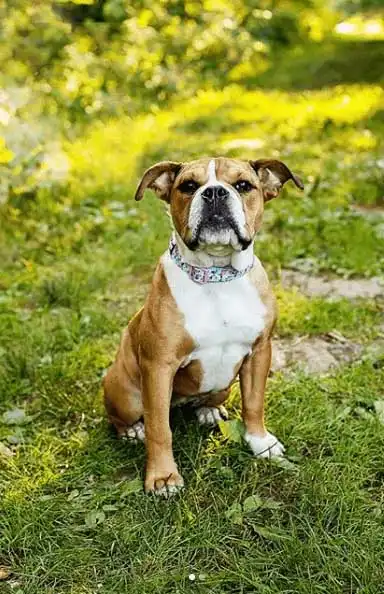
When the English Bulldog was first developed, there was significant confusion surrounding dog classifications, and breed names were often imprecise. A large dog might simply be referred to as a Mastiff based on its size, or it could be called a Bandog, a term used for various dogs that were kept chained. During that era, the label Bulldog applied to any dog involved in bull-baiting. It wasn't until the 1800s that Sydenham Edwards offered a clear definition of the English Bulldog as a distinct breed in his publication, Cynographia Britannica, where he noted their round heads, broad chests, and natural underbites. As time progressed, breeders' preferences and practices led to a version of the English Bulldog that diverged significantly from its original appearance, featuring shorter, slightly bowed legs, a more compact muzzle and tail, and an even more pronounced underbite, which unfortunately resulted in various serious health problems within the breed. Starting in the 1940s, some breeders aimed to recreate the original breed to enhance its vitality and health while maintaining the friendly, easy-going nature that defined it. This initiative resulted in the emergence of the American Bulldog, largely influenced by John D. Johnson and Alan Scot, as well as the Olde English Bulldogge, developed by Dr. Fechimer, both of which are recognized by the United Kennel Club. Additionally, the Dorset Olde Tyme Bulldog, created by Steve Barnett, and the Olde Victorian Bulldogge, developed by Carlos Woods, have not gained recognition from major kennel clubs. In the process of creating the Victorian Bulldog, Ken Mollett from London included not only English Bulldogs but also Bull Terriers, Bull Mastiffs, and Staffordshire Bull Terriers. The Victorian Bulldog is becoming increasingly popular, which has led some unethical or misinformed breeders to crossbreed various bully-type dogs and market their offspring as Victorian Bulldogs.
Breed Appearance
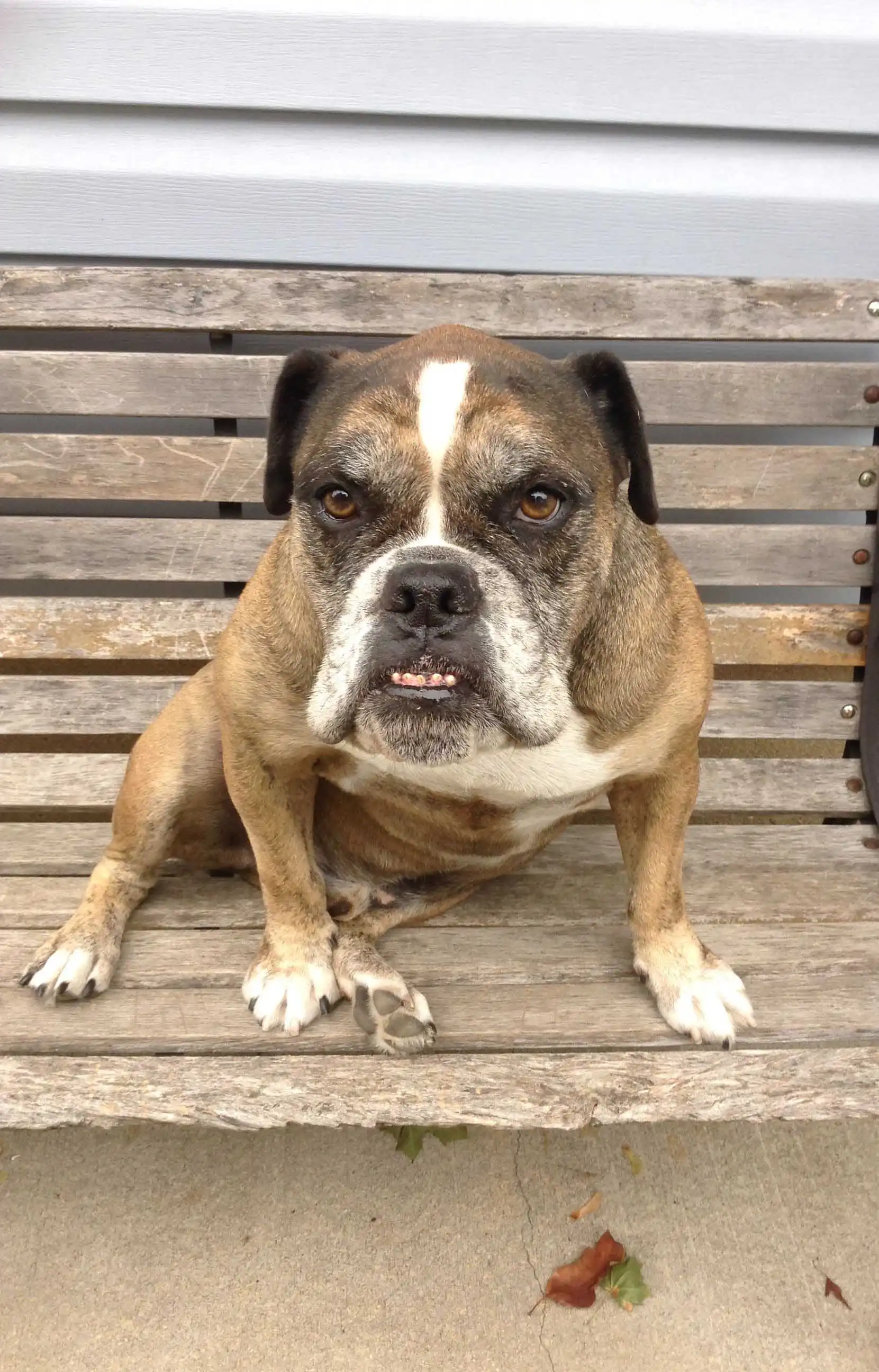
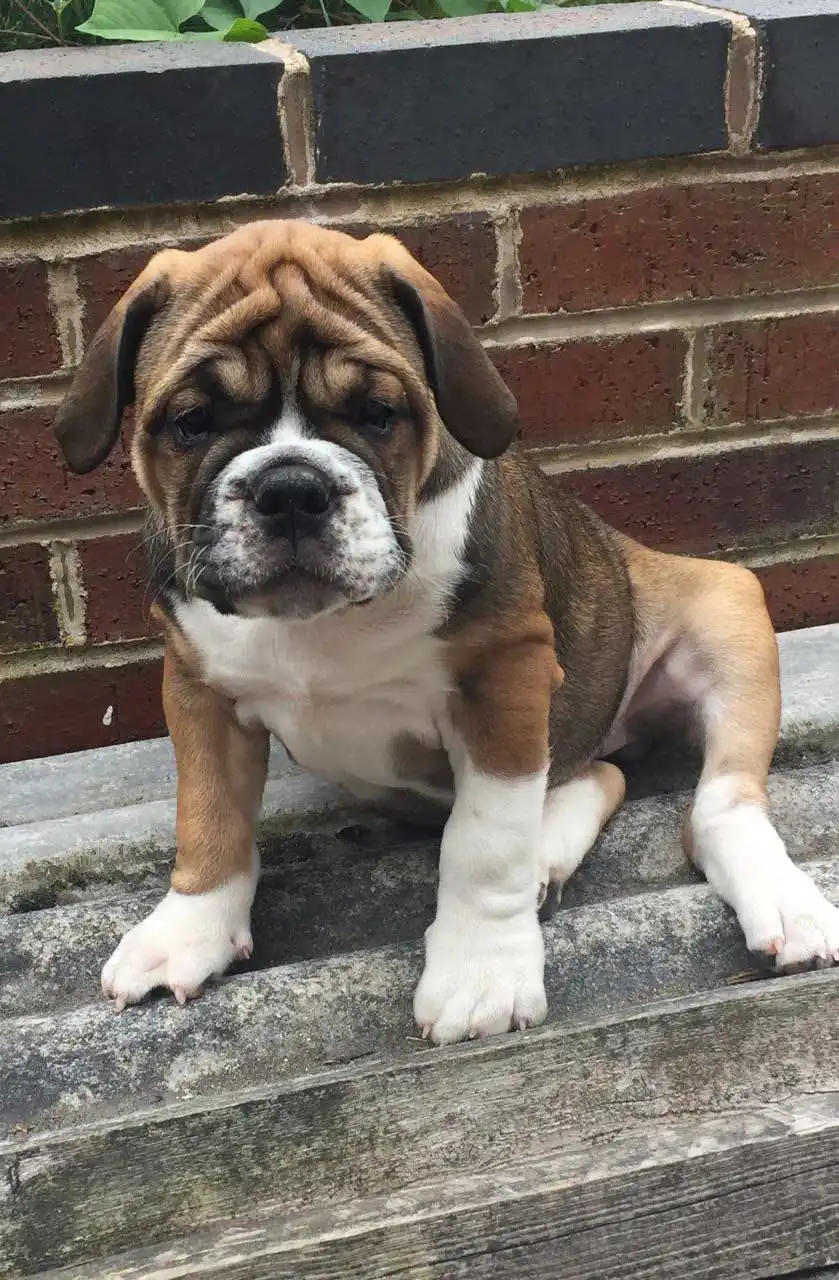
Mr. Mollett established the criteria for the Victorian Bulldog, categorizing it as a medium-sized breed that generally reaches a height of around 18 inches at the shoulder and weighs between 55 and 75 pounds. Much like the English Bulldog, this breed is sturdy and muscular, characterized by a large head and a thick neck. However, these features should not be so exaggerated that they hinder the dog's health or movement. The muzzle is broad and slightly upturned, short but not overly so, to facilitate proper breathing, and the breed exhibits a square bite with an undershot jaw. Distinctive traits include dark, low-set eyes that face forward, as well as medium to short ears that can be either rose or button-shaped, with cropping being unacceptable. The tail can be straight, drooping, or corkscrew-shaped, but it should never be carried over the back. Their short, soft coat comes in a variety of colors, such as brindle, white, red, fawn, pied, or fallow, often adorned with white markings.
Care Routine
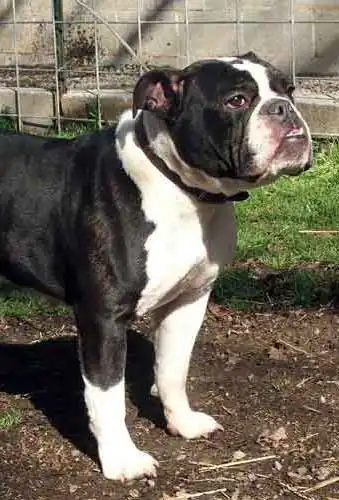
The Victorian Bulldog typically requires more regular baths than many other breeds, ideally once a month or every two months, to avoid any unpleasant smells. Although they have fewer wrinkles than their English Bulldog ancestors, it's still important to check their wrinkles regularly to ensure they aren't collecting dirt or moisture, which could cause skin issues. Their short coats do shed to some extent, so weekly brushing is advisable to keep them looking clean and shiny. Furthermore, dental care is particularly important for dogs with undershot jaws, such as the Victorian Bulldog.
Behavior & Temperament
Initially bred for their aggressive traits to manage bulls much larger than themselves, the English Bulldog experienced a notable change after bull baiting was banned. Breeders shifted their focus towards cultivating a gentler and more manageable temperament. This evolution gave rise to the Victorian Bulldog, recognized for its friendly disposition and compatibility with both humans and a variety of other animals. Nonetheless, they may occasionally exhibit a touch of grumpiness when interacting with other dogs. When it comes to small children, supervision during interactions is advisable, but the Victorian Bulldog typically shows a great deal of patience. Their calm yet headstrong nature can make training a bit challenging; however, they respond positively to encouragement, such as praise and treats. While they might take some time to learn new concepts, they generally retain that knowledge quite well once they have mastered it.

Play & Exercise
While many Victorian Bulldogs love to relax throughout the day, they still need consistent exercise to maintain their fitness and prevent obesity. In contrast to English Bulldogs, which often face challenges with long walks due to breathing difficulties and shorter legs, Victorian Bulldogs typically have better stamina due to their longer muzzles and limbs. However, they are somewhat more susceptible to extreme weather conditions than some other breeds. Although they may seem too big for standard apartment living, their calm nature makes them pleasant companions, even in smaller spaces.
Things to Know
Cups Per Day
2.5 Cups
Daily Activity
45 Minutes
Average Lifespan
13 Years
Origin
1980s
Type
Pure Breeds
Size
Large
Origin Country
London, England
Brush Frequency
Monthly
Coat Texture
Straight
Register
Your kids have been begging for a pet forever, and you've recently decided that it's time for your family to get a new addition -- a dog! While everyone is excited for the new arrival, you're wondering if you need to have a dog license. How much does it cost? Is it required? Where do you get one?
Member Clubs

PETINNATE
Other
Height & Weight
Weight
66 lbs (30 kg)Male: 73 lbs (33 kg) , Female: 60 lbs (27 kg)
Height
18 inches (46 sm)Male: 18 inches (46 sm) , Female: 17 inches (43 sm)
6 Months
42 lbs ( m 42 lbs, f 42 lbs )
14 inches ( m 14 inches, f 14 inches )
12 Months
54 lbs ( m 54 lbs, f 54 lbs )
16 inches ( m 16 inches, f 16 inches )
18 Months
60 lbs ( m 60 lbs, f 60 lbs )
17 inches ( m 17 inches, f 17 inches )
Eye Colors
Brown
Nose Colors
Black
Isabella
Coat Colors
Pied
White
Red
Fawn
Brindle