
Vizmaraner
Velcro Dog
The Vizmaraner is a remarkable breed with a deep-rooted history in hunting and tracking. Its sleek, short coat enables it to excel in aquatic environments, while its steadfast loyalty and affection make it a wonderful companion for families. Often dubbed the "Velcro Dog," this breed is known for its clingy and loving nature. However, it's important to consider that they may experience separation anxiety if left alone for long periods, a common characteristic of the breed. While they can adjust to smaller living spaces, Vizmaraners need ample exercise. This lively dog is an excellent running partner, often willing to work harder than many other breeds, and is notably easy to train. They are responsive to your commands and will gladly snuggle up for a warm cuddle after an active day.

Breed Origin
The Vizmaraner is a hybrid breed that draws from two parent breeds, both of which were originally bred for tracking game. The Weimaraner was primarily developed for hunting larger animals, while the Vizsla was trained to pursue smaller game and was also expected to point. Weimaraners were often utilized in extensive hunting expeditions, whereas Vizslas played a role in falconry, assisting in both hunting and training. Notably, both breeds exhibit a strong instinct for smaller game, making them adept at hunting rabbits and birds. The Weimaraner is a relatively modern breed, having emerged in the early 1800s, with bloodhounds believed to be part of its lineage. By the late 1800s, it had become one of the most closely protected breeds, with strict ownership regulations that required membership in the Weimaraner Club and limited the number of registered dogs to 1,500 at any given time. The American Kennel Club officially recognized the breed in 1943. In contrast, while some sources claim that the Vizsla's roots extend back to the ninth century, credible evidence points to its development in Hungary during the early 1800s. The term "Vizsla" means "pointer" in Hungarian. These dogs were bred not only for hunting but also for companionship, leading to the formation of the Breeders Club in May 1920. The breed gained recognition from the American Kennel Club in 1960 and is celebrated for its bravery, loyalty, and effectiveness as service and therapy dogs.
Breed Appearance
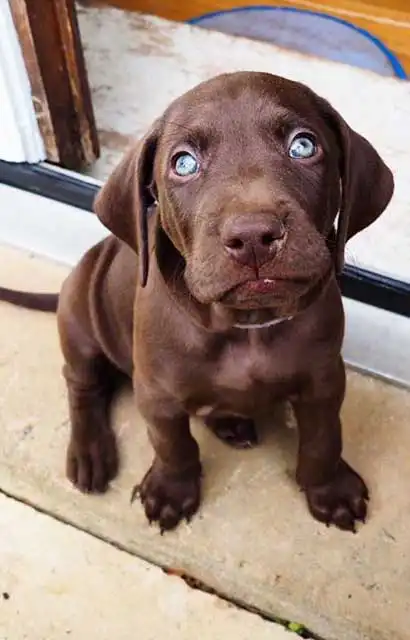
The Weimaraner and the Vizsla share a similar coat type, characterized by short, dense, and silky fur, suggesting that the Vizmaraner's coat will closely resemble theirs. Both breeds have long, slender snouts, though the Weimaraner's is distinctly longer. Their ears are also long, thin, and wide, and unlike a German Shepherd's, they do not stand upright. This hybrid may display a variety of eye colors, including blue and brown, with the potential for green, amber, yellow, or gray shades. Since both parent breeds are adept in water, it is very likely that the Vizmaraner will inherit webbed toes and larger paws.

Care Routine
It's important to understand that Vizmaraners only need a bath when absolutely necessary. Their short, dense fur stays looking sleek all year round. Without an undercoat, they generally shed very little, though some shedding may occur. Therefore, it's a good idea to brush them occasionally, especially if you notice hair on your furniture or their bedding. Moreover, their short coat requires consideration of the weather. If you need to wear a jacket outside, it's likely that they would benefit from one too. They should never be left outdoors in the cold for extended periods. Given their long, folded ears, it's crucial to regularly check for wax buildup and other potential issues. Since their ears do not stand upright and have limited airflow, they can create a favorable environment for bacteria and viruses to thrive. Lastly, their nails should be trimmed monthly and checked after active play or outdoor excursions.
Behavior & Temperament
Vizmaraners embody playfulness, energy, and a keen ability to learn. They flourish in environments with children and other pets, displaying a friendly demeanor towards newcomers, as long as you do too. These dogs make perfect partners for active individuals, like runners, as they are eager to join you even on the hottest summer days. Moreover, they excel as devoted hunting companions, ready to cover long distances and lend a helping paw when needed. If you’re looking for a dog that is easy to train, a Vizmaraner is a fantastic option. However, be prepared to give commands only a few times, as they quickly pick up new skills. It’s essential to remember that these dogs develop deep connections with their owners and may suffer from separation anxiety if left alone for too long. Therefore, be prepared to dedicate ample time and attention to keep your Vizmaraner content and thriving.


Play & Exercise
The Vizmaraner is a lively and active breed that has a natural inclination for play. If you have a securely fenced yard or can visit a nearby dog park, you'll find ample chances to give them the exercise they require. While these dogs flourish in spacious homes with outdoor areas, they can also adjust to apartment life as long as they get consistent and sufficient physical activity. It's crucial to avoid keeping them confined for long stretches; otherwise, you risk having a stressed pet or one that redirects their surplus energy into damaging behaviors, such as chewing or destroying furniture.
Things to Know
Cups Per Day
2.0 Cups
Daily Activity
60 Minutes
Average Lifespan
13 Years
Origin
Middle Ages
Type
Crossbreeds
Size
Large
Origin Country
Germany, Hungary
Brush Frequency
Weekly
Coat Texture
Straight
Register
Your kids have been begging for a pet forever, and you've recently decided that it's time for your family to get a new addition -- a dog! While everyone is excited for the new arrival, you're wondering if you need to have a dog license. How much does it cost? Is it required? Where do you get one?
Member Clubs

PETINNATE
Other
Height & Weight
Weight
60 lbs (27 kg)Male: 61 lbs (28 kg) , Female: 59 lbs (27 kg)
Height
23 inches (58 sm)Male: 24 inches (61 sm) , Female: 23 inches (58 sm)
6 Months

25 lbs ( m 25 lbs, f 25 lbs )
14 inches ( m 14 inches, f 14 inches )
12 Months
55 lbs ( m 55 lbs, f 55 lbs )
23 inches ( m 23 inches, f 23 inches )
18 Months
60 lbs ( m 60 lbs, f 60 lbs )
23 inches ( m 23 inches, f 23 inches )
Eye Colors
Blue

Hazel
Brown
Amber
Nose Colors
Blue
Black
Brown
Coat Colors
Brindle

Sable

Fawn

Brown

Gray