Clumberton
The Clumberton is a mixed breed that emerges from the combination of a Clumber Spaniel and a Bedlington Terrier. These dogs are celebrated for their affectionate demeanor, loyalty, and intelligence. Although they possess a fair amount of energy, they require only moderate exercise to stay healthy. Clumbertons generally have a lifespan of 11 to 13 years, weigh between 35 and 45 pounds, and stand 16 to 18 inches tall. They bear a resemblance to a slimmer Clumber Spaniel and come in a variety of color patterns, such as blue, liver, sandy, tan, or white, often adorned with lemon or orange markings. While the precise origins of this hybrid breed remain uncertain, it is thought to have been developed relatively recently. As a result, the breed has not yet achieved full stabilization, which means Clumbertons are not recognized as purebreds by the American Kennel Club.

Breed Origin
The Clumberton breed takes its name from its two ancestral breeds: the Clumber Spaniel and the Bedlington Terrier. The Clumber Spaniel is believed to have originated around the time of the French Revolution, resulting from a cross between Basset Hounds and Alpine Spaniels. This breed was brought to Europe when the French Duke of Noailles moved his kennels to Clumber Park, located on the estate of the Duke of Newcastle. In the UK, Clumber Spaniels became favored by the British aristocracy, renowned for their exceptional sense of smell and retrieving abilities. Although they were introduced to North America in the 1800s, they never gained significant popularity there. Nevertheless, the American Kennel Club (AKC) officially recognized the breed in 1878. The other parent breed, the Bedlington Terrier, also hails from the UK. It is thought to have evolved from several breeds, including the Dandie Dinmont, Soft Coated Wheaten Terrier, and Whippet. Originally bred for hunting, early Bedlington Terriers were known as Rothbury Terriers or Northumberland Fox Terriers. According to local lore, a resident of Bedlington began breeding two Rothbury Terriers in the early 1800s, leading to the establishment of the Bedlington Terrier name we know today. This breed quickly became popular among the upper classes and eventually made its way to North America. While it hasn't achieved widespread popularity in the U.S., it was recognized by the AKC in 1886. Given the long history of both parent breeds in Europe and North America, it is likely that the Clumberton has been selectively bred for a considerable time. However, there is no concrete documentation of its origins, and it remains unrecognized by the AKC.
Breed Appearance
The Clumberton is a small to medium-sized dog that bears a resemblance to a more slender version of the Clumber Spaniel, while also showcasing some facial characteristics of the Bedlington Terrier. Typically, these dogs weigh between 35 and 45 pounds and stand around 16 to 18 inches tall. Their coat is short and wavy, striking a balance between the dense fur of the Clumber Spaniel and the softer hair of the Bedlington Terrier. Clumbertons come in a variety of colors, including combinations of blue, liver, sandy, tan, or white, and may also feature lemon or orange markings. Reflecting its Terrier heritage, the Clumberton has a shorter skull and a longer jaw, with a smooth transition from the forehead to the nose, which is generally black or dark brown. The breed has relatively broad paws with thick, smooth pads. Its eyes are almond-shaped, dark, and widely spaced, while the medium-sized ears are floppy and hang low on either side of the head.


Care Routine
Clumbertons are not completely hypoallergenic, but they generally produce fewer allergens due to the coat they inherit from their Bedlington Terrier ancestry. This breed experiences moderate shedding and benefits from being brushed several times a week. It is recommended to give Clumbertons a bath once a month, and owners should pay particular attention to their floppy ears to avoid infections. If the fur around their eyes and paws is longer, regular trimming is advisable. For Clumbertons that take after their Terrier forebears, professional grooming may be required to manage a curlier coat. As with all dog breeds, it is crucial to brush their teeth daily and trim their nails once or twice a month to prevent painful overgrowth.
Behavior & Temperament
Clumbertons are recognized for their loving disposition, loyalty, and sharp intellect. These dogs flourish in environments where they receive ample human interaction, forming deep connections with their owners and often seeking attention at every opportunity. Although they may exhibit caution around strangers—both people and other animals—it's essential to introduce them to new friends, whether they have fur or not, in a gradual and thoughtful manner. Despite their initial hesitance, Clumbertons are generally not aggressive towards other pets and do not tend to bark excessively. They can be somewhat mouthy, engaging in playful nipping, which makes them better suited for families with older children or those without young kids. This breed is quite clever and responds positively to training; as with most dogs, establishing early and consistent boundaries is crucial for raising a well-behaved companion. Furthermore, Clumbertons are lively and relish outdoor playtime with their owners and other dogs, while also cherishing quiet moments indoors with their family.


Play & Exercise
Clumbertons are energetic and cheerful dogs, but their exercise requirements are quite manageable. Typically, a routine that includes moderate walks or play sessions with their owners or other sociable dogs is enough to keep them content. They also enjoy the chance to play indoors to burn off some energy. Thanks to their versatility, Clumbertons can flourish in urban, suburban, or rural environments, as long as they have sufficient outdoor space to roam. This breed can adapt to different climates, but, like all dogs, they should steer clear of strenuous activity in hot weather. After a day of play, Clumbertons are loving companions, happily curling up on the couch in the evening.
Things to Know
Cups Per Day
3.0 Cups
Daily Activity
45 Minutes
Average Lifespan
12 Years
Origin
Unknown
Type
Crossbreeds
Size
Medium
Origin Country
United States
Brush Frequency
Weekly
Coat Texture
Wavy
Ancestors
Clumber Spaniel
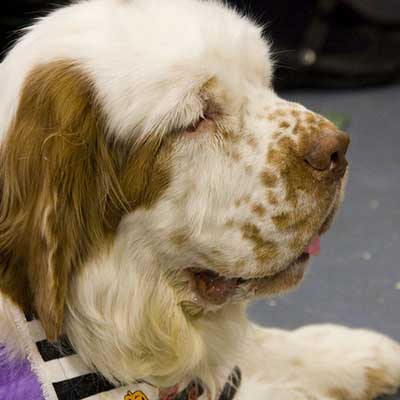
The Clumber Spaniel, which emerged in the 1700s, is celebrated as one of the oldest and sturdiest breeds within the Spaniel family. Its ancestry is believed to include the Alpine Spaniel, Basset Hound, and Saint Bernard. These dogs typically have a medium height but are characterized by their solid build. Renowned for their gentle and affectionate temperament, Clumber Spaniels often exhibit a playful and somewhat goofy personality. Although they may drool and shed, their intelligence and eagerness to learn make them delightful companions. Commonly known as the "retired gentleman’s Spaniel," they also excel as hunters. While they are generally easy to house train, it’s important not to leave them alone for long periods, as they can become bored and might chew on household items. With their short legs, large heads, and unique stature, Clumber Spaniels have a striking appearance.
Read more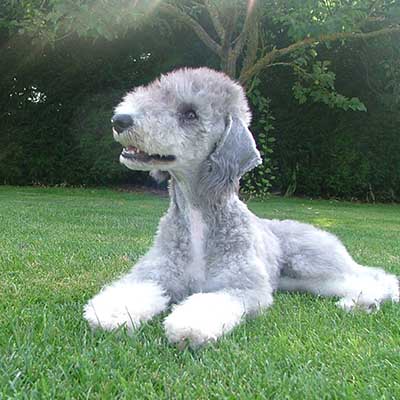
Bedlington Terrier
Bedlington Terriers stand out among Terrier breeds for their unique characteristics, typically weighing between 17 and 23 pounds. Females generally reach an average height of about 15.5 inches, while males are slightly taller at around 16.5 inches. These dogs are known for their graceful physique, which includes a slender build, lively personality, and distinctive coat. Their appearance is further enhanced by an arched back, ears adorned with tassels, and a narrow head. With gentle expressions, they exude a friendly nature, displaying neither shyness nor anxiety. Often regarded as delightful, entertaining, and loyal companions, Bedlington Terriers possess remarkable stamina, showcasing the energetic qualities of a Terrier along with the speed of a small coursing Hound. They respond well to training and typically interact positively with children and other dogs, especially when supervised. Although generally healthy, some may experience issues related to copper toxicosis. Their non-shedding single coat requires regular grooming, including scissor trimming and clipping, to maintain its appearance.
Read moreRegister
Your kids have been begging for a pet forever, and you've recently decided that it's time for your family to get a new addition -- a dog! While everyone is excited for the new arrival, you're wondering if you need to have a dog license. How much does it cost? Is it required? Where do you get one?
Member Clubs

PETINNATE
Other
Height & Weight
Weight
40 lbs (18 kg)Male: 43 lbs (20 kg) , Female: 38 lbs (17 kg)
Height
17 inches (43 sm)Male: 18 inches (46 sm) , Female: 17 inches (43 sm)
Eye Colors
Brown

Amber
Nose Colors
Black
Coat Colors
Blue
Gray
Brown
White