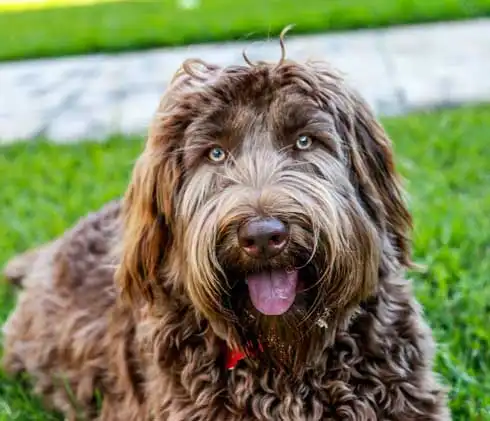
Chesa-Poo
The Chesa-Poo is a large breed that emerges from the combination of a Chesapeake Bay Retriever and a Poodle. This dog is characterized by its sturdy, muscular physique, elongated legs, and soft, drooping ears, all of which are enhanced by a dense, curly coat. They typically have a long tail and webbed feet, features that significantly boost their swimming prowess. Renowned for their loving disposition and gentle nature, Chesa-Poos are wonderful companions for families. They have a strong hunting instinct, so if you’re not an enthusiastic hunter, they will find joy in chasing after rabbits and squirrels in the yard. Although they can exhibit a bit of stubbornness, with consistent training and clear boundaries, managing their behavior becomes much easier. Chesa-Poos come in various colors, but they are most frequently found in solid hues.
Breed Origin
The Chesapeake Bay Retriever emerged in the 1800s in the United States, specifically designed as a hunting dog and retriever. Historical records indicate that the breed's lineage can be traced back to two Newfoundland dogs, a black female named Canton and a red male called Sailor, who were saved by the American ship Canton in 1807 after a shipwreck involving an English brig near Maryland. These dogs were presented to their rescuers and are believed to have ancestry that includes the Bloodhound, Irish Water Spaniel, and various hound breeds. Some accounts also suggest that the Curly-Coated Retriever, Flat-Coated Retriever, and English Otterhound may be part of their genetic background. Known for their remarkable swimming skills in the chilly waters of Chesapeake Bay, these retrievers were capable of retrieving between 100 and 200 ducks in a single day. The American Kennel Club (AKC) officially recognized the breed in 1878, and it is currently ranked as the 43rd most popular dog breed in the United States, making it one of the few breeds that originated domestically. In contrast, the Poodle has its roots in France during the 1500s, where it was originally bred as a performer, companion, and retriever. Some sources suggest that the breed may also have connections to Denmark or Germany. The early ancestors of the Poodle were curly-coated dogs from Asia, celebrated for their water-retrieving skills. The term "Poodle" comes from the German word "pfudel," meaning splash or puddle. While they were initially prized for duck hunting, Poodles quickly became popular in various roles, including circus acts, military service, guarding, and guiding. Their coats were often styled to improve swimming efficiency, although some believe the characteristic puffs on their knees and tails were intended to protect them during hunts. However, the prevailing opinion is that these fluffy hairstyles are mainly for decorative purposes. The AKC recognized the Poodle in 1887, and it now ranks as the 7th most popular dog breed in the United States.
Breed Appearance
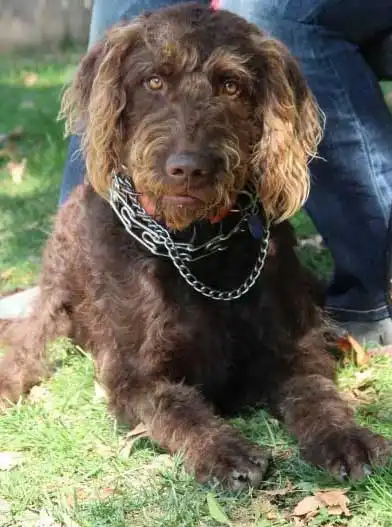
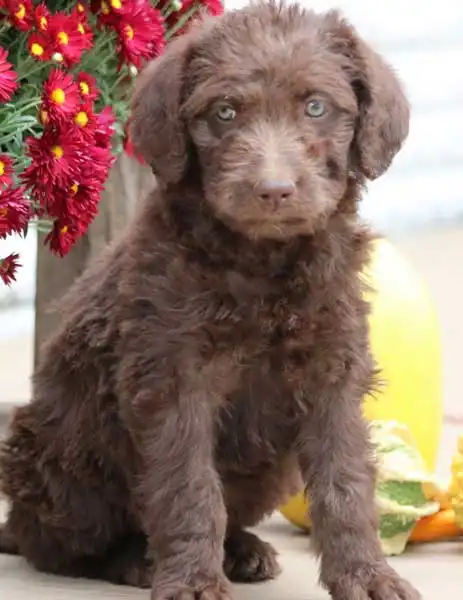
The Chesa-Poo is a large breed known for its dense, curly double coat, which can appear in a variety of colors such as white, gray, yellow, tan, brown, black, red, blue, and orange. This breed is distinguished by its long, robust legs, floppy ears, bushy tail, and large, webbed feet that enhance its swimming prowess. While the facial features are reminiscent of a Poodle, the body shape is more similar to that of a Chesapeake Bay Retriever. They have dark, round eyes and a black nose. To help them stay cool and simplify grooming during the summer, many owners choose to keep their Chesa-Poo's coat trimmed shorter.

Care Routine
Numerous Chesa-Poo owners choose to have their dogs professionally groomed about twice a year to keep their coats in good condition. Nonetheless, it is crucial to brush and comb their fur at least three to four times weekly to prevent tangles. Regular nail trimming and dental care are also vital to prevent oral health issues. Furthermore, due to their floppy ears being susceptible to bacteria and mites, it is recommended to check them weekly for any indications of redness, swelling, or other concerns.
Behavior & Temperament
Your Chesa-Poo may show some stubborn tendencies, which can pose challenges during training. However, with steady training and positive reinforcement, you should be able to handle it effectively. These dogs flourish in social environments and love to play with children and other animals. That said, their natural hunting instincts might prompt them to chase after rabbits and squirrels in the neighborhood when outside. Although they aren't the best guard dogs due to their friendly disposition towards strangers, they will bark energetically if they perceive a real threat. It's important to keep them occupied when you're away, as they can easily feel lonely.
Play & Exercise
The Chesa-Poo needs a considerable amount of daily physical activity to stay happy and healthy. Ideal activities include long walks, hiking, playing an extended game of fetch, or enjoying time at the beach or dog park. Due to their heritage, they possess a strong instinct for hunting and swimming, making these activities perfect for burning off excess energy. If they don’t get enough exercise, your Chesa-Poo may become restless and bored, potentially leading to behavioral problems. You might come home to find that your furniture and other items have been turned into chew toys. To prevent these issues, it’s essential to provide your dog with at least an hour of exercise each day.
Things to Know
Cups Per Day
0.0 Cups
Daily Activity
0 Minutes
Average Lifespan
14 Years
Origin
Unknown
Type
Crossbreeds
Size
Not Set
Origin Country
United States
Brush Frequency
Daily
Coat Texture
Straight
Ancestors
Chesapeake Bay Retriever
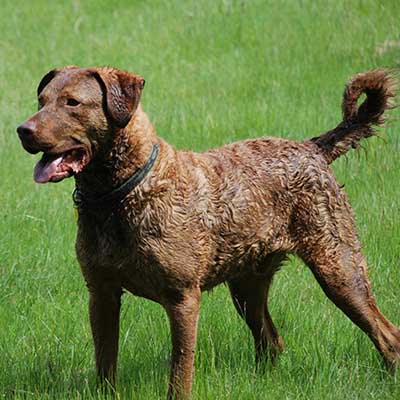
The Chesapeake Bay Retriever is a distinctive breed that sets itself apart from other Retrievers. This breed traces its roots back to two Lesser Newfoundland puppies, also referred to as St. John’s Water Dogs, which were saved by an American ship following a shipwreck near Maryland in 1807. These dogs were subsequently crossbred with local breeds, including Water Spaniels, Setters, and Hounds, in a somewhat haphazard manner. Although they share similar roles with other Retrievers, their genetic background is quite unique. Chesapeake Bay Retrievers are known for their striking looks, featuring a slightly oily, musky, waterproof wavy brown coat, captivating amber eyes, and a sturdy, muscular physique. While they are now mainly cherished as family pets and hunting companions, their initial role was to retrieve waterfowl. Renowned for their cheerful disposition, intelligence, and eagerness to please, these dogs excel in work, especially in water-related tasks. Their grooming requirements are relatively low, needing only a weekly brushing and a bath every three to four months. Due to their energetic and robust nature, they benefit from regular, vigorous exercise, whether through walking, running, or hunting geese. To ensure their proper development, consistent training combined with firm yet affectionate discipline is crucial.
Read more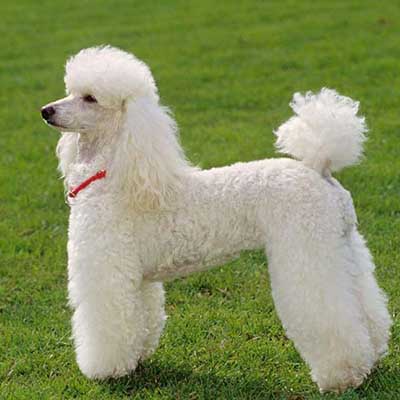
Poodle
Poodles, one of the most ancient dog breeds, are celebrated for their remarkable intelligence and ease of training, which makes them a popular choice among dog enthusiasts. They generally interact well with children and other pets, especially if they are socialized early on. Currently, Poodles are available in several sizes, including Toy, Miniature, and Standard. Each Poodle boasts a dense, curly coat that can range in texture from coarse to wiry and comes in nearly every color imaginable. Although they have charming personalities, they do require significant grooming and are susceptible to various serious health concerns. However, their loving and loyal disposition makes the extra care and attention well worth it!
Read moreRegister
Your kids have been begging for a pet forever, and you've recently decided that it's time for your family to get a new addition -- a dog! While everyone is excited for the new arrival, you're wondering if you need to have a dog license. How much does it cost? Is it required? Where do you get one?
Member Clubs

PETINNATE
Other
Height & Weight
Weight
58 lbs (26 kg)Male: 65 lbs (29 kg) , Female: 50 lbs (23 kg)
Height
24 inches (61 sm)Male: 26 inches (66 sm) , Female: 22 inches (56 sm)