Chesapeake Bay Retriever
Chessie, Chesapeake
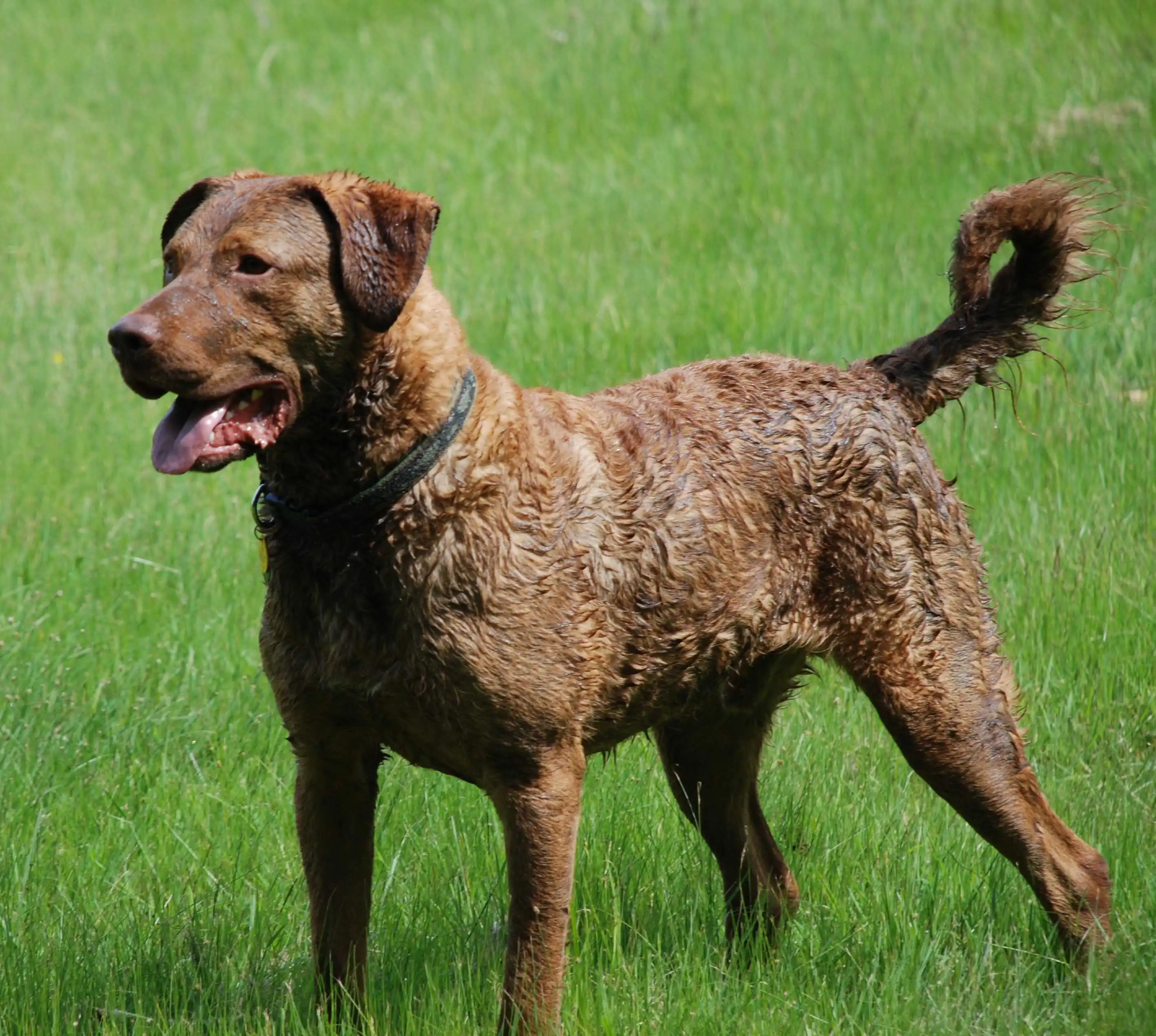
The Chesapeake Bay Retriever is a distinctive breed that sets itself apart from other Retrievers. This breed traces its roots back to two Lesser Newfoundland puppies, also referred to as St. John’s Water Dogs, which were saved by an American ship following a shipwreck near Maryland in 1807. These dogs were subsequently crossbred with local breeds, including Water Spaniels, Setters, and Hounds, in a somewhat haphazard manner. Although they share similar roles with other Retrievers, their genetic background is quite unique. Chesapeake Bay Retrievers are known for their striking looks, featuring a slightly oily, musky, waterproof wavy brown coat, captivating amber eyes, and a sturdy, muscular physique. While they are now mainly cherished as family pets and hunting companions, their initial role was to retrieve waterfowl. Renowned for their cheerful disposition, intelligence, and eagerness to please, these dogs excel in work, especially in water-related tasks. Their grooming requirements are relatively low, needing only a weekly brushing and a bath every three to four months. Due to their energetic and robust nature, they benefit from regular, vigorous exercise, whether through walking, running, or hunting geese. To ensure their proper development, consistent training combined with firm yet affectionate discipline is crucial.
Breed Origin
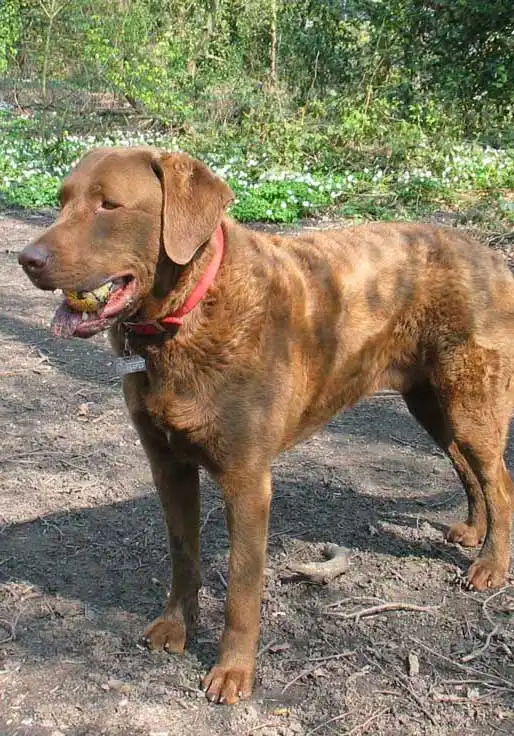
The Chesapeake Bay Retriever derives its name from a clear and direct history. In 1877, dogs from both shores of the Chesapeake Bay were recognized as one of three types of the Chesapeake Bay Ducking Dog, which was later consolidated under the name Chesapeake Bay Retriever in 1918. The breed's ancestry dates back to 1807, when two puppies were rescued from a sinking vessel in Maryland. These agile canines were presented to their saviors as a gesture of appreciation. As they matured, the puppies became skilled water retrievers, and it is believed that they were bred with local breeds, such as Hounds and Water Spaniels. Some accounts also suggest that the breed may have been influenced by crosses with the English Otterhound, as well as flat-coated and curly-coated Retrievers. Over the years, the distinctive breed we now know as the Chesapeake Bay Retriever emerged, gaining fame for its extraordinary ability to navigate the cold, choppy waters of the Chesapeake Bay to retrieve ducks. Reports suggest that a single dog could fetch between 100 and 200 ducks in just one day. Today, this breed is celebrated for its exceptional waterfowl recovery skills, and its popularity has extended far beyond the Chesapeake Bay area. The American Kennel Club officially recognized the breed in 1918, highlighting it as one of the few breeds genuinely "developed in America." Some enthusiasts contend that the contemporary Chessie differs from its predecessors, which typically featured dark brown coats, wedge-shaped heads, and longer, denser fur. Since 1964, the Chesapeake Bay Retriever has been designated as Maryland's official dog and serves as the mascot for the University of Maryland, Baltimore County. Notable individuals, including General Custer and Teddy Roosevelt, have owned this unique breed. Currently, it ranks as the 43rd most popular dog breed according to the American Kennel Club, making the intelligent, affectionate, and sensitive Chessie a beloved and rare companion.
Breed Appearance
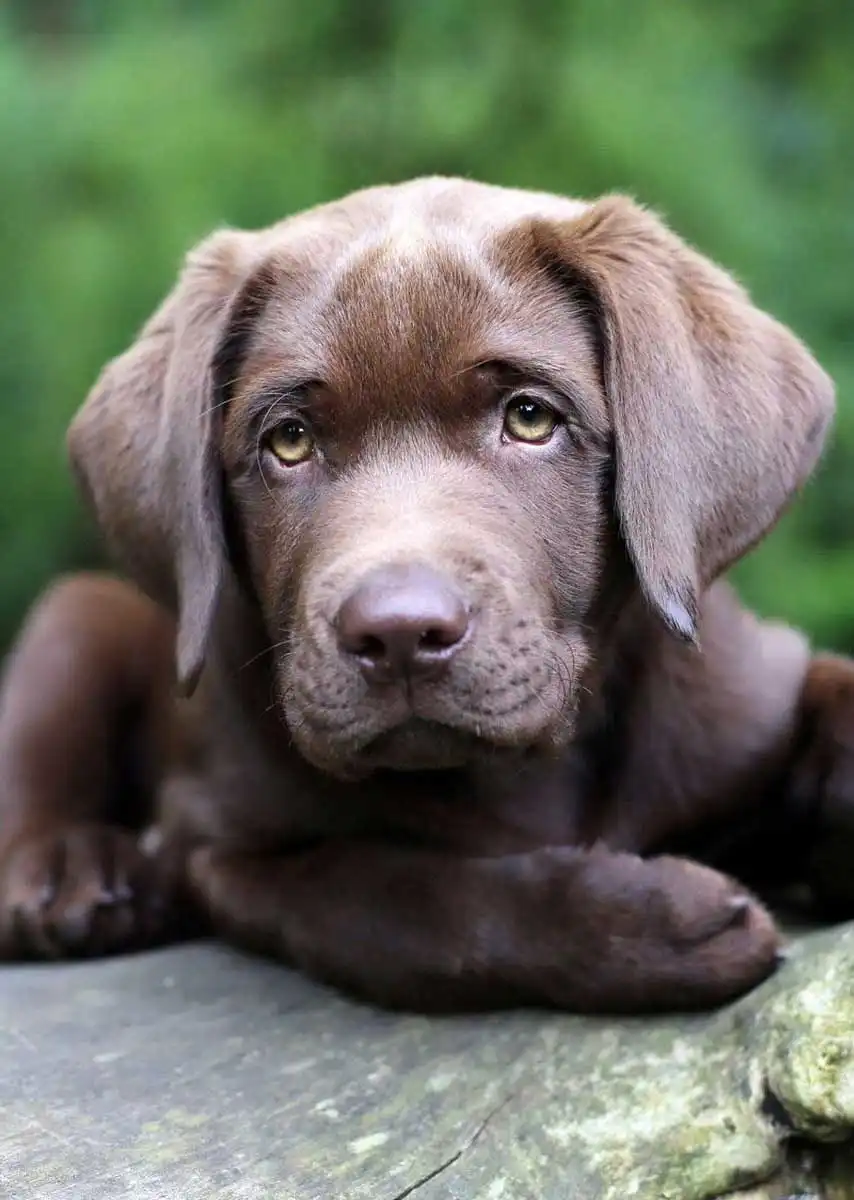
The Chesapeake Bay Retriever is easily recognized by its unique coat, which often appears almost dry immediately after emerging from the water. This breed boasts a double-layered, wavy fur that is enriched with natural oils, enabling it to dry quickly. Underneath the outer layer, there is a thick, short, and woolly undercoat, with similarly dense fur covering the legs. Muscular and sturdy, the Chesapeake is slightly longer than it is tall, with hindquarters that are equal to or even exceed the height of its front legs. Its strong legs feature webbed feet with well-rounded toes. The dog's head is marked by medium to large eyes that are set wide apart, giving it a curious expression. The muzzle has a gentle taper, and the teeth meet in either a scissors or level bite. The tail is of medium length, typically showing a slight curve or remaining straight.
Care Routine
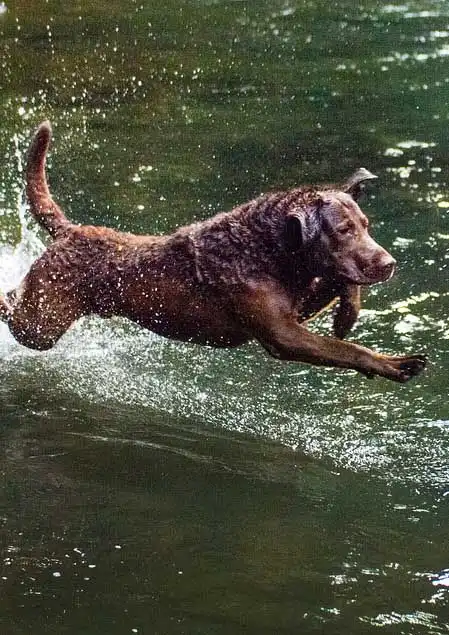
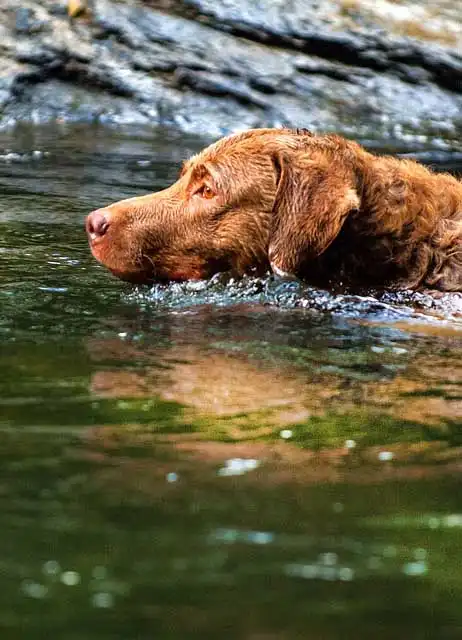
To maintain the health of this breed's coat, it is important to brush it thoroughly once a week. Their fur has a naturally oily feel and a faint musky aroma, which is entirely normal and cannot be removed. Bathing should be restricted to three to four times a year to retain the coat's natural oils, as frequent washing can diminish its water-resistant properties. Using a firm bristle brush regularly will help eliminate dead hair, as this breed tends to shed moderately to heavily. While the ears and eyes usually stay clean, they should still be inspected regularly. Like all dogs, the Chesapeake Bay Retriever needs professional dental cleanings annually. Daily exercise is vital; engaging in a good walk or swim is particularly beneficial since this breed is built for water activities. Although they enjoy spending time indoors with their families, they also thrive in temperate to cool outdoor environments. While the Chessie prefers cooler temperatures, it can adjust to warmer climates if there are plenty of swimming opportunities. Overall, this breed is less active indoors and is best suited for homes with a fenced yard for playtime. Living in an apartment is not recommended, as they may become bored without enough exercise. Feeding should consist of 1 to 1.5 cups of high-quality dog food twice a day, with adjustments made based on the dog's age and activity level; puppies may need up to 4 cups daily due to their rapid growth.
Behavior & Temperament
The Chesapeake Bay Retriever is a breed known for its eagerness to learn and its independent nature, celebrated for its love of swimming and retrieving, having been specifically bred as a water dog. These dogs generally get along well with children but may be somewhat reserved around strangers. They can display protective behaviors, may show aggression towards unfamiliar dogs, and might chase after cats that are not part of their family. To facilitate effective training, it is essential to provide them with gentle and consistent guidance, and owners should ideally have experience and confidence. Due to their intelligence, Chessies thrive on mental challenges through training to keep their minds active. Early socialization and training are vital to prevent dominance issues. While they are energetic outdoors, Chesapeake Bay Retrievers usually exhibit a calm demeanor indoors. They can make wonderful family pets, as long as they receive sufficient exercise. A daily regimen of 20 minutes of vigorous play or a one-hour walk will help ensure that your strong and majestic Chesapeake Bay Retriever is content to relax as a loyal companion for the rest of the day.

Play & Exercise
Things to Know
Cups Per Day
2.8 Cups
Daily Activity
90 Minutes
Average Lifespan
12 Years
Origin
1800s
Type
Pure Breeds
Size
Large
Origin Country
United States
Brush Frequency
Weekly
Coat Texture
Wavy
Register
Your kids have been begging for a pet forever, and you've recently decided that it's time for your family to get a new addition -- a dog! While everyone is excited for the new arrival, you're wondering if you need to have a dog license. How much does it cost? Is it required? Where do you get one?
Member Clubs

PETINNATE
Gun Dog

AKC
Sporting Group

UKC
Gun Dog
Height & Weight
Weight
68 lbs (31 kg)Male: 73 lbs (33 kg) , Female: 63 lbs (29 kg)
Height
24 inches (61 sm)Male: 25 inches (64 sm) , Female: 23 inches (58 sm)
6 Months

30 lbs ( m 30 lbs, f 30 lbs )
15 inches ( m 15 inches, f 15 inches )
12 Months
45 lbs ( m 45 lbs, f 45 lbs )
19 inches ( m 19 inches, f 19 inches )
18 Months
60 lbs ( m 60 lbs, f 60 lbs )
22 inches ( m 22 inches, f 22 inches )
Eye Colors
Brown

Amber
Nose Colors
Brown
Coat Colors
Brown

Red