Griffon-Pei
Brussels-Pei
The Griffon-Pei is an endearing crossbreed that combines the traits of the Brussels Griffon and the Chinese Shar Pei. This hybrid typically falls within the small to medium size category, reflecting the toy nature of the Brussels Griffon and the larger stature of the Shar Pei. Renowned for their companionship, Griffon-Peis also make reliable watchdogs; however, they may not be the best fit for families with young children. Conversely, they usually get along well with other animals, including cats, and can interact positively with fellow dogs at the park when introduced properly. Their coats vary from short to medium length, are dense, and can sometimes be wiry, depending on whether the Brussels Griffon parent had a smooth or rough coat.
Breed Origin
The Brussels Griffon was first bred in the 1800s in Brussels, Belgium, primarily to control the populations of mice and rats in stables. This breed quickly became popular among the drivers of horse-drawn carriages in the area. It is thought that the Brussels Griffon has lineage connections to several breeds, such as the English Toy Spaniel, Affenpinscher, Pug, and possibly the Yorkshire Terrier. They possess the large eyes and rounded head typical of Spaniels, combined with the compact size of the Affenpinscher, while their facial expressions show a Pug influence. The smooth-coated variety is believed to have been shaped by the Pug and Yorkshire Terrier, while the wiry coat is linked to the Affenpinscher. Over the years, these dogs evolved into cherished family pets. Although there are three recognized varieties, only the Brussels Griffon is acknowledged by the American Kennel Club (AKC), with the other two—Belgium Griffon and Petit Brabancon—being recognized in Europe. Both the smooth and rough-coated Brussels Griffon received AKC recognition in 1910 and are currently ranked as the 97th most popular dog breed in the United States. The Chinese Shar-Pei, which hails from China, is a descendant of the Chow Chow and was originally bred as a working farm dog. This breed's history can be traced back to pottery dating from 206 BC, making it one of the oldest breeds in China. The Shar-Pei was adept at hunting vermin, herding livestock, and safeguarding homes. The Chinese believed that the breed's dark mouth and wrinkled skin could ward off evil spirits. As the number of these dogs began to decline, a Hong Kong businessman named Matgo Law played a crucial role in rekindling interest in the breed by showcasing them in American magazines. The AKC officially recognized the breed in 1992, and it currently holds the position of the 61st most popular dog breed in the United States.
Breed Appearance
The Griffon-Pei is distinguished by its large, inquisitive brown eyes and a black nose, and it may also have a blue tongue along with loose skin that resembles that of the Chinese Shar-Pei. This breed's coat comes in a variety of colors, such as black, brown, red, cream, fawn, and brindle. With a small, round head and a short muzzle, the Griffon-Pei can be susceptible to brachycephalic syndrome, a respiratory issue that may cause significant breathing difficulties in some individuals. Therefore, it is essential to arrange a veterinary visit for your new pet promptly to ensure a comprehensive health assessment. Furthermore, they are equipped with strong, muscular legs and a rectangular body, complemented by a short tail that curls over their back.

Care Routine
For a Griffon-Pei with a sleek coat, it’s crucial to brush her daily with a pin brush. Her beard and mustache should also be tended to with a metal comb as needed. If you spot any tangles, you might need to use a dematter from time to time. For those with a wiry coat, it’s essential to strip the fur with a specialized tool every few months, or you can manually pull out the dead hairs from the root, as clippers won’t do the job effectively. Additionally, incorporating weekly ear cleaning and trimming her nails as necessary are vital components of her grooming regimen.
Behavior & Temperament
This breed is known for its affectionate and sociable nature, but it might not be the ideal choice for families with young children. Close supervision is crucial around kids of any age, as the breed can become irritable if teased or provoked. The Griffon-Pei typically enjoys the company of other pets and usually interacts well with other dogs at the park, especially if they have been properly socialized from a young age. While they possess a high level of intelligence, they can also be quite stubborn, which may necessitate extra time and patience during training. Naturally fearless, this breed makes an excellent watchdog and is unafraid to stand up to much larger dogs.
Play & Exercise
This breed has a balanced energy level and can sometimes be a bit sluggish, so you may need to think outside the box to encourage her to be active. A beneficial daily schedule might involve a lengthy walk in the morning and evening, along with a game of fetch or a trip to the dog park. She may also enjoy activities such as playing frisbee, swimming, or hiking in local parks. However, it's crucial to keep her leashed, as she might be inclined to chase after squirrels or rabbits. Furthermore, she could excel in agility training, which is a strong suit for this breed.
Things to Know
Cups Per Day
2.0 Cups
Daily Activity
45 Minutes
Average Lifespan
12 Years
Origin
2000s
Type
Crossbreeds
Size
Medium
Origin Country
United States
Brush Frequency
Daily
Coat Texture
Wiry
Ancestors
Brussels Griffon
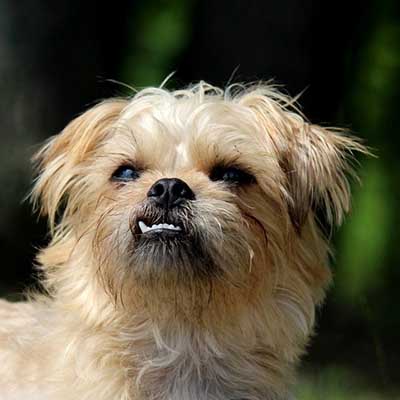
This energetic and vivacious breed has humble beginnings, initially bred to hunt vermin in Belgian stables. As time passed, it was interbred with the Pug, creating an endearing little companion for cab drivers. It's uncertain whether passengers were more enamored with the Griff or the drivers themselves! With its expressive face reminiscent of a Pug and a coat that can be either smooth or wiry, this breed—often dubbed the "velcro dog"—is celebrated for its steadfast loyalty, affection, playful nature, curiosity, and protective instincts, along with a strong aversion to being left alone. Nevertheless, the Brussels Griffon is prone to several health concerns, such as cataracts, progressive retinal atrophy, Chiari-like malformation (CM), syringomyelia (SM), corneal dystrophy, and hip dysplasia.
Read more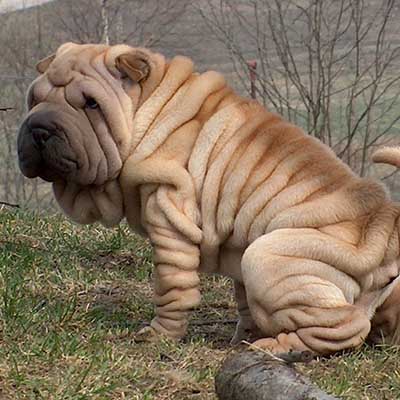
Chinese Shar-Pei
The Chinese Shar-Pei is a large dog breed distinguished by its unique wrinkled head and face. Typically, these dogs weigh around fifty pounds and stand about eighteen inches tall. There is a belief that the Chinese Shar-Pei shares a lineage with the Chow-Chow, as both breeds feature a blue-black tongue, which often causes confusion between them. Traditionally, the Chinese Shar-Pei was a multifunctional farm dog in China, employed for various tasks such as hunting, tracking, herding, and protecting livestock. Unfortunately, some people misused the breed for dogfighting, as its distinctive wrinkled skin and coarse fur were thought to hinder opponents' grip. The breed came perilously close to extinction during the Communist Revolution, but a businessman from Hong Kong played a vital role in reviving interest in the Shar-Pei among American dog lovers. In 1992, the American Kennel Club officially recognized the Chinese Shar-Pei, and it has since gained popularity as one of the favored dog breeds in the United States.
Read moreRegister
Your kids have been begging for a pet forever, and you've recently decided that it's time for your family to get a new addition -- a dog! While everyone is excited for the new arrival, you're wondering if you need to have a dog license. How much does it cost? Is it required? Where do you get one?
Member Clubs
PETINNATE
Other
Height & Weight
Weight
31 lbs (14 kg)Male: 33 lbs (15 kg) , Female: 29 lbs (13 kg)
Height
15 inches (38 sm)Male: 15 inches (38 sm) , Female: 14 inches (36 sm)
Eye Colors
Brown

Nose Colors
Black
Coat Colors
Black
Brown
Red
Cream
Fawn
Brindle