Pekehund
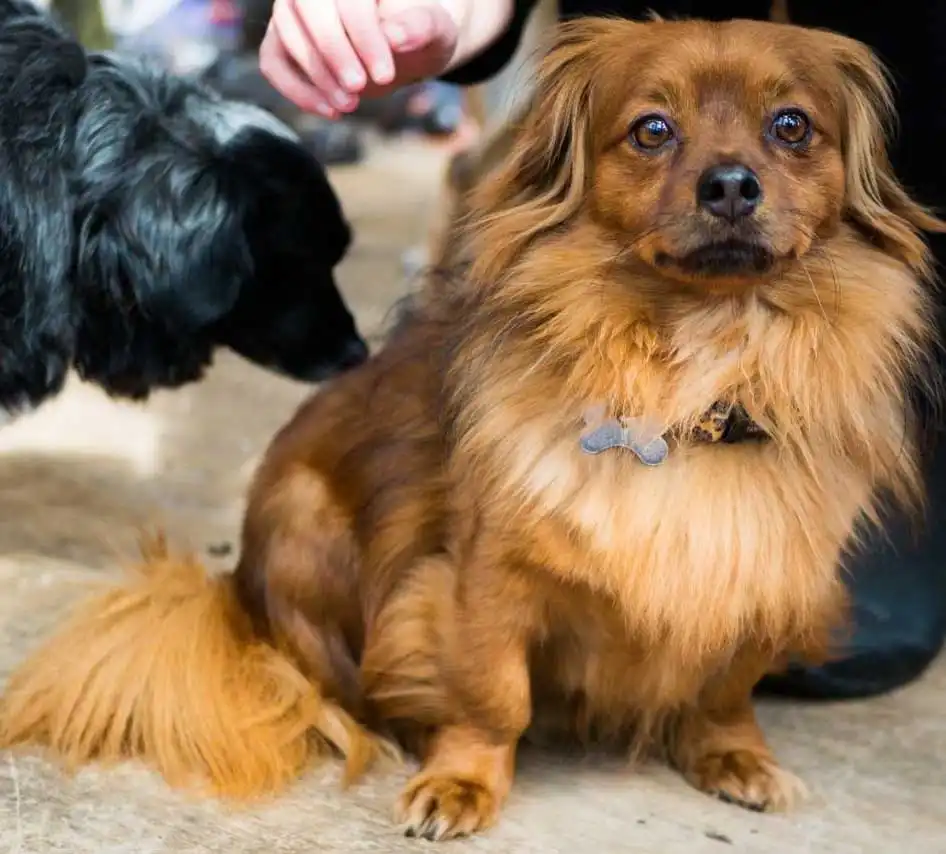
Pekehunds are a delightful and curious hybrid breed, created by crossing a Dachshund—commonly known as a “Doxie”—with a Pekingese. This unique combination brings together a variety of traits from both breeds, especially regarding their energy levels. Furthermore, qualities such as loyalty, intelligence, and a strong attachment to humans are heightened in these dogs. The size and appearance of Pekehunds can differ widely, depending on the type of Dachshund parent—be it standard, miniature, smooth-haired, long-haired, or wire-haired. Generally, these dogs weigh between 10 and 22 pounds and reach a height of about 7 to 9 inches. Although they possess an endearing personality, Pekehunds are not as common as other Pekingese-Dachshund mixes and have not yet received official recognition from the American Kennel Association.
Breed Origin
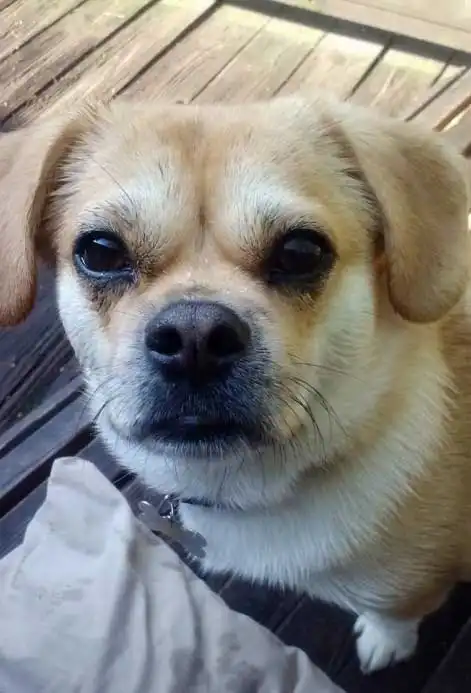
The Pekehund is a hybrid breed that emerges from the combination of a purebred Dachshund and a Pekingese. Both of these parent breeds arrived in the United States during the mid to late 1800s, and they may have been interbred for over a century. Despite their long-standing coexistence, their origins are quite different. The name "Dachshund" means "badger dog" in German, which highlights its original role in hunting badgers and other small vermin, a practice that dates back to 15th-century Germany. Dachshunds are available in three types: the “smooth-haired” variety, which was the first to be developed from small hunting breeds like the Pinscher and Basset Hound; the “wire-haired”; and the “long-haired,” both of which were later created by mixing in Spaniels and various Terriers. Over the years, Dachshunds have become known not only for their hunting skills but also for their loyalty and affectionate nature, qualities that have made them increasingly popular as pets throughout Europe and North America in the 1800s. During this time, breeders also began to create “miniature” Dachshunds, which weigh 11 pounds or less. The American Kennel Club officially recognized the Dachshund in 1895. Although they are rarely used for hunting today, they remain beloved family companions around the globe. In contrast, the Pekingese has its origins in ancient China, where it was primarily kept by the royal and elite classes, believed to act as a protector against malevolent spirits. The details surrounding the breed's development are somewhat unclear due to the scarcity of breeding records from Imperial China. However, it is known that in the 19th century, Dowager Empress Cixi began presenting Pekingese dogs as gifts to foreign officials and diplomats. Furthermore, during the Second Opium War in the 1860s, several Pekingese were smuggled out of China. Once they were introduced to the international community, the breed quickly became popular, particularly in Europe, and eventually reached North America by the late 19th century, earning recognition from the AKC in 1909.
Breed Appearance
Pekehunds are reminiscent of elongated dachshunds, showcasing the short muzzle of a Pekingese along with feathery fur around their ears and tails. These compact canines have endearing, inquisitive expressions and typically weigh between 10 and 22 pounds, standing at a height of 8 to 10 inches. The specific type of Dachshund used in their breeding can significantly affect various characteristics of the hybrid. For example, if a miniature Dachshund is one of the parents, the resulting Pekehunds are likely to be smaller in size. Additionally, the length and texture of their coats can differ based on whether the Dachshund parent has a smooth, wire-haired, or long-haired coat. The smooth-haired Dachshund is the most common parent in Pekehund mixes, usually resulting in a coat that is short to medium in length, straight, and soft. Their coats can come in a diverse array of colors, either in solid hues or combinations typical of both Dachshunds and Pekingese. Pekehunds are also noted for their high-set, drooping ears, small, cat-like paws, and a medium-length tail that is well-feathered.

Care Routine
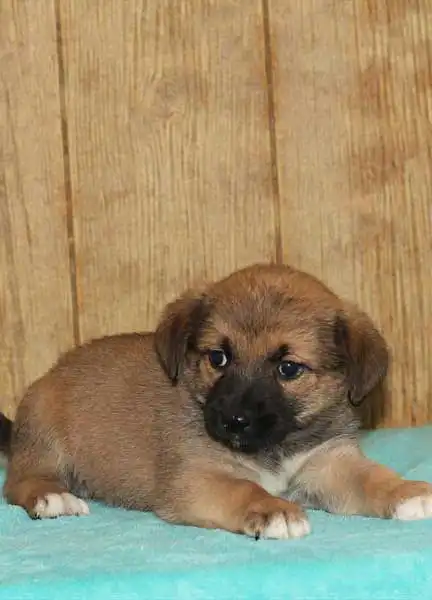
The grooming needs of Pekehunds can vary widely depending on their Dachshund lineage. Those with wiry or long fur generally require weekly brushing and occasional stripping, while Pekehunds with shorter coats may need less frequent grooming, although they still shed a moderate amount. A common characteristic among all varieties is the feathering around the ears and tail, which may require trimming with scissors or clippers; many owners opt for professional grooming services for this task. Regardless of coat type, all Pekehunds should be bathed and have their nails trimmed at least once a month. Furthermore, due to their tendency to accumulate wax in their ears, regular inspections and cleaning are vital to avoid infections or discomfort. Lastly, daily brushing of their teeth is essential for maintaining good dental health, just as it is for all dogs.
Behavior & Temperament
Pekingese and Dachshunds display a variety of distinct characteristics, and Pekehunds can inherit a blend of these traits from both parent breeds. However, one quality that remains constant among them is their deep loyalty and strong bond with their owners. Pekehunds are very sociable and prefer to stay close to their humans whenever possible. Being natural pack animals, they can feel distressed if left alone for long periods, thriving best in the company of others, whether that be another pet or a person. Consequently, it is essential for owners to address any social anxiety their Pekehund may have by creating a consistent routine, utilizing crate training, and, most importantly, providing ample love and reassurance. Furthermore, since Pekehunds may be cautious around strangers, early socialization with both people and other animals is crucial for developing a well-adjusted dog. In general, Pekehunds are quite intelligent and require mental stimulation through games and personal interactions, along with plenty of attention from their families.


Play & Exercise
Pekehunds need about 30 minutes of exercise each day to stay happy and healthy. Their specific exercise requirements can differ based on whether they take after their Pekingese or Dachshund parent; those with more Pekingese traits may need less activity, while those resembling the Dachshund might require more. Regardless of their genetic background, Pekehunds flourish in activities that foster a connection with their owners, such as going for walks, visiting parks, playing fetch, and mastering new tricks. They also appreciate socializing with familiar dogs. During colder seasons, a jacket may be necessary, but they generally adapt well to different weather conditions. Their size and exercise demands make them particularly well-suited for city living and apartment environments.
Things to Know
Cups Per Day
1.0 Cups
Daily Activity
30 Minutes
Average Lifespan
14 Years
Origin
Late 1800s
Type
Crossbreeds
Size
Small
Origin Country
Unknown
Brush Frequency
Weekly
Coat Texture
Straight
Ancestors
Pekingese
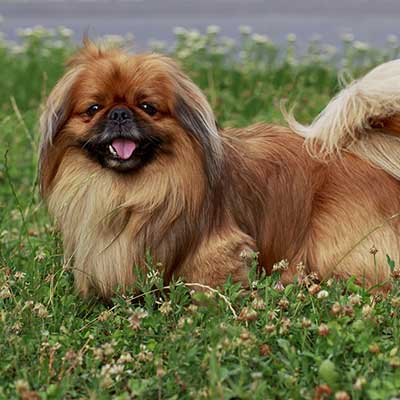
The Pekingese has a rich and esteemed history, having been celebrated as emblems of aristocracy in China. The breed's earliest records trace back to the 8th century during the T’ang Dynasty. Specifically bred to be companions, their name is derived from Peking, the former name of Beijing. These small, toy-sized dogs are known for their distinctive flat faces, lion-like manes, droopy ears, and a confident demeanor. According to Chinese mythology, the Pekingese is believed to be the offspring of a lion that fell in love with a marmoset. They come in a range of colors, including black, cream, fawn, gray, red, sable, and white.
Read more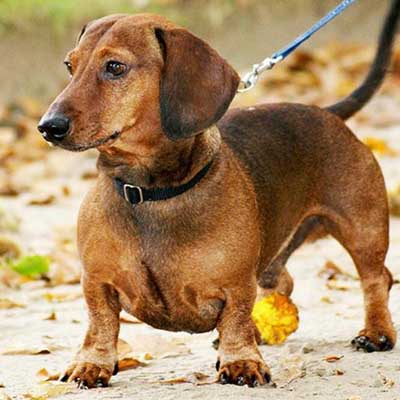
Dachshund
Since the 1950s, Dachshunds have consistently been among the most beloved dog breeds. With their distinctive long bodies and short legs, these dogs are not only charming but also exhibit a spirited and courageous personality. Although they possess intelligence, training can be challenging, especially if the techniques used become repetitive. Their inherent stubbornness often leads them to prefer their own methods. Originally developed in Germany for hunting small game, these characteristics are still apparent in their behavior today, which may manifest as a tendency to chase smaller animals or dig in the yard. Dachshunds are lively both indoors and outdoors, allowing them to adapt well to a variety of living environments.
Read moreRegister
Your kids have been begging for a pet forever, and you've recently decided that it's time for your family to get a new addition -- a dog! While everyone is excited for the new arrival, you're wondering if you need to have a dog license. How much does it cost? Is it required? Where do you get one?
Member Clubs

PETINNATE
Other
Height & Weight
Weight
16 lbs (7 kg)Male: 17 lbs (8 kg) , Female: 15 lbs (7 kg)
Height
8 inches (20 sm)Male: 8 inches (20 sm) , Female: 8 inches (20 sm)
6 Months
6 lbs ( m 6 lbs, f 6 lbs )
5 inches ( m 5 inches, f 5 inches )
12 Months
8 lbs ( m 8 lbs, f 8 lbs )
7 inches ( m 7 inches, f 7 inches )
18 Months
15 lbs ( m 15 lbs, f 15 lbs )
8 inches ( m 8 inches, f 8 inches )
Eye Colors
Blue

Hazel
Brown
Nose Colors
Black
Brown
Isabella
Coat Colors
Fawn

Gray

Black

Brown

Red

Cream

Isabella

Sable

Brindle

Pied