Dog Breeds Starting With i
Browse dog breeds whose names start with i and explore their unique characteristics.
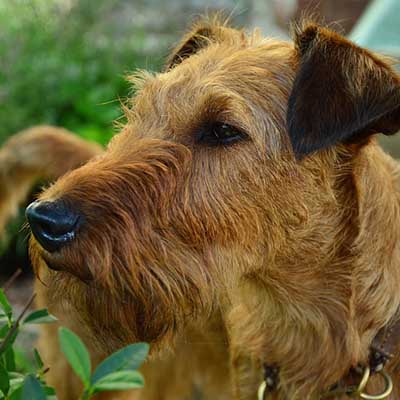
Irish Terrier
The Irish Terrier, celebrated for its spirited and adventurous nature, holds the distinction of being the oldest among all Terrier breeds, although its exact origins are somewhat ambiguous. Historical documentation suggests that by the 17th century, this breed was esteemed in Ireland for its prowess in hunting vermin and serving as a guard dog on rural farms. By the 18th century, the Irish Terrier had become popular in dog shows throughout Ireland, England, Scotland, and even the United States. Today, this medium-sized dog, known for its wiry coat, is treasured as a loyal, joyful, and energetic family companion. While it requires little grooming, this resolute breed demands plenty of daily exercise, along with early socialization and training to flourish.
Read more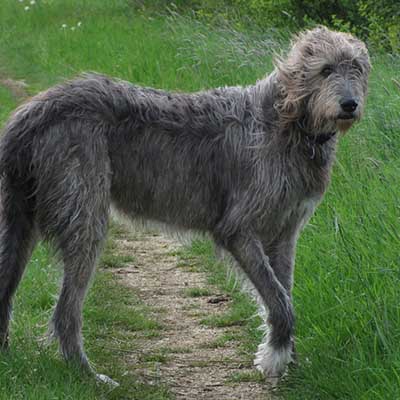
Irish Wolfhound
The Irish Wolfhound is a striking breed that was initially developed to assist in pulling men from their horses and chariots. Beyond its historical significance as a powerful hunting partner, the breed nearly faced extinction due to the dwindling populations of boars and wolves in Ireland. Captain George Graham was instrumental in the breed's revival, incorporating Great Danes and Deerhounds into its genetic line. Once referred to as the "Great Hound of Ireland," these dogs were highly esteemed by the aristocracy, often exchanged as gifts and even becoming the subject of ownership disputes. The American Kennel Club granted official recognition to the Irish Wolfhound in 1897.
Read more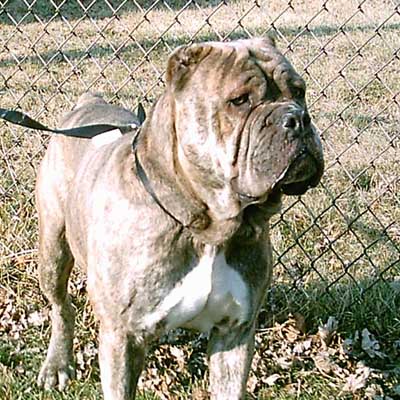
Italian Bulldogge
The Italian Bulldogge is an impressive and protective giant breed, created by crossing the Neapolitan Mastiff with the Olde English Bulldogge. This hybrid demands a higher level of care due to its seasonal shedding, tendency to drool, and the need for regular maintenance of its facial wrinkles. Despite their large size, they can adjust to apartment living, as long as they are taken for daily walks and have access to a nearby park for exploration and exercise several times a week. However, this breed is not suited for inexperienced owners; they flourish under the guidance of knowledgeable and assertive individuals.
Read more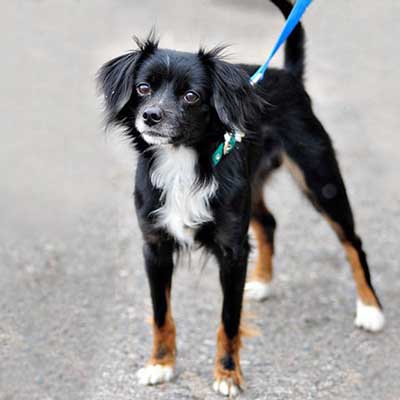
Italian Cavalier Greyhound
The Italian Cavalier Greyhound is a charming and friendly small breed, created by crossing the Italian Greyhound with the Cavalier King Charles Spaniel. This dog adapts easily to different living environments, making it a fantastic option for novice dog owners. They require only moderate grooming and are generally straightforward to train due to their gentle disposition and eagerness to please. Although primarily seen as companion animals rather than working or guard dogs, they have a sharp awareness that allows them to serve as effective watchdogs. Many owners characterize the Italian Cavalier Greyhound as a clever little friend, overflowing with love and affection.
Read more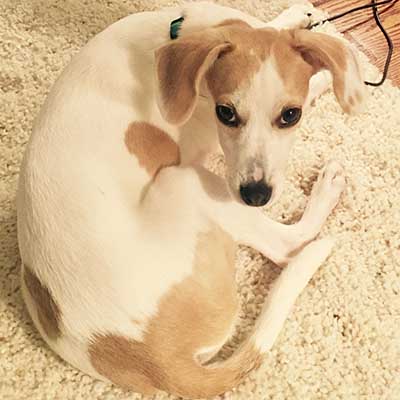
Italian Greagle
The Italian Greagle is a mixed breed that emerges from the crossbreeding of an Italian Greyhound and a Beagle. Although the exact history of this small dog is somewhat ambiguous, it is widely believed that the initial Italian Greagles were developed by Kelly and Angela Easley in their residence in Great Falls, Montana. These dogs are known for their strong prey drive, a characteristic inherited from both parent breeds. They possess the sharp vision typical of the Italian Greyhound, along with the remarkable scent detection skills of the Beagle. This powerful combination necessitates keeping the Italian Greagle on a leash unless in a secure area, as they are prone to chasing moving objects or following enticing scents. Renowned for their loving disposition, these dogs create deep connections with their owners and display a high level of intelligence. Generally categorized as medium-sized, Italian Greagles typically stand between 13 to 15 inches tall at the shoulder and weigh around 20 to 40 pounds.
Read more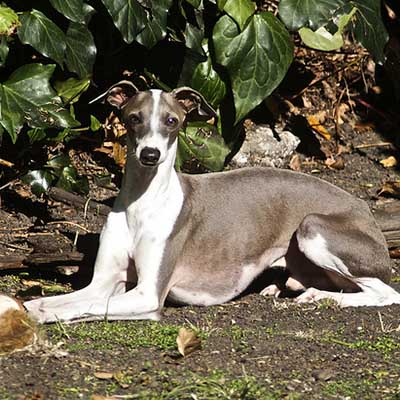
Italian Greyhound
The Italian Greyhound is recognized as the smallest of the sighthound breeds, often referred to as "miniature" due to its petite size. Historical artwork from ancient Egypt depicts dogs that closely resemble this breed. Renowned for their affectionate and lively disposition, Italian Greyhounds were originally bred for hunting purposes but have evolved into cherished companions that enjoy lounging on laps. It is crucial to keep them indoors or in a securely fenced space, as they have a propensity to chase after cars, bicycles, and even pedestrians. Although they are quite intelligent, they can pose challenges during house training. To flourish, they need plenty of love and attention. Furthermore, they may be sensitive to certain insecticides and anesthetics, yet they are generally regarded as healthy dogs overall.
Read more
Italian Tzu
The Italian Tzu is a hybrid dog that emerges from the combination of an Italian Greyhound and a Shih Tzu. This breed is relatively easy to care for, requiring little grooming and exhibiting minimal shedding. Training an Italian Tzu is generally uncomplicated, and they do not require a lot of exercise. Since their parent breeds are not designed for extended outdoor activities, it’s crucial to keep a close eye on them when outside to avoid overheating. The Italian Tzu can be left alone for reasonable durations, such as during a workday, and typically does not suffer from separation anxiety. Known for their affectionate, energetic, and playful nature, they make excellent companions for children.
Read more
Italian-Bichon
The Italian Bichon is a small but alert companion, celebrated for its loyalty and playful demeanor, often confused with the Jack Russell Terrier. In reality, this breed is a hybrid of the Italian Greyhound and the Bichon Frise. Characterized by their slender, elongated frames and slightly tousled coats, these dogs typically need weekly grooming to keep their fur in good condition. The precise origins of the Italian Bichon are somewhat ambiguous, a common trait among many designer breeds that have recently surged in popularity. They make wonderful family pets, adapting easily to different living environments and climates. However, it's important to note that they generally feel more at ease around older children, as younger kids may not always engage with them in a suitable manner.
Read more