Irish Wolfhound
Cu Faoil
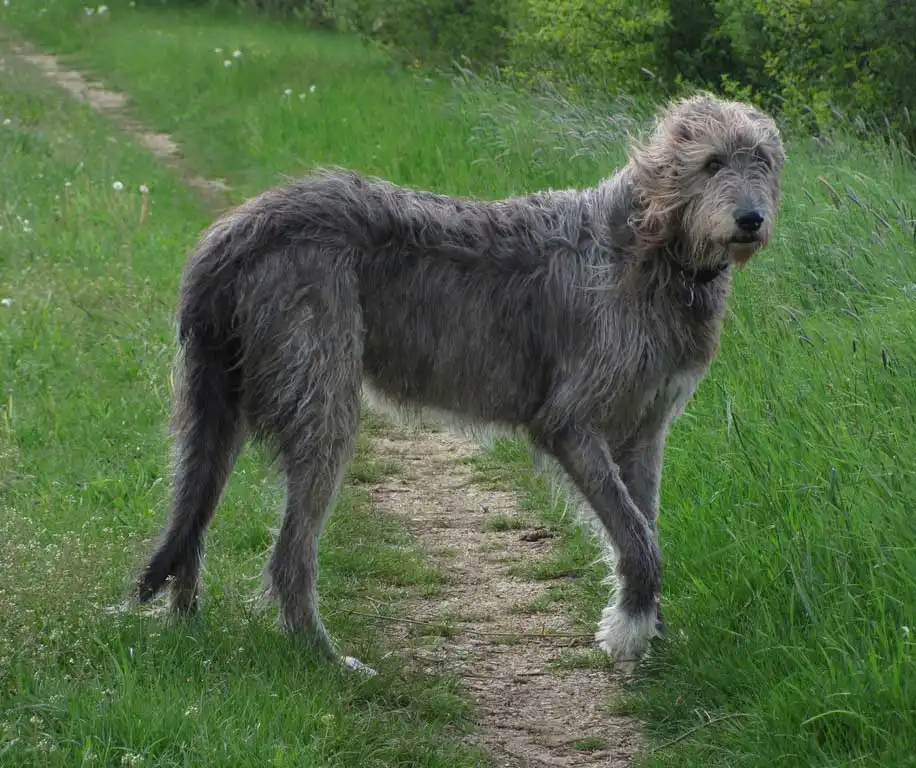
The Irish Wolfhound is a striking breed that was initially developed to assist in pulling men from their horses and chariots. Beyond its historical significance as a powerful hunting partner, the breed nearly faced extinction due to the dwindling populations of boars and wolves in Ireland. Captain George Graham was instrumental in the breed's revival, incorporating Great Danes and Deerhounds into its genetic line. Once referred to as the "Great Hound of Ireland," these dogs were highly esteemed by the aristocracy, often exchanged as gifts and even becoming the subject of ownership disputes. The American Kennel Club granted official recognition to the Irish Wolfhound in 1897.
Breed Origin
Historical records indicate that Quintus Aurelius Symmachus received a remarkable “Great Hound of Ireland” as a gift from his brother, part of a total of seven Irish Wolfhounds bestowed upon him. These noble dogs were highly esteemed in various royal courts, and at one time, laws restricted their ownership exclusively to royalty. Frequently exchanged as diplomatic gifts, Irish Wolfhounds were sent to countries such as Sweden, Denmark, and Spain by other noble families. In addition to serving as loyal companions, these hounds were also employed in hunting, pursuing not only boars and wolves but also trained to unseat riders from their mounts and pull men from chariots during conflicts. The breed nearly faced extinction in the eighteenth century, but Captain George Graham discovered a few surviving Wolfhounds. He successfully crossbred them with Scottish Deerhounds, Tibetan Borzis, Pyrenean Wolfhounds, and Great Danes, leading to the development of the Irish Wolfhound we know today.
Breed Appearance
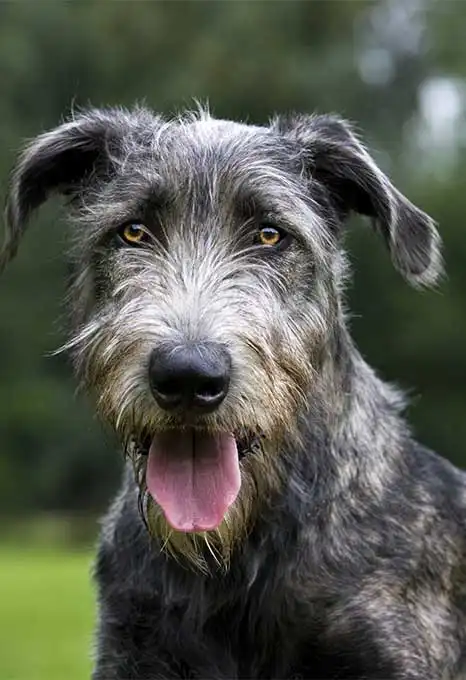
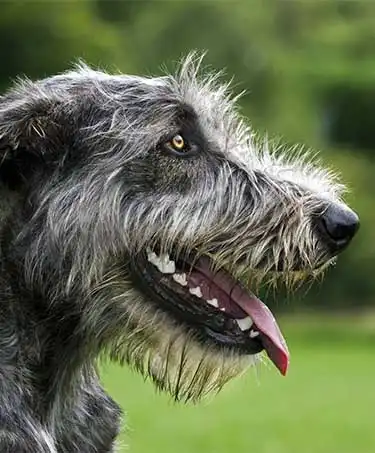
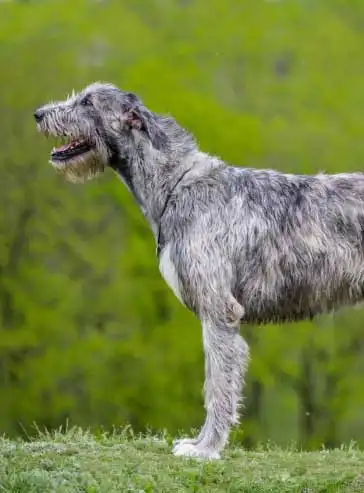
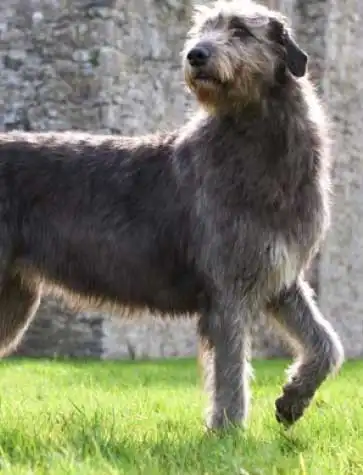
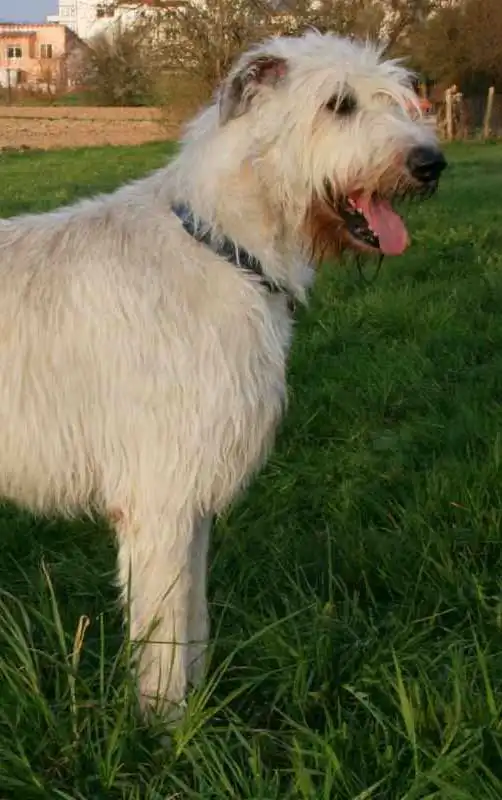
The Irish Wolfhound can reach an impressive height of up to seven feet when it stands on its hind legs, and when it is on all fours, it is comparable in size to a small pony. This breed features an elongated head and muzzle, along with small ears that typically lie flat against its skull; however, they perk up when the dog is excited. With its shaggy, wiry coat, which is longer over the eyes and under the jaw, the Irish Wolfhound has a unique and striking appearance. The coat's texture is generally coarse to the touch. These dogs come in a variety of colors, including gray, brindle, red, black, white, and fawn, with gray being the most common shade.
Care Routine
The Irish Wolfhound is not ideal for living in an apartment; it requires plenty of daily exercise. A secure, fenced yard is crucial for this breed to ensure it gets enough physical activity. Although the Irish Wolfhound does not shed excessively, it does shed at a moderate rate. Regular brushing, preferably once a week, is recommended, and every six months, either you or a professional groomer should remove excess dead hair from the coat. It's also important to pay attention to the dog's nails and teeth; regular nail trimming is essential for larger breeds, as it’s easier to manage in smaller increments. When feeding an Irish Wolfhound puppy, it's important to be cautious—growth formulas are not appropriate for this breed at a young age. Instead, prioritize high-quality food while steering clear of high-protein options.
Behavior & Temperament
Although Irish Wolfhounds are quite large, they are not usually seen as effective guard dogs. Known for their gentle nature, these majestic creatures exhibit sweetness, patience, kindness, and impressive intelligence. While their size might intimidate some, they do not display aggression towards strangers. Irish Wolfhounds are incredibly loyal and eager to please their owners. In their first couple of years, they can be somewhat clumsy and require time to reach full maturity. Thus, it is crucial to dedicate additional time to nurturing your Irish Wolfhound puppy to foster its confidence. Implementing early leash training is also recommended, as it helps the dog learn to walk calmly beside you without pulling, particularly before it gains significant strength. These dogs flourish under the care of a firm and consistent handler. They typically get along well with other dogs and children, and they are among the few breeds that can live peacefully with almost any other animal.
Play & Exercise
Things to Know
Cups Per Day
4.5 Cups
Daily Activity
60 Minutes
Average Lifespan
7 Years
Origin
390 AD
Type
Pure Breeds
Size
Giant
Origin Country
Ireland
Brush Frequency
Weekly
Coat Texture
Wiry
Register
Your kids have been begging for a pet forever, and you've recently decided that it's time for your family to get a new addition -- a dog! While everyone is excited for the new arrival, you're wondering if you need to have a dog license. How much does it cost? Is it required? Where do you get one?
Member Clubs
PETINNATE
Sighthound and Pariah Dog

AKC
Hound Group

UKC
Sighthound and Pariah Dog
Height & Weight
Weight
136 lbs (62 kg)Male: 150 lbs (68 kg) , Female: 123 lbs (56 kg)
Height
33 inches (84 sm)Male: 34 inches (86 sm) , Female: 32 inches (81 sm)
6 Months
65 lbs ( m 65 lbs, f 65 lbs )
26 inches ( m 26 inches, f 26 inches )
12 Months
80 lbs ( m 80 lbs, f 80 lbs )
29 inches ( m 29 inches, f 29 inches )
18 Months
122 lbs ( m 122 lbs, f 122 lbs )
32 inches ( m 32 inches, f 32 inches )
Eye Colors
Brown
Nose Colors
Black
Coat Colors
Black
Gray
Red
Cream
Fawn
Silver
Brindle
Characteristics
Mixes
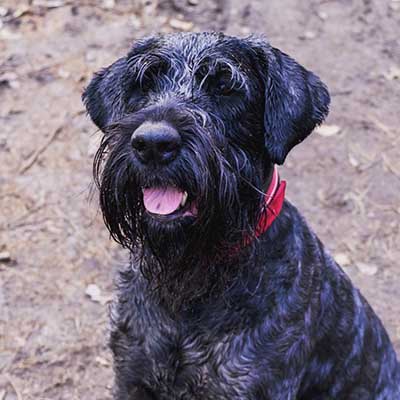
Giant Irish Wolf Schnauzer
The Giant Irish Wolf Schnauzer is a meticulously designed hybrid breed, created through the deliberate crossbreeding of the Giant Schnauzer and the Irish Wolfhound. The Giant Schnauzer, a sturdy dog with origins in Germany, was historically utilized for various farm tasks, such as herding cattle, protecting livestock, and pulling carts. On the other hand, the Irish Wolfhound is a large breed that was traditionally used for hunting and eradicating the now-extinct Irish wolf, and possibly the Irish elk, with roots tracing back to at least 391 A.D. Both breeds are typically sociable and enjoy being around children, regardless of their size. However, they may exhibit excessive energy or clumsiness when interacting with very young kids, especially the younger Giant Irish Wolf Schnauzers. It’s also important to mention that there are Standard and Miniature Irish Wolf Schnauzers, which are bred using either the Standard or Miniature Schnauzer instead of the Giant Schnauzer. These three types of Schnauzers, while sharing similar looks, are distinct breeds that vary significantly in terms of health concerns, temperament, and natural abilities, making the Standard and Miniature Irish Wolf Schnauzers quite different from their Giant relative.
Read more