Dog Breeds Starting With a
Browse dog breeds whose names start with a and explore their unique characteristics.
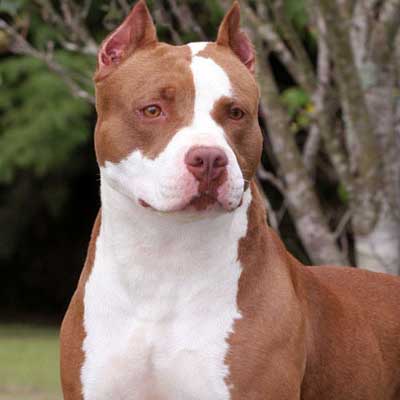
American Pit Bull Terrier
The term "Pit Bull" or "Pit Bull Terrier" refers to a group of sturdy, short-haired dogs that generally have a mixed heritage of Bulldogs and Terriers. Among them, the American Pit Bull Terrier is officially recognized as a separate breed by the United Kennel Club in England, although it does not have the same status with the American Kennel Club or the Fédération Cynologique Internationale. While Pit Bulls can sometimes display unpredictable behaviors due to their varied genetic backgrounds, this is less frequent in well-bred American Pit Bull Terriers, as responsible breeders focus on fostering a more stable temperament. To address potential issues like fearfulness, overly excited greetings, and aggression towards other dogs, it is essential to prioritize obedience training and socialization for this powerful breed.
Read more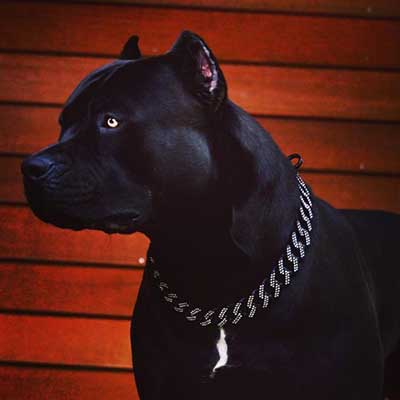
American Pit Corso
The American Pit Corso is a mixed breed that results from the combination of the American Pit Bull Terrier and the Italian Cane Corso. Typically, these dogs are quite substantial, averaging around fifty pounds in weight. The American Pit Bull Terrier was initially bred for farm work, but it gradually transformed into a devoted protector and friend. Nowadays, some individuals use the American Pit Corso for hunting wild boar. Conversely, the Cane Corso Italiano was specifically designed for pursuing large game, especially wild boar. Renowned for their balanced temperament, American Pit Corsos are also very trainable. They serve as wonderful companions, needing only minimal grooming and a moderate amount of exercise.
Read more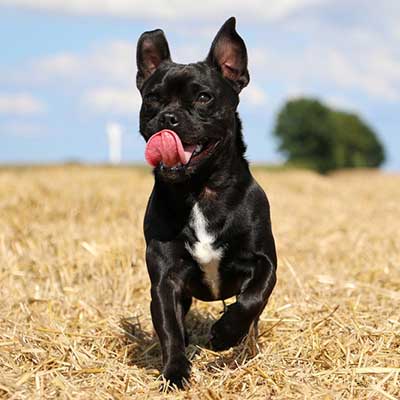
American Pugabull
The Pug has its origins in China and became a beloved pet among European royalty. Its popularity surged during the Victorian era, leading to its depiction in numerous artistic forms such as paintings, postcards, and figurines. On the other hand, the American Bulldog was bred for the now-banned practice of bull-baiting and was utilized as a hunting and guard dog by farmers and ranchers. Both breeds are recognized for their considerable shedding. Moreover, they are both great with children and exhibit a deep loyalty to their families.
Read more
American Rat Pinscher
The American Rat Pinscher is a mixed breed created by crossing the American Rat Terrier with the Miniature Pinscher. Originally, the American Rat Terrier was bred for agricultural tasks and hunting, but it gradually became a cherished pet. On the other hand, the history of the Miniature Pinscher is not as thoroughly documented, though it is recognized that this breed originated in Germany. It is believed that the Mini Pin has connections to Italian Greyhounds and Dachshunds, with the German Pinscher possibly also playing a role in its development. Given that Pinschers were traditionally used for catching rats, it’s likely that the American Rat Pinscher will have a natural instinct to chase small animals and objects. These dogs are small enough to thrive in apartment settings, even without a yard, but they possess a high energy level, making regular exercise crucial for their well-being and happiness.
Read more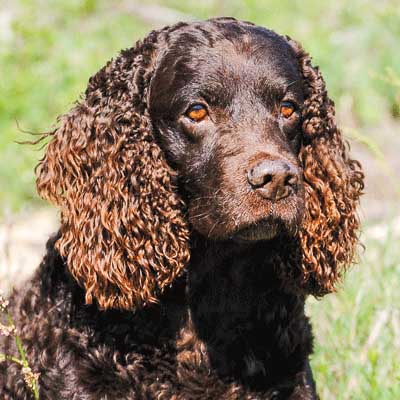
American Water Spaniel
The American Water Spaniel is a compact breed with a rich brown coat, tracing its roots back to the Midwestern United States in the 18th century. Originally developed as a hunting companion for waterfowl, pheasants, and rabbits, this breed is known for its lively and confident presence in the field, although it may show some timidity around unfamiliar people. Equipped with a double coat that effectively repels water and webbed feet, the American Water Spaniel thrives in aquatic settings, but it does need consistent grooming to keep its fur healthy and clean. Beneath its dense, curly exterior lies a strong, agile body, enabling the American Water Spaniel to gracefully jump in and out of small boats or canoes without creating a disturbance.
Read more
Anatolian Pyrenees
The Anatolian Pyrenees is a mixed breed that merges the characteristics of the Anatolian Shepherd and the Great Pyrenees. Both of these parent breeds were initially developed for the purpose of guarding livestock, which makes the Anatolian Pyrenees an excellent protector for both families and animals. This breed is well-regarded for its gentle nature, particularly around children. The Anatolian Shepherd hails from Turkey, while the Great Pyrenees is native to the mountainous areas of Asia. Typically, the Anatolian Pyrenees sports a cream-colored coat with brown or black markings. It’s worth mentioning that this breed tends to shed more than average, necessitating additional grooming care.
Read more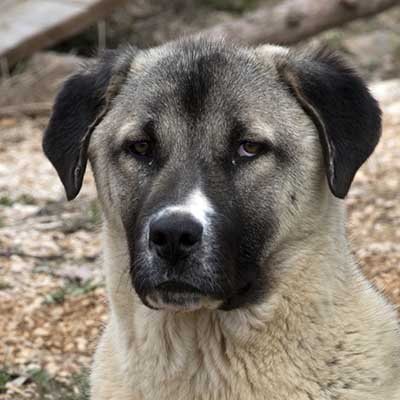
Anatolian Shepherd
The Anatolian Shepherd Dog serves primarily as a guardian for livestock rather than a herding breed, specifically created to shield animals from predators. This breed hails from Turkey, with its lineage believed to date back to approximately 2000 BC. Historical evidence of these dogs is depicted in ancient bas-reliefs located in the Assyrian Rooms of the British Museum in London. Furthermore, the Anatolian Shepherd is thought to be alluded to in the Bible, particularly in the Book of Job, which discusses these dogs in the context of flocks and is set in the Turkish region. Although they can display affection, Anatolian Shepherds are generally not ideal as family pets, especially in homes with young children. Their independent and assertive temperament often leads them to view children as peers rather than authority figures, which can result in a lack of respect.
Read more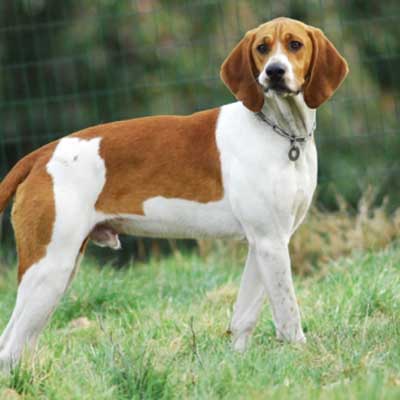
Anglo-Francais de Petite Venerie
The Anglo-Français de Petite Vénerie, much like various other French scent hounds, has a storied past that stretches back several centuries. This breed originated from the interbreeding of older Anglo-French hounds with the Poitevin, Beagle, Petite Gascon-Saintongeois, and Petite blue de Gascogne. The result is a dog that resembles English foxhounds in build while showcasing the unique head characteristics typical of French scent hounds. For centuries, these dogs have been primarily employed in hunting, often working in packs to flush out small game, and many of their behavioral traits are rooted in this historical function. Although they have long been recognized as hunting dogs in France, their appeal is now on the rise as show and companion animals in countries such as the United Kingdom, the United States, and Italy. Even when kept as individual pets, they maintain their pack-oriented instincts, displaying sociable, friendly, and non-aggressive behavior towards people, including strangers, and are particularly gentle with children. These dogs are known for their loyalty and affection, forming deep bonds with their families, especially with the owner who trains and socializes them. Like other scent hounds, they possess intelligence and a strong-willed nature, which can sometimes lead to stubbornness. This makes early training more effective when conducted by an experienced handler. They also have a tendency to bay, a behavior developed to alert their owners, which can create challenges in smaller living spaces like apartments. Furthermore, their hunting instincts may complicate living with small non-canine pets, as their prey drive can emerge unexpectedly. Despite these minor hurdles, the Anglo-Français de Petite Vénerie is a well-mannered breed that is gradually evolving from a traditional hunting dog into a beloved family companion.
Read more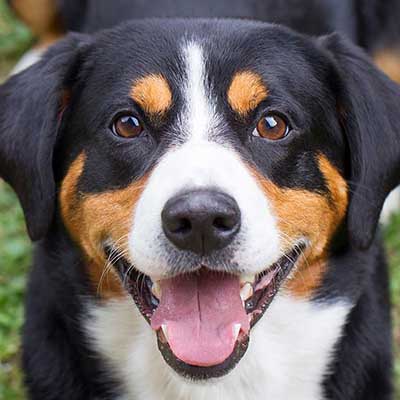
Appenzeller
The Appenzeller Mountain Dog is a sturdy and adaptable breed, although its precise origins are not entirely known. This breed excels in various roles, such as guarding farms, herding livestock, and pulling carts. Despite their strong and muscular physique, they do not fall into the giant breed category. Their dark, expressive eyes enhance the appeal of their short, double coat. Originating from Switzerland, Appenzellers usually sport a black or brown coat with unique symmetrical markings in white and rust. In general, the Appenzeller Mountain Dog is a hardy breed, typically not prone to specific health problems linked to its ancestry.
Read more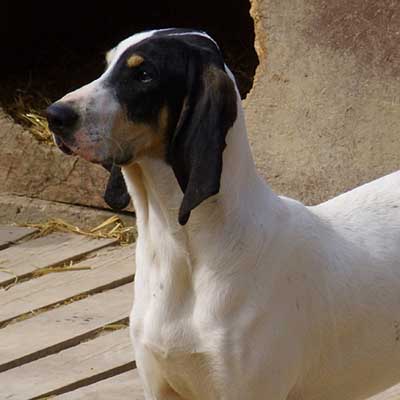
Ariegeois
The Ariegeois is a large scent hound renowned for its exceptionally friendly temperament. While not widely known beyond France, these dogs are appreciated for their easygoing nature, particularly in social situations, except when it comes to hunting. With a strong history as pack animals, they generally show little aggression towards other dogs and are often welcoming, even to strangers, which unfortunately diminishes their effectiveness as guard dogs. This breed is affectionate and loyal, thriving in a family environment. Although they possess a high energy level, they are adaptable and will join in on whatever activities the group is involved in, even if it means simply lounging together. However, it’s crucial to ensure they get regular exercise. As larger, athletic dogs, their well-being relies on sufficient physical activity. When not engaged in coursing or driving, they delight in running or having access to open spaces where they can sprint freely, reminiscent of their ancestral roles in chasing. They are relatively easy to train, particularly when a strong bond exists with their owner, and once trained, they respond effectively to commands.
Read more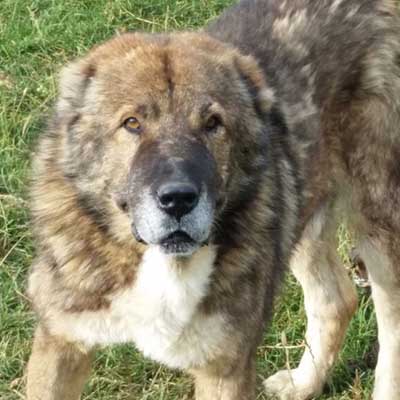
Armenian Gampr
The Armenian Gampr is a large to giant landrace breed that hails from the Armenian Highlands, where it has historically acted as a protector of livestock for millennia. Renowned for their innate guarding instincts, these dogs are gentle with both livestock and family members, regardless of age. However, they are typically more serious and reserved than many other breeds, displaying minimal interest in playtime. Although they possess intelligence, courage, and a generally calm demeanor, they often find it challenging to coexist with other animals unless they receive thorough socialization. Importantly, the Armenian Gampr is a notably sturdy breed, with a lifespan that tends to exceed that of most dogs of comparable size.
Read more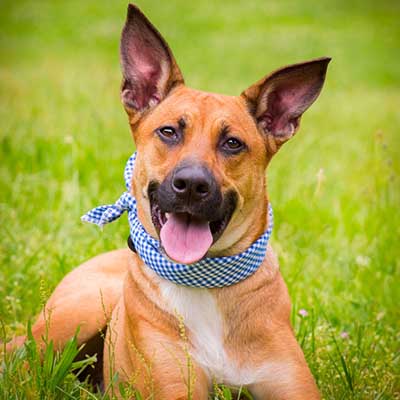
Arubian Cunucu
The Arubian Cunucu is a breed of pariah dog indigenous to Aruba, a Caribbean island. While it is not officially recognized as a separate breed by any kennel club or organization, it is cherished by the local community. These dogs are lively and nimble sighthounds, thought to have historically hunted alongside the Arawak people. Individuals who choose to bring a Cunucu into their homes often discover that they are loyal, trainable, and tolerant companions, although they may exhibit some neediness. This trait is evident in both puppies adopted from shelters and adult dogs rescued from the streets.
Read more