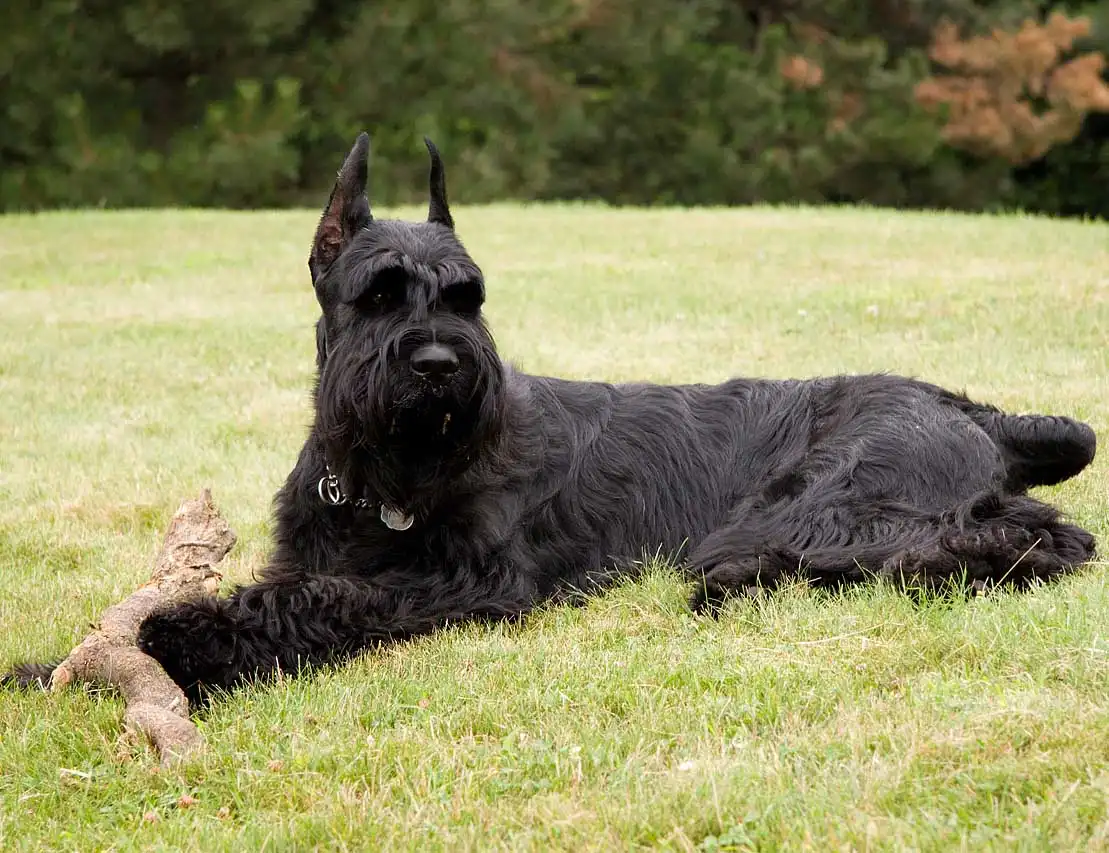
Giant Schnauzer
Riesenschnauzer, Bear Schnauzer
The Giant Schnauzer is the largest of the three recognized Schnauzer breeds. Initially bred as a working dog, its primary roles included herding cattle and protecting livestock. It is commonly thought that the Giant Schnauzer was developed by crossing the Standard Schnauzer with the Great Dane and the Bouvier des Flandres. Given its demanding temperament and the necessity for extensive training, this breed may not be the best fit for novice dog owners. Known for its intelligence and strong sense of independence, the Giant Schnauzer can be somewhat difficult to keep mentally stimulated. Furthermore, this breed requires considerable grooming, making it a high-maintenance pet.
Breed Origin
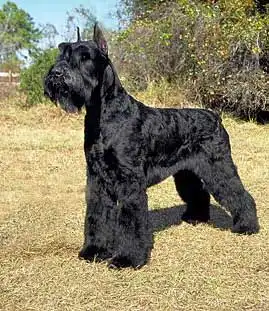
There are three unique varieties of Schnauzers: the Standard Schnauzer serves as the original breed, while the Miniature and Giant Schnauzers are its derivatives. The exact history of the Giant Schnauzer is somewhat ambiguous, but the Standard Schnauzer has been depicted in artwork since 1492, with the Giant Schnauzer appearing later. This breed was originally bred for herding and protecting livestock. To develop the Giant Schnauzer, breeders combined the Standard Schnauzer with larger breeds such as the Great Dane and the Bouvier des Flandres. Initially, the Giant Schnauzer was employed to drive cattle to market, but by the early 1900s, its responsibilities shifted to safeguarding breweries, stockyards, and butcher shops. In both the U.S. and Europe, Giant Schnauzers have been trained for police duties; however, their size and potential for aggression, if not properly socialized, have made them less common in this role today. The American Kennel Club officially recognized the Giant Schnauzer in 1930, and it currently holds the 94th position in popularity among dog breeds. This breed demands extensive grooming and is highly energetic, requiring consistent training and exercise. The Giant Schnauzer is not ideal for novice dog owners or families with young children. As its name suggests, the Giant Schnauzer is a strong, muscular working dog that thrives when given specific tasks to accomplish.
Breed Appearance
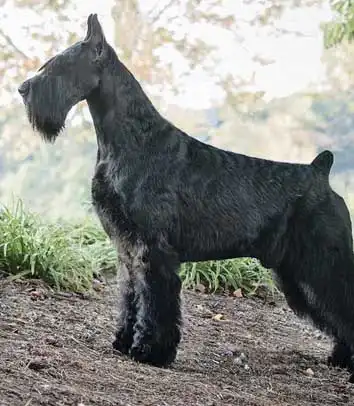
The Giant Schnauzer is characterized by a robust, wiry topcoat paired with a plush undercoat. Unlike breeds with smooth or flat fur, the hair along its back has a slight lift. The coat on its head is coarse, and the breed's signature beard and eyebrows exhibit the same wiry quality, a trait common to all Schnauzers, including the Standard and Miniature types. A coat that is excessively soft is deemed undesirable. This breed is available in solid black or a pepper-and-salt pattern, where the topcoat features a blend of banded hairs—white mixed with black and vice versa—resulting in a grayish appearance from afar. The only acceptable marking is a small white spot on the chest, and all variations of pepper and salt, from silver-gray to dark iron-gray, are allowed.
Care Routine
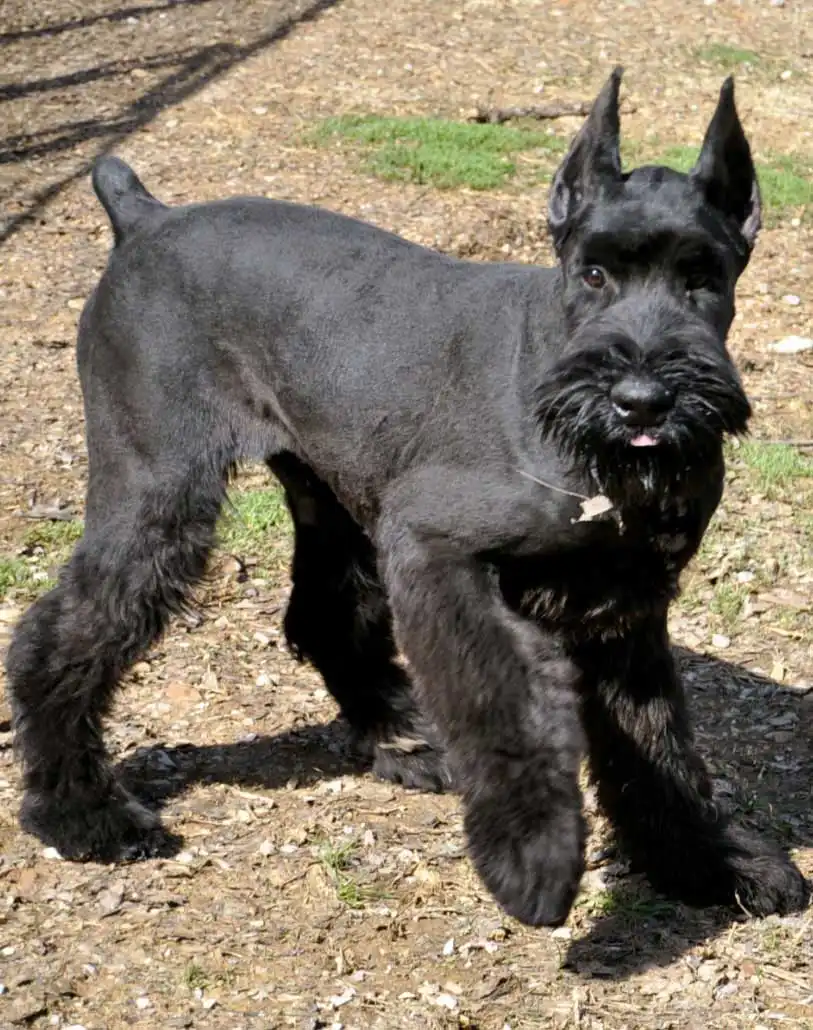
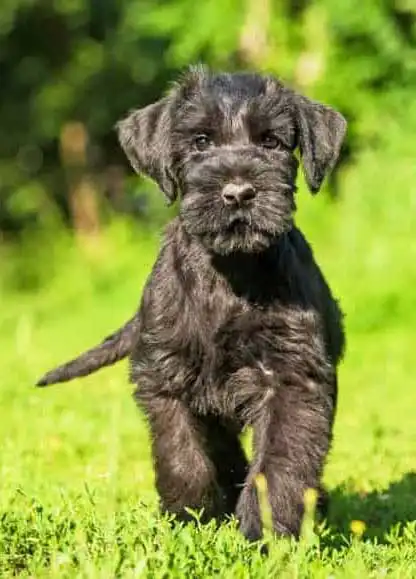
Maintaining the distinctive appearance of a Giant Schnauzer requires considerable grooming effort. This breed's striking look is not a natural occurrence; it necessitates careful grooming to sculpt the eyebrows, beard, and body. Regular upkeep includes brushing, bathing, body clipping, ear cleaning, and nail trimming, with grooming sessions typically scheduled every six to eight weeks. Many owners opt to take their Giant Schnauzer to a groomer who specializes in Schnauzers. In between professional appointments, it’s crucial to brush the dog with a pin brush at least once a week. The beard should also be combed multiple times a day to remove any food particles or debris. After drinking, it’s advisable to use a clean cloth to dry the beard, as moisture can drip from it, giving the impression of excessive drooling. Neglecting to clean and comb the beard regularly can lead to an unpleasant odor.
Behavior & Temperament
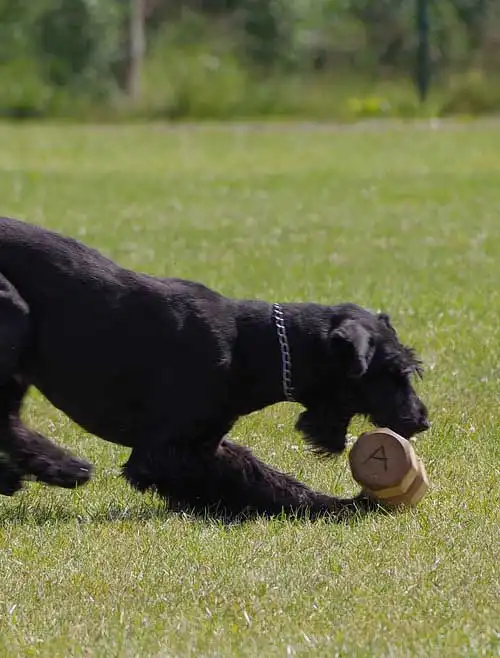
The Giant Schnauzer is a highly intelligent breed recognized for its ability to think independently. This dog is deeply loyal to its family and makes a formidable protector. However, its stubborn nature may not make it the ideal choice for novice dog owners or families with young children. Effective training is crucial to help the Giant Schnauzer understand its role within the household. Furthermore, this breed needs plenty of exercise and flourishes when given specific tasks to accomplish. Although it is no longer used for herding cattle, the Giant Schnauzer excels in protective roles and performs admirably in conformation and obedience events. While he takes his duties seriously, he also has a playful side and enjoys engaging with toys. It’s essential to recognize that Giant Schnauzers without adequate socialization or training may display aggressive tendencies. Consequently, owners should commit at least 30 minutes daily to training activities, in addition to another 30 minutes to an hour for walks or other physical exercises.
Play & Exercise
Things to Know
Cups Per Day
3.0 Cups
Daily Activity
90 Minutes
Average Lifespan
14 Years
Origin
middle ages
Type
Pure Breeds
Size
Large
Origin Country
Germany
Brush Frequency
Weekly
Coat Texture
Wiry
Register
Your kids have been begging for a pet forever, and you've recently decided that it's time for your family to get a new addition -- a dog! While everyone is excited for the new arrival, you're wondering if you need to have a dog license. How much does it cost? Is it required? Where do you get one?
Member Clubs
PETINNATE
Guardian Dog

AKC
Working Group

UKC
Guardian Dog
Height & Weight
Weight
75 lbs (34 kg)Male: 85 lbs (39 kg) , Female: 65 lbs (29 kg)
Height
26 inches (66 sm)Male: 27 inches (69 sm) , Female: 25 inches (64 sm)
6 Months
40 lbs ( m 40 lbs, f 40 lbs )
21 inches ( m 21 inches, f 21 inches )
12 Months
52 lbs ( m 52 lbs, f 52 lbs )
23 inches ( m 23 inches, f 23 inches )
18 Months
65 lbs ( m 65 lbs, f 65 lbs )
25 inches ( m 25 inches, f 25 inches )
Eye Colors
Brown
Nose Colors
Black
Coat Colors
Pied
Silver
Gray
Black
Characteristics
Mixes
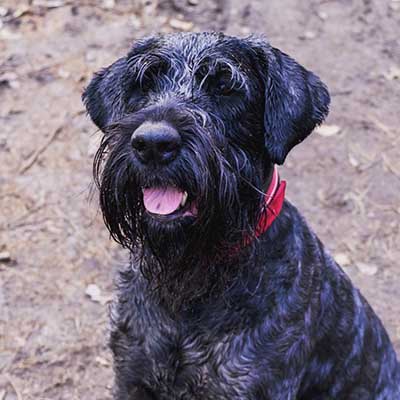
Giant Irish Wolf Schnauzer
The Giant Irish Wolf Schnauzer is a meticulously designed hybrid breed, created through the deliberate crossbreeding of the Giant Schnauzer and the Irish Wolfhound. The Giant Schnauzer, a sturdy dog with origins in Germany, was historically utilized for various farm tasks, such as herding cattle, protecting livestock, and pulling carts. On the other hand, the Irish Wolfhound is a large breed that was traditionally used for hunting and eradicating the now-extinct Irish wolf, and possibly the Irish elk, with roots tracing back to at least 391 A.D. Both breeds are typically sociable and enjoy being around children, regardless of their size. However, they may exhibit excessive energy or clumsiness when interacting with very young kids, especially the younger Giant Irish Wolf Schnauzers. It’s also important to mention that there are Standard and Miniature Irish Wolf Schnauzers, which are bred using either the Standard or Miniature Schnauzer instead of the Giant Schnauzer. These three types of Schnauzers, while sharing similar looks, are distinct breeds that vary significantly in terms of health concerns, temperament, and natural abilities, making the Standard and Miniature Irish Wolf Schnauzers quite different from their Giant relative.
Read more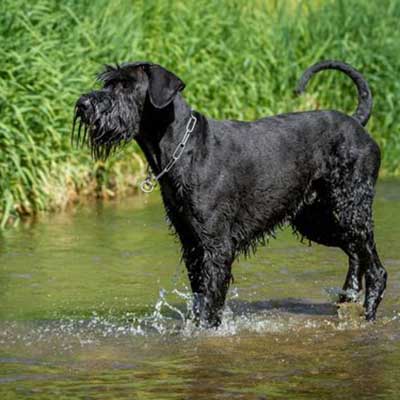
Giant Kerry Blue Schnauzer
The Giant Kerry Blue Schnauzer is a mixed breed that emerges from the combination of a Kerry Blue Terrier and a Giant Schnauzer. The parent breeds typically showcase a variety of colors, including black, salt and pepper, silver, blue, slate blue, and grey. The Giant Schnauzer is characterized by its wiry, robust, and dense coat, which is relatively low-maintenance, while the Kerry Blue Terrier is known for its soft, thick, and wavy fur. Since both parent breeds are recognized for their minimal shedding, it is likely that the Giant Kerry Blue Schnauzer will also exhibit low shedding tendencies. This breed is expected to inherit the lively and playful characteristics of its lineage, making it an excellent choice for families. Furthermore, it has the potential to excel as a working dog in various capacities, including police and military roles.
Read more