
Rhodesian Ridgeback
African Lion Hound
In their quest for a hunting dog better suited to Africa's challenging climates, Dutch settlers crossbred their imported European breeds with a native tribal dog. This breeding produced a reddish-brown dog characterized by a unique ridge of fur along its back, adept at hunting large game and protecting families and homes. Originally employed for lion hunting, the Rhodesian Ridgeback's loyal and affectionate disposition soon endeared it to families, contributing to its rising popularity in other countries. Today, while it is still appreciated for its keen eyesight and scent-tracking skills, the Rhodesian Ridgeback is also celebrated as a low-maintenance, well-mannered, and energetic companion, thriving in dog shows, protection roles, and playful interactions with its human family.
Breed Origin
Between the 16th and 18th centuries, Dutch settlers known as Boers brought several European dog breeds to South Africa, including Great Danes, Mastiffs, Bloodhounds, Pointers, Greyhounds, and Terriers. However, by the 18th century, they realized that these breeds were ill-suited for the region's harsh climate. To remedy this, they began crossbreeding their imported dogs with a local breed utilized by the Khoikhoi, also known as the Hottentots. This indigenous dog, recognizable by its reddish-brown fur and a unique ridge of hair along its back, had likely inhabited the area for centuries, with its jackal-like ancestors possibly illustrated in ancient cave art created by the San people. The hybrid dogs that emerged were short-haired, retained the distinctive ridge, and proved to be adept at both sight and scent hunting, making them excellent guardians and hunters. In the 1800s, as the Dutch moved northward to escape British rule, they took this newly developed breed with them. They settled in what is now Zimbabwe, formerly known as Rhodesia, where these dogs were used for hunting lions, earning the moniker African lion hounds or lion dogs. By this time, various strains of the breed had emerged, leading to a gathering of dog owners in Rhodesia during the 1920s who established a breed standard and named it the Rhodesian Ridgeback. The breed made its way to England in the 1930s and subsequently to the United States. By the 1950s, Rhodesian Ridgebacks had gained significant popularity in both nations, and the American Kennel Club officially recognized the breed in 1955. Today, the Rhodesian Ridgeback is celebrated as a courageous hunter, a devoted family protector, and a beloved companion.
Breed Appearance
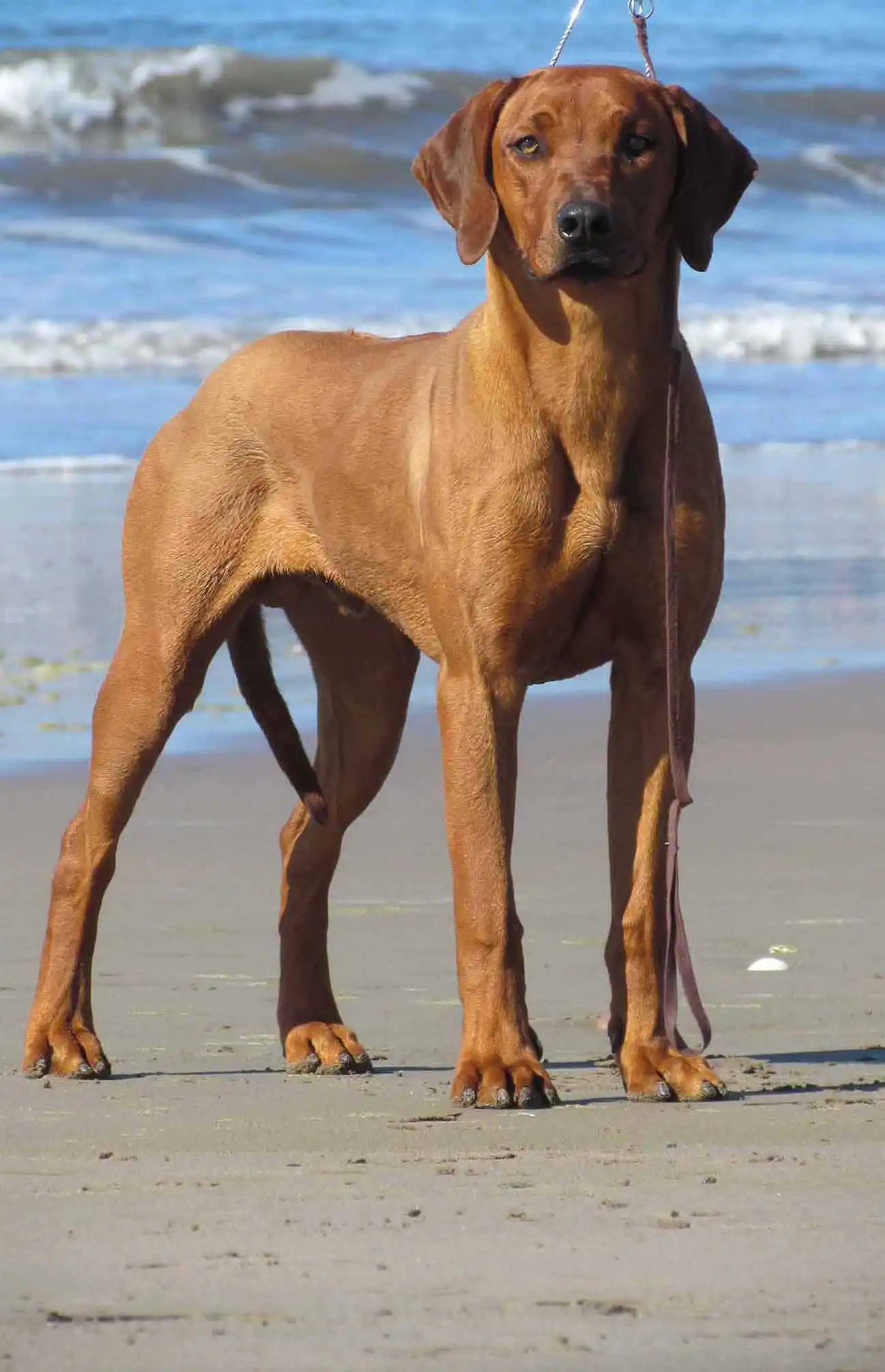
The Rhodesian Ridgeback is a sturdy breed known for its strikingly balanced and symmetrical build. Its most distinguishing characteristic is the unique ridge of hair that runs along its spine, from the shoulders to the hips, growing in the opposite direction of the surrounding fur. This breed features a strong back supported by well-defined, muscular legs that end in compact paws with well-arched toes. The neck is long, and the head is moderately sized with a flat skull. Its expressive, round eyes, which can be either brown or amber, are bright and alert, while the medium-sized ears are broad at the base, tapering to a point and set high on the head. The muzzle is elongated and contains level jaws with a scissors bite. The tail is held with a slight upward curve. Adapted to warm climates, the coat is short, dense, and smooth, with a glossy sheen. Coat colors range from red to tan wheaten, occasionally featuring white markings on the chest and toes.


Care Routine
The Rhodesian Ridgeback is a breed that requires very little grooming. A quick brushing session of about ten minutes, once or twice a week with a firm bristle brush, is enough to keep its coat looking good. During shedding seasons, using a shedding tool can significantly reduce the amount of hair in your home. Occasional baths are advisable as needed. Regular nail trimming is crucial to prevent splitting and cracking, and consistent dental care is also important. Moreover, the dog’s droopy ears should be kept clean and dry to avoid infections. This breed is characterized by its high energy levels, necessitating daily mental and physical exercise; without sufficient activity, they may become frustrated and display destructive behaviors. Activities such as daily runs, hikes, or swims are excellent for channeling their abundant energy, and they often excel in dog sports like lure coursing. When walking, it’s essential to keep the Ridgeback on a leash and ensure a secure fence at home due to their strong prey drive. They thrive in warmer climates, whether indoors or outdoors, and prefer rural environments where they have plenty of space to roam. While they can make wonderful family pets, their exercise requirements may be challenging for first-time dog owners.
Behavior & Temperament
The Rhodesian Ridgeback is a breed characterized by its dignified demeanor and composed nature, renowned for its strength and unwavering loyalty. This dog exhibits deep affection for its family, and its courageous spirit makes it an exceptional protector. Typically reserved, the Ridgeback remains vigilant around unfamiliar faces, often positioning itself defensively in front of its loved ones before resorting to growling or barking. Its gentle disposition allows for positive interactions with children, although its considerable size and strength can be intimidating for younger ones. While many Ridgebacks can learn to manage their powerful physique, supervision is crucial when they are around small children. Regarding socialization, the Ridgeback may either be friendly towards other dogs in the household or display territorial tendencies. When it comes to cats, it may instinctively see them as prey. To create a peaceful atmosphere among pets, early and effective socialization is essential, although the Rhodesian may still regard unfamiliar cats as potential targets, even if it accepts the resident ones. This breed is intelligent but can also be quite headstrong, making early training critical for success. Given their inherent guarding instincts, it is advisable to emphasize obedience training through positive reinforcement methods, as this approach is both effective and encouraged. Without proper direction, a Ridgeback may become overly assertive and mischievous. As an energetic and robust breed, the Rhodesian Ridgeback requires significant exercise. Daily activities such as running, walking, or playtime are vital to keep them mentally and physically stimulated. They thrive in various roles, including hunting, dog shows, competitive sports, and, most importantly, as devoted family protectors.


Play & Exercise
Things to Know
Cups Per Day
2.8 Cups
Daily Activity
60 Minutes
Average Lifespan
12 Years
Origin
1800s
Type
Pure Breeds
Size
Large
Origin Country
South Africa
Brush Frequency
Weekly
Coat Texture
Straight
Register
Your kids have been begging for a pet forever, and you've recently decided that it's time for your family to get a new addition -- a dog! While everyone is excited for the new arrival, you're wondering if you need to have a dog license. How much does it cost? Is it required? Where do you get one?
Member Clubs

PETINNATE
Sighthound and Pariah Dog

AKC
Hound Group

UKC
Sighthound and Pariah Dog
Height & Weight
Weight
75 lbs (34 kg)Male: 82 lbs (37 kg) , Female: 67 lbs (30 kg)
Height
26 inches (66 sm)Male: 26 inches (66 sm) , Female: 25 inches (64 sm)
6 Months
43 lbs ( m 43 lbs, f 43 lbs )
19 inches ( m 19 inches, f 19 inches )
12 Months
57 lbs ( m 57 lbs, f 57 lbs )
21 inches ( m 21 inches, f 21 inches )
18 Months
67 lbs ( m 67 lbs, f 67 lbs )
25 inches ( m 25 inches, f 25 inches )
Eye Colors
Brown

Amber
Nose Colors
Black
Brown
Coat Colors
Fawn
Red
Characteristics
Mixes

Rhodesian Labrador
The Rhodesian Labrador is a breed that stands out for its striking beauty, gentle demeanor, and affectionate nature, yet it also exhibits a determined and occasionally stubborn personality. These large, energetic dogs are incredibly loyal, forging deep bonds with their owners that result in a strong companionship. They revel in playtime and have a particular fondness for children, often outlasting even the most energetic youngsters in their games. Although they have a tall and slender build, Rhodesian Labradors are not suited for outdoor living; they prefer the comfort of being indoors, close to their families, sharing snacks, and engaging in playful antics. Their enthusiasm for food is well-known, so it's wise to be mindful of their clever begging strategies and those irresistible, pleading expressions. They can gain weight quickly and are prone to bloat, a serious health concern, making it essential to space their meals and limit treats. Training is crucial for this breed to help them realize their full potential. However, they can be quite stubborn; harsh discipline may lead them to become withdrawn and sulky. Positive reinforcement, through praise and encouragement, proves to be much more effective with these delightful dogs. While they are generally non-aggressive, they may show caution around unfamiliar people and can adopt a stance that seems threatening. In summary, the Rhodesian Labrador is a lively, playful, and affectionate breed with a hint of goofiness, making them a promising and devoted companion.
Read more