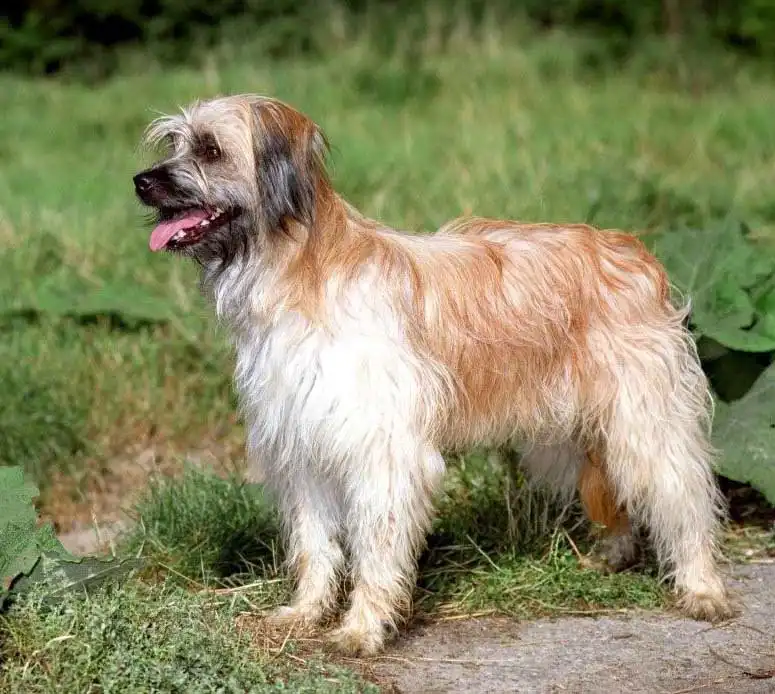
Berger Des Pyrenees
Pyr Shep, Berger des Pyrenees
The Pyrenean Shepherd, originating from the Pyrenees Mountains in France around 6000 BC, boasts a rich history of herding and protecting sheep and goats. During World War I, these dogs played crucial roles as messengers, sentinels, and rescue animals. After the war, the energetic Pyr Shep continued its herding and guarding responsibilities while also gaining recognition in competitions and exhibitions. This cheerful breed comes in two distinct types: the rough-faced variety, known for its thick, coarse coat, and the smooth-faced type, which has a softer, finer fur. The Pyrenean Shepherd thrives in an active home environment.
Breed Origin
The precise beginnings of the Pyrenean Shepherd remain elusive, yet this breed has been a fixture in the Pyrenees Mountains of Southern France for centuries. Renowned for their exceptional sheep herding skills, they are enveloped in various myths, one of which suggests they were companions to the Cro-Magnon people, who are known for the famous Lascaux cave paintings. While this claim lacks concrete evidence, archaeologists have unearthed small dog remains in Neolithic fossil sites, hinting at a long-standing relationship between humans and dogs. By 6000 BC, the region had undergone considerable changes due to overgrazing, indicating that sheep and goat herding practices were already well established. Historical documentation and artwork have recorded the presence of Pyrenean Shepherds in the Pyrenees for around 6,000 years, underscoring their vital role in herding alongside the Great Pyrenees, which served as protectors of the flock. The breed's keen intelligence and versatility make it exceptionally suited for herding, often enabling just two shepherds to oversee flocks of up to 1,000 sheep. In the 19th century, some Pyrenean Shepherds were brought to the United States to aid in herding in the western territories, possibly influencing the development of the Australian Shepherd. Although relatively unknown beyond their native region, the breed gained recognition during World War I for their contributions as couriers, guards, and search-and-rescue dogs for the French military. After the war, the population of these dogs saw a significant decline, prompting shepherds to take action to revive the breed. They began to engage in herding trials and dog shows, and by 1923, a formal breed standard was established in France. The 1970s and 1980s marked a surge in the breed's importation to the United States, culminating in official recognition by the American Kennel Club in 2009.
Breed Appearance
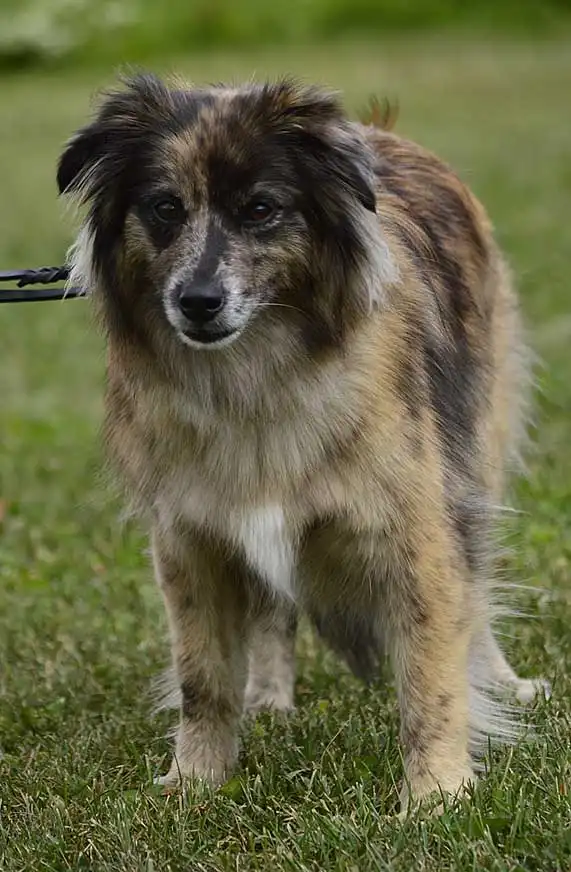
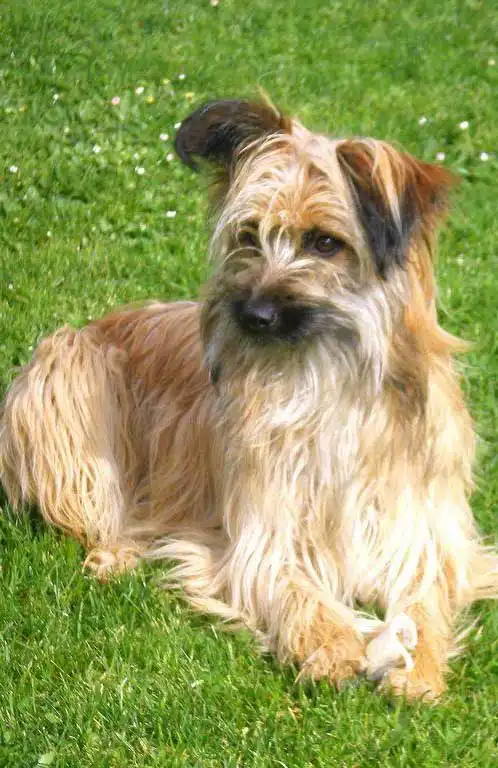
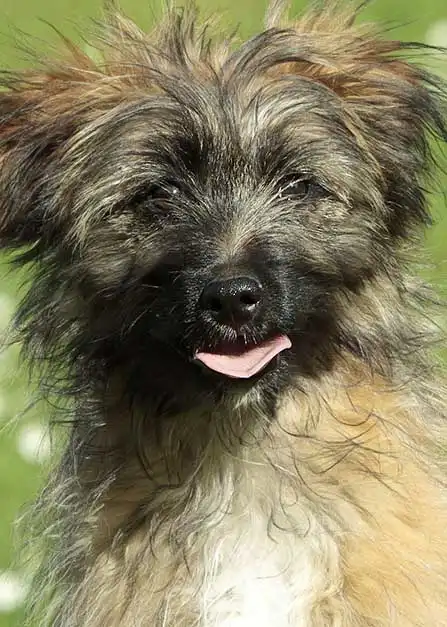
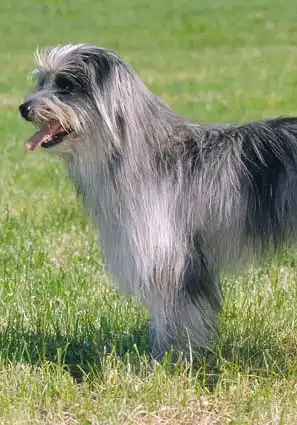
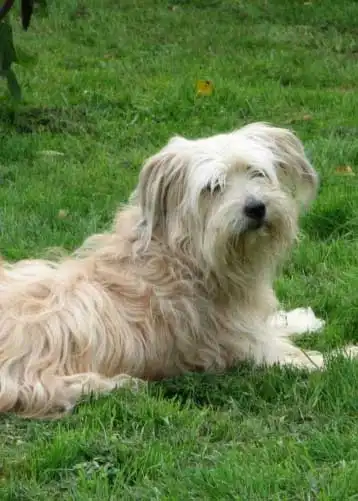
This breed, which varies in size from small to medium, is celebrated for its athletic build. It boasts a long neck that flows into well-defined shoulders, which rise above the straight line of its back. The body is elongated and supported by slender, muscular legs, allowing for a graceful and fluid movement. The paws are oval-shaped and may feature double dewclaws or none at all on the hind feet. The tail can be long, naturally bobbed, or cropped. The head is triangular, with a nearly flat skull and gently rounded sides that taper into a short muzzle filled with large, sharp teeth. Its expressive, almond-shaped eyes can be dark brown or blue, while the ears are short, broad at the base, and often hang forward, with some being cropped. Pyrenean Shepherds are divided into two distinct coat types: rough-faced and smooth-faced. The rough-faced variety has long or semi-long, thick fur that can be flat or slightly wavy, with a coarse texture similar to that of goat or sheep hair. Dogs with longer coats may develop corded fur, particularly on their thighs, croup, and elbows. The longer fur is also found on the sides of the muzzle and cheeks, often styled back for a windblown appearance. In contrast, the smooth-faced variety features shorter, finer hair that is soft to the touch, with slightly longer fur on the sides of the head, elbows, and thighs. Pyrenean Shepherds exhibit a wide range of colors, including fawn, tan, copper, brindle, merle, black, grey, and various combinations of black and white. They may also have white markings on their chest, head, and feet.
Care Routine
The Pyrenean Shepherd demands regular grooming, ideally on a weekly schedule. Although their coat does shed, much of the loose fur tends to remain entangled within the hair. To manage this, brushing them once or twice a week is effective in removing stray hairs and preventing tangles. An occasional bath can help maintain their cleanliness and pleasant scent, but frequent washing may result in dry skin. Their nails grow quickly and are sturdy, requiring consistent trimming to prevent splitting or cracking. Additionally, routine cleaning of their ears and teeth is essential. As a breed known for their high energy levels, Pyrenean Shepherds require significant exercise; without it, they may engage in undesirable behaviors such as excessive barking or digging. Traditionally, these dogs would cover distances of up to 25 miles daily while herding. To effectively channel their energy, they need at least an hour of exercise each day. Activities like agility trials, obedience training, flyball, herding, or tracking can offer both mental and physical engagement. When adequately exercised, a Pyrenean Shepherd can adapt well to various living environments, including apartments. This breed thrives on having tasks to complete and enjoys staying active.
Behavior & Temperament
The Pyrenean Shepherd boasts a rich lineage, and its unique personality traits are apparent in every member of the breed. Known for their high energy, enthusiasm, intelligence, and natural protective instincts, these dogs exude a cheerful disposition. They are playful with their families and often develop a particularly strong attachment to one person, which can sometimes hinder their interactions with others. To thrive, they need an active owner or family that can match their energetic lifestyle and engage them in daily activities. While they can coexist harmoniously with children if raised together, their herding instincts may lead to behaviors like nipping or chasing. Generally, Pyr Sheps can get along with other pets, but their assertive nature might pose challenges in shared living situations. As instinctive guardians, they tend to be wary of strangers, though early socialization can encourage a more welcoming demeanor. These dogs are highly trainable and respond well to positive reinforcement and consistent training methods. Without adequate obedience training, they may develop a tendency to bark excessively. To keep a Pyrenean Shepherd happy, it’s crucial to provide them with engaging tasks such as tracking, coursing tests, dog shows, herding, rally, and other canine sports. This breed truly thrives in an environment that can match their energy levels and offer mental stimulation.
Play & Exercise
Things to Know
Cups Per Day
0.0 Cups
Daily Activity
0 Minutes
Average Lifespan
14 Years
Origin
6000 BC
Type
Pure Breeds
Size
Not Set
Origin Country
France
Brush Frequency
Daily
Coat Texture
Straight
Register
Your kids have been begging for a pet forever, and you've recently decided that it's time for your family to get a new addition -- a dog! While everyone is excited for the new arrival, you're wondering if you need to have a dog license. How much does it cost? Is it required? Where do you get one?
Member Clubs

PETINNATE
Herding Dog

AKC
Herding Group

UKC
Herding Dog
Height & Weight
Weight
23 lbs (10 kg)Male: 23 lbs (10 kg) , Female: 23 lbs (10 kg)
Height
18 inches (46 sm)Male: 18 inches (46 sm) , Female: 18 inches (46 sm)