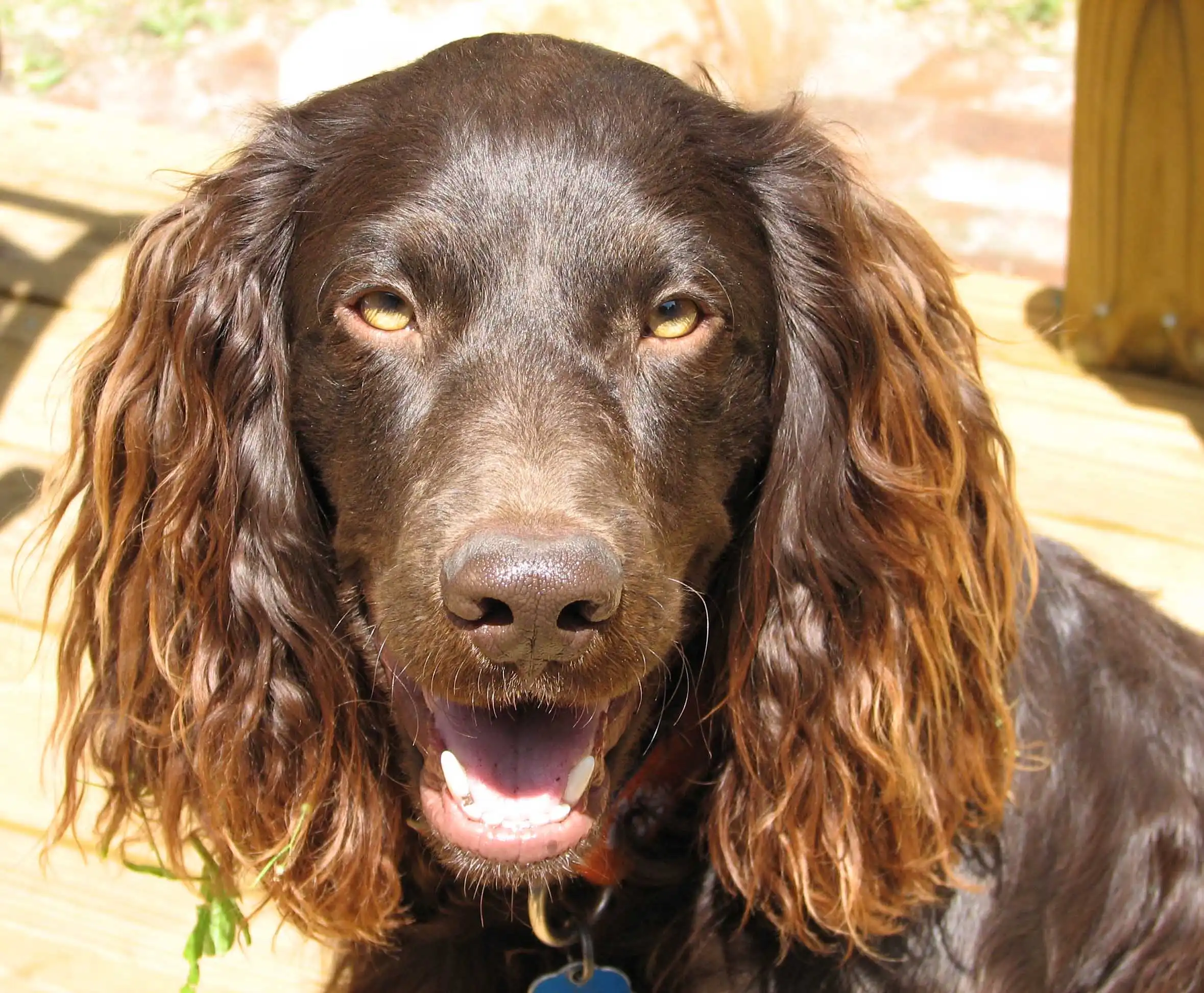
Boykin Spaniel
Little Brown Dog
The Boykin Spaniel was bred specifically to fulfill the needs of hunters pursuing wild birds in the marshes of South Carolina. With its medium build, energetic personality, and strong swimming abilities, it became a favored choice for hunters who needed a dog that could be easily lifted into a boat along with their catch. In modern times, the Boykin's loving and sociable disposition makes it an excellent family pet. Although this breed requires regular grooming and some maintenance, its intelligence and eagerness to learn make training a straightforward process. To keep your Boykin happy and healthy, it’s essential to provide plenty of exercise and mental stimulation, as this helps prevent any destructive behaviors from developing.
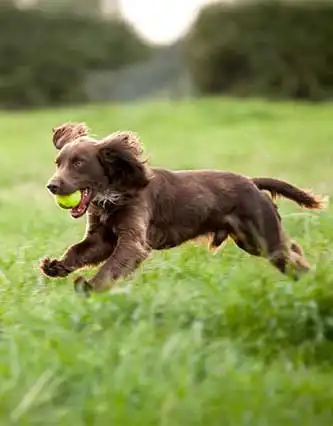
Breed Origin
The origins of the Boykin Spaniel date back to the early 1900s in the United States. In South Carolina, hunters were in search of a versatile dog that could retrieve both upland game and waterfowl. One day, Alexander White from Spartanburg encountered a small, brown stray dog near a church, which he affectionately named Dumpy due to its short and stocky build. Mr. White later gifted Dumpy to his friend L. Whitaker Boykin, who lived in Camden. Shortly thereafter, another dog resembling Dumpy was found and bred with him. Initially thought to be a mix of several breeds, including the American Water Spaniel, Springer Spaniel, Chesapeake Bay Retriever, and Pointer, this little brown dog was selectively bred over the years on Boykin’s Pine Grove plantation. Whit Boykin's goal was to develop a distinctive hunting dog capable of effectively pursuing wild turkeys and ducks in the Wateree River swamp. The ideal dog would be compact enough to be lifted into a boat with the game it retrieved, have a friendly temperament, and be adept at navigating through water and marshes, while also being a loving family companion. “Mr. Boykin’s Spaniels” gained traction in South Carolina before World War II and saw a surge in popularity beyond the state after the war. However, the increasing demand for the breed led to a decline in breeding standards, which adversely affected the dogs' health. In 1977, Boykin's relatives joined forces with Dr. Peter McKoy, a local veterinarian, to form The Boykin Spaniel Society, dedicated to preserving the breed's standards. Since the breed was developed by South Carolinians for their community, it was only fitting that in 1985, the Boykin Spaniel was named South Carolina's state dog. The American Kennel Club officially recognized the breed in 2009.
Breed Appearance
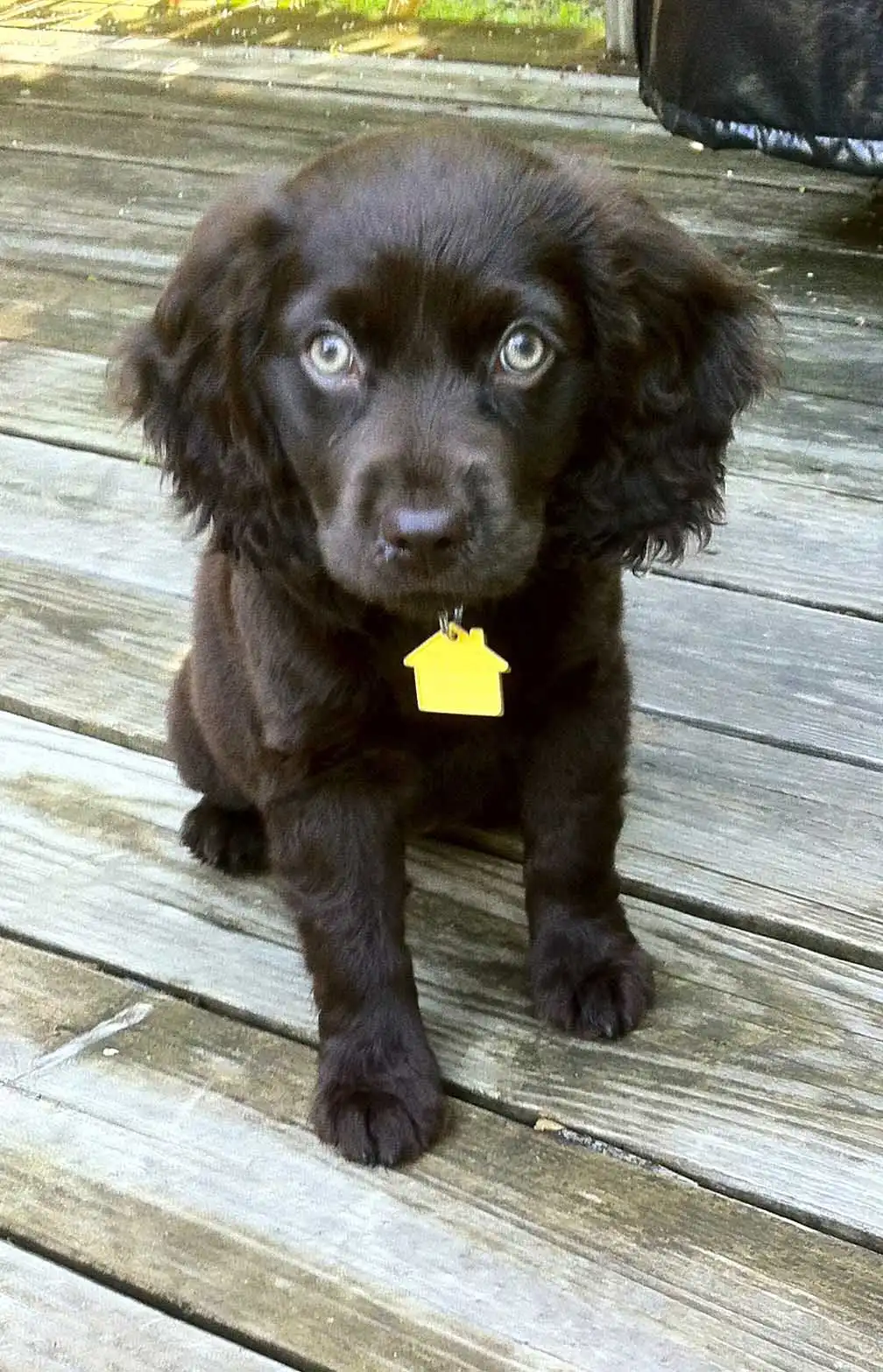
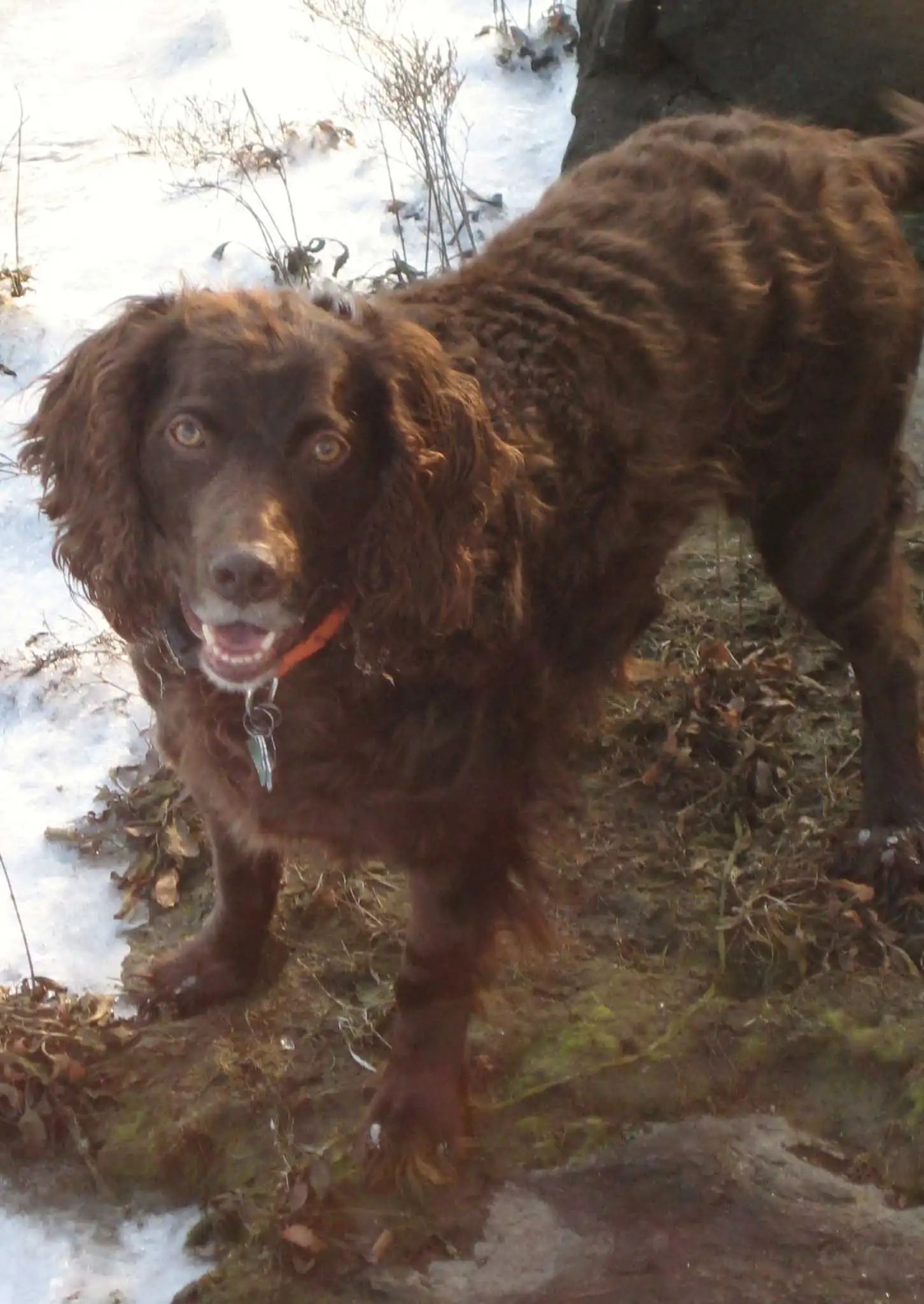
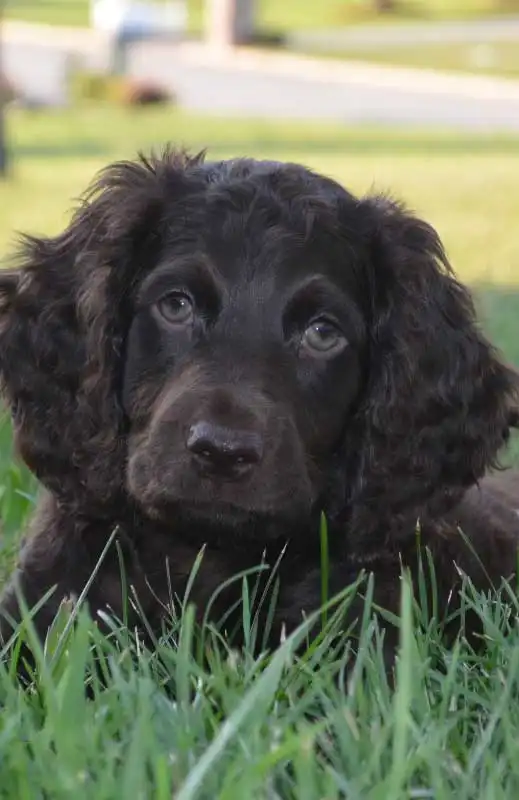
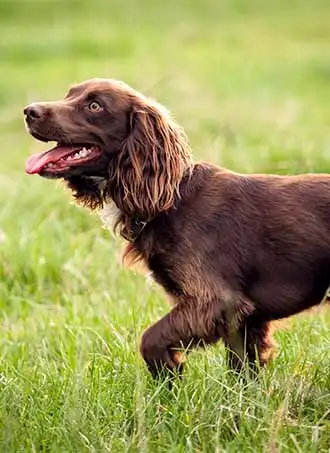
The Boykin Spaniel is a medium-sized, sturdy breed well-suited for navigating rough terrains and swimming in diverse environments. This dog strikes a balance between strength and agility, showcasing sloping shoulders, a pronounced chest, and a strong, mostly level back with a gentle curve over the loins. Its head, reminiscent of other spaniels, is proportionate to its body, featuring a flat top, slightly rounded sides, and a broad shape. The teeth meet in a straight, scissors, or even bite. The eyes, set wide apart, shine in shades from yellow to amber to brown, with deeper yellows being particularly sought after. The large ears, which can reach the tip of the nose, are covered in long, wavy hair, mirroring the waterproof coat that envelops the entire body of the Boykin. While the breed is predominantly known for its solid brown coat, variations can include reddish-brown liver tones or chocolate brown with a small white patch on the chest. The coat can be either flat or curly, often featuring feathering on the ears, chest, legs, feet, and belly. Additionally, the Boykin's paws are uniquely designed for swimming, complete with webbed toes. It is also common for Boykin Spaniels to have their tails docked.
Care Routine
To prevent the long hair of a Boykin Spaniel from becoming tangled, consistent brushing is crucial for their wavy coat. It is recommended to brush them once or twice a week, especially in the spring when shedding increases. An occasional bath will help keep them clean and odor-free. However, if you notice an unusual smell coming from your Boykin’s ears, it could indicate an ear infection. To reduce the risk of such infections, clean your Spaniel’s ears weekly with an appropriate ear cleaner, particularly after swimming, bathing, or any water-related activities. Regular nail trimming is also necessary to prevent cracking or splitting, and it’s advisable to brush your Spaniel’s teeth twice a week. Boykin Spaniels are an active breed that needs plenty of daily exercise; without it, they may develop destructive behaviors. Although they have been bred as outdoor dogs, they can adapt well to apartment living as long as they receive enough exercise to prevent boredom. Due to their tendency to suffer from skin allergies, it’s important to provide them with high-quality food formulated for medium-sized dogs, with an average daily intake of around two cups.
Behavior & Temperament
Originally valued by hunters for their tenacity in the field, the Boykin Spaniel has transformed into a cherished family companion recognized for its gentle disposition. This breed is not only smart but also highly trainable, making the training process relatively easy. Boykins embody a delightful blend of calmness, energy, and playfulness, always eager to please their families. Their loving and sociable nature enables them to thrive in the company of children and other pets. While they are active, they are generally not overly hyper; however, they do need regular exercise to avoid boredom-induced mischief. Furthermore, Boykins possess a natural curiosity, likely inherited from their hunting background, so it’s crucial to provide them with plenty of attention and mental stimulation. In essence, a Boykin Spaniel can be both an outstanding hunting partner and a beloved, friendly companion.
Play & Exercise
Things to Know
Cups Per Day
2.5 Cups
Daily Activity
60 Minutes
Average Lifespan
15 Years
Origin
1900s
Type
Pure Breeds
Size
Medium
Origin Country
United States
Brush Frequency
Weekly
Coat Texture
Wavy
Register
Your kids have been begging for a pet forever, and you've recently decided that it's time for your family to get a new addition -- a dog! While everyone is excited for the new arrival, you're wondering if you need to have a dog license. How much does it cost? Is it required? Where do you get one?
Member Clubs

PETINNATE
Gun Dog

AKC
Sporting Group

UKC
Gun Dog
Height & Weight
Weight
33 lbs (15 kg)Male: 35 lbs (16 kg) , Female: 30 lbs (14 kg)
Height
16 inches (41 sm)Male: 17 inches (43 sm) , Female: 15 inches (38 sm)
6 Months
20 lbs ( m 20 lbs, f 20 lbs )
11 inches ( m 11 inches, f 11 inches )
12 Months
25 lbs ( m 25 lbs, f 25 lbs )
12 inches ( m 12 inches, f 12 inches )
18 Months
30 lbs ( m 30 lbs, f 30 lbs )
15 inches ( m 15 inches, f 15 inches )
Eye Colors
Brown

Nose Colors
Brown
Coat Colors
Brown