Briard
Berger de Brie
The Briard is a multifaceted breed known for its herding and guarding abilities, with origins dating back to medieval France. Historically, especially during times of conflict, this breed took on various responsibilities, including finding injured soldiers, hunting, tracking, and even serving as pack animals, eventually earning the title of the official dog of the French army. Today, the Briard leads a more leisurely lifestyle, prioritizing playtime and the protection of its family. Renowned for its independence and loyalty, this breed excels in ensuring the safety of children, safeguarding the home, and participating in activities such as herding, agility trials, and flyball competitions. With consistent grooming, the Briard's long, shaggy coat—available in shades of black, gray, or tawny—can remain tidy and free from tangles. It is crucial to provide this energetic dog with plenty of exercise, as its requirements go well beyond a simple daily walk.
Breed Origin
The Briard's history dates back to the 8th century, with its presence noted in tapestries and mentioned in 12th-century writings. This ancient breed of French working dog is thought to have evolved from rough-coated sheepdogs. In France, it is referred to as the Berger de Brie, a name likely derived from "chien berger de Brie," meaning “shepherd dog of Brie,” which indicates its origins in the Brie region. Alternatively, some suggest that the name comes from "chien d'Aubry," named after a prominent figure, Aubry de Montdidier, whose dog avenged his death. The designation "Briard" was officially adopted in 1809. Originally, these dogs were mainly used for herding sheep and protecting flocks from wolves and poachers. As the French Revolution led to the division of land into smaller plots, Briards adapted to herding sheep within these new boundaries while also acting as property guardians. In addition to herding, they were employed for tracking, hunting, and even as military dogs, helping to locate injured soldiers on the battlefield. Some sources claim that the Marquis de Lafayette was the first to bring the Briard to the United States, while others attribute this to Thomas Jefferson, who became interested in the breed during his time as a minister in France. In 1909, the French group Les Amis du Briard was formed, and by 1925, it had established a breed standard. The American Kennel Club registered its first Briard litter in 1922, granting the breed official recognition in 1928. Although Briards have a relatively small following in the United States, they continue to be the most popular sheep herding breed in their homeland of France.
Breed Appearance
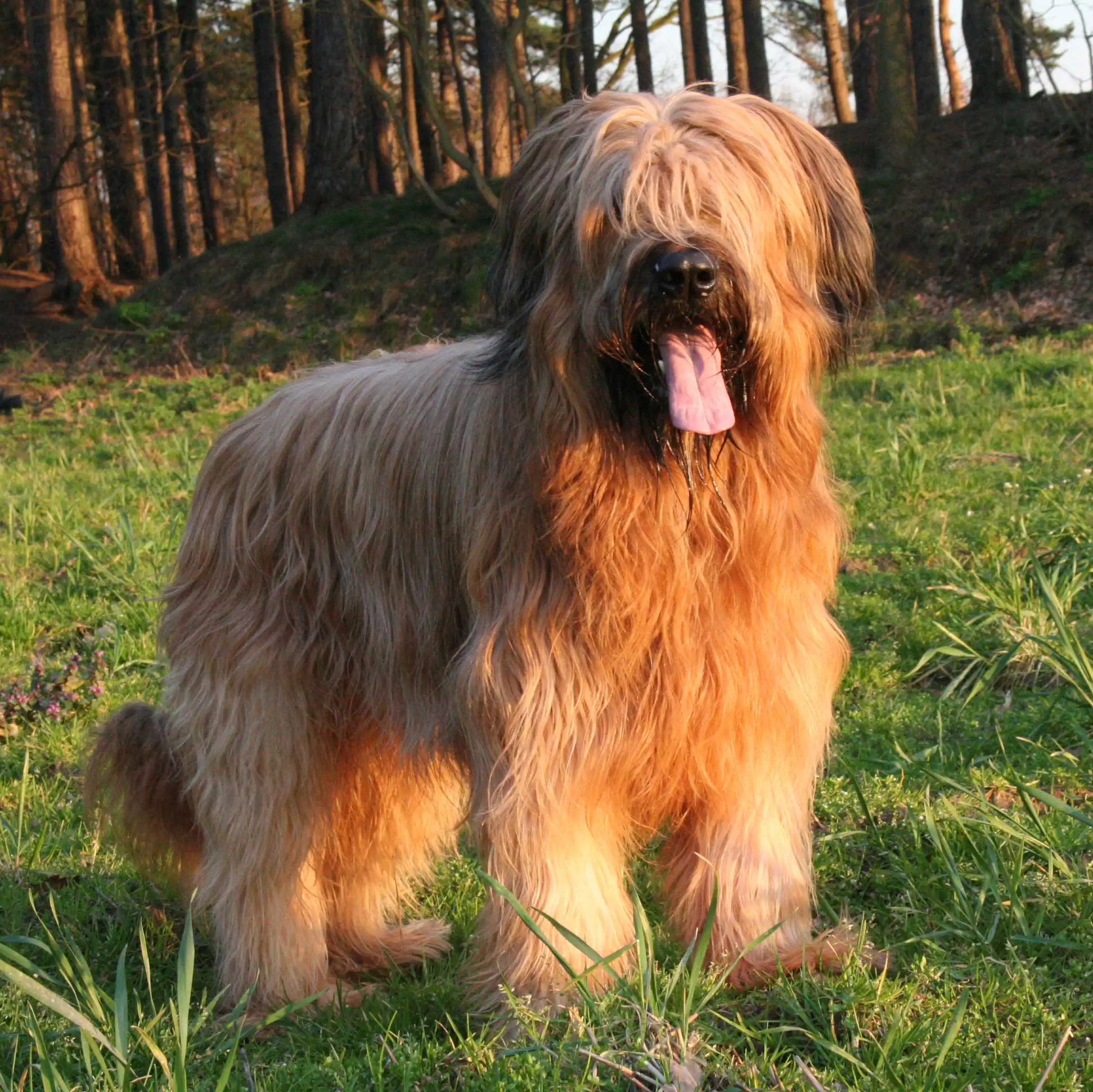
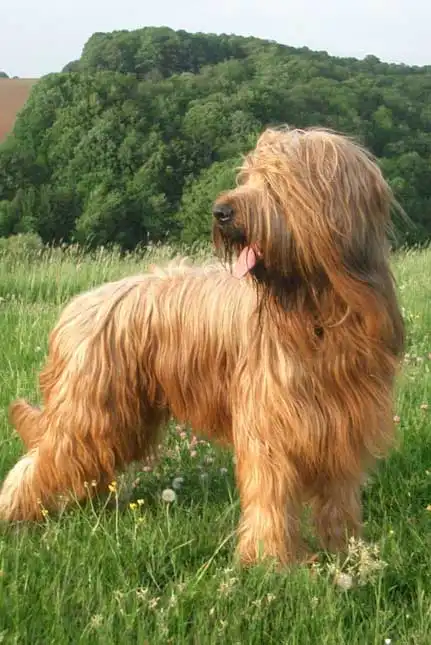
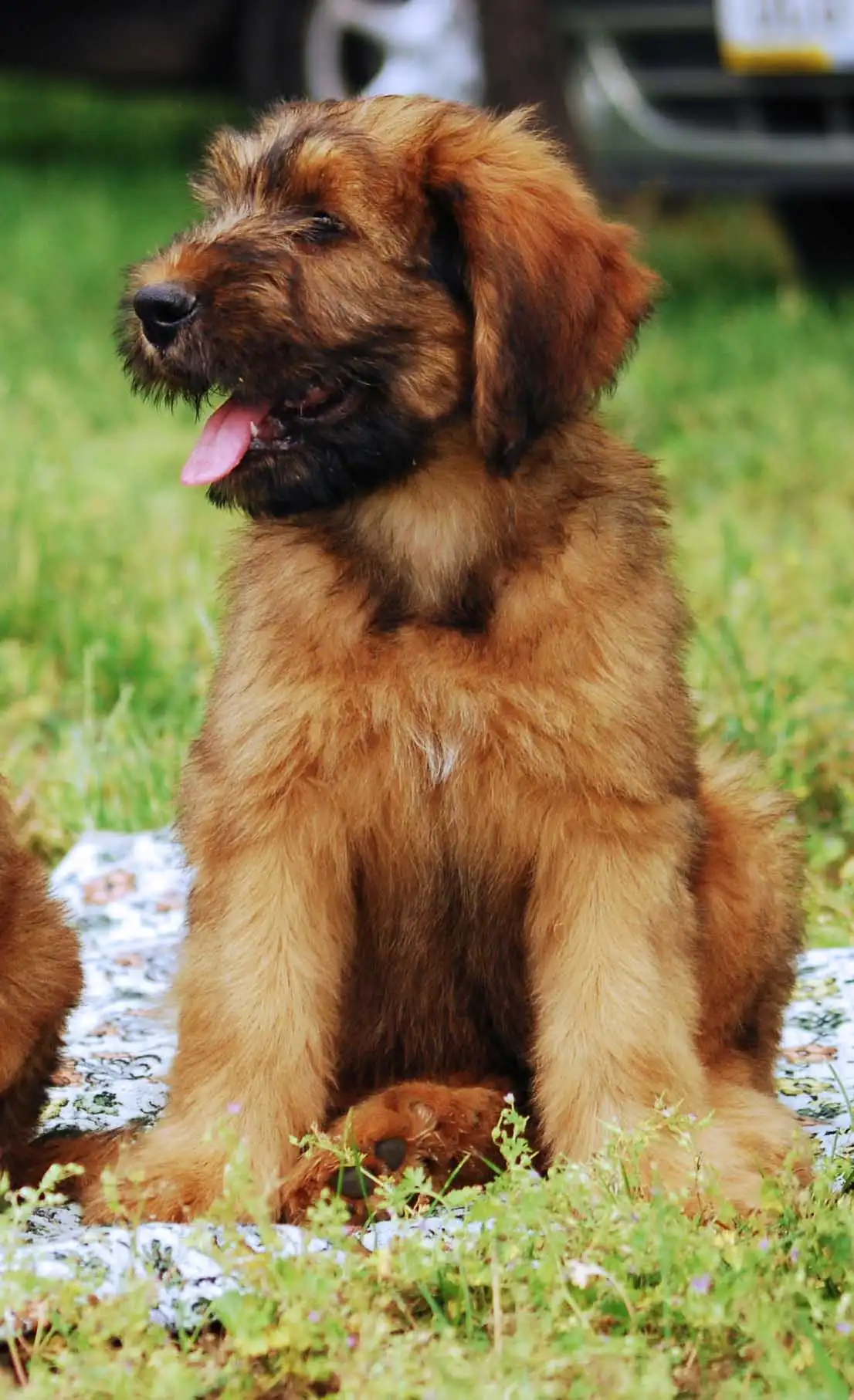
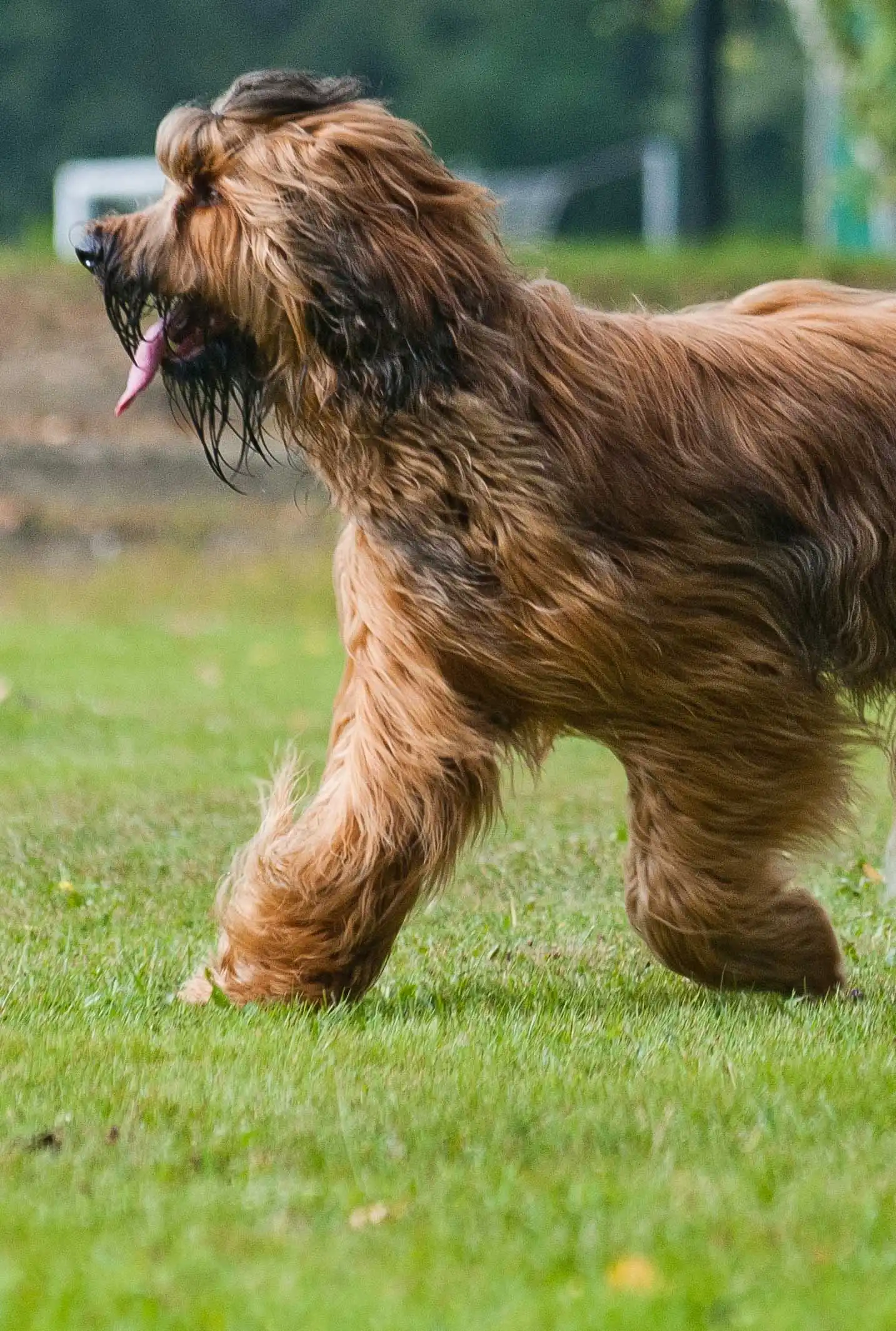
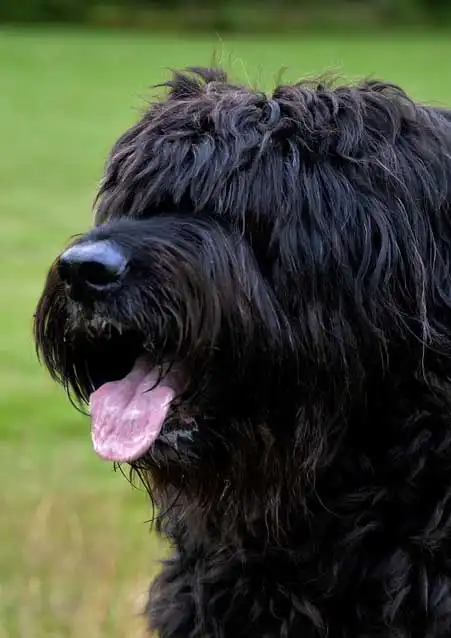
The Briard is an eye-catching and unique breed known for its robust, square physique that moves with a smooth and elegant gait. Its long, sloping shoulders lead into powerful front legs and a strong neck, while its agile hindquarters facilitate effortless motion. Among the Briard's most striking features are the distinctive hair that parts down the center of its head, prominent eyebrows that often shade its dark eyes, and a luxurious mustache and beard that enhance its broad muzzle. This breed has a scissor bite, and its large, furry ears can be cropped. Another notable characteristic is its tail, which is long, well-feathered, and curves into a J shape, referred to as a crochet. The oval-shaped feet are marked by well-arched toes, thick pads, and sturdy nails, while the hind legs feature double dewclaws. The Briard is enveloped in a long, shaggy double coat; the outer layer consists of long, wavy, coarse hair, while the undercoat is fine and dense. The hair on the shoulders typically measures six inches or more. This breed's coat comes in solid colors, mainly black, gray, or tawny, but never white, and it may change in color as the dog ages or sheds.
Care Routine
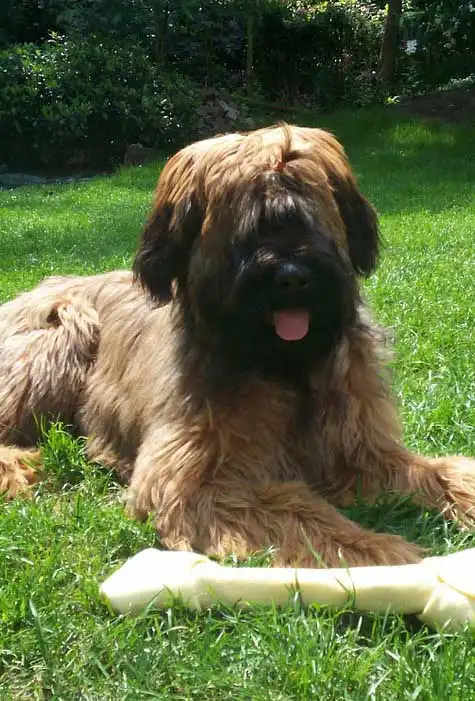
The Briard boasts a dense, shaggy coat that necessitates regular grooming to avoid matting. Failing to provide this care can lead to painful skin conditions known as hot spots. To keep your Briard's coat free of tangles, it's advisable to brush it every few days to once a week. The coarse nature of its fur helps repel dirt and moisture, making consistent grooming vital for maintaining a clean look. When properly groomed, Briards shed very little, although they may undergo seasonal shedding in the spring and fall, during which their coat color can change. Bathe your Briard only as needed, typically every month or two, unless it becomes particularly dirty. The beard can trap food and water, so it may need more frequent washing. Additionally, remember to trim the hair between its paw pads and any excess fur inside the ears, which should also be cleaned regularly. This breed is highly energetic, originally developed for herding, and is not suited for a life of inactivity. To keep your Briard stimulated, engage it with walks, runs, and swimming, while avoiding extreme heat. When outside, always keep it on a leash or in a securely fenced area due to its strong prey drive. Briards can thrive in both rural and urban environments, provided they have access to a safe yard for exercise. They do not fare well in confined spaces and should never be kept in a kennel. Their diet should be appropriate for their size and may need adjustments with supplements to support rapid growth or seasonal hair loss.
Behavior & Temperament
The Briard is a devoted and loyal companion, celebrated for its courage and high energy levels. This breed is inherently sociable and eager to please its family members. Moreover, the Briard exhibits an independent and watchful demeanor, which is vital for herding and safeguarding sheep. These traits can result in a cautious disposition towards unfamiliar individuals and potential aggression towards other dogs. While they typically interact well with children, they are sensitive to discipline and may step in if they perceive a child is in danger, even if it involves their own parents. Briards possess a strong prey drive, often seeing cats and small animals as potential prey. Training these dogs can be quite demanding, yet it is essential for managing their instincts. As independent thinkers, they do not respond well to negative reinforcement, making patience crucial during their training from an early age. With appropriate socialization and effective training methods, your Briard can learn to coexist peacefully with other animals and new people. Regular training classes are often advised. Even after completing training, your Briard might still instinctively nip at your heels as part of its herding instinct. Given its historical background, this breed is highly energetic and requires more than just a daily walk for adequate exercise. To truly thrive, the Briard needs a purpose and plenty of space to run freely.
Play & Exercise
Things to Know
Cups Per Day
2.5 Cups
Daily Activity
60 Minutes
Average Lifespan
11 Years
Origin
1300s
Type
Pure Breeds
Size
Large
Origin Country
France
Brush Frequency
Daily
Coat Texture
Wavy
Register
Your kids have been begging for a pet forever, and you've recently decided that it's time for your family to get a new addition -- a dog! While everyone is excited for the new arrival, you're wondering if you need to have a dog license. How much does it cost? Is it required? Where do you get one?
Member Clubs

PETINNATE
Herding Dog

AKC
Herding Group

UKC
Herding Dog
Height & Weight
Weight
73 lbs (33 kg)Male: 88 lbs (40 kg) , Female: 58 lbs (26 kg)
Height
24 inches (61 sm)Male: 25 inches (64 sm) , Female: 24 inches (61 sm)
6 Months
37 lbs ( m 37 lbs, f 37 lbs )
21 inches ( m 21 inches, f 21 inches )
12 Months
47 lbs ( m 47 lbs, f 47 lbs )
22 inches ( m 22 inches, f 22 inches )
18 Months
57 lbs ( m 57 lbs, f 57 lbs )
23 inches ( m 23 inches, f 23 inches )
Eye Colors
Brown

Amber
Nose Colors
Black
Brown
Coat Colors
Black

Gray
Cream