Brittany
Epagneul Breton, Brittany Spaniel
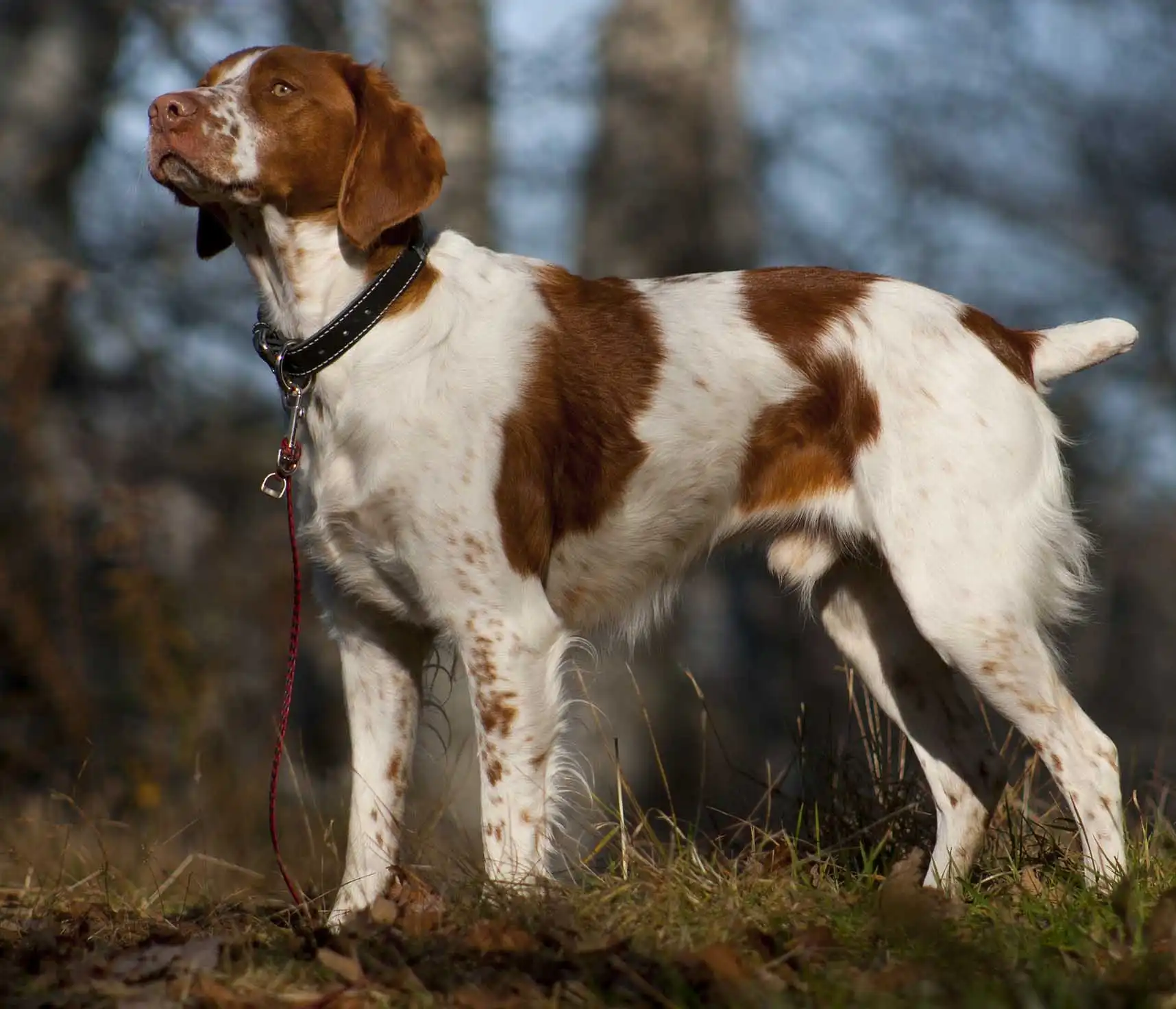
The spirited Brittany is thought to have its roots in 18th century France. This breed emerged from a combination of French Spaniels and possibly English Pointers, and it quickly gained recognition for its remarkable versatility in hunting, often fulfilling the functions of several hunting dogs at once. With a strong physique and a nimble structure, the medium-sized Brittany embodies both grace and speed. Typically adorned with a white and orange coat, its short fur requires minimal upkeep, simplifying the grooming process. Renowned for its boundless energy, the Brittany not only thrives as a hunter but also makes a loving and loyal companion, always ready to engage in play, protect its family, or run for hours.

Breed Origin
Some historians propose that the Brittany breed traces its roots back to around 150 AD, although visual depictions resembling these dogs did not appear until the 17th century. In 1850, Reverend Davies described a small hunting dog with a bobtail, adept at both pointing and retrieving. This breed was originally developed for hunting in the charming town of Pontou, situated in the Brittany region of France. Renowned for their versatility and skill across various terrains, these dogs were highly valued. It is thought that further crossbreeding occurred around 1900, though accounts vary. Some sources claim that an orange and white setter was crossed with a local breed, while others argue that native spaniels were mixed with English pointers brought by British visitors, potentially including setters or Welsh springer spaniels. Initially, the breed was known as Brittany Spaniels, named after its geographic origin. Over the last century, the Brittany has gained considerable popularity worldwide due to its diverse hunting abilities, which include pointing, setting, flushing, and retrieving. In 1907, the breed was officially recognized in France as a distinct entity, along with the establishment of a breed standard. By 1931, the Brittany had reached the United States, where its moderate size and friendly disposition made it a favored family pet. The American Kennel Club recognized the Brittany Spaniel in 1934, but in 1982, the name was streamlined to Brittany to better reflect its hunting style, which aligns more closely with that of a Setter than a Spaniel.
Breed Appearance
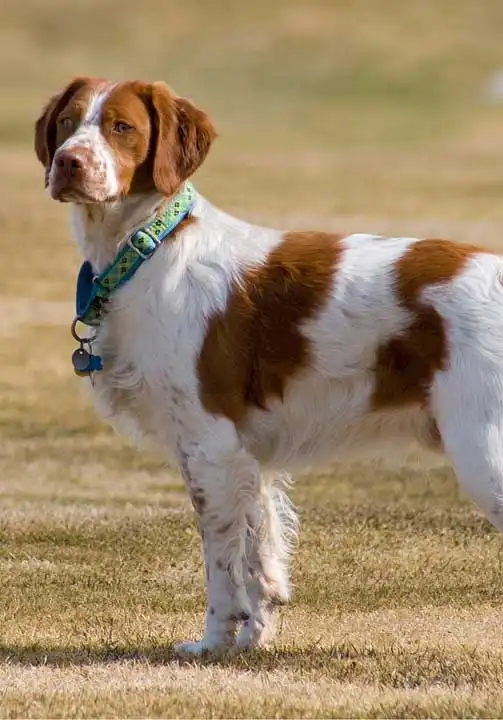
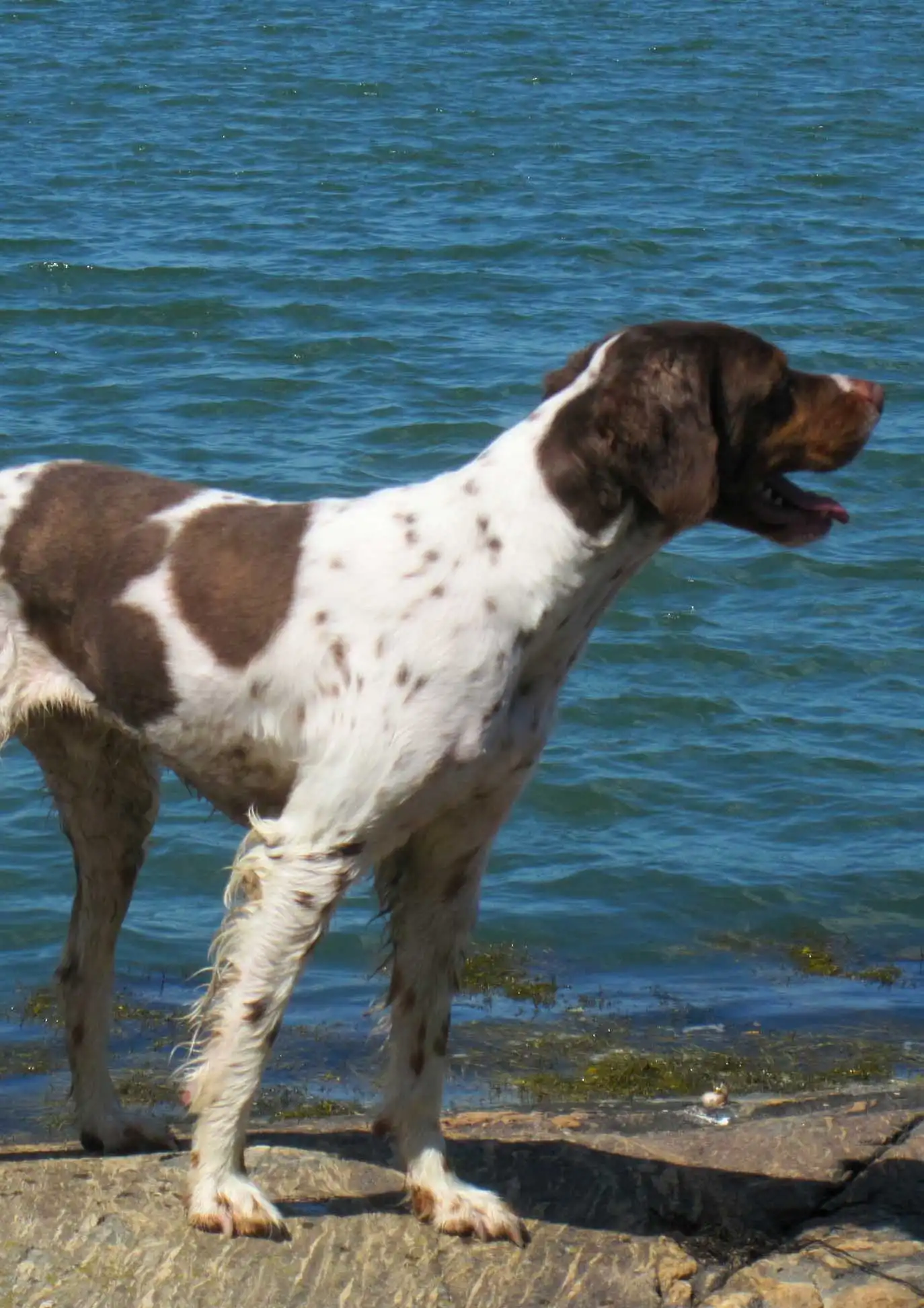
The Brittany is a medium-sized dog known for its long legs and balanced, square build. It has strong, sloping shoulders that flow into a moderately long neck, leading to a short, straight back. This breed features graceful front legs and powerful, muscular thighs, which contribute to its lively and smooth gait. Notably, the shoulders are positioned slightly higher than the hindquarters, enhancing its agility and effectiveness as a hunting dog. The Brittany's expressive brow frames its amber to hazel eyes, which convey a sense of eagerness and alertness. Its triangular ears are set high and covered in short, dense fur. The medium-length muzzle tapers towards well-defined nostrils, which can vary in color from tan to pink. The dog has a perfect scissor bite with its teeth aligned neatly. Its strong feet, equipped with thick pads and arched toes, provide both stability and agility. The tail may be naturally bobbed or typically docked to about four inches. The Brittany's coat is of medium length, with a wavy to flat texture that is neither silky nor wiry, often featuring fringes near the ears and feathering on the legs. This breed primarily showcases bicolor patterns, commonly in combinations of orange and white or liver (reddish-brown) and white. Occasionally, tricolor coats appear, characterized by a liver and white base with orange markings on the face and tail. The coat colors can be either clear or roaned, with subtle hints of color visible through the white patches.


Care Routine
The Brittany's short coat requires minimal upkeep. This breed experiences light shedding, so a weekly grooming session with a pin or soft slicker brush can effectively reduce loose hair in your home. Occasional baths are adequate when they get dirty. Regular ear cleaning is essential, especially after outdoor activities, along with keeping their nails trimmed. Brittanys are susceptible to dental issues, making routine tooth brushing important. Known for their energetic nature, these dogs need plenty of daily exercise. In addition to regular walks, they should engage in at least an hour of play or running each day. Brittanys are not ideal for apartment living; they flourish in homes with a secure, fenced yard. Without sufficient exercise, they may develop destructive behaviors and anxiety. This active breed excels in performance sports such as agility, flyball, field trials, and dock diving. If Brittany puppies grow too quickly, they may encounter joint problems like osteochondritis dissecans. Therefore, it’s vital to monitor their diet during their growth stage and consider supplements to promote healthy development.
Behavior & Temperament
The Brittany is an exceptional hunting partner, flourishing in environments that demand high energy and a sense of purpose. This breed is not only affectionate and friendly but also makes a wonderful family pet. Brittanys form strong bonds with their families, always eager to play or follow them around. They are particularly gentle with children, providing a protective presence, though adult supervision is advisable to avoid any accidents stemming from their lively nature. While they may be wary of unfamiliar faces, Brittanys greatly benefit from socialization. They generally get along well with other dogs, often viewing them as part of their pack. However, smaller animals like cats and birds may be at risk due to the Brittany's instinctual prey drive. Nonetheless, if raised together, they can learn to accept cats as part of the family. With their keen intelligence and eagerness to please, Brittanys are relatively easy to train, but it’s crucial to use positive reinforcement. Harsh training methods can lead to shyness and withdrawal in this sensitive breed. Regular exercise is vital for a Brittany, as they thrive on activities such as field trials, lure coursing, and tracking. Daily physical activity is essential to prevent the onset of anxiety-related behaviors.
Play & Exercise
Things to Know
Cups Per Day
2.5 Cups
Daily Activity
90 Minutes
Average Lifespan
13 Years
Origin
1800s
Type
Pure Breeds
Size
Medium
Origin Country
France
Brush Frequency
Weekly
Coat Texture
Wavy
Register
Your kids have been begging for a pet forever, and you've recently decided that it's time for your family to get a new addition -- a dog! While everyone is excited for the new arrival, you're wondering if you need to have a dog license. How much does it cost? Is it required? Where do you get one?
Member Clubs

PETINNATE
Gun Dog

AKC
Sporting Group

UKC
Gun Dog
Height & Weight
Weight
35 lbs (16 kg)Male: 35 lbs (16 kg) , Female: 35 lbs (16 kg)
Height
19 inches (48 sm)Male: 19 inches (48 sm) , Female: 19 inches (48 sm)
6 Months

25 lbs ( m 25 lbs, f 25 lbs )
15 inches ( m 15 inches, f 15 inches )
12 Months
30 lbs ( m 30 lbs, f 30 lbs )
16 inches ( m 16 inches, f 16 inches )
18 Months
35 lbs ( m 35 lbs, f 35 lbs )
18 inches ( m 18 inches, f 18 inches )
Eye Colors
Hazel

Brown
Amber
Nose Colors
Brown
Isabella
Coat Colors
Brown

Red

Cream

Isabella

Fawn

Blue

Pied

Brindle

Characteristics
Mixes

Brittany Beagle
The Brittany Beagle is a hybrid breed that merges the qualities of the Brittany and the Beagle. Both parent breeds boast a long-standing history as hunting companions and possess a keen instinct for pursuing game. While Beagles are typically more vocal than Brittanys, you can expect your Brittany Beagle to bark quite a bit as well. In terms of size, both breeds fall into the medium category, but the Brittany is usually taller and more slender than the Beagle. Your Brittany Beagle will likely exhibit physical traits from both breeds, though it may lean more towards one in appearance. It’s essential to recognize that neither parent breed enjoys solitude; thus, your Brittany Beagle will flourish when included in daily family activities, which is crucial for its mental and emotional health.
Read more