Curly-Coated Retriever
Curly, CCR
These affectionate and intelligent dogs have vibrant minds that require an active lifestyle to keep them content. They thrive best with owners who can involve them in various activities such as swimming, running, or hiking, along with other forms of physical exercise. Unlike some other Retrievers, they require more social interaction due to their inherent cautiousness around strangers. However, they are generally friendly and playful with other animals. Their cleverness can sometimes lead to playful antics, highlighting the necessity of effective obedience training. The Curly Coated Retriever, commonly known as the Curly or CCR, originated in the United Kingdom and has a history that spans roughly 300 years.
Breed Origin
The exact origins of the Curly Coated Retriever are somewhat unclear, but it is generally accepted that this breed originated in the United Kingdom. Its ancestry includes Poodles, Retriever Setters, St. John’s Newfoundland, and the now-extinct Irish and English Water Spaniels. The breed first appeared at a dog show in England in 1860 and is often considered the earliest breed specifically bred for retrieving purposes. Known for their courage and tenacity, these dogs were highly esteemed by English gamekeepers, who trained them for hunting and retrieval tasks. However, their popularity declined with the emergence of the Labrador Retriever, which became the favored choice among hunters. During the wars, the breed came perilously close to extinction, with only five registered Curly Coated Retrievers remaining by the end of World War I. Although their numbers began to rebound, they experienced another drop after World War II. The first Curly Coated Retrievers were introduced to the United States in 1907, and in 1924, the American Kennel Club officially recognized the breed. The 1960s brought a wave of imports from Australia, New Zealand, and England, which significantly increased the breed's population. The Curly Coated Club of America was founded in 1979. Currently, the global population of Curly Coated Retrievers is estimated to be around 5,000, with fewer than 2,000 residing in the United States.
Breed Appearance
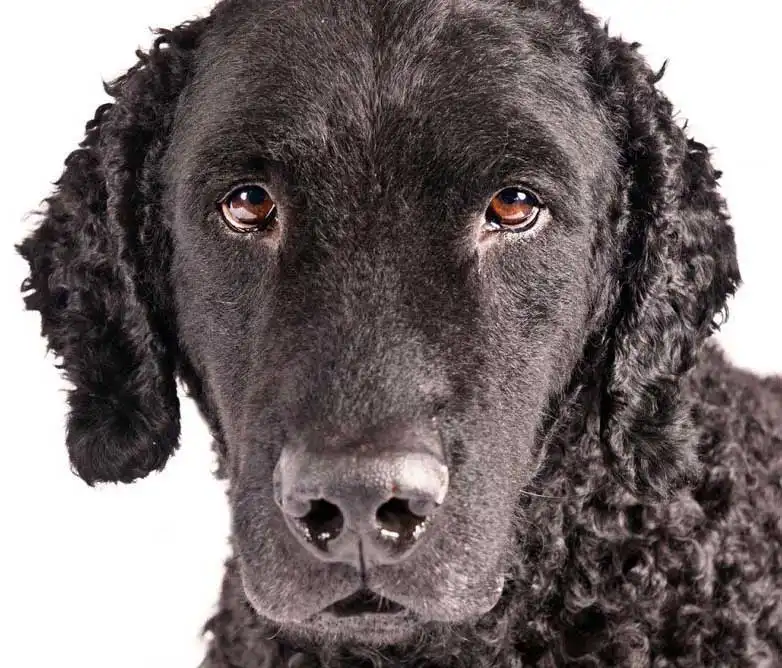
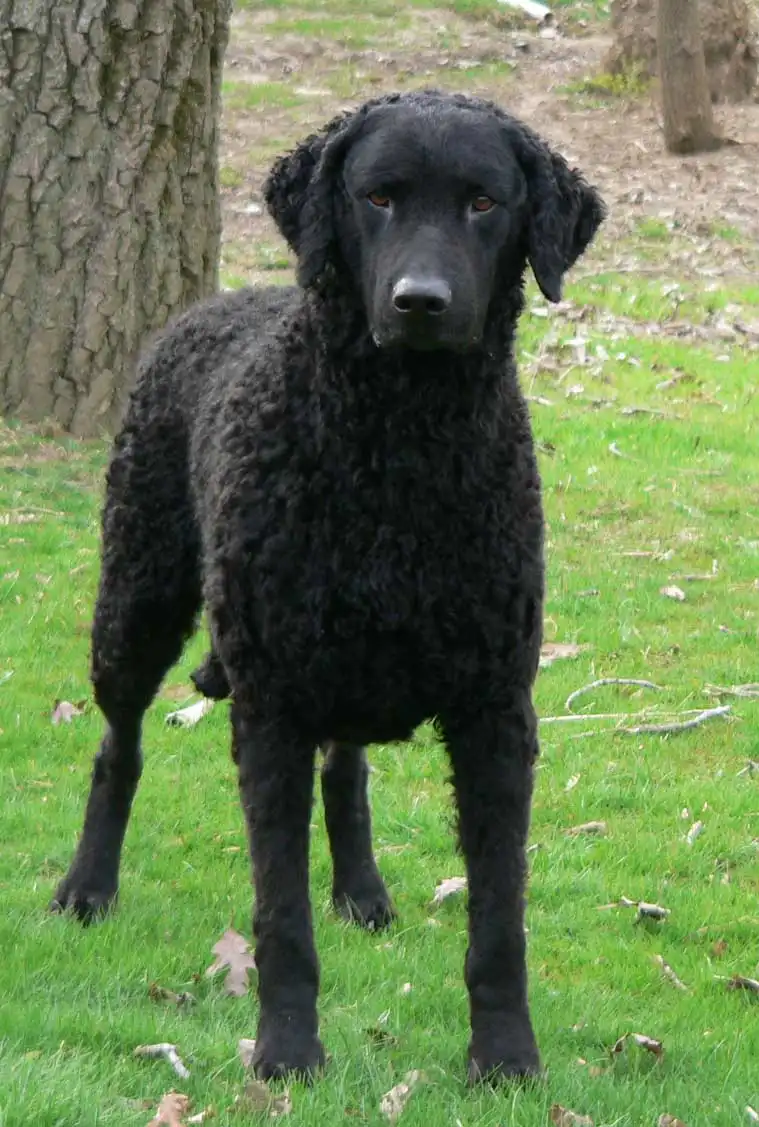
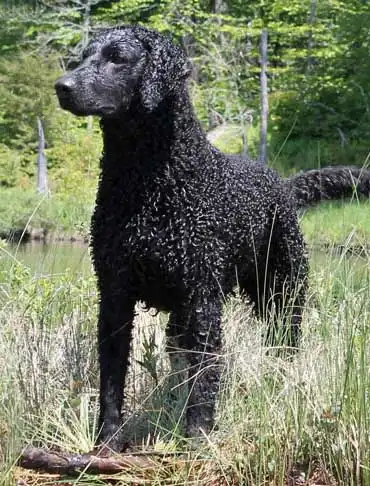
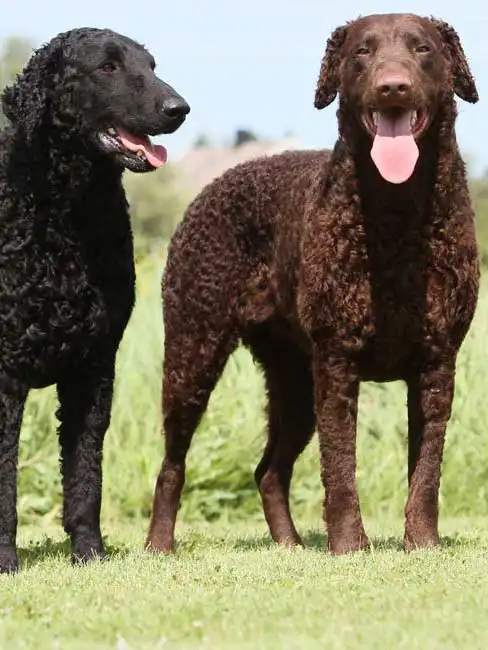
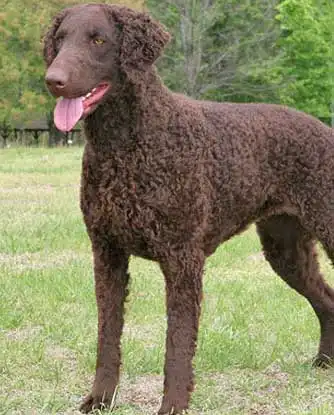
Curly Coats are easily recognized by their unique curls that cover their entire body. These curls are tight, dense, and lie close to the skin, offering excellent protection against harsh environments while also being weather- and water-resistant. The curls may be somewhat looser around the ears, and these dogs often have longer tufts of hair on their bellies, ears, thighs, and the backs of their forelegs, though these are usually trimmed. In contrast, the fur on their face, forehead, the front of their forelegs, and feet is generally straighter. Their coat colors can vary from black to a deep red or brown, occasionally featuring a few white hairs, but never in patches. These dogs are not only robust and sturdy but also quick and agile, radiating confidence and alertness. Their heads have a wedge shape when viewed from both the front and the side, enhanced by large, oval eyes. The ears are small, covered in curls, and positioned close to the head, slightly above eye level. They have strong jaws with a scissor bite and medium-length necks that are gently arched. The Curly Coated Retriever has relaxed shoulders and straight forelegs that are aligned directly beneath the body. Their chest is deep, and the flank is slightly tucked, contributing to a strong topline that slopes into the croup. The body is somewhat longer than it is tall, featuring muscular hindquarters and rounded feet with webbed, arched toes. The tail, which is no longer than the hock, is held straight and level with the topline while in motion.
Care Routine
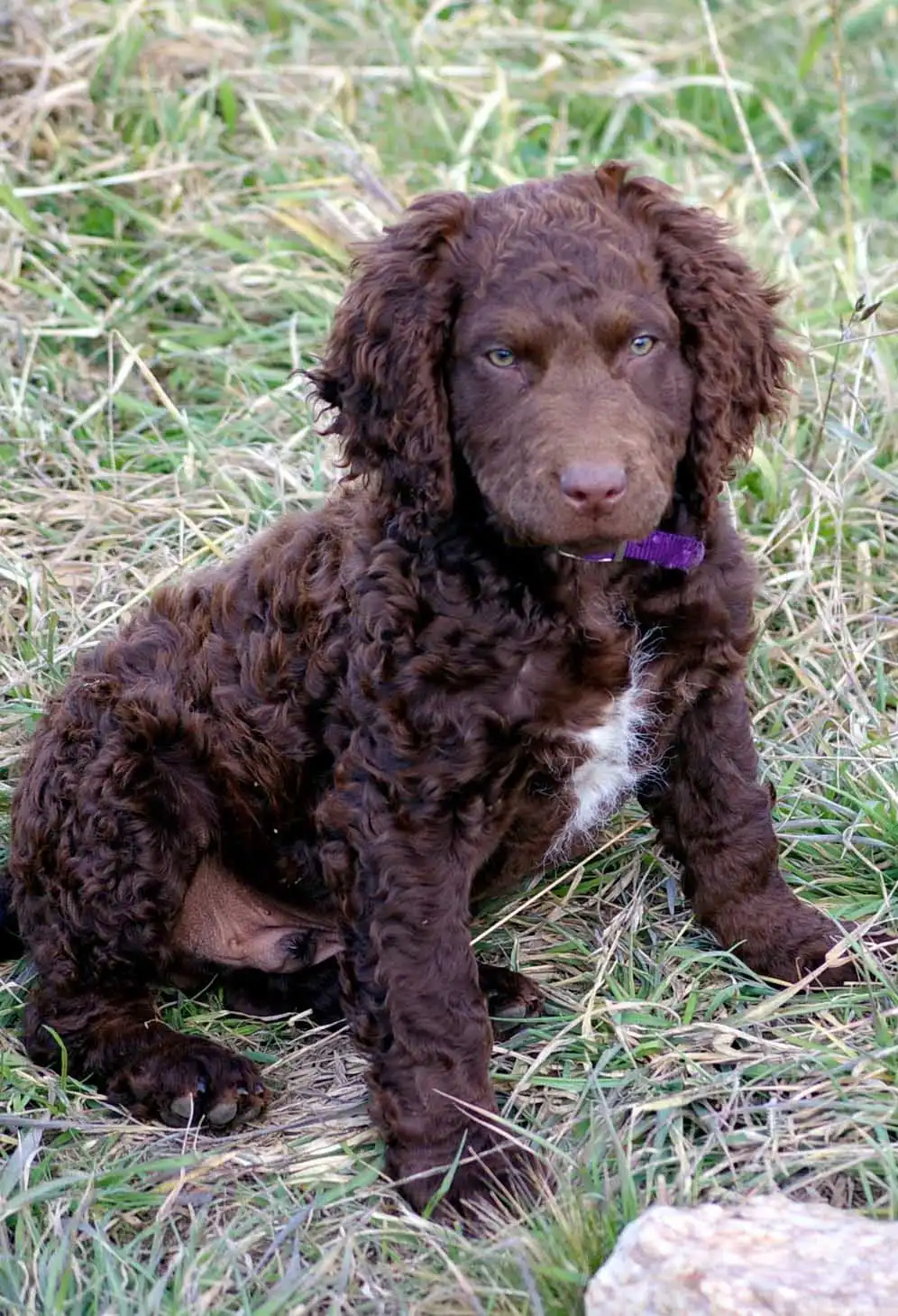
Curly Coated Retrievers are lively dogs that need a daily exercise routine of at least 30 minutes to an hour. They flourish when given a sense of purpose and enjoy being active, making activities like swimming, long walks, or carrying light objects ideal for keeping them engaged and happy. These dogs thrive on challenges, so participating in obedience or agility training can be especially fulfilling for them. Additionally, puzzle toys are a great way to stimulate their minds and provide entertainment. As puppies, Curly Coated Retrievers are full of energy and playfulness, which makes early training essential for shaping them into well-behaved and intelligent adults. It's important to keep an eye on their natural inclination to chew and nip at various items, as some objects can pose a risk if swallowed. Crate training is recommended for this breed, as it helps prevent mischief and shields them from potential hazards. It also helps them get used to confined spaces, which can be beneficial if they ever need to be boarded. However, it’s vital not to confine your Curly for long periods, as they are social creatures that value time spent with their families. Feeding should be done twice a day, with portions adjusted according to the dog's specific needs and activity level; generally, 3 to 4 cups of food daily is suitable. Their coat is relatively easy to maintain, and grooming should be introduced as a positive experience during their puppy stage. Nail trimming should occur as necessary; if you can hear their nails clicking on the floor, it’s time for a trim. Grooming is most needed during the spring and fall when they shed, and excessive grooming can lead to a frizzy coat. For the best results, use a wide-toothed plastic or wooden comb. Bathing should be limited to shedding seasons or when they get particularly dirty, as frequent baths are usually not required.
Behavior & Temperament
These delightful and gentle dogs are known for their sharp instincts and determined personalities. Curly Coated Retrievers usually have well-rounded temperaments, but they can be a bit reserved around strangers, which makes early socialization important. Their playful nature continues into their young adult years, ensuring plenty of joyful and entertaining moments. These dogs display a self-assured attitude and flourish under the care of a skilled owner who can offer them structure. Although they respond well to training, they may take a bit longer to learn commands compared to other breeds. This isn't due to a lack of smarts; rather, it's a reflection of their curious disposition and a tendency to lose interest when they become bored. To maintain their engagement, it's vital to keep training sessions dynamic and stimulating. Curly Coated Retrievers typically get along well with older children, but their size and energy levels might be too much for younger kids. They can live peacefully with other pets, although they will require time to adapt and proper socialization to facilitate smooth interactions.
Play & Exercise
Things to Know
Cups Per Day
3.5 Cups
Daily Activity
90 Minutes
Average Lifespan
10 Years
Origin
1700s
Type
Pure Breeds
Size
Large
Origin Country
United Kingdom
Brush Frequency
Monthly
Coat Texture
Curly
Register
Your kids have been begging for a pet forever, and you've recently decided that it's time for your family to get a new addition -- a dog! While everyone is excited for the new arrival, you're wondering if you need to have a dog license. How much does it cost? Is it required? Where do you get one?
Member Clubs

PETINNATE
Gun Dog

AKC
Sporting Group

UKC
Gun Dog
Height & Weight
Weight
83 lbs (38 kg)Male: 90 lbs (41 kg) , Female: 75 lbs (34 kg)
Height
25 inches (64 sm)Male: 26 inches (66 sm) , Female: 24 inches (61 sm)
6 Months
37 lbs ( m 37 lbs, f 37 lbs )
15 inches ( m 15 inches, f 15 inches )
12 Months
57 lbs ( m 57 lbs, f 57 lbs )
19 inches ( m 19 inches, f 19 inches )
18 Months
75 lbs ( m 75 lbs, f 75 lbs )
24 inches ( m 24 inches, f 24 inches )
Eye Colors
Hazel

Brown
Nose Colors
Black
Brown
Coat Colors
Black

Brown