Flat Coated Retriever
Flat Coat, Flat-Coat Retriever
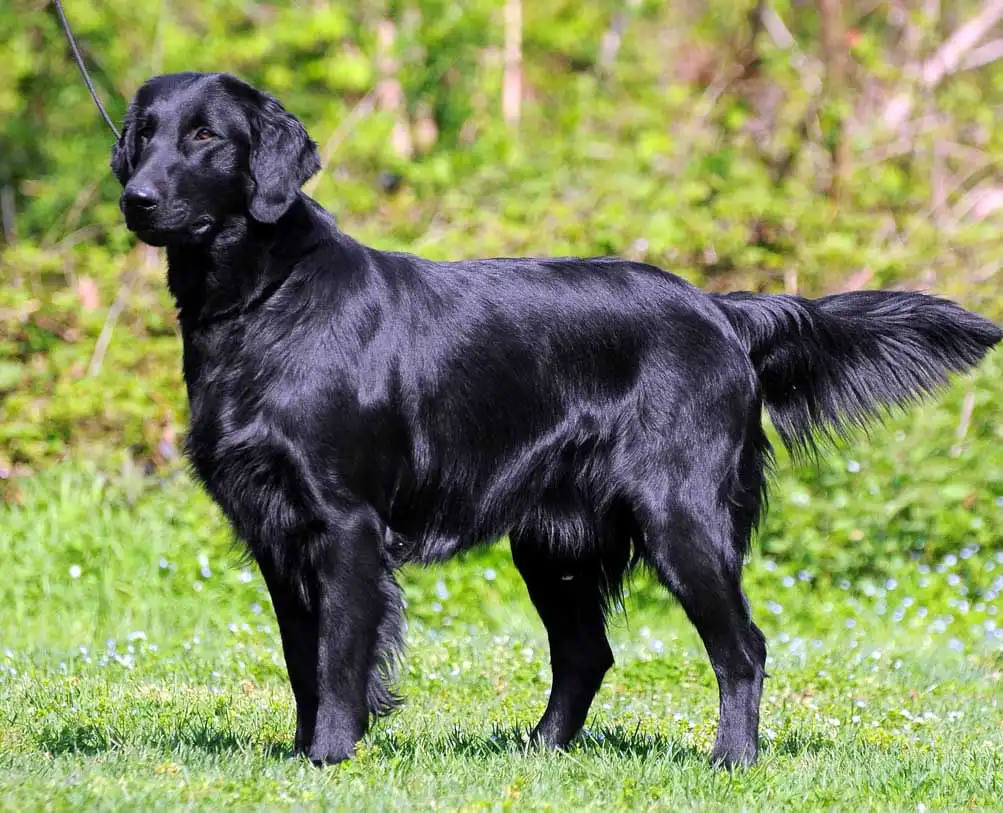
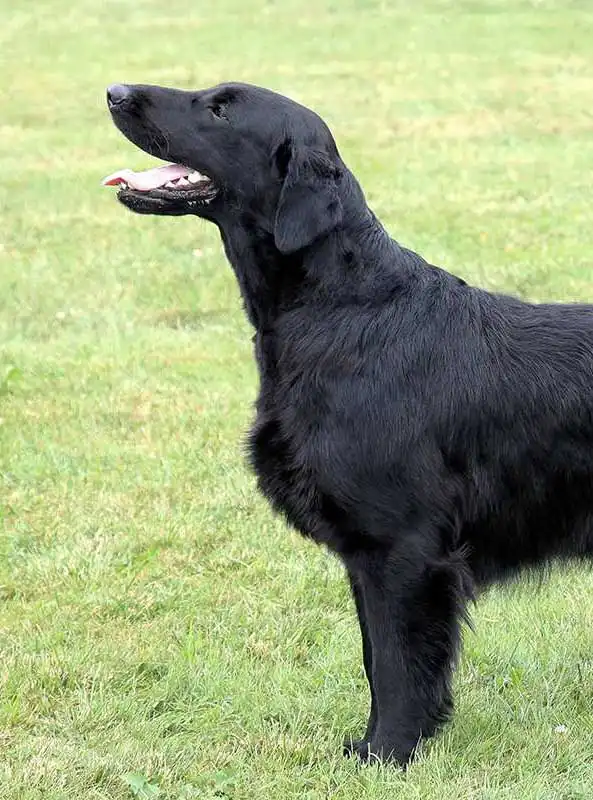
The Flat-Coated Retriever is a remarkable breed, celebrated for its shiny black coat, although a deep liver hue can also be seen from time to time. This breed is categorized as large, standing up to 24.5 inches tall and weighing as much as 80 pounds. Hailing from England in the 1800s, these dogs were originally developed for retrieving waterfowl and serving as hunting companions. However, their popularity declined after World War I, especially as the Golden Retriever gained favor. Known for their playful nature, Flat-Coated Retrievers mature at a slower pace despite their considerable size. Nonetheless, this breed is charming and hardworking, sure to fill your life with joy and laughter.

Breed Origin
The Flat-Coated Retriever has its roots in the Black Retriever and Newfoundland breeds, having been intentionally developed as versatile gundogs skilled in retrieving from both land and water. The early versions of this breed were noted for their curly fur, which led breeders to cross them with Newfoundlands and possibly various Setter breeds to produce a dog with a flatter coat, better suited for a variety of retrieving tasks. As hunting methods advanced and firearms improved, the need arose for a multifunctional dog capable of effectively retrieving game across different terrains. In the 1800s, the Flat-Coated Retriever became popular in England and later in the United States as a preferred gundog, enjoying widespread acclaim until the conclusion of World War I. However, shortly after the war, it began to decline in popularity, overshadowed by the emergence of the Golden Retriever, a breed that descended from the Flat-Coat lineage. Despite this downturn, the American Kennel Club officially recognized the Flat-Coated Retriever in 1915. By the mid-1960s, the breed faced a serious risk of extinction due to a significant drop in numbers. Fortunately, breeding programs were revitalized during this time, helping to restore the Flat-Coat as a cherished family pet. Despite these efforts, the breed has not regained the extensive popularity it once had in the 19th century. Today, Flat-Coated Retrievers are considered relatively uncommon, and breeders are particularly selective about placing them in new homes. Renowned for their affectionate disposition, these dogs are also quite sensitive and maintain a playful, youthful spirit well into their adult years, earning them the affectionate title of the “Peter Pan of Dogs.” As a result, breeders now look for potential owners who possess a good sense of humor and an appreciation for the breed's unique charm.
Breed Appearance
The Flat-Coated Retriever is a large breed known for its distinctive elongated head. Its dark, almond-shaped eyes are set wide apart, giving it an alert expression. The ears are small and closely attached to the head, adorned with a fair amount of feathering but not hanging excessively low. This breed features a long muzzle with a dark nose that harmonizes with its coat color. The jaws are also elongated, designed for effectively retrieving larger game such as pheasants and hares, and the bite can be either scissor or level. True to its name, the Flat-Coated Retriever has a moderately long, flat-lying coat that offers protection against various weather conditions, typically in shades of black or dark liver. Feathering is present on the ears, legs, and tail, though it is kept at a manageable length. The tail is straight and held high, exuding a cheerful demeanor while in motion, but it does not curl or rise significantly above the back. The forelegs are strong and straight, more wiry than bulky, with elbows close to the body. Its feet are well-arched, thickly padded, and oval in shape. The hindquarters are well-proportioned to the forelegs, featuring muscular thighs and feet that match those of the front legs.

Care Routine
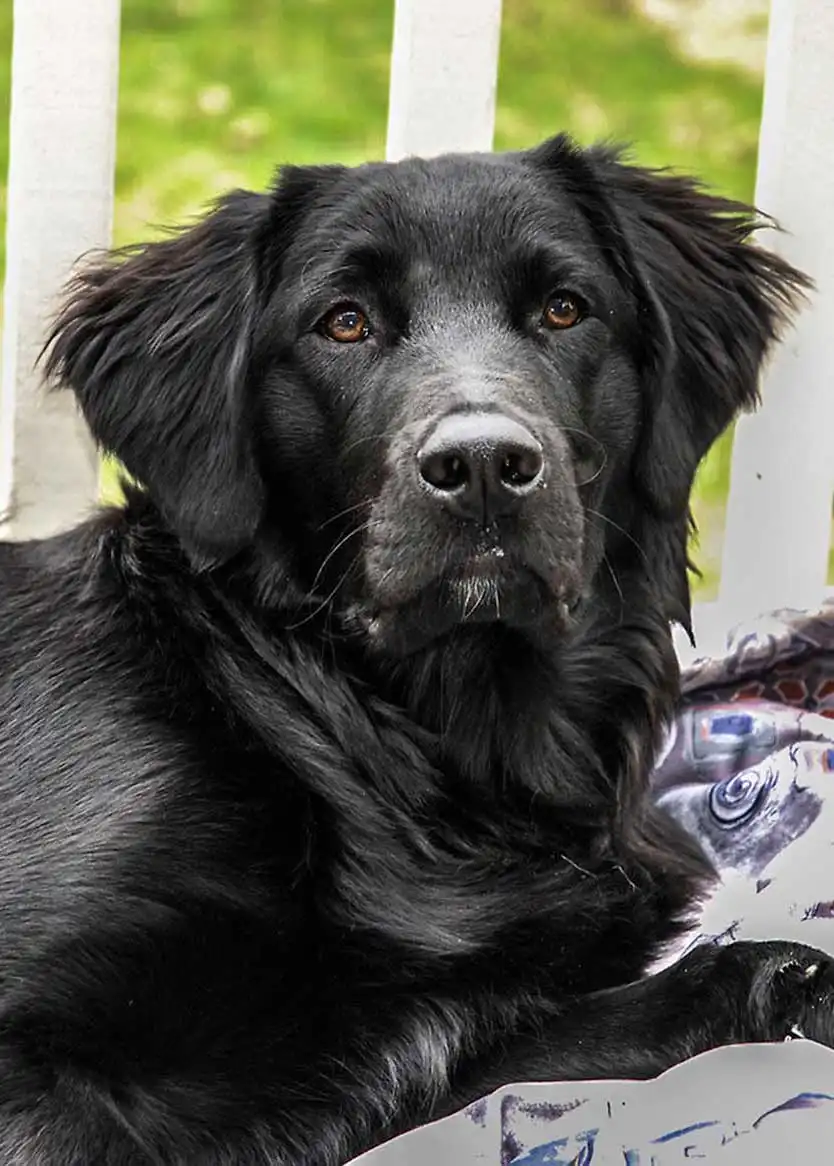
The Flat-Coated Retriever features a coat of moderate length that necessitates weekly brushing. Regular grooming is vital for managing shedding by eliminating loose and dead hair, which also helps maintain a shiny coat and minimizes any doggy odor. Like other retriever breeds, Flat-Coats can develop an unpleasant smell, especially when wet, and given their love for water, this is an important consideration. In addition to brushing, it’s crucial to keep their nails trimmed or filed regularly and to inspect their ears for wax accumulation. Dental care is equally important, so using dog-specific dental tools is recommended. For personalized grooming tips, it’s advisable to consult a veterinarian or a professional groomer. Regarding their diet, a Flat-Coated Retriever generally needs between 3.5 to 4.5 cups of dry food daily, divided into two meals. The precise amount may vary depending on the dog's age, activity level, and metabolism, making it essential to keep an eye on any dietary changes, including weight shifts and possible food allergies. This breed is not particularly suited for apartment living, as they tend to be less active indoors. Flat-Coats flourish in spaces where they can run and play freely, which is crucial for their overall well-being. Fortunately, they adapt well to various climates, whether cold or hot.
Behavior & Temperament
The Flat-Coated Retriever is celebrated for its energetic and playful personality, often characterized as bouncy and amusing. This breed is quite sensitive and flourishes best in the presence of active owners who have a good sense of humor. Despite being a large dog, the Flat-Coat maintains a youthful spirit well into its adult years. As such, it thrives in a lively yet patient family setting, where training is approached with kindness rather than harshness. Affectionate with its family, the Flat-Coat is wonderful with children and generally gets along well with other dogs. Although its considerable size may initially be daunting to strangers, this breed is more likely to welcome newcomers with a friendly lick than a bark. Training a Flat-Coat can be relatively easy, as it is eager to please and highly intelligent. To keep the Flat-Coat engaged and well-mannered, early and consistent training is recommended. Without appropriate guidance, this spirited dog may develop unwanted habits, such as excessive chewing or barking. Once regarded as a versatile hunting companion, the Flat-Coated Retriever is now treasured as a beloved family pet and a delightful source of happiness.
Play & Exercise
Things to Know
Cups Per Day
3.2 Cups
Daily Activity
60 Minutes
Average Lifespan
13 Years
Origin
1800s
Type
Pure Breeds
Size
Large
Origin Country
England
Brush Frequency
Weekly
Coat Texture
Straight
Register
Your kids have been begging for a pet forever, and you've recently decided that it's time for your family to get a new addition -- a dog! While everyone is excited for the new arrival, you're wondering if you need to have a dog license. How much does it cost? Is it required? Where do you get one?
Member Clubs

PETINNATE
Gun Dog

AKC
Sporting Group

UKC
Gun Dog
Height & Weight
Weight
70 lbs (32 kg)Male: 70 lbs (32 kg) , Female: 70 lbs (32 kg)
Height
23 inches (58 sm)Male: 24 inches (61 sm) , Female: 23 inches (58 sm)
6 Months
30 lbs ( m 30 lbs, f 30 lbs )
16 inches ( m 16 inches, f 16 inches )
12 Months
52 lbs ( m 52 lbs, f 52 lbs )
20 inches ( m 20 inches, f 20 inches )
18 Months
70 lbs ( m 70 lbs, f 70 lbs )
22 inches ( m 22 inches, f 22 inches )
Eye Colors
Brown

Nose Colors
Black
Brown
Coat Colors
Black

Brown