German Pinscher
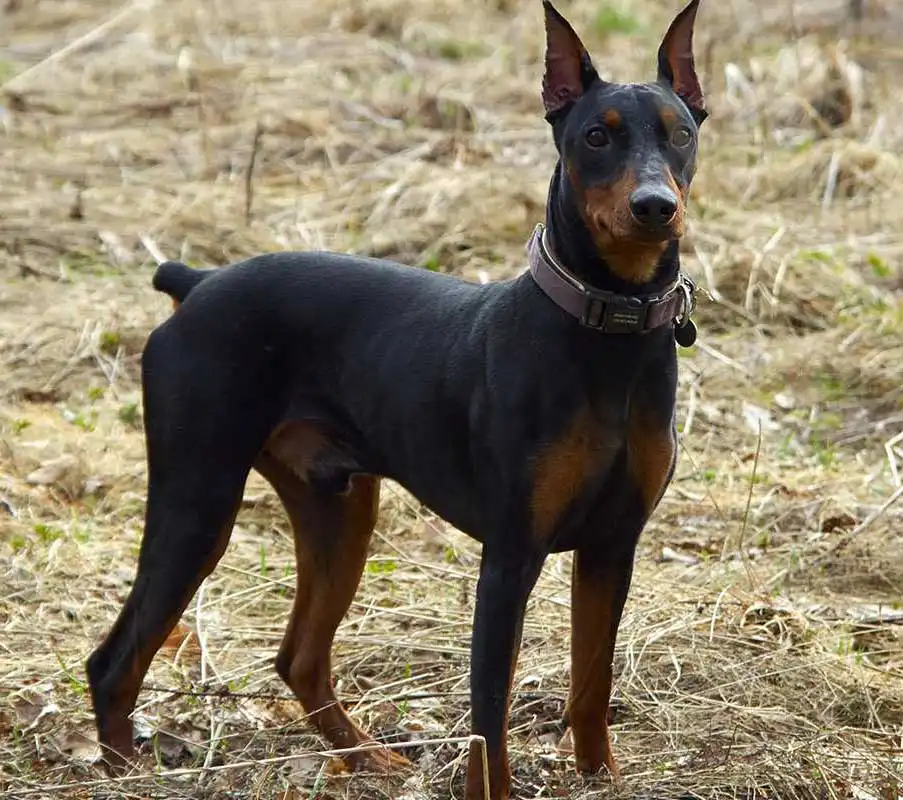
The German Pinscher is a breed that exudes grace, strength, and a dignified presence. Originating in 17th-century Germany, this medium-sized dog was developed from the Black and Tan Terrier, eventually leading to the formation of the Rattenfanger. Celebrated for its effectiveness as both a watchdog and a rat-catcher, the Rattenfanger was known for its unwavering dedication to its tasks. Typically, the German Pinscher stands at a height comparable to an average adult's knee, showcasing a muscular build beneath its sleek fur. Its head is characterized by a unique wedge shape, and its dark, attentive eyes reflect a keen eagerness. As a companion, the German Pinscher is always eager to embrace new adventures. Initially bred for pest control, this breed has evolved into a recognized guard dog, loyal companion, and versatile working dog. While it tends to be cautious and may take time to warm up to strangers, the German Pinscher thrives in environments that are not overly stimulating, particularly those without boisterous children. This breed is fiercely protective of its family and territory, and with appropriate training, it can develop a well-rounded temperament around others. Caring for a German Pinscher is relatively simple; it sheds moderately and benefits from weekly grooming. This breed flourishes in spacious living conditions where it can roam freely and requires daily exercise to keep its mind active, making it an excellent choice for those with an active lifestyle.
Breed Origin
The term "German Pinscher" originates from Germany and is linked to a type of Fox Terrier. The word “pinscher” is believed to have been derived from the English term “pinch,” which refers to the practice of ear cropping. The history of the German Pinscher dates back to the 1600s, when its forebears were interbred with the Rattenfanger, a breed celebrated for its skills as a watchdog and rodent hunter. The initial breeding involved the Rattenfanger and Black and Tan Terriers, resulting in the early German Pinscher, which proved to be a valuable working dog, especially in stable environments. In 1884, the first breed standard for the Pinscher was established, but its popularity declined significantly due to the upheavals of the World Wars. By the early 1900s, the breed was on the brink of extinction due to a lack of breeding initiatives. However, in 1958, the breed experienced a resurgence, thanks to the registration of four larger Miniature Pinschers with the Pinscher-Schnauzer Klub in West Germany. In East Germany, three of these Miniature Pinschers were bred with a female Pinscher, further contributing to the breed's revival. While there are differing views, it is generally accepted that the German Pinscher influenced the development of the Doberman breed. The breed was introduced to the United States in the late 1970s, and in 2001, it was classified in the Miscellaneous class by the American Kennel Club (AKC). By 2003, the German Pinscher achieved full recognition from the AKC.
Breed Appearance
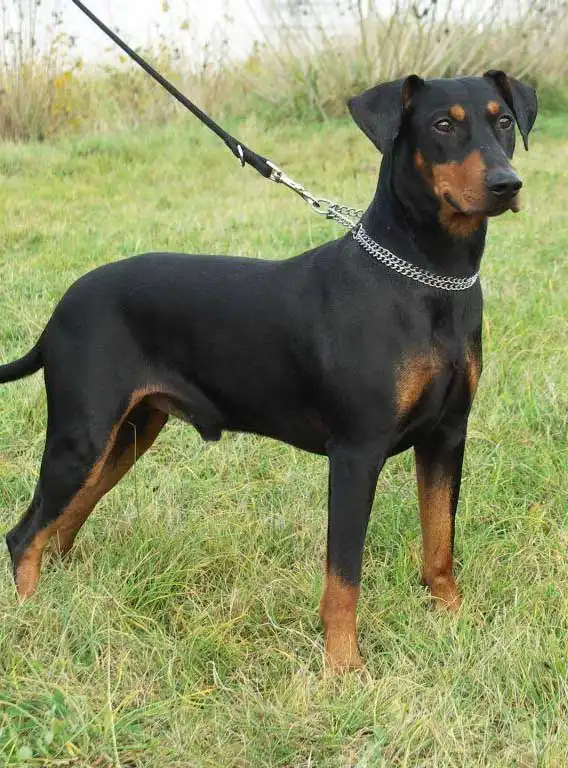
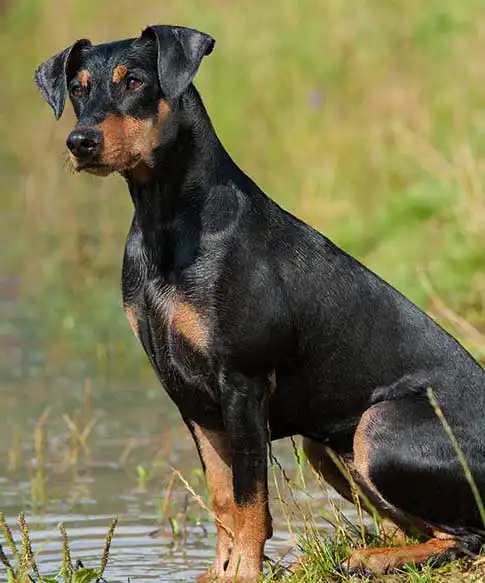
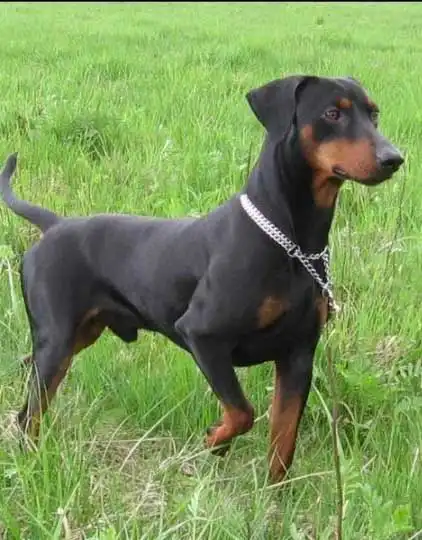
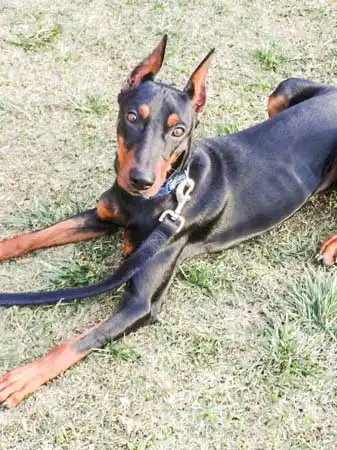
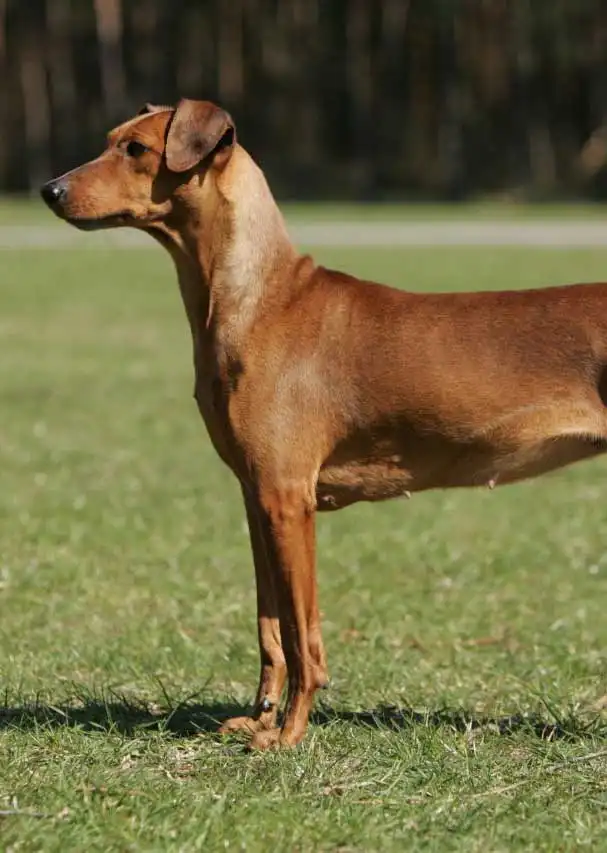
The German Pinscher is a medium-sized breed distinguished by its sleek, short coat, which is both smooth and fine. This dog embodies elegance in its stance and overall look. With a square build, the German Pinscher is designed for strength, endurance, and agility. Its shoulders are well-defined and gently sloped, while the front legs are straight and appear vertical from multiple perspectives. The hindquarters are strong, featuring powerful thighs that complement the forequarters, resulting in a balanced posture. The breed's paws are compact and round, equipped with dark nails, and are arched similarly to a cat's toes. The head of the German Pinscher is elongated, projecting an air of intelligence and grace. Its ears are symmetrical and set high on the skull; when cropped, they stand upright, while natural ears are folded in a "V" shape. The muzzle is long and ends in a blunt tip. The neck is thick and muscular, contributing to a well-proportioned gait with impressive reach. The coat is not only smooth and short but also dense, available in a variety of color combinations such as black, blue, brown, fawn, and red. Additionally, the German Pinscher may feature markings on the lips, cheeks, feet, throat, and above the eyes.
Care Routine
The German Pinscher is quite easy to care for in terms of grooming. Its smooth, short, and shiny coat categorizes it as an average shedder, necessitating weekly brushing with a rubber curry brush. To control excess oil on the skin, baths should be given every four to six weeks. It's worth mentioning that this breed is not hypoallergenic, which could be a concern for allergy sufferers. On the bright side, German Pinschers do not have a noticeable odor. To ensure a German Pinscher remains both mentally and physically stimulated, regular exercise is crucial, with daily walks being highly advisable. This breed flourishes in homes with large, fenced yards that provide plenty of space for running and playing. Renowned for their agility, German Pinschers are quick and have a natural instinct to chase moving objects. As long as they receive sufficient exercise and mental engagement, they will thrive in their surroundings. Furthermore, this breed is best suited for moderate climates, as their thin coat offers little protection against extreme temperatures. There are no special dietary needs for the German Pinscher.
Behavior & Temperament
The German Pinscher is a lively breed known for its playful antics, especially if not adequately trained. This dog tends to bark selectively, only when it feels it's warranted. He thrives in the company of those he knows and enjoys being a loyal companion. Celebrated for his sharp intellect and cleverness, the German Pinscher thrives on consistent motivation and positive reinforcement. While he may be wary of unfamiliar faces, proper training is vital to help him become more accepting of new people. As a natural leader, he confidently stands his ground when confronted by other dogs. This breed is ideally suited for households without overly boisterous children, as he may react defensively around them; instead, he does well with older, more understanding kids. The German Pinscher is fiercely protective of his family and will stand guard against any perceived threats. He also has a strong instinct to chase cats and small animals, making early socialization with these creatures essential to manage this behavior. For effective training, the German Pinscher requires plenty of praise and attention, but once he learns, he can showcase an impressive array of tricks.
Play & Exercise
Things to Know
Cups Per Day
3.0 Cups
Daily Activity
90 Minutes
Average Lifespan
14 Years
Origin
1600s
Type
Pure Breeds
Size
Large
Origin Country
Germany
Brush Frequency
Weekly
Coat Texture
Wiry
Register
Your kids have been begging for a pet forever, and you've recently decided that it's time for your family to get a new addition -- a dog! While everyone is excited for the new arrival, you're wondering if you need to have a dog license. How much does it cost? Is it required? Where do you get one?
Member Clubs

PETINNATE
Terrier

AKC
Working Group

UKC
Terrier
Height & Weight
Weight
69 lbs (31 kg)Male: 78 lbs (35 kg) , Female: 60 lbs (27 kg)
Height
24 inches (61 sm)Male: 25 inches (64 sm) , Female: 23 inches (58 sm)
6 Months
32 lbs ( m 32 lbs, f 32 lbs )
17 inches ( m 17 inches, f 17 inches )
12 Months
52 lbs ( m 52 lbs, f 52 lbs )
21 inches ( m 21 inches, f 21 inches )
18 Months
60 lbs ( m 60 lbs, f 60 lbs )
23 inches ( m 23 inches, f 23 inches )
Eye Colors
Hazel

Brown
Nose Colors
Black
Brown
Coat Colors
Black

Fawn
Red
Brown
Blue