Ibizan Hound
Ibizan Warren Hound, Beezer
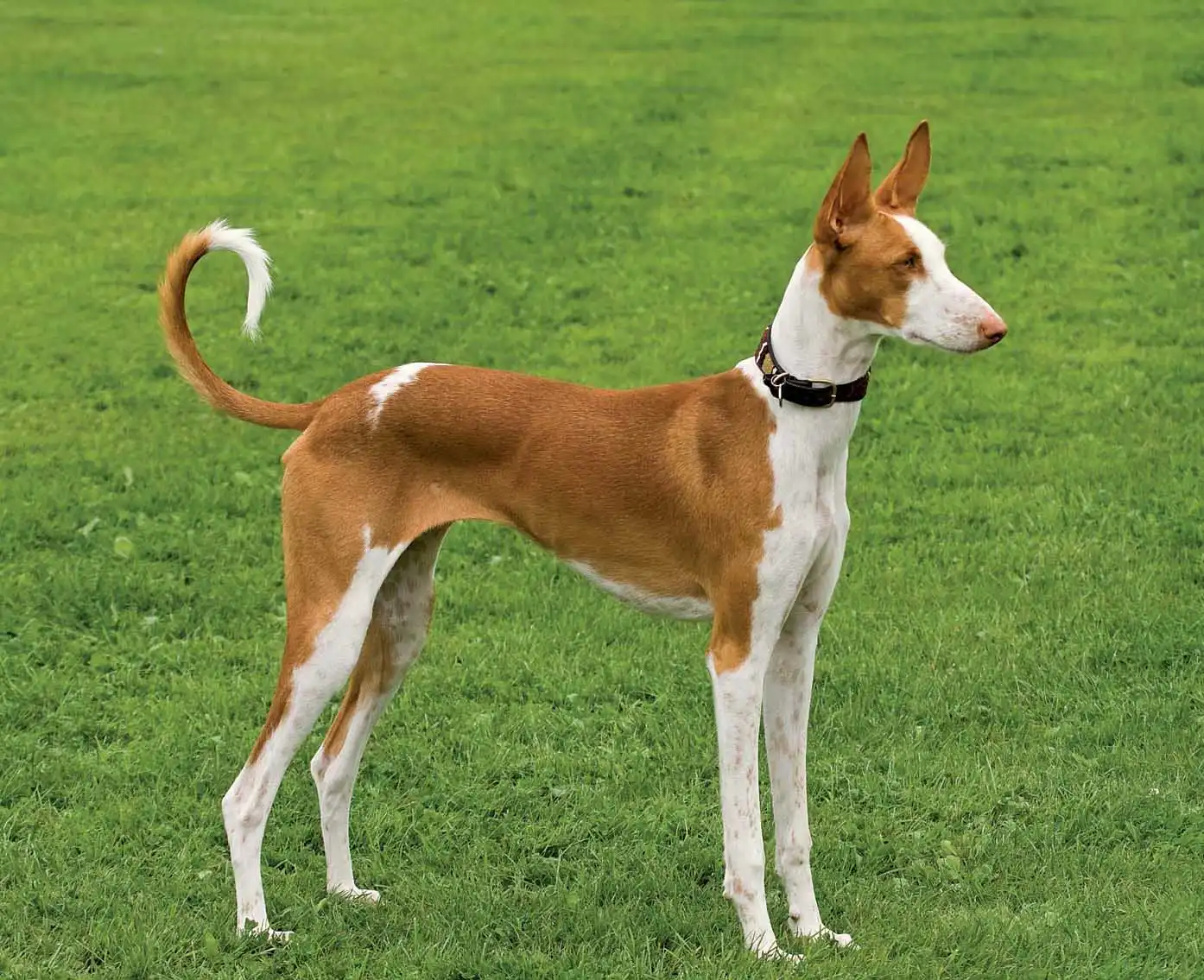
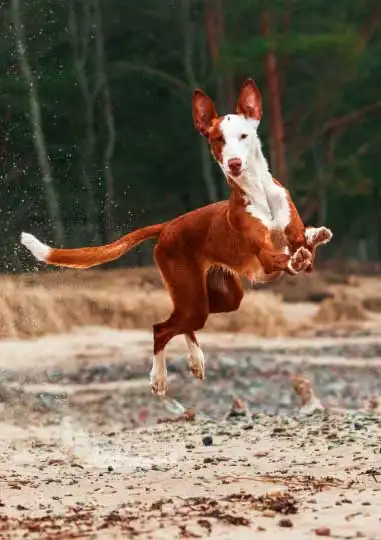
The Ibizan Hound carries an air of elegance and dignity, yet underneath that refined facade lies a playful and slightly silly disposition. This breed is notorious for its playful mischief, frequently snatching food whenever it gets the chance and eagerly chasing after any small creature that crosses its path. As a result, households with small pets such as rabbits, hamsters, or birds may not be the best fit for an Ibizan Hound. With impressive agility, this dog can effortlessly clear a five-foot fence, highlighting its athletic prowess. To keep this breed happy, it needs significant attention and daily exercise—ideally around 20 to 30 minutes on a leash. Additionally, it thrives with plenty of time to run in a securely fenced yard. While the Ibizan Hound may be somewhat reserved with strangers, early socialization is essential for its growth. Although it enjoys being around children, it is more compatible with older kids, as its lively nature might be too much for younger ones. Enthusiasts of this breed often endearingly call it a "Beezer."
Breed Origin
The precise origins of the Ibizan Hound remain elusive, with several theories suggesting different beginnings for this breed. A notable point of interest is the striking similarity between the Ibizan Hound and the statue of Anubis, the Egyptian god linked to the afterlife. This likeness, along with various archaeological evidence, suggests that the breed may have existed for over 5,000 years. It is thought that the Phoenicians introduced the Ibizan Hound to the Spanish island of Ibiza during the 8th or 9th century, where these dogs were employed to hunt rabbits and hares in the island's rugged terrain, honing their skills in patience and determination. For a long time, the breed was a closely guarded secret in Spain until the mid-1950s. In 1956, Colonel and Mrs. Consuelo Seoane brought two Ibizan Hounds, named Hannibal and Certera, to Rhode Island. This pair produced the first litter of Ibizan Hounds born in America, which included eight puppies. These puppies, along with their parents and several other imported Ibizan Hounds, laid the groundwork for the breed's lineage in the United States. Today, most American Ibizan Hounds can trace their ancestry back to these early imports. The American Kennel Club officially recognized the Ibizan Hound in 1979, and the breed made its first appearance at the prestigious Westminster Kennel Club dog show in 1980. Currently, it ranks 138th in popularity among the 155 breeds acknowledged by the AKC. As a rare breed, locating an Ibizan Hound puppy can be quite difficult.
Breed Appearance
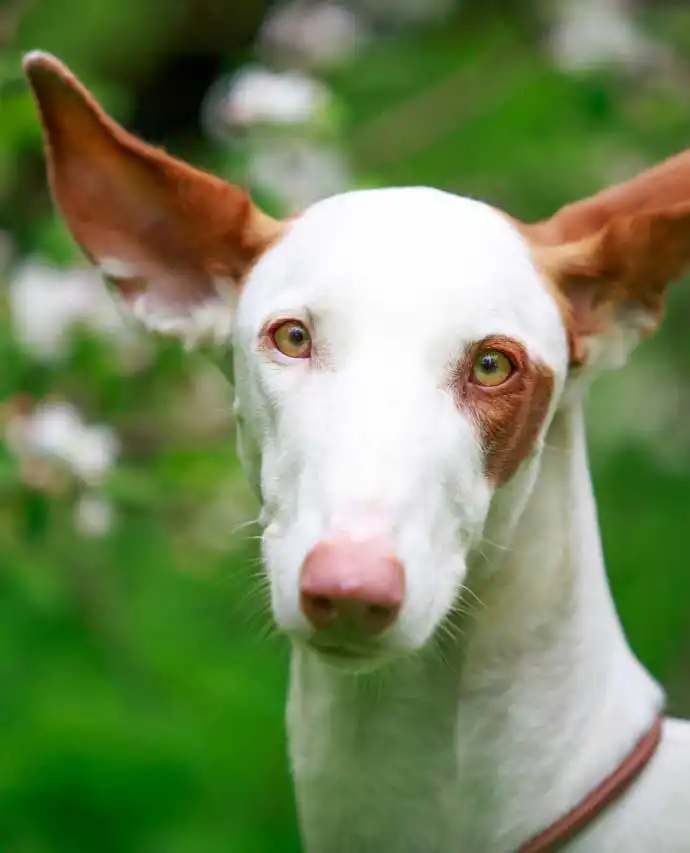
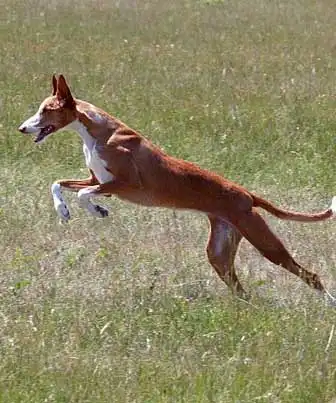
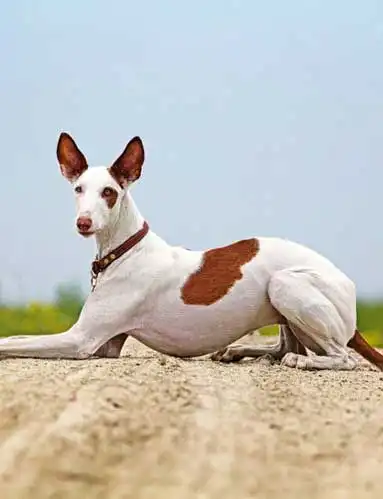
The Ibizan Hound is characterized by two unique coat types: smooth and wire. Both varieties are relatively easy to care for, needing just weekly brushing to remove loose fur and help distribute natural oils on the skin. Regular bathing is not required and can actually cause dryness and irritation; baths should only be given when the dog is noticeably dirty. For minor cleaning, wet wipes can effectively clear away dust and debris. The wirehaired version of the Ibizan Hound typically has hair that measures between one to three inches in length, with the longest strands located on the back, tail, and the rear of the thighs. Some wirehaired individuals may also have a moustache on their muzzle. Both coat types have a coarse texture. Regarding color, the Ibizan Hound can be completely white, a mix of red and white, or solid red. The shades of red can range from a light, yellowish-red referred to as "lion" to a deep, rich red. Ideally, the nose and eye rims should have a flesh-colored pigmentation; any black pigmentation in these areas is considered a fault.
Care Routine
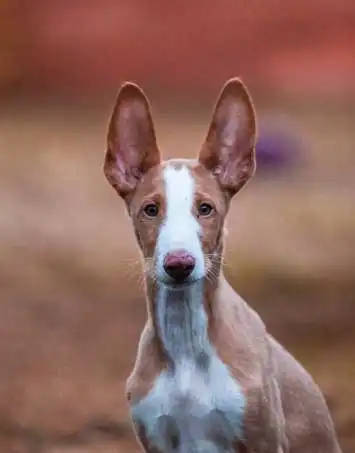
The Ibizan Hound thrives on daily exercise, requiring walks of about 20 to 30 minutes. In addition to this, he needs plenty of playtime to burn off excess energy. Thanks to his remarkable jumping skills, a fence should be at least six feet tall, as he can effortlessly clear a five-foot one. House training this breed is typically uncomplicated; he has a strong desire to please his owners, although he may show some stubbornness at times. It’s beneficial to incorporate basic obedience training, but it should be done in a fun and upbeat way, as he may not respond well to strict commands. Keeping training sessions short and enjoyable will help him stay engaged while learning new commands. The Ibizan Hound is an excellent companion for walks or jogs. Due to his low body fat, it’s essential to provide him with cozy dog beds or cushions for relaxation, and he will likely enjoy sharing your furniture. If crating is necessary, adding a crate pad will improve his comfort.
Behavior & Temperament
The Ibizan Hound possesses a strong instinct to pursue anything that moves, including small animals like cats, which makes it unwise to leave small pets unattended in the house. This breed is an excellent watchdog, thanks to its acute hearing; it will perk up its ears at unfamiliar noises and may bark if it senses someone on your property. Ideally, the Ibizan Hound should be friendly and playful with those it knows, while remaining wary of strangers. Early socialization is crucial for helping the dog adjust to new situations without anxiety. Training is generally straightforward, as the dog is eager to please its family, although it can sometimes show a stubborn side. Without adequate exercise, the Ibizan Hound may resort to mischievous antics. Regular interaction and leashed walks are essential for expending energy, along with ample time to run in a securely fenced yard. Due to its ability to jump over high fences, supervision is important during outdoor playtime.
Play & Exercise
Things to Know
Cups Per Day
2.5 Cups
Daily Activity
30 Minutes
Average Lifespan
11 Years
Origin
ancient times
Type
Pure Breeds
Size
Medium
Origin Country
Ibiza (Balaeric Islands)
Brush Frequency
Weekly
Coat Texture
Straight
Register
Your kids have been begging for a pet forever, and you've recently decided that it's time for your family to get a new addition -- a dog! While everyone is excited for the new arrival, you're wondering if you need to have a dog license. How much does it cost? Is it required? Where do you get one?
Member Clubs

PETINNATE
Sighthound and Pariah Dog

AKC
Hound Group

UKC
Sighthound and Pariah Dog
Height & Weight
Weight
55 lbs (25 kg)Male: 55 lbs (25 kg) , Female: 55 lbs (25 kg)
Height
26 inches (66 sm)Male: 27 inches (69 sm) , Female: 25 inches (64 sm)
6 Months
27 lbs ( m 27 lbs, f 27 lbs )
21 inches ( m 21 inches, f 21 inches )
12 Months
40 lbs ( m 40 lbs, f 40 lbs )
24 inches ( m 24 inches, f 24 inches )
18 Months
55 lbs ( m 55 lbs, f 55 lbs )
25 inches ( m 25 inches, f 25 inches )
Eye Colors
Hazel

Brown
Amber
Nose Colors
Blue
Brown
Isabella
Coat Colors
Red
Cream
Fawn
White