Komondor
Hungarian Sheepdog, Hungarian Komondor, Mop Dog
This breed is known for its sharp awareness and steadfast loyalty to their human families. They are courageous dogs that thrive when entrusted with tasks, but without proper socialization during their puppy stage, they may display territorial and aggressive tendencies towards unfamiliar people and animals. Their unique coat, reminiscent of a mop, is perfectly designed for their original role of protecting livestock in frigid environments. Although they have a strong independent streak, they respond well to engaging and diverse training techniques, particularly when led by a confident handler. Despite their considerable size, they can adapt to living indoors as long as they receive sufficient exercise and regular outings. To deter them from asserting dominance over their territory—a typical trait of guard dogs—a tall fence is crucial around your property. However, beneath their rugged facade, they truly enjoy cozying up indoors with their loved ones.
Breed Origin
The origins of the Komondor can be linked to ancient Tibetan canines. Some historians propose that this breed made its way to Hungary approximately a millennium ago, brought by the nomadic Magyars who needed them to safeguard their extensive herds of cattle and sheep. However, more recent studies suggest that the true roots of the Komondor lie with the Cumans, a Turkic nomadic tribe. After the Mongol invasion in 1237, many Cumans fled to Hungary, joining those who had already established themselves there. The name "Komondor" is believed to come from "Korman-dor," meaning "dog of the Cumans." Archaeological evidence has revealed the remains of these dogs in Cuman burial sites. The breed was first documented in writing in the 16th century. The Komondor saw a surge in popularity during the 1920s as dog enthusiasts began to exhibit them in competitions. Today, these dogs remain vital as flock guardians, enduring harsh outdoor conditions for long durations. Interestingly, they do not herd the animals but focus on their protection, often operating independently of human assistance. The American Kennel Club officially recognized the breed in 1937.
Breed Appearance
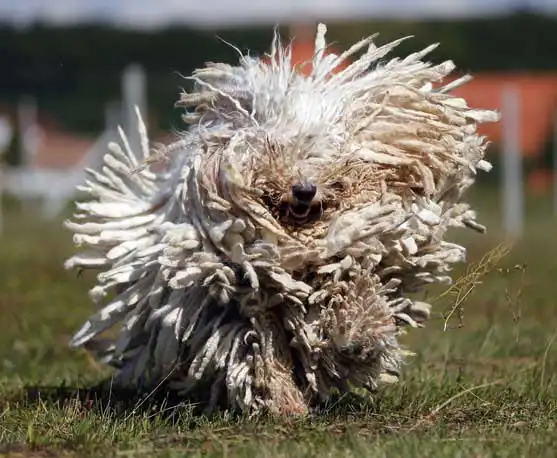
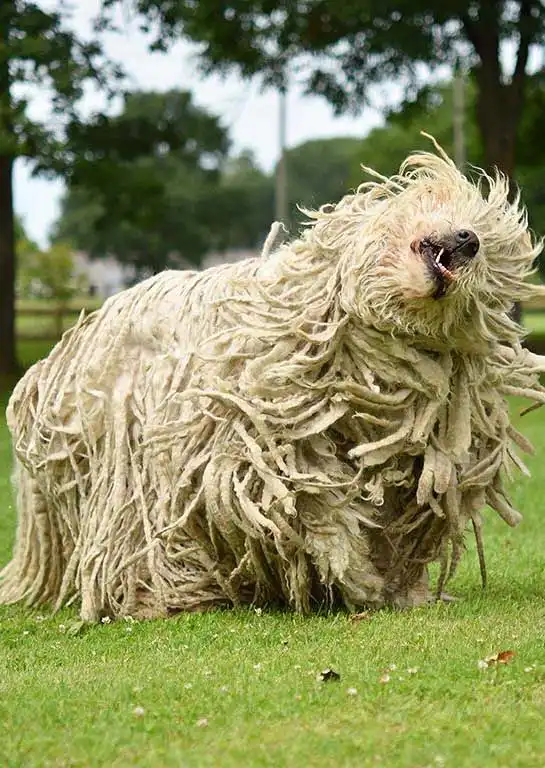
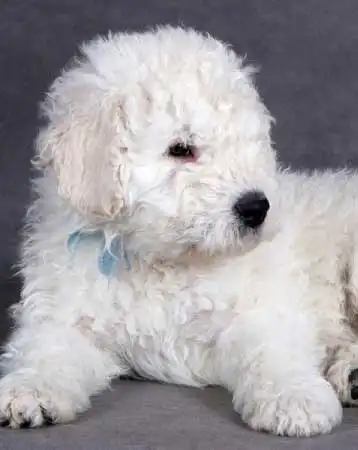
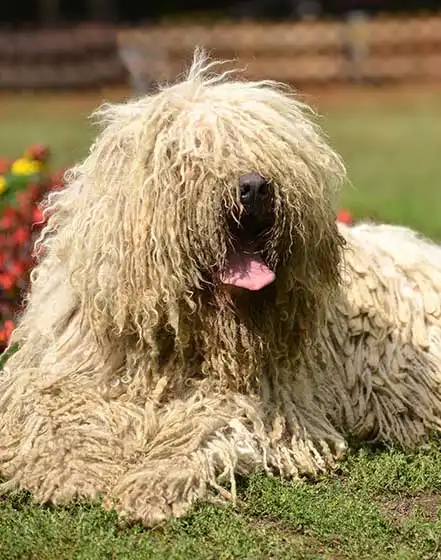
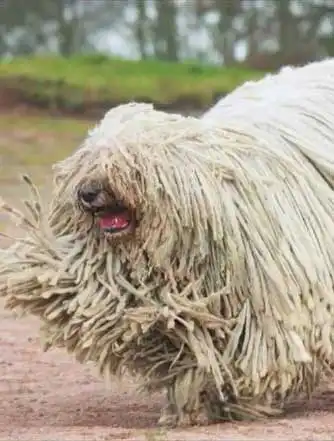
The Komondor is a sturdy breed known for its strong bone structure, making it an exceptional protector of livestock. These dogs are deeply committed to their roles and will defend their charges with great intensity. They have a large head featuring a notably short, dark muzzle. Their eyes, which are partially hidden by their long, mop-like fur, are almond-shaped, medium-sized, and dark brown. The ears are elongated triangles with rounded tips, blending seamlessly into their coat. Their long tail reaches down to the hocks, and their teeth meet in a scissor bite, supported by powerful jaws. What truly sets the Komondor apart is its distinctive coat, which is entirely covered in a unique felted and corded texture that can grow between 8 to 11 inches long. The outer fur layer combines with a soft undercoat to form long, cord-like strands that resemble dreadlocks. This remarkable coat takes about two years to fully develop. Often compared to a floor mop, it serves a practical function: it helps the dog camouflage among sheep and offers protection during confrontations, ensuring the safety of their flock.
Care Routine
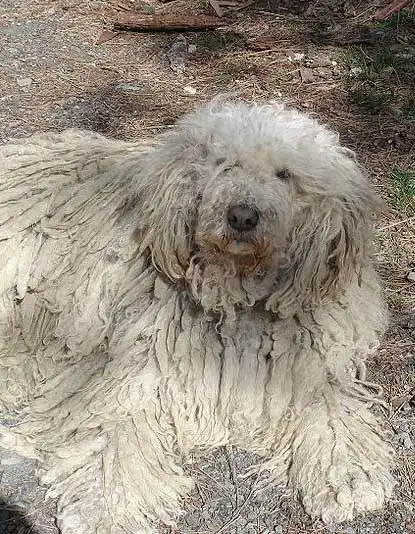
The unique coat of this breed should never be brushed or combed. Instead, it needs to be divided into cords and trimmed to keep it clean. Regular inspections for debris and parasites, such as ticks and fleas, are crucial. Given their white fur, these dogs do require occasional baths, but this should be done infrequently to prevent damage to the coat's thickness, which also takes a long time to dry. Training them to stand by a fan or to accept a carefully used blow dryer can help expedite the drying process. Although they can adjust to city life, they truly flourish in rural environments, especially in homes with large yards and high fences. When not performing their duties as flock guardians, they may become sluggish and sleep for long stretches. To ensure they remain fit and healthy, daily brisk walks are essential. This breed is robust and can adapt to various climates, including severe weather. Regular upkeep includes consistent exercise, coat maintenance, bathing, and routine checks for ear and eye infections.
Behavior & Temperament
The Komondor can make a wonderful family pet, but it is essential for the owner to establish a firm sense of authority, effectively taking on the role of pack leader. Originally bred as strong protectors of livestock, these dogs have a natural instinct to be both fiercely protective and confident. While they are known for their independence, loyalty, and thoughtfulness, they can also display aggressive behaviors. Their determination allows them to stand up to threats such as wolves and bears, demonstrating their capability to face even the most formidable foes. Given their high levels of dominance, Komondors may be cautious around strangers and exhibit territorial instincts. They often struggle to coexist peacefully with other dogs and may show aggression towards animals that are not part of their family. To counteract these tendencies, it is vital to socialize them thoroughly during their puppy years and to set clear boundaries for their behavior. Introducing puppies to a diverse range of people is crucial for helping them adjust to various social environments. These dogs can be quite headstrong if not properly guided, making it imperative for their owners to assert their leadership and gain the dog's respect. The owner should take the lead in decision-making rather than allowing the dog to take charge. Although Komondors are intelligent, they can become bored easily; thus, training sessions should be stimulating, enjoyable, and varied to keep their interest engaged.
Play & Exercise
Things to Know
Cups Per Day
3.8 Cups
Daily Activity
60 Minutes
Average Lifespan
11 Years
Origin
1600s
Type
Pure Breeds
Size
Large
Origin Country
Hungary
Brush Frequency
Monthly
Coat Texture
Corded
Register
Your kids have been begging for a pet forever, and you've recently decided that it's time for your family to get a new addition -- a dog! While everyone is excited for the new arrival, you're wondering if you need to have a dog license. How much does it cost? Is it required? Where do you get one?
Member Clubs

PETINNATE
Guardian Dog

AKC
Working Group

UKC
Guardian Dog
Height & Weight
Weight
99 lbs (45 kg)Male: 113 lbs (51 kg) , Female: 85 lbs (39 kg)
Height
25 inches (64 sm)Male: 26 inches (66 sm) , Female: 24 inches (61 sm)
6 Months
47 lbs ( m 47 lbs, f 47 lbs )
18 inches ( m 18 inches, f 18 inches )
12 Months
65 lbs ( m 65 lbs, f 65 lbs )
21 inches ( m 21 inches, f 21 inches )
18 Months
82 lbs ( m 82 lbs, f 82 lbs )
24 inches ( m 24 inches, f 24 inches )
Eye Colors
Brown

Nose Colors
Black
Coat Colors
White