Lundehund
Puffin Dog
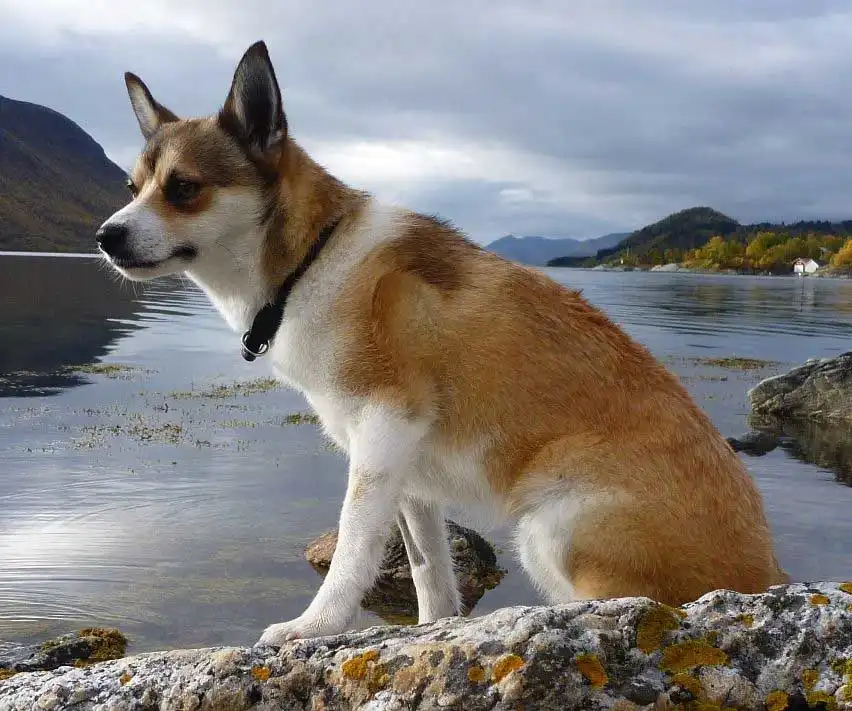
The Norwegian Lundehund is a truly distinctive breed. Each paw is equipped with six toes, and the toes on his front legs may be double or even triple-jointed. His legs are uniquely positioned at a 90-degree angle, and his head can bend back almost to touch his spine. Furthermore, he can fold his ears both forward and backward, enabling him to close them. This extraordinary flexibility poses a challenge when it comes to keeping him contained. In addition to his unusual physical traits, the Lundehund is full of energy, making him more suitable for an experienced dog owner.
Breed Origin
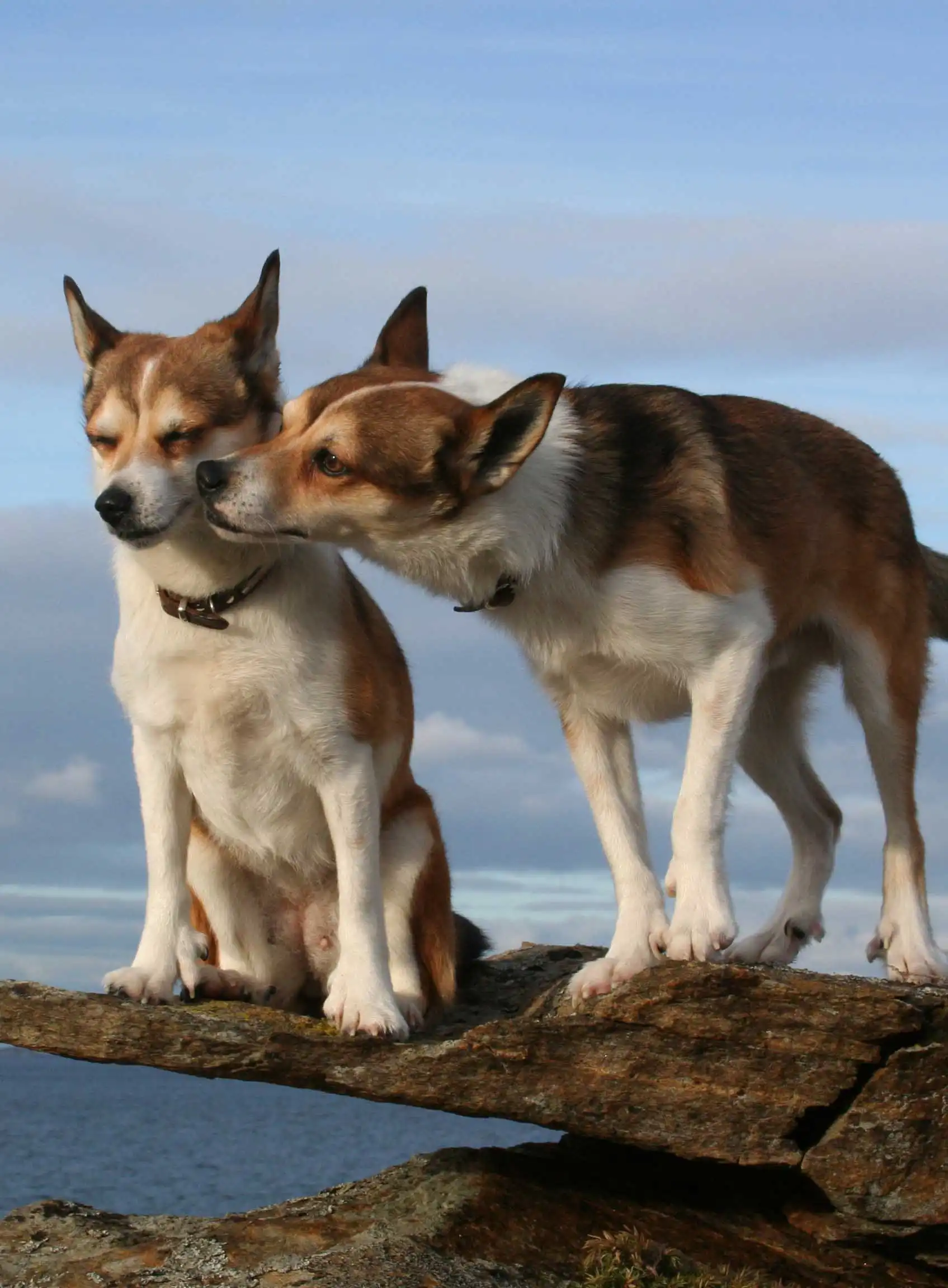
The Norwegian Lundehund is recognized as one of the rarest dog breeds in the world, distinguished not only by its small population but also by its distinctive characteristics. The breed's name comes from the Norwegian term "lunde," which translates to puffin, highlighting its original function as a bird hunter. Developed on the remote islands off the coast of Norway, the Lundehund was primarily tasked with climbing cliffs to find puffins, capturing them, and bringing them back alive to their handlers. This breed possesses extraordinary physical attributes that enable it to traverse steep landscapes and squeeze into narrow spaces. Its additional toes enhance grip and stability on rugged terrain, while its flexible neck allows for agile movements when navigating out of a puffin's nest. The first Norwegian Lundehunds arrived in North America in 1960, landing in Canada. The breed made its debut in the United States in 1987 when Paul Ross became the first owner of a Lundehund there. The following year, in 1988, the Norwegian Lundehund Club of America was founded. The breed was added to the American Kennel Club’s Foundation Stock Service in 1996 and became eligible for AKC companion events in 2003. It wasn't until a board meeting in 2010 that the Norwegian Lundehund was allowed to register officially with the AKC. In 2011, it gained the right to compete in conformation shows within the non-sporting group, achieving recognition as the 169th breed by the American Kennel Club.
Breed Appearance
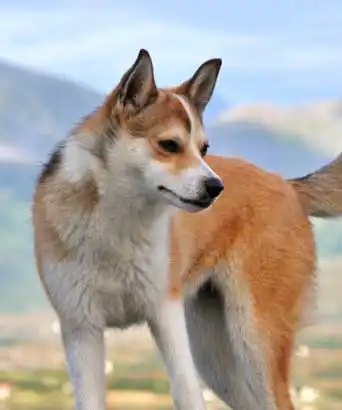
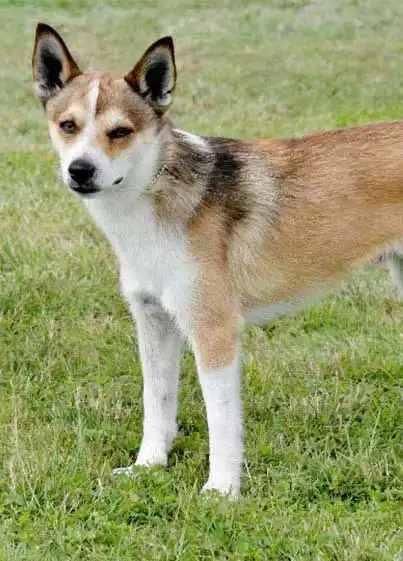
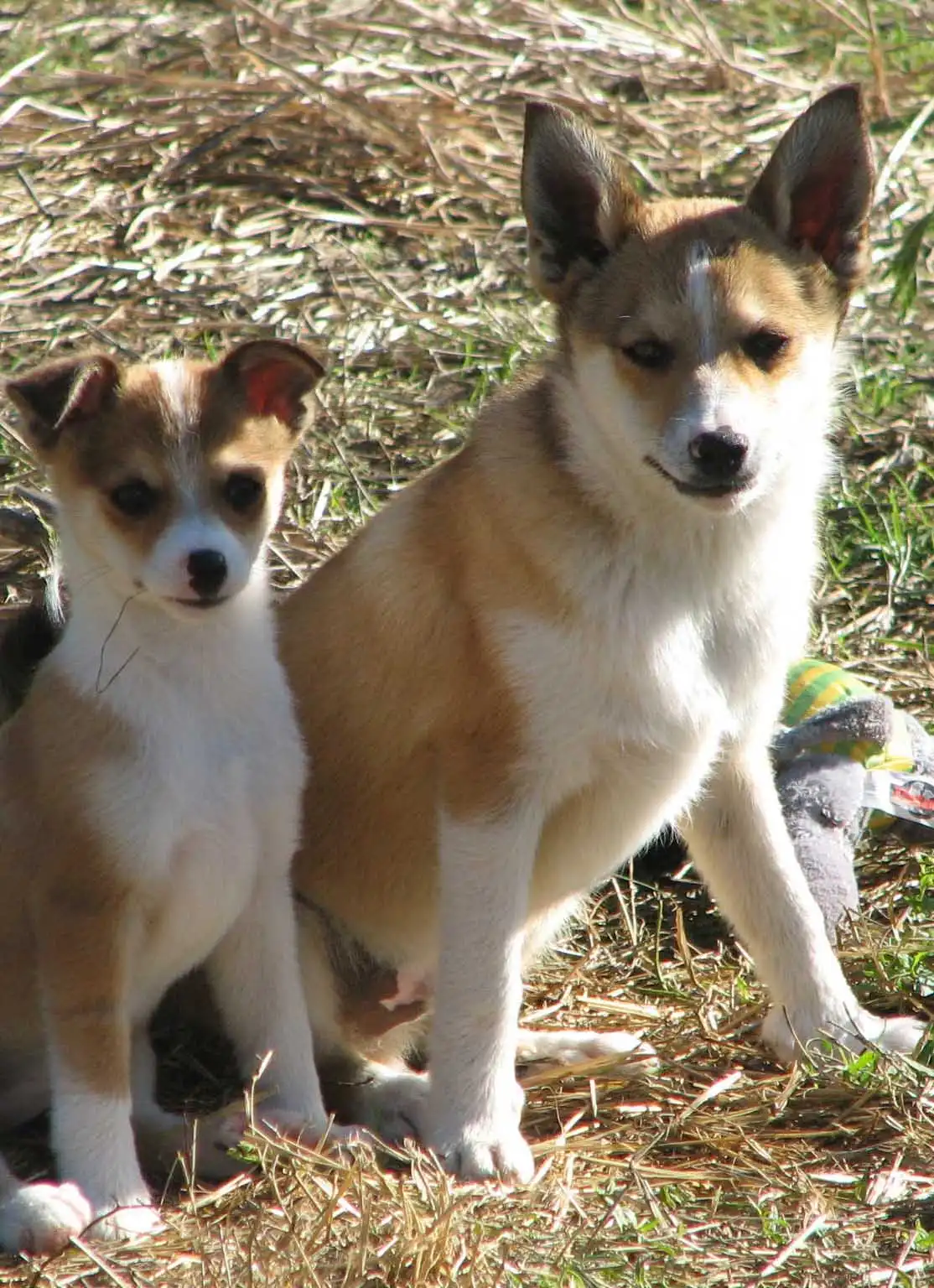
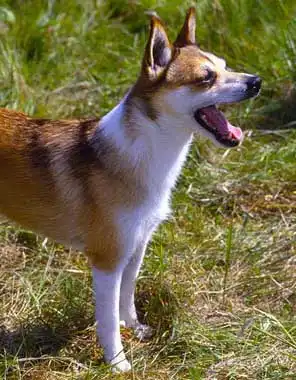
The Norwegian Lundehund is a unique small breed within the Spitz family, distinguished by several remarkable characteristics that differentiate it from other breeds. This dog is notable for having six toes on each paw, with the front toes being either double or triple-jointed. Its neck is exceptionally flexible, enabling it to arch backward almost to its spine. The shoulders can extend flat to the sides, and the ears can fold forward or backward to protect against debris. This breed boasts a double coat, featuring a coarse outer layer and a soft, thick undercoat. The fur is shorter on the head and front legs, while it becomes longer and denser around the neck and the back of the thighs. The tail is well-furred with minimal feathering. Typically, male Norwegian Lundehunds have a more prominent ruff around their necks than females. In conformation shows, the Norwegian Lundehund should be showcased in its natural state, without any coat trimming. The breed comes in a variety of colors, including fallow and reddish-brown, often accented with black tips and white markings. They can also be predominantly white with red or dark markings, and as they grow older, they usually develop more black tipping.
Care Routine
The Norwegian Lundehund has a dense undercoat that undergoes substantial shedding twice a year. Alongside this seasonal shedding, he will also lose small amounts of hair daily. Expect his fur to find its way onto your furniture and clothes, so keeping a lint roller handy is a smart idea! Regular brushing, ideally once a week, not only helps remove loose hair but also redistributes natural oils, promoting a healthy coat and skin while keeping things tidy. If shedding is a concern, consider brushing more frequently to better manage loose hairs. During the spring and fall, daily brushing is recommended to help control the shedding. Nail trimming should be done every 2 to 3 weeks, depending on the individual dog's needs, though some Norwegian Lundehunds may be resistant to this grooming task. If you find it challenging, your veterinarian can assist with nail trimming. Additionally, trimming the tufts of hair between his toes can help prevent him from tracking excess dirt and debris into your home. Weekly ear cleaning is important to remove dirt and moisture buildup. Finally, establishing a dental care routine is crucial for maintaining his oral health, ensuring he has strong teeth and healthy gums.
Behavior & Temperament
The Norwegian Lundehund is known for its tendency to hoard, often collecting shiny objects and hiding them away. This breed also has a habit of stashing food for later, so you might find kibble hidden under your bed, in couch cushions, or even tucked beneath pillows. While the Norwegian Lundehund can be a fantastic companion for families with older children, it’s not the best fit for those with toddlers, as he tends to be impatient with little ones who might pull on his ears or tail. Housetraining this breed can prove to be quite difficult; some owners even report that achieving complete house training feels nearly impossible. Additionally, the Lundehund is quite vocal and enjoys barking, which makes him less than ideal for apartment living. As an independent thinker, he can also be quite stubborn, making him a challenging choice for first-time dog owners. He quickly learns how to manipulate family members to get what he wants. Consistency in training is essential; all family members should use the same commands and expect uniform behaviors, or he may not regard everyone with equal respect.
Play & Exercise
Things to Know
Cups Per Day
0.0 Cups
Daily Activity
0 Minutes
Average Lifespan
13 Years
Origin
Unknown
Type
Pure Breeds
Size
Small
Origin Country
Norway
Brush Frequency
Daily
Coat Texture
Straight
Register
Your kids have been begging for a pet forever, and you've recently decided that it's time for your family to get a new addition -- a dog! While everyone is excited for the new arrival, you're wondering if you need to have a dog license. How much does it cost? Is it required? Where do you get one?
Member Clubs

PETINNATE
Northern Breed

AKC
Non-Sporting Group

UKC
Northern Breed
Height & Weight
Weight
17 lbs (8 kg)Male: 17 lbs (8 kg) , Female: 17 lbs (8 kg)
Height
14 inches (36 sm)Male: 14 inches (36 sm) , Female: 13 inches (33 sm)
Eye Colors
Brown

Nose Colors
Black
Coat Colors
White
Red
Gray
Sable