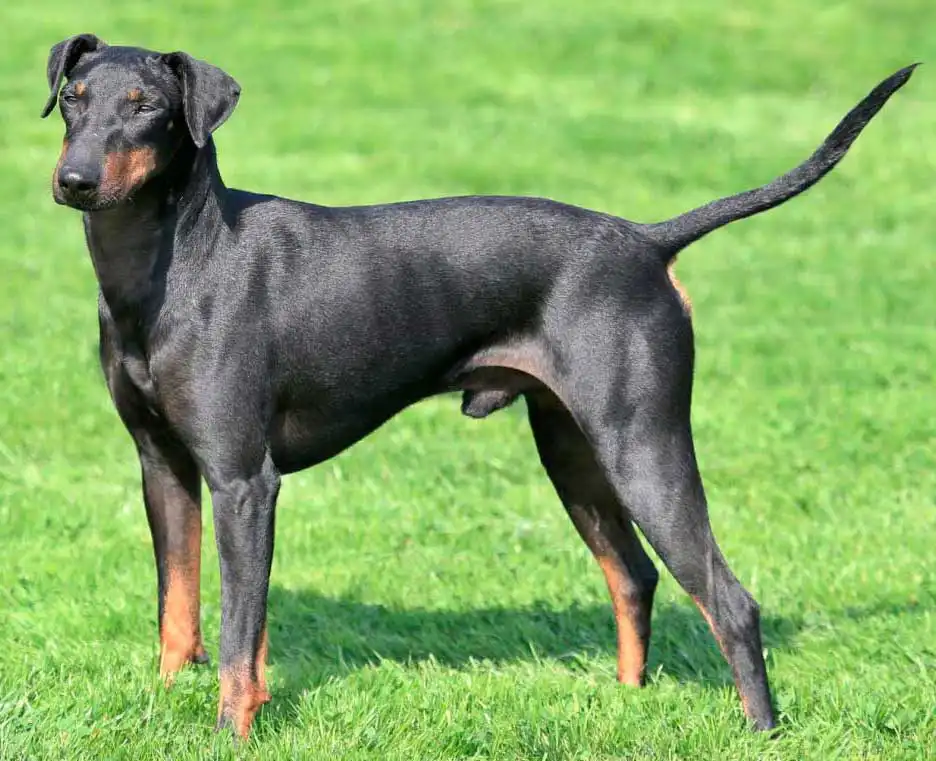
Manchester Terrier
Black and Tan Terrier, English Toy Terrier (toy)
The Manchester Terrier was developed in response to the worsening sanitation issues in England, which were intensified by the Industrial Revolution and a growing population. As rat infestations became more prevalent, there was an increasing need for smaller, energetic dogs like Terriers. This breed originated from the crossbreeding of a Whippet and a mixed-breed terrier, resulting in a spirited and courageous hunting companion. Today, the Manchester Terrier is recognized as a lively earth dog and a delightful pet. Although this breed is both active and friendly, it requires ongoing training to keep its strong-willed disposition in check, as it often assumes a leadership role. While regular exercise is crucial for a Manchester Terrier, they are generally easy to care for in terms of grooming.
Breed Origin
The Manchester Terrier, as its name indicates, is part of the Terrier group and hails from Manchester, England. In the early 19th century, the city faced severe sanitation issues, leading to a surge in the rat population. These pests not only posed health hazards but also negatively impacted the quality of life, which spurred the creation of various rat terrier breeds to address the problem. The Manchester Terrier was developed through the careful breeding of a Whippet and a mixed terrier, resulting in a lively and efficient rat-catching dog. By the mid-1800s, Manchester had established a reputation for its “Rat Terrier,” which ultimately influenced the breed's name. Beyond their skills in ratting, Manchester Terriers also excelled as hunting companions for coursing hares and rabbits. These smaller dogs were often carried in specially crafted leather pouches during hunts, affectionately referred to as the “Groom’s Pocket Piece.” When larger hounds found it difficult to maneuver through thick underbrush, the Manchester Terrier would boldly chase after the game. This breed's function as an earth dog in fox and hare hunts earned it the title of “Gentlemen’s Terrier.” In 1886, the American Kennel Club acknowledged the Toy Manchester Terrier, followed by the Standard Manchester Terrier in 1887. The two variations remained separate breeds until their merger in 1959. Today, the spirited and lively Manchester Terrier is valued as a companion and continues to thrive both in the field and at home.
Breed Appearance
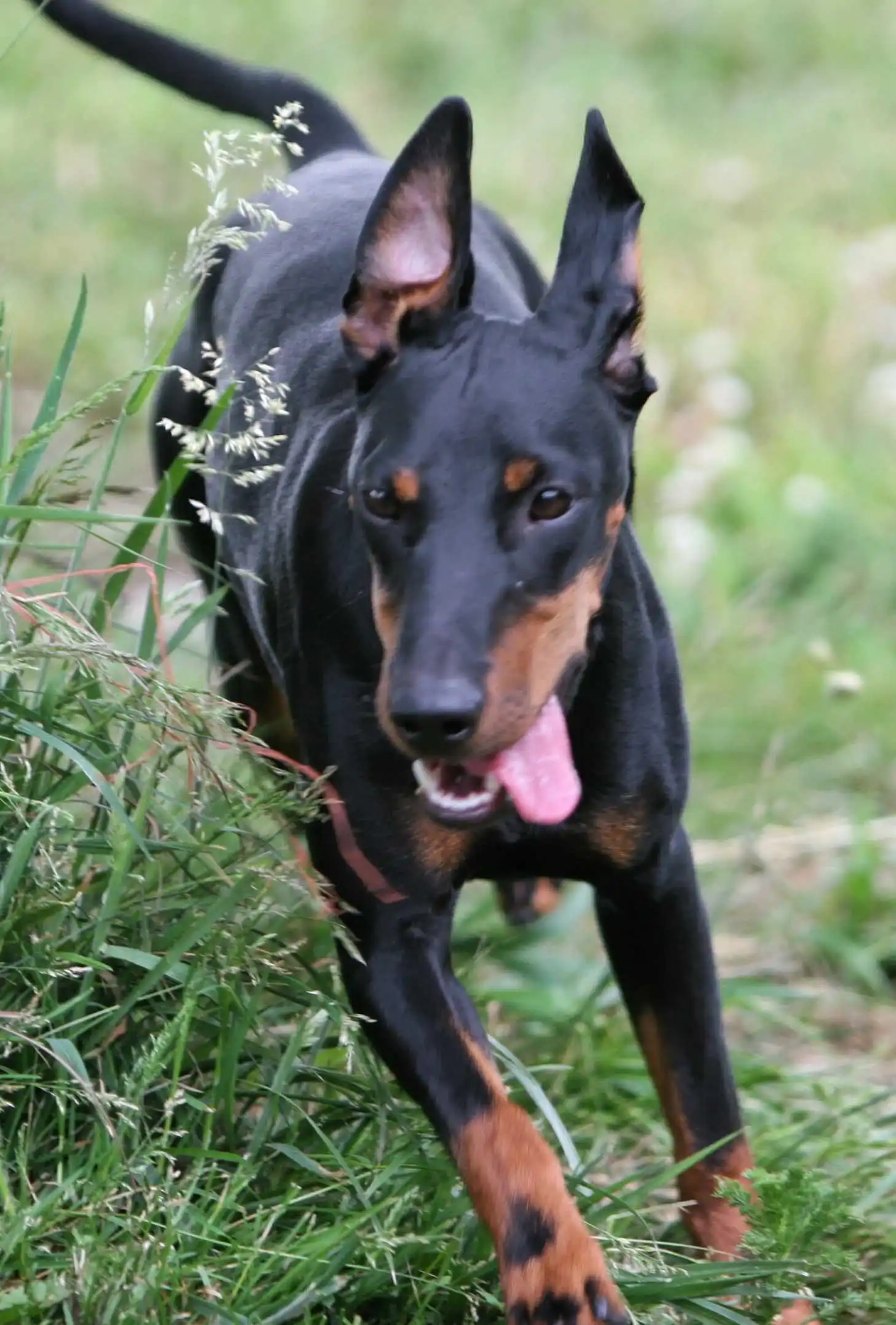
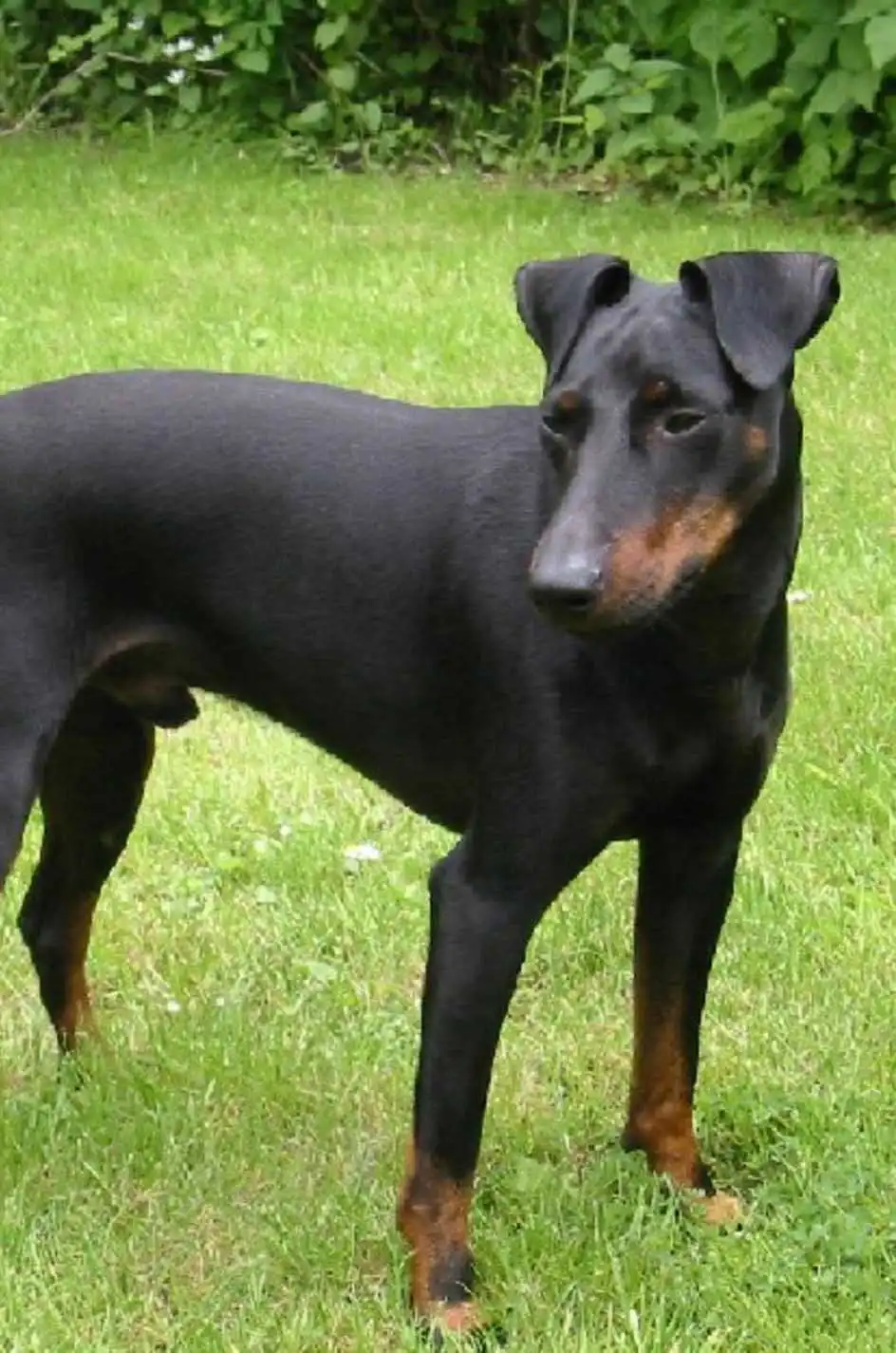
The Manchester Terrier is a small, compact breed known for its striking black coat, which features rich mahogany markings, and a slender, tapered tail. Its fur is glossy and dense, though it lacks a soft feel. This breed is characterized by a sleek, thin-boned body, a long head, and an alert, expressive face, all of which contribute to its impressive agility and smooth, muscular build. There is no size or ear shape difference between the Standard and Toy varieties of the Manchester Terrier. Both types have nearly black, almond-shaped eyes that are moderately spaced and slightly slanted. The Standard variety may have ears that are erect, cropped, or buttoned, while the Toy variety typically has upright ears. The muzzle is well-proportioned to the skull and ends with a clearly defined black nose. The lips are tight and black, with a scissor bite being the standard, although level bites can occur. The forelegs are straight and end in compact, well-arched feet, while the hind legs are strong with well-developed thighs, positioned further back and resembling cat-like feet. The tail is short, tapering from a thick base to a point, and is held slightly elevated.


Care Routine
The Manchester Terrier is relatively easy to care for in terms of grooming. Its short, dense coat is simple to maintain, as dirt can be easily brushed off. However, this breed does experience shedding twice a year, making regular brushing essential to remove dead and loose hair during these periods. Bathing should be reserved for when it is truly necessary, and it’s best to use a shampoo formulated specifically for dogs. In addition, the nails of a Manchester Terrier may need to be trimmed up to twice a month unless they naturally wear down through regular activity. Weekly ear inspections are also important to check for any debris or wax accumulation. For optimal grooming products and methods, it’s advisable to consult with your groomer or veterinarian. As part of the terrier group, Manchester Terriers generally do not have a strong "doggy" smell. Keeping their coat, ears, and teeth clean will help prevent any unpleasant odors. This breed is lively and requires plenty of exercise, but it can adapt well to urban environments and apartment living, provided it has opportunities to run and play. Interestingly, Manchester Terriers tend to handle warm weather better than cold. Regarding their diet, Manchester Terriers typically require between ¼ cup to 1 cup of dry food daily, divided into two meals. The precise amount will depend on factors such as the dog's metabolism, age, and size. Since this breed can be prone to overeating, it’s crucial to keep an eye on their weight and adjust their diet as necessary to avoid obesity.
Behavior & Temperament
The Manchester Terrier is a lively and spirited breed that thrives on physical activity. This dog needs plenty of exercise and loves to explore its environment. Initially bred for hunting rats, the Manchester Terrier may not be the ideal choice for households with small pets like rabbits or guinea pigs; however, it can live peacefully alongside cats and larger dogs. Thanks to its sharp hearing, the Manchester Terrier can alert larger guard dogs, such as German Shepherds or Doberman Pinschers, to potential threats, creating a strong partnership. Affectionate with its family, the Manchester Terrier prefers gentle interactions and does not tolerate rough play, whether from children or adults. Its delicate bone structure may become more fragile with age, highlighting the importance of careful handling. This breed is typically wary of strangers and is known for its vocal tendencies, barking and keeping its distance until it feels confident that the newcomer is not a threat. Training a Manchester Terrier can be a bit of a challenge, as it may develop a "Napoleon Complex" if not properly taught who is in charge. With a slightly dominant personality, this breed requires patient owners who can commit to consistent training from an early age. As a result, it may not be the best option for first-time dog owners or those with busy lifestyles. Nonetheless, despite the training hurdles, the Manchester Terrier is a loyal and protective companion, full of energy and affection for its family.

Play & Exercise
Things to Know
Cups Per Day
1.0 Cups
Daily Activity
60 Minutes
Average Lifespan
15 Years
Origin
1800s
Type
Pure Breeds
Size
Small
Origin Country
England
Brush Frequency
Weekly
Coat Texture
Straight
Register
Your kids have been begging for a pet forever, and you've recently decided that it's time for your family to get a new addition -- a dog! While everyone is excited for the new arrival, you're wondering if you need to have a dog license. How much does it cost? Is it required? Where do you get one?
Member Clubs

PETINNATE
Terrier

AKC
Terrier Group

UKC
Terrier
Height & Weight
Weight
15 lbs (7 kg)Male: 15 lbs (7 kg) , Female: 15 lbs (7 kg)
Height
16 inches (41 sm)Male: 16 inches (41 sm) , Female: 16 inches (41 sm)
6 Months
8 lbs ( m 8 lbs, f 8 lbs )
11 inches ( m 11 inches, f 11 inches )
12 Months
12 lbs ( m 12 lbs, f 12 lbs )
13 inches ( m 13 inches, f 13 inches )
18 Months
14 lbs ( m 14 lbs, f 14 lbs )
16 inches ( m 16 inches, f 16 inches )
Eye Colors
Brown

Nose Colors
Black
Coat Colors
Black

Red

Fawn